You may allow a potential buyer to test drive your classic car, but only after verifying that your insurance policy permits lending the steering wheel to this driver. Check their original driving licence, call the insurer if the clauses are unclear, record the car’s condition and mileage, insist on a short route, and always accompany the driver. Third-party insurance primarily protects victims: it does not necessarily cover damage to your own car or injuries to the responsible driver.
With a classic car, a test drive requires more preparation than with a modern vehicle. Unassisted controls, different braking, a delicate manual gearbox or a high agreed value can turn a simple fifteen-minute loop into a major financial risk. Here is a practical protocol to organise the test drive without scaring off a serious buyer or unnecessarily exposing the vehicle.
Does insurance automatically allow a test drive by a buyer?
No. In France, the vehicle is insured, but the policy may restrict the persons authorised to drive it.Service-Public.frreminds that occasional lending remains subject to the driver’s licence and the conditions set out in the policy.
Possible restrictions include, in particular:
- exclusive driving reserved for the policyholder;
- lending limited to the spouse or household members;
- exclusion of novice drivers;
- an increased excess when a third party drives;
- a total prohibition on lending;
- different coverages for vehicle damage and driver injuries.
A “collection” policy or agreed value guarantee does not override these clauses. The commercial name of the product is not enough: you must read the specific and general conditions. Ask the insurer, ideally in writing, whether an identified potential buyer may drive during a sales test.
Before handing over the keys, confirm five points: lending of the steering wheel authorised, age and licence seniority conditions, amount of the excess, coverage of damage to the vehicle itself, and bodily injury cover for the occasional driver.
Civil liability, comprehensive cover and driver’s guarantee: three different protections
Mandatory civil liability indemnifies damage caused to other vehicles, buildings, pedestrians and passengers. It does not automatically cover damage to the test-driven car or injuries to the responsible driver. This is the possible role of damage cover and driver’s guarantee, depending on the subscribed clauses.
“Comprehensive” cover does not mean every situation is reimbursed unconditionally. An exclusion of lending, an unauthorised driver, a specific excess or a usage limitation may reduce compensation. For a rare car whose repair requires specialised parts or expertise, also check the evaluation method provided in case of a claim.
Service-Public.fr specifies that minimum third-party insuranceprotects victims, but the responsible driver is not compensated for their own damage under this sole guarantee. The question to ask is therefore not simply “is the car insured?”, but “what are the precise consequences if this buyer causes an accident during the test drive?”.
The checklist to request from the insurer before the appointment
Contact your company or broker with the contract number and the characteristics of the test. Note the date, the name of the contact person and the response received.
| Question | Why it matters |
|---|---|
| Is lending a car to a potential buyer permitted? | Some contracts restrict lending to close relatives or prohibit it altogether |
| Is there a minimum age or length of driving licence holding required? | A novice driver may be excluded or subject to a higher excess |
| What excess applies during the test drive? | It may differ from the usual excess |
| Are damages to the car covered? | Third-party liability alone does not cover repairs to your vehicle |
| Is the driver personally protected? | Driver insurance may include exclusions or limits |
| Are theft and misappropriation covered after voluntary handover of the keys? | Contractual definitions of theft and breach of trust may vary |
| Are roadside assistance and towing included? | An older car can break down without an accident occurring |
If the answer remains uncertain, do not allow the prospect to drive. Offer a demonstration with you at the wheel, an inspection by an expert, or a later test drive after written confirmation. A serious buyer will understand that a rare vehicle cannot be entrusted based on an approximate interpretation of the contract.
What should you check about the buyer before handing over the keys?
Ask to see the original driving licence and an identity document. Verify that the name, photo, apparent validity and licence category match. A photograph sent by messaging cannot be properly checked and may come from a stolen identity.
Record only the information necessary for the test drive and explain why: identity, contact details, licence reference, date and time. These details may become necessary if an automated offence is committed. TheANTAI states that an owner who has lent their vehiclemust provide the identity, contact details and licence reference of the driver to designate them.
Avoid keeping the original identity document as a “deposit” or distributing an unprotected copy. If you consider a copy essential, obtain the person’s consent, protect it against reuse and keep it only for as long as necessary. If you have doubts about the prospect’s identity, behaviour or sobriety, refuse the test drive.

The keys should only be handed over after insurance and identity checks have been completed. Photo: Nenad Stojković,Wikimedia Commons, CC BY 2.0 license.
Should a document be signed before the test drive?
A test sheet is not an insurance policy and does not cover what the contract excludes. However, it does allow for dating the temporary handover of the steering wheel and setting a clear framework.
The document may include:
- the identity of the owner and the driver;
- the make, model and registration of the vehicle;
- the reference and category of the presented driving licence;
- the departure and return times;
- the mileage and fuel level;
- any visible damage, supplemented by dated photographs;
- the planned route and duration;
- the prohibition of handing over the steering wheel to another person;
- acknowledgement of the excess amount, without claiming to replace the insurance contract.
A clause whereby the prospective buyer promises to pay any excess can formalise your agreement, but its recovery is never automatic in case of dispute. For a high-value car, seek advice from your insurer or a legal professional rather than using a generic template found online.
How to organise the test drive in practice?
Start by driving yourself. You can demonstrate cold starting, the position of the controls, operation of the gearbox, steering, braking and mechanical peculiarities. This first part also allows the vehicle to gradually reach the correct operating temperature.
Then change drivers in a calm, safe and authorised location. Adjust the seat and mirrors before setting off again. A prospective buyer discovering heavy steering, an offset pedal cluster or a gearbox without synchronisation should not improvise in the middle of traffic.
During the test drive:
- always accompany the buyer;
- use a defined, familiar and reasonably short route;
- avoid rush hours, rain and unsuitable roads;
- prohibit any sporty driving on open roads;
- keep your phone and assistance contact details on you;
- immediately stop the test if behaviour becomes dangerous.
For a very powerful car, without electronic aids or freshly restored, a test drive supervised by a professional on a suitable site may be more appropriate. The aim is to allow the buyer to assess the operation, not to test the vehicle’s limits.
Is a test drive mandatory to sell a classic car?
Official information recommends that the buyer test drive a used car in order to check, in particular, the engine, braking, clutch and road handling. The DGCCRF explicitly advises this test drive, but the transfer formalities do not make the prospective buyer’s driving a mandatory part of the file.
The seller can therefore propose a framework compatible with the insurance and the value of the vehicle. They can start with a static inspection, have an independent professional drive it, or demonstrate the car themselves. A total refusal without an alternative solution may worry the buyer, while a test drive without control unnecessarily exposes both parties.
An expert appraisal before purchasing a classic car usefully complements the test drive: it documents the identity, condition and defects, without turning a few kilometres behind the wheel into a complete mechanical diagnosis.
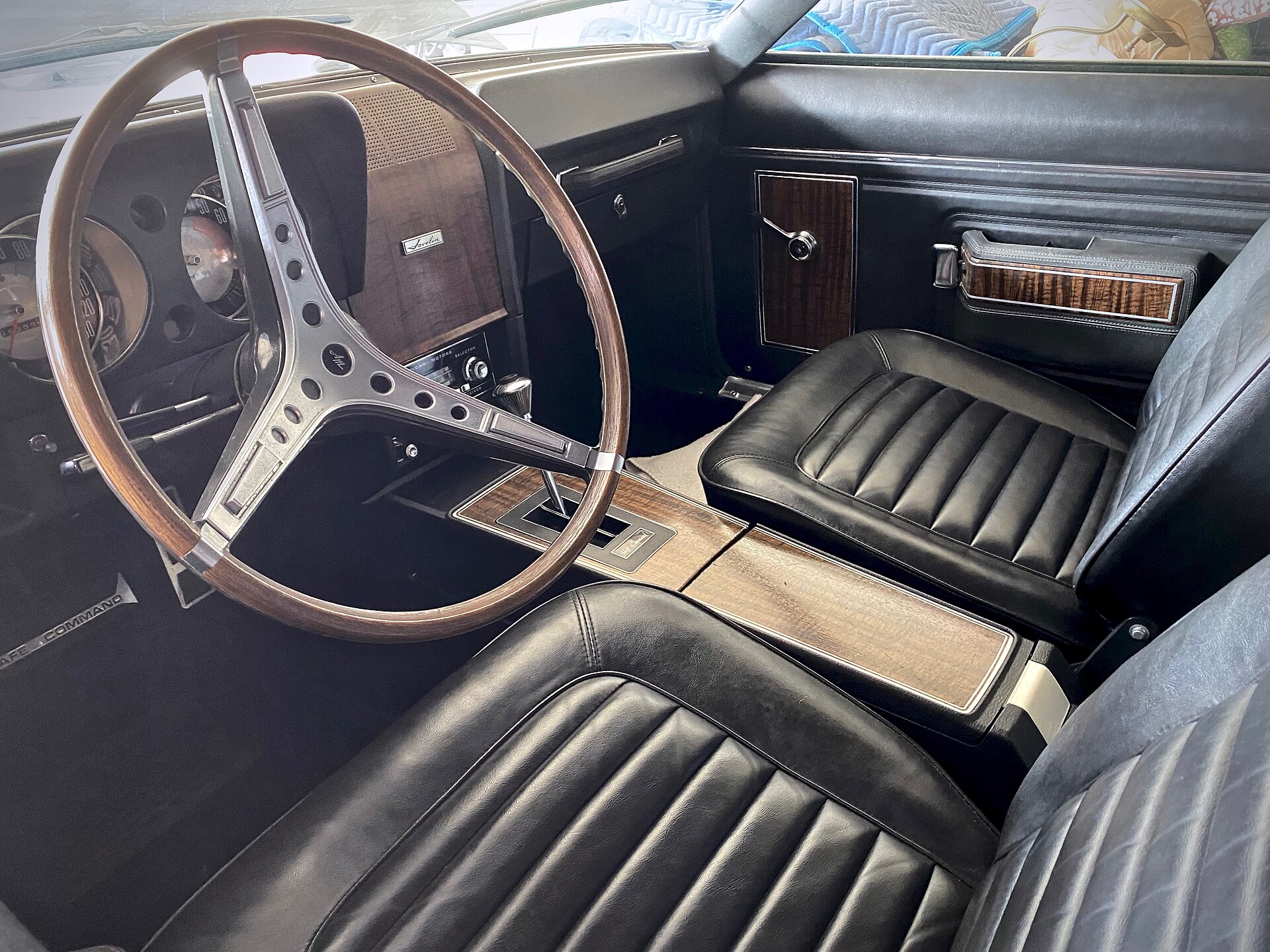
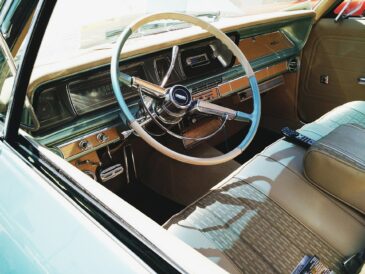
Before the test drive, explain the controls and peculiarities of the interior. Photo: Christopher Ziemnowicz (CZmarlin), Wikimedia Commons, public domain CC0 1.0.
What to do in case of an accident during the test drive?
Secure the scene, assist any persons involved and contact emergency services if necessary. Complete an accident report with the exact identity of the driver at the time of the accident, take photographs and notify the insurer within the timeframe specified in the contract.
Do not sign an inaccurate version to “simplify” the file. The vehicle owner, the policyholder and the driver can be three different people; the insurer must know the real situation. Keep the test drive sheet, appointment messages and images taken before departure.
Compensation will depend on responsibilities, subscribed coverages and compliance with loan conditions. An increased deductible may remain payable by the insured. A responsible claim may also have consequences on the owner’s contract, even if they were in the passenger seat.
What if the buyer commits an offence?
The automated notice is generally sent to the holder of the registration certificate. Do not pay the fine as if you were the driver if you wish to designate the person who actually drove. Follow the procedure indicated by the ANTAI and provide the exact details of the prospective buyer.
The dated test drive sheet, with departure and return times, facilitates this process. It also protects the buyer against designation relating to another period. Never invent an identity or designate a person who was not driving.
After the agreement: do not confuse test drive and departure after sale
The test drive takes place before the transfer, under the seller’s still valid contract and within the authorised loan limits. Once the sale is concluded and the keys handed over, the buyer must have arranged their own coverage before driving. One should not assume that the seller’s insurance will automatically cover the return journey.
Prepare separately the transfer certificate, the registration document, the administrative status certificate and the technical inspection when required. Our guide explains how to complete the transfer certificate for a classic car. For payment, also consult the precautions regarding bank transfer and bank cheque during the sale.
If you prefer to delegate appointments, buyer qualification and test drive organisation, discover the solutions to entrust the sale of your car to Plethore Cars.
Quick checklist before handing over the keys
- Insurance contract reviewed and driving permission confirmed.
- Excess and own damage clearly identified.
- Original driving licence and identity document verified.
- Contact details and licence reference recorded with the driver’s consent.
- Condition, mileage and fuel level photographed.
- Test drive form dated and signed.
- Short route defined in advance.
- Owner present in the car.
- Incident report and assistance contact details available.
- Buyer’s insurance confirmed before their departure after the sale.
FAQ on test driving a classic car before sale
Who pays for damages if the buyer has an accident during the test drive?
It depends on the liabilities and the contract. Third-party liability covers damage to others, but damage to the test car requires a comprehensive insurance policy applicable to occasional drivers. An excess may still be payable.
Does comprehensive insurance automatically cover the buyer?
No. The contract may prohibit lending, exclude certain drivers or increase the excess. Confirm coverage before the test drive.
Can I refuse to let the buyer drive?
You can offer a demonstration with you at the wheel or an inspection by a professional if insurance, weather, vehicle condition or the prospect’s behaviour do not allow a safe test drive.
Can I keep the buyer’s identity document during the test drive?
It is preferable to check the original and note the necessary information with their consent rather than retain their document. Always accompany the driver and protect the data collected.
Should I let the buyer go alone?
No. Accompanying the prospective buyer allows you to explain the controls, ensure the route is followed, and reduce the risks of misuse or the vehicle disappearing.
Does a signed document transfer all risks to the buyer?
No. A test sheet provides evidence and sets a framework, but it does not alter the insurance contract guarantees nor guarantee the recovery of a deductible.
Main sources
- Service-Public.fr — Lending a vehicle to a third party: contractual authorisation, restrictions and deductibles.
- Service-Public.fr — Mandatory motor insurance: civil liability and limits of third-party insurance.
- DGCCRF — Buying a used vehicle: benefits of a test drive and recommended checks.
- ANTAI — Designation or contestation: procedure when the vehicle was lent.
- Service-Public.fr — Selling or giving away your vehicle: formalities and transfer documents.
Information verified on 30 September 2026. Insurance contracts differ and may change: check your specific conditions before each test drive and update this guide in six months.