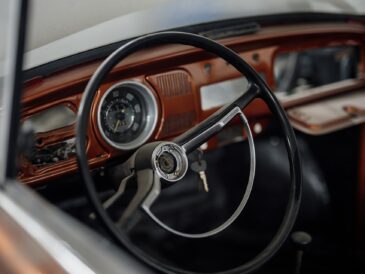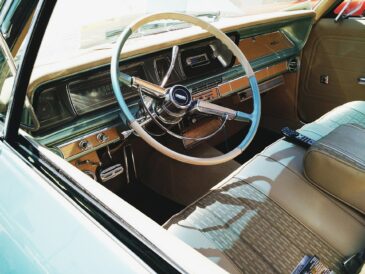
To transfer an old car, fill out the Cerfa 15776*02 in two copies with the buyer, both sign it, indicate the exact date and time as well as the displayed mileage, then hand over copy no. 2 to the buyer. Simultaneously, cross out the registration document with the same date and time, and declare the transfer on France Titres within 15 days.
The procedure is the same for a standard registration document or one bearing the mention “vintage vehicle.” The difficulties usually arise from the frequent peculiarities of old vehicles: old FNI registration, multiple co-owners, barely legible chassis number, five-digit odometer, or incomplete history. Here is how to secure each step.
Transfer certificate: the checklist in 8 steps
| Step | To do | Checkpoint |
|---|---|---|
| 1 | Download the Cerfa 15776*02 | Use the official current version |
| 2 | Verify identities | Names must match identity documents and the registration document |
| 3 | Copy the vehicle data | Registration number, VIN, make, model, displayed mileage |
| 4 | Indicate the nature of the transaction | Sale, donation or delivery for destruction |
| 5 | Enter the exact date and time | Record them identically on the registration document |
| 6 | Collect all signatures | Seller, buyer and relevant co-owners |
| 7 | Hand over the documents | Cerfa, crossed-out registration document, certificate of administrative status and technical inspection if required |
| 8 | Declare the transfer | On France Titres within 15 days |
1. Use the correct form
The official form is the Cerfa 15776*02, certificate of transfer of a used vehicle. It is used for both sales and gifts. It must be printed in two copies: the seller keeps copy no. 1 and gives copy no. 2 to the buyer.
Download it from Service-Public rather than from an intermediary site. An older version may contain different sections and complicate registration. It is also possible to use the official Simplimmat application, but only when the service conditions are met: seller and buyer present together, residing in France, and vehicle already registered in the SIV format of type AA-123-AA.
A car still bearing an FNI registration of the type 123 AB 45 therefore cannot be transferred via Simplimmat. The paper form and the France Titres online procedure remain appropriate.
2. Prepare the information before the appointment
Do not fill in the certificate in haste at the moment of handing over the keys. Prepare the registration document, identity papers and the buyer’s full contact details. Check in advance:
- the exact identity and address of the registration document holder;
- the registration number and date of first registration;
- the make, type, commercial designation and VIN identification number;
- the mileage shown on the odometer;
- the buyer’s surname, first name, date of birth and address;
- the planned date and time for the effective transfer of the vehicle.
For an older vehicle, compare the chassis number stamped on the vehicle with that on the registration document. Any discrepancy, illegible character or missing manufacturer’s plate must not be corrected by approximation on the Cerfa. Have the anomaly clarified before the sale, as the buyer could later be blocked for registration or during an inspection.
If the vehicle belongs to a joint ownership or an estate, identify the persons authorised to sign before the appointment. Service-Public specifies that all co-owners listed on the registration certificate must sign, unless there is a valid mandate.
3. Fill in the “former owner” section
The seller provides their identity and address as they appear on their documents. For a legal entity, use the company name and business information. Avoid abbreviations, missing first names and unexplained former addresses.
In the section relating to the vehicle, copy the information from the registration document. Then tick the nature of the transfer: “transferred” for a sale or gift, or “transferred for destruction” only if the vehicle is handed over to an authorised end-of-life vehicle centre.
Enter the date and time at which ownership and keys are actually transferred. This detail protects both parties: it allows correct attribution of any offence or incident occurring on the day of the transaction. The time entered on the Cerfa must be identical to that written on the crossed-out registration document and that declared online.
4. What to note for the mileage of a classic car?
The Cerfa requests the mileage shown on the odometer. Therefore, copy the value visible on the day of sale, without attempting to reconstruct an uncertain total. A five-digit odometer may have completed one or more rotations; the form does not thereby convert the displayed value into certified mileage.
When the total mileage is not justifiable, clearly state in the sales contract or on the invoice that it is the mileage shown on the odometer, not guaranteed. Conversely, only use the expressions “original mileage” or “certified” if you have a truly reliable history.
This caution is important for the value of a classic car. The service book, technical inspections, invoices and expert reports must remain consistent with your presentation. To establish a price before the sale, you can request a free valuation of your classic car.
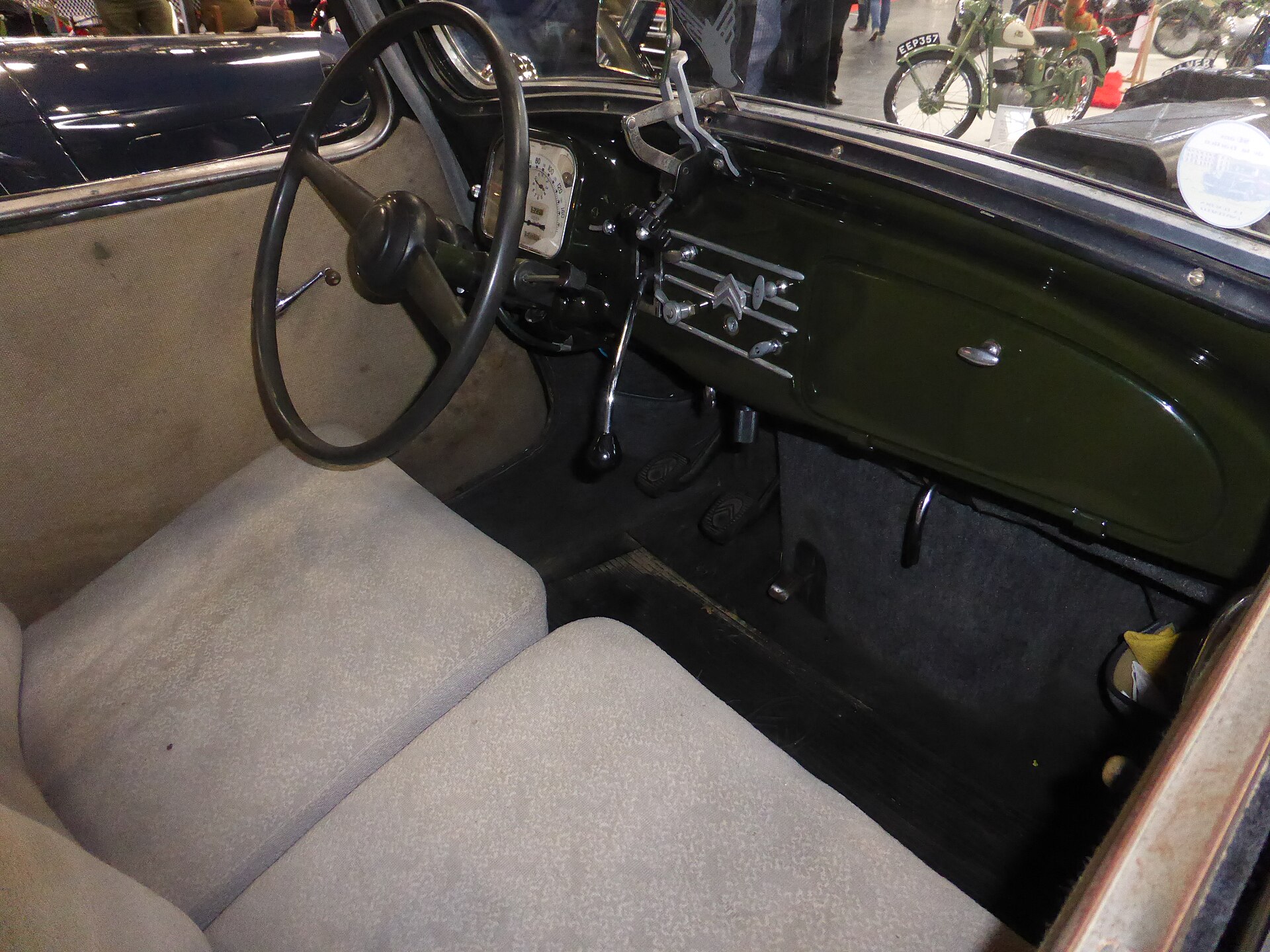
Photo: andreboeni, Wikimedia Commons, CC BY licence 2.0.
5. Have the correct people sign
The seller and the buyer each sign both copies. When several people are co-holders of the registration document, their signatures are required, unless one acts on behalf of the others with a valid mandate.
Do not sign an incomplete form and do not leave any essential section to be completed later. Each party must leave with an identical and legible copy. In case of an error detected before handing over the vehicle, the safest option is to start again with two clean forms rather than using correction fluid or accumulating crossings-out.
For an inheritance, the sale may require additional supporting documents depending on the situation: certificate of notoriety, notary’s certificate, agreement of the heirs or proof of the signatory’s authority. Our guide explains how to sell the car of a deceased person and details these special cases.
6. Cross out the registration document at the right time
Once payment is confirmed and the handover of the vehicle agreed, cross out the registration document with a diagonal line. Add the phrase “sold on” or “transferred on”, followed by the date, time and your signature. All co-holders must also sign.
Do not cross out the registration document several days before the appointment: if the sale is cancelled, the document becomes difficult to reuse. The date and time must correspond exactly to the certificate of transfer.
If the classic car still has an FNI registration, the seller does not have to convert it beforehand to the SIV system to complete the sale. When applying for the registration document, the buyer will receive a new registration in the SIV format.
The mention “collector vehicle” does not exempt from the certificate of transfer nor from the declaration. It also does not authorise the sale of a car without proper title. In case of a missing document, first consult our file: buying a classic car without a registration document.
7. Hand over the complete file to the buyer
On the day of the transfer, the seller hands over at least:
- copy no. 2 of the signed certificate of transfer;
- the complete registration document, crossed out, dated, timestamped and signed;
- the administrative status certificate dated less than 15 days;
- the technical inspection report dated less than six months when the vehicle is subject to it, or less than two months if a re-inspection was prescribed;
- the transfer code generated after the online declaration.
The detachable coupon from the registration certificate allows the buyer to drive in France for one month, the time needed to obtain their new document, provided the file is in order. To avoid any hold-up, check before the sale that there is no lien or opposition using our guide to the certificate of no lien for a classic car.
Deliberately add invoices, the service book, expert reports, manuals and restoration photos. These documents do not replace administrative papers, but they enhance traceability and the collectible value.
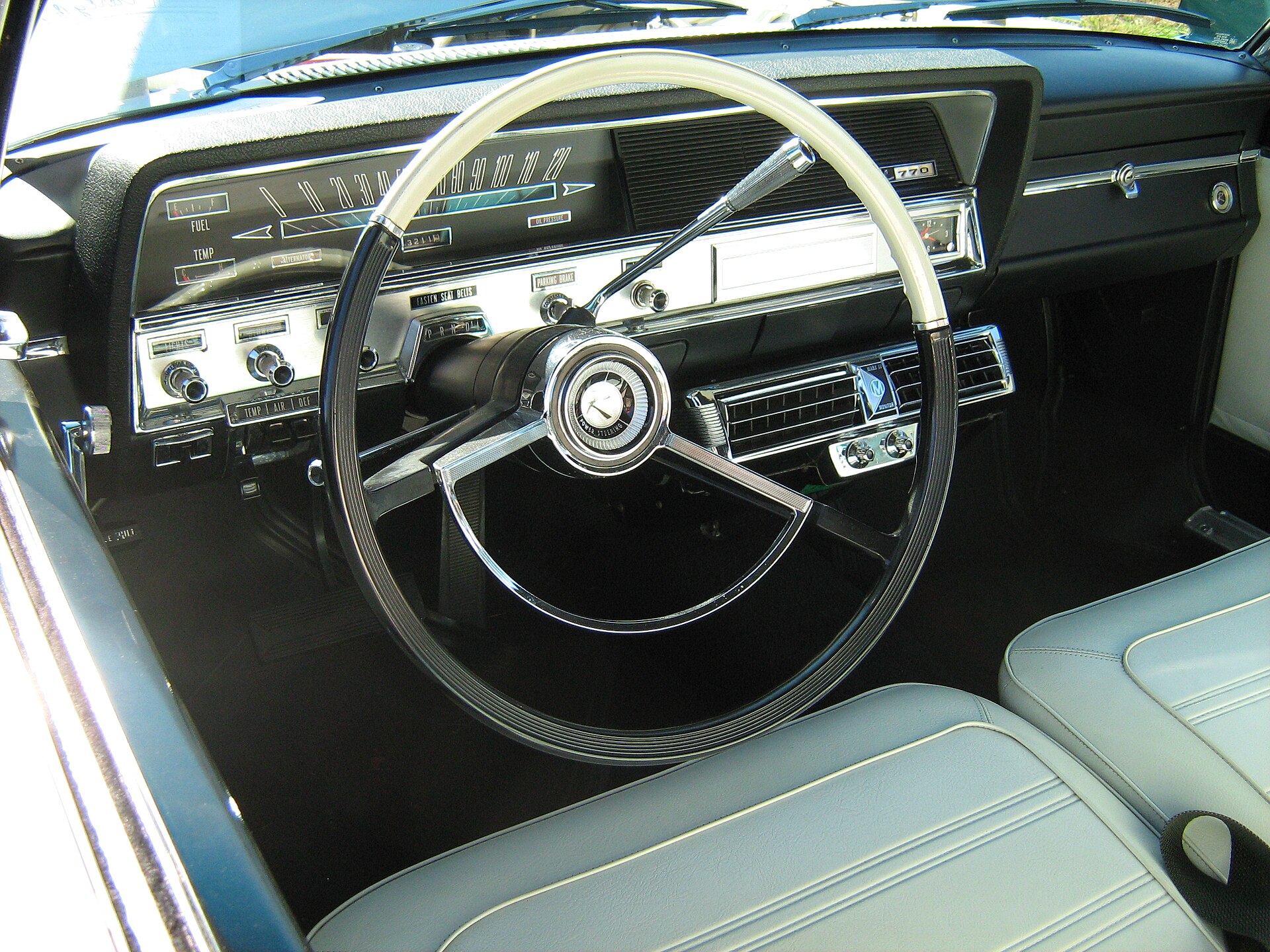
Photo: CZmarlin, Wikimedia Commons, public domain.
8. Declare the transfer within 15 days
After signing, the seller must declare the transfer on the France Titres website within 15 days. This procedure records the buyer’s identity, the date and time of the transaction, as well as the mileage. At the end, keep the registration receipt and pass the transfer code to the buyer. This code is valid for 15 days.
Do not simply entrust this obligation to the buyer. Until the transfer is properly registered, penalty notices and certain administrative difficulties may continue to be directed at the former holder.
If you prefer end-to-end support, offer your classic car to Plethore Cars to structure its presentation and sale.
The errors that most often block a transfer
- an outdated or illegible version of the Cerfa form;
- an identity different from that shown on the registration certificate;
- a date or time differing between the Cerfa, the registration certificate and France Titres;
- a missing signature from a co-holder;
- a VIN copied from memory or a confused character;
- an unchecked “transferred” box;
- a mileage presented as guaranteed without proof;
- an administrative status certificate that is too old;
- a registration certificate crossed out before the transaction is certain;
- the absence of a transfer declaration by the seller.
How to correct an error?
If the error is discovered before the final signature, redo both copies. This solution is clearer than crossing out and avoids discrepancies between copies.
If the transfer has already been declared online, use the France Titres procedure to report an error or request correction of the administrative file. Attach the requested supporting documents and keep the tracking number. In case of cancellation of the sale, do not simply reuse the crossed-out registration document: request the appropriate procedure from France Titres.
Frequently Asked Questions
Which Cerfa form should be used to sell a classic car?
The Cerfa 15776*02 is the official current form for transferring a used vehicle. It must be completed in two copies and signed by both the seller and the buyer.
Does the mention “collector vehicle” change the transfer certificate?
No. The same form and transfer declaration apply. Historical documents or the FFVE certificate can supplement the file but do not replace the Cerfa form.
Do all co-owners have to sign?
Yes, all co-owners listed on the registration document must sign, unless represented by a valid power of attorney.
Can a classic car with an FNI registration be sold?
Yes. The seller does not have to convert the number themselves. The buyer will obtain an SIV registration when applying for a new registration certificate.
What time should be entered on the transfer certificate?
Enter the actual time the vehicle was handed over. Record exactly the same time on the crossed-out registration document and in the online declaration.
Can a transfer certificate be corrected with correction fluid?
It is better to complete two clean copies before signing. If the error has already been recorded, use the France Titres correction procedure with the requested supporting documents.
Sources
- Service-Public — Transfer certificate for a used vehicle (Cerfa 15776*02)
- Service-Public — Selling or giving away your vehicle
- Légifrance — Decree of 9 February 2009, article 10
- France Titres — Report an error on the registration certificate or administrative file
- DGCCRF — Purchase of a used vehicle: seller’s obligations
Information verified on 28 September 2026. As forms and online procedures may evolve, a review every six months is recommended.