To sell a classic car privately, the instantaneous transfer received and verified in the seller’s account is generally the simplest method to verify. However, bank limits and the addition of the beneficiary must be prepared before the meeting. A bank cheque remains usable, but it must be authenticated directly with the issuing bank, using a number independently verified during their opening hours.
In all cases, a screenshot, an email, a text message or the banking app shown by the buyer does not prove that the money has been definitively credited. The seller must check their own account — ideally in their usual app or with their bank — before handing over the car, its keys and the original documents.
Transfer or bank cheque: a quick comparison
| Payment method | Main advantage | Risk to manage | Recommended moment to hand over the keys |
|---|---|---|---|
| Instant transfer | Funds available immediately, 24 h/24 and 7 d/7 | Limit, unregistered beneficiary, fake proof | After credit is visible in the seller’s account |
| Standard SEPA transfer | Bank traceability | Delay generally from 24 to 48 hours | After actual receipt, never on a simple issuance notice |
| Bank cheque | Issued by the bank on its own funds | Fake cheque, fictitious bank or number, forgery | After direct confirmation from the issuing bank |
| Trusted third party | Funds blocked until the agreed conditions | Fake site, fees, unlocking conditions | After confirmation in the verified official service |
| Cash | Immediate payment | Counterfeit notes, physical security, proof | After counting, checking and written receipt |
The amount for a rare car often requires several days of banking preparation before the transaction. The right choice is therefore not only the method of payment: it is also a protocol that avoids improvisation on the day of delivery.
Why instant transfer is often preferable
The Banque de France describes instant transfer as a transaction executed in a maximum of ten seconds, available continuously and credited immediately to the beneficiary’s account. It also highlights its irrevocable nature and its usefulness for payments between individuals.
The seller thus benefits from a clear signal: the funds appear on their own account before handing over the keys. This process eliminates the clearing delay and the risk of counterfeit paper documents. Since 2025, banks must also offer a service to verify the match between the beneficiary’s name and the IBAN holder, called Verification of Payee or VoP. This check mainly protects the sender against errors or substituted IBANs; it does not replace the seller’s verification of receipt.
Limitations to anticipate
Service-Public reminds that a transfer may be capped according to the account agreement. For a classic car, the buyer must therefore contact their bank in advance to know or temporarily raise their limit. Some banks also impose a security delay after adding a new beneficiary.
Before the appointment, carry out a test with a symbolic amount only if both parties agree and if the contract specifies how it will be accounted for. If it is a reservation, clearly distinguish between deposit and down payment: our guide on the down payment when selling a classic car details their legal effects.
How to verify a transfer without being caught out
The seller must never trust the buyer’s phone screen. A fake app, a modified page or an imitated PDF receipt can display a non-existent transaction.
Proceed as follows:
- send your IBAN via an agreed channel and verbally verify the last characters with the buyer;
- ask the buyer to save the beneficiary and check their limit before the appointment;
- on the day of sale, let the buyer make the transfer in front of you, without handling their phone;
- check your own account via your usual app, without following any link received by message;
- check the amount, the reference, and the credited account;
- do not sign the final handover or hand over the keys until the funds have actually appeared.
A standard SEPA transfer may also be suitable, but Service-Public indicates a usual delay of 24 to 48 hours after its registration. In this case, the parties can sign a preliminary agreement and schedule delivery after receipt. A payment notification or a screenshot does not equate to a bank credit.
The National Consumer Institute also reminds us of the existence of a transfer recall procedure in certain cases, notably technical error, duplication, or fraudulent origin. To present any transfer as absolutely impossible to contest would therefore be excessive. Best practice remains to verify the identity of the parties, the coherent origin of the payment, and the actual posting of funds.
Bank cheque: essential checks
A bank cheque is issued by a bank, but the document handed over can be counterfeit, stolen, or altered. The Bank of France recommends, when possible, favouring another payment method and explicitly warns about fake bank cheques in used vehicle sales.
If you accept this payment method:
- arrange the transaction on a working day during the issuing bank’s opening hours;
- find the official contact details of the branch yourself, without calling the number printed on the cheque or the one provided by the buyer;
- ask the bank to confirm the cheque number, its amount, date, and the beneficiary’s name;
- examine the “bank cheque” watermark visible by transparency, as well as any erasures, overwrites, or printing differences;
- compare the buyer’s identity with the sales documents;
- keep a copy of the cheque with the transaction file.
The National Consumer Institute also advises avoiding Sundays and public holidays, precisely because it becomes difficult to contact the bank. A buyer who insists on an urgent handover outside these times creates an unnecessary risk.
Is a trusted third party useful for a high-value car?
A specialised payment service can hold the funds and then release them when contractual conditions are met. This solution can be relevant when the vehicle, buyer, and seller are in different countries, or when the price exceeds usual limits.
It is only secure if the provider is genuine and regulated. Before any payment:
- enter the official address of the service yourself;
- verify the legal identity, contact details, and, if applicable, authorisation in the public registers of the ACPR, notably REGAFI;
- read the conditions for release, refund, and dispute;
- clearly identify who pays the fees;
- refuse any last-minute IBAN changes received by simple email.
Do not confuse a technical platform with a genuine escrow account. The words “secure payment” or “escrow” in an advertisement do not constitute a legal guarantee. For the most expensive vehicles or an international transaction, a legal professional or specialised intermediary can structure the operation.
Is it possible to pay for a classic car in cash?
Between private individuals acting in a private capacity, Service-Public states that cash payments are not capped. However, a written record is required for amounts exceeding 1 500 euros to prove the payment. Conversely, payment from a private individual to a professional, or between professionals, is generally limited to 1 000 euros, subject to exceptions for certain persons fiscally domiciled abroad.
The absence of a limit between private parties does not make cash suitable for a classic car: risky transport, counterfeit notes, counting and proof of the origin of funds. If the parties nevertheless choose this option, they must count the money in a secure location, issue a dated and signed receipt, and ensure the price exactly matches that stated in the contract.
The most common scams to recognise
The fake transfer confirmation
The buyer shows a confirmation on their screen or sends a PDF, then pressures the seller to hand over the car. The countermeasure is simple: verify the credit exclusively on your own bank account.
The fake bank cheque and the fake advisor
The number printed on the document leads to an accomplice who confirms the issuance. You must separately find the official bank number and call it during its opening hours.
Overpayment followed by a refund request
An alleged buyer transfers or shows a sum exceeding the price, then asks for the difference to be returned quickly. Never refund any amount based on a suspicious or provisional credit; contact your bank through its usual channels.
The IBAN replaced in an email
A compromised message can substitute a fraudster’s account for that of the seller. The buyer must verify the name returned by the VoP service and confirm the IBAN with the seller via a second already known channel.
The urgent remote transaction
An improvised carrier, a close proxy, refusal to see the car and pressure to use an unknown service are warning signs. A high-value sale justifies identity verification and a timetable allowing each step to be checked.
The secure procedure on the day of sale
Prepare before the meeting the contract, the transfer certificate, the registration document, the administrative status certificate and the technical inspection when required. Our article on the certificate of no encumbrance for a classic car explains how to obtain and lift any potential blocks.
On the day, follow this order:
- verify the buyer’s identity and its match with the contract;
- carry out the agreed test drive and inspection;
- complete the contract and transfer certificate without handing over the originals;
- execute and then verify the payment according to the chosen protocol;
- indicate on the registration document the exact date and time of the transfer, then cross it out and sign it;
- hand over the keys, the documents and the vehicle;
- declare the transfer via the ANTS or Simplimmat within the applicable deadlines;
- keep the contract, proof of payment, the declaration receipt and correspondence.
The date and time must be consistent across all documents. They mark the moment when custody of the vehicle changes and facilitate the management of any fines or subsequent disputes.
Should the car be handed over before the money arrives?
No, except in a precise contractual arrangement knowingly accepted. The safest scenario is to condition delivery on the actual crediting of the price. If a standard bank transfer is made several days in advance, a written agreement can specify that ownership or physical delivery will occur on a determined date, once the funds are received and the documents verified.
For sellers who do not wish to manage the advertisement, checks and transaction alone, Plethore Cars offers its solutions to entrust the sale of a vehicle.A free valuation also helps to set a coherent price before defining the payment protocol. The guide to consignment sale of a classic car
finally details the points to check in a mandate.
FAQ
The Banque de France presents the instant transfer as irrevocable, but recall procedures do exist, particularly in cases of fraud or error. The seller must check their account, the buyer’s identity, and the consistency of the transaction rather than relying on an absolute rule.
The Banque de France presents the instant transfer as irrevocable, but recall procedures exist, notably in cases of fraud or error. The seller must check their account, the buyer’s identity and the consistency of the transaction rather than rely on an absolute formula.
Is a screenshot of the transfer sufficient?
No. It can be falsified or show an unexecuted order. Only the credit visible on the seller’s account, verified through their own banking access, confirms receipt.
How to verify a bank cheque on a Saturday?
Only if the issuing branch can be contacted via an official number independently found. If it is closed, postpone delivery or choose another payment method.
There is no single limit applicable to all accounts. Service-Public specifies that the maximum depends on the banking agreement; the buyer must therefore verify this and request an adjustment before the sale.
There is no single limit applicable to all accounts. Service-Public specifies that the maximum depends on the banking agreement; the buyer must therefore check this and request an adjustment before the sale.
This is possible if the contract clearly specifies the total price, the source of the payments, and their allocation. Multiple issuers or accounts with no apparent connection to the buyer should prompt requests for explanations and the bank’s opinion.
Which proof should be kept after the sale?
Keep the signed contract, the transfer certificate, proof of bank credit or receipt, the ANTS acknowledgment, the administrative status certificate, and any correspondence relating to the price and delivery.
Sources and photographic credits
Information verified on 21 September 2026 :Banque de France — prevention of bank cheque fraud, Banque de France — study on payment methods, Service-Public — bank transfer, Service-Public — cash payment, Service-Public — selling or giving away a vehicle and National Consumer Institute — securing the transaction.
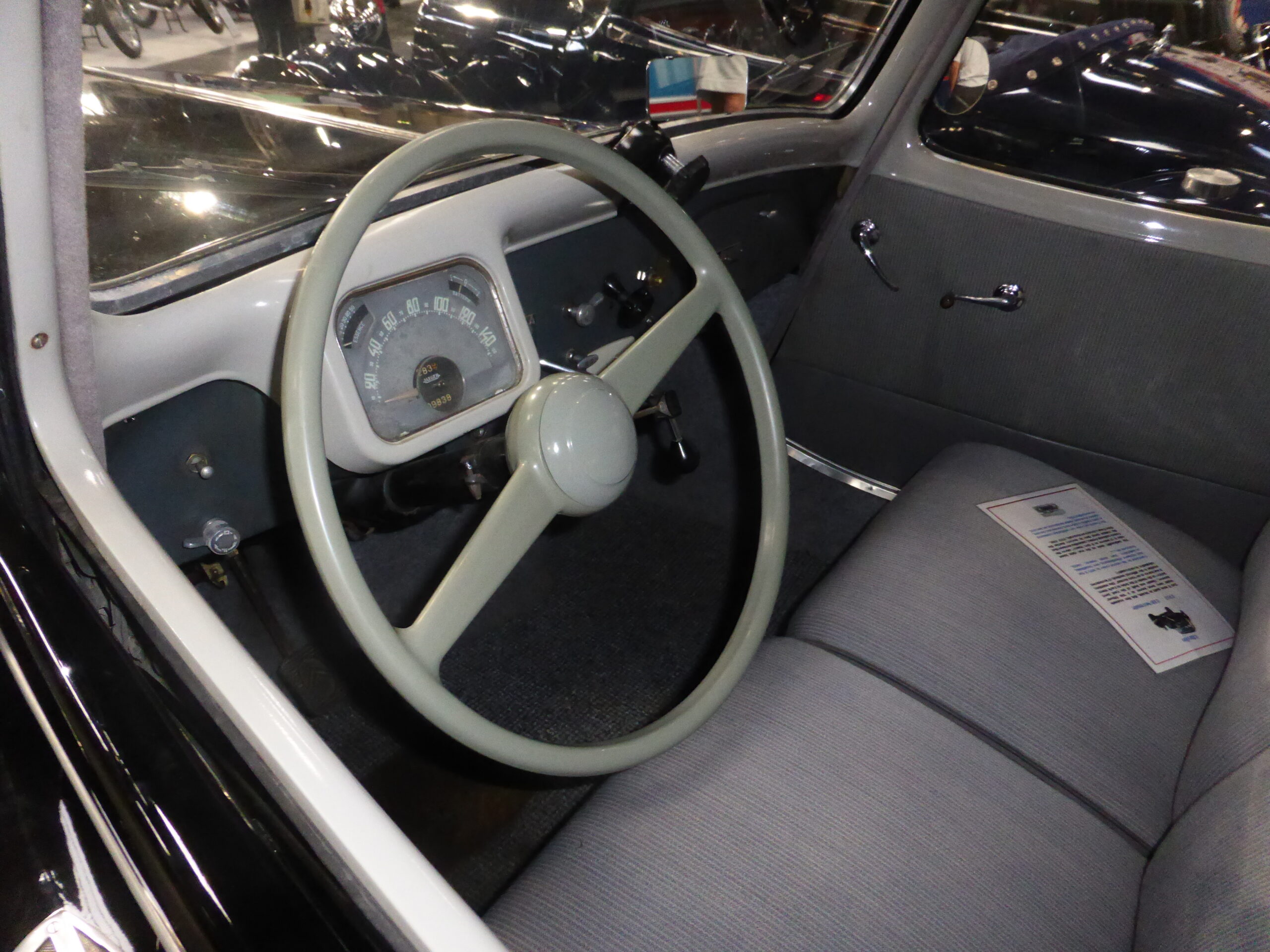
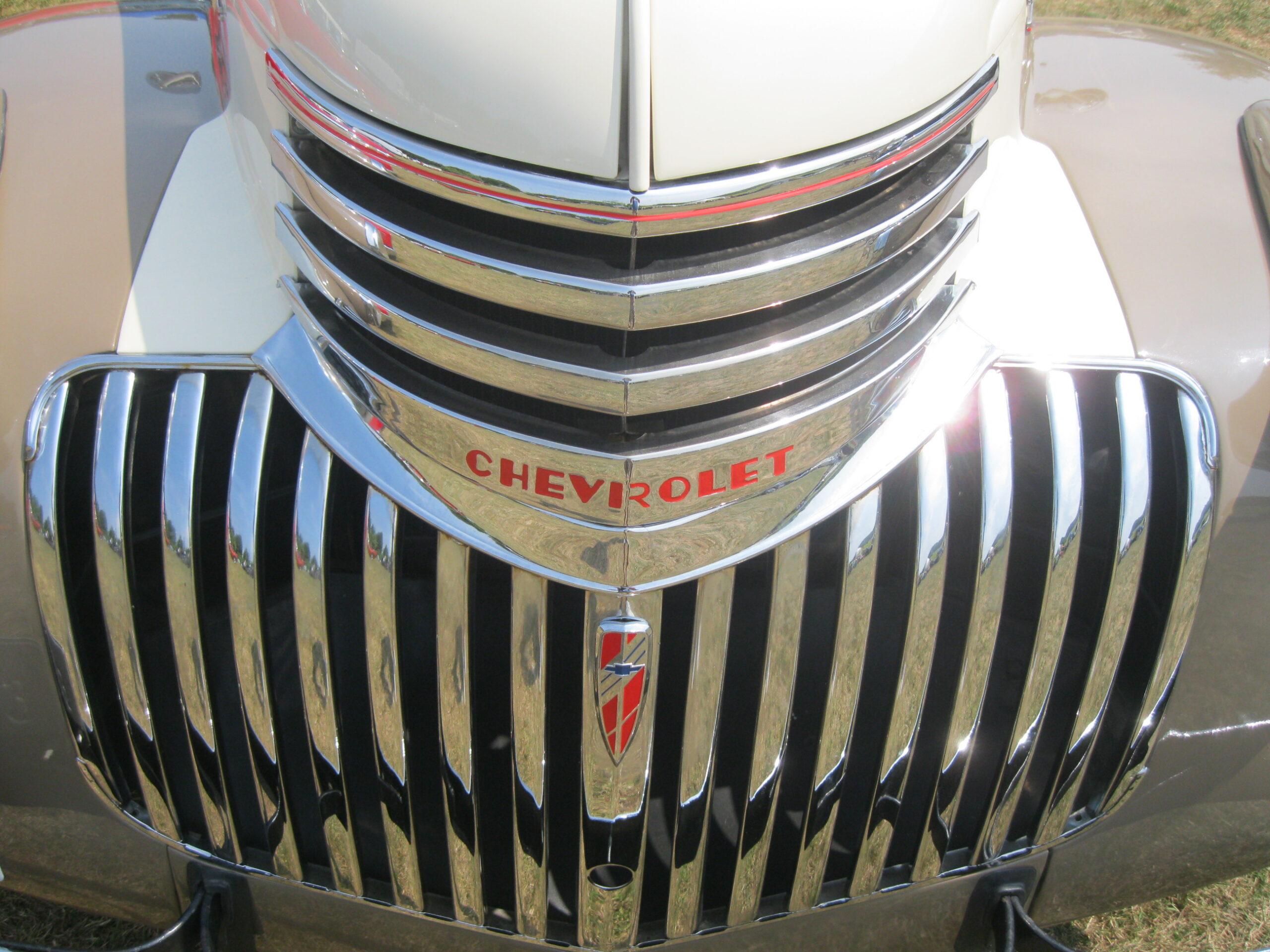
Photographs: “Close-up of a man holding his car keys…”, Shixart1985,Wikimedia Commons , CC BY 2.0 licence; “Citroën Traction Avant — French dashboard”, andreboeni,Wikimedia Commons , CC BY 2.0 licence; “1946 Chevrolet Stepside pick-up grille detail”, Andrew Bone,Wikimedia Commons.jpg), CC BY 2.0 licence.