To estimate the selling price of a classic car, one must cross-reference comparable transactions, genuinely competing advertisements, a specialised valuation guide, and the precise condition of the vehicle. A valuation guide alone is insufficient: the version, authenticity, history, quality of restoration, necessary repairs, and sales channel can significantly affect the value. The useful result is therefore not a magic number, but a reasoned, dated range adapted to the French market.
This method allows for distinguishing three often confused concepts: the market value, the listed price and the net amount the seller will receive.
Valuation guide, estimate and selling price: three different figures
A valuation guide is a benchmark constructed from market observations. It indicates a general level for a model and version but does not automatically describe your car. An estimate then applies this market to a specific example. Finally, the selling price is what a buyer actually agrees to pay at a given date.
| Concept | What it measures | Main limitation |
|---|---|---|
| Specialised valuation guide | Indicative level for a model or version | Does not take into account all the details of the specific vehicle |
| Listing price | Seller’s asking price | Does not prove that a transaction has taken place |
| Hammer price | Last accepted bid | May be presented excluding or including fees |
| Expert valuation | Reasoned opinion on an identified vehicle | Must be dated and its purpose specified |
| Net seller price | Amount remaining after fees and expected charges | Depends on the channel and the sales contract |
The French Federation of Automotive Expertise indicates that the expert responsible for evaluating a classic car notably studies specialised price guides, advertisements and sales results, then compares these with the actual condition of the vehicle. This cross-referencing approach forms the most solid basis.
Step 1 : precisely identify the car
A comparison is only relevant if the cars are truly comparable. Begin by compiling a complete identity sheet:
- make, model, generation and body style;
- model year and date of first registration;
- engine, gearbox, left- or right-hand drive;
- version, limited edition and market specification;
- chassis number and, where relevant, engine and gearbox numbers;
- paint colour, upholstery, original options and accessories;
- displayed mileage and supporting documentation;
- administrative status and country of registration.
A similar name can conceal a considerable difference. A version with a more sought-after engine, a first series or a rare configuration should not be compared without adjustment to the most common version. Conversely, rarity only creates value if there is demand.
Step 2 : search for truly comparable transactions
Completed sales are more informative than advertisements, provided you understand their scope. Look for recent results concerning the same version, in a similar condition and within a coherent geographical market. For a model that is rarely traded, extend the period, then cautiously adjust for differences.
For each result, note:
- the date and location of the sale;
- the mileage and configuration;
- the declared condition and documented work;
- the presence or absence of a complete history;
- the hammer price, buyer’s fees and currency;
- the status: sold, unsold or withdrawn.
The Council of Auction Houses reminds us that the hammer price corresponds to the final bid, while the buyer’s fees are added on top. Some results are published excluding fees, others including fees. Mixing these two bases can distort comparisons by several tens of thousands of euros on a significant automobile.
An unsold lot also provides information, but not a definite value: it only indicates that the reserve price or the seller’s expectations did not meet demand on that day.
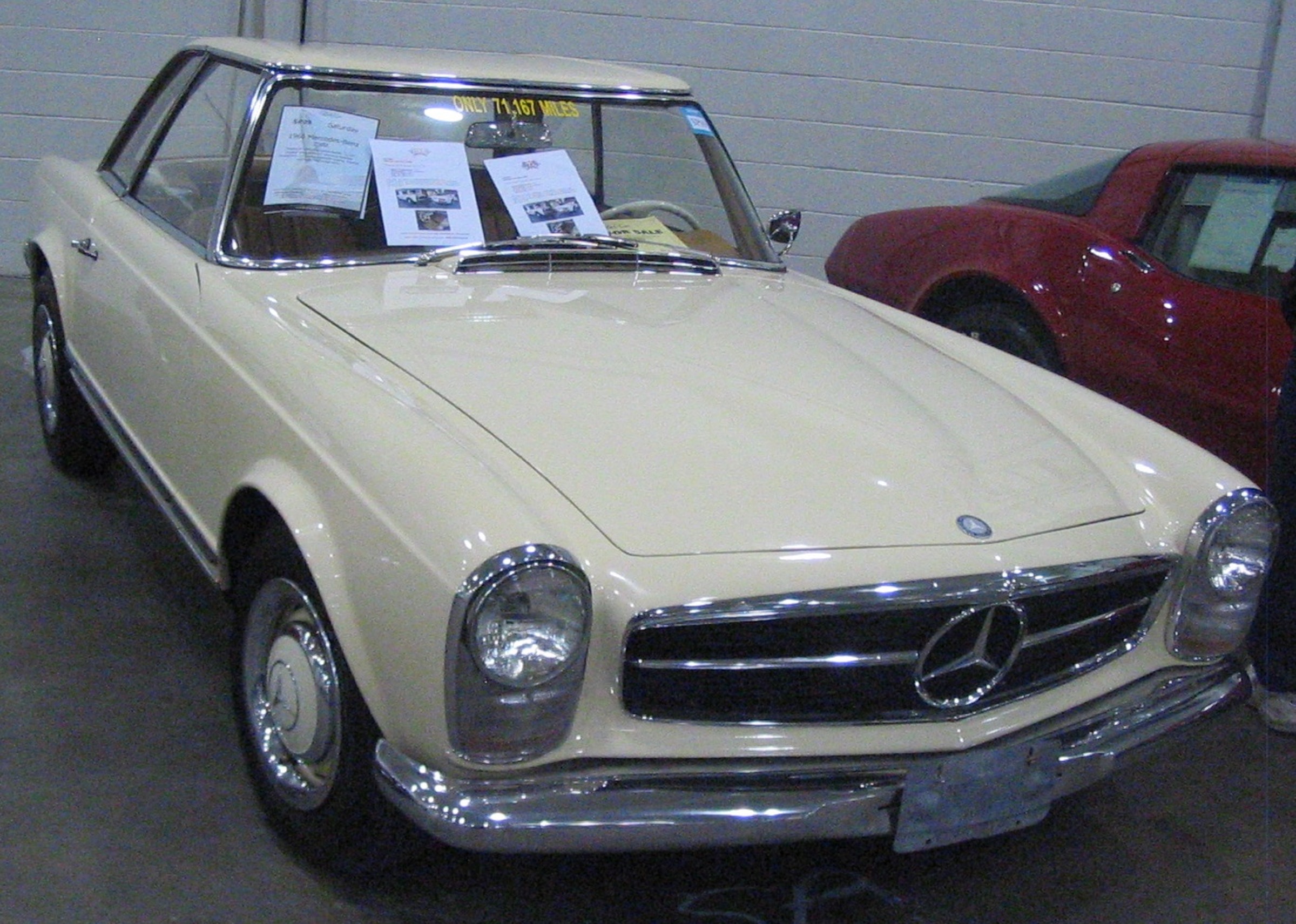
Mercedes-Benz 230 SL presented at the Toronto Classic Car Auction. Photo: Bull-Doser, Wikimedia Commons, public domain. Image resized and metadata removed.
Step 3: analyse listings without confusing them with sales
Listings show the available supply and direct competition. They help position a car, but the asking price is not proof of the price achieved. A listing can remain online for a long time, be duplicated, or disappear without a sale.
Build a table of five to ten comparable listings and note their age. Exclude examples whose version, country, condition or history are too different. If a car reappears several months at the same price, that price may describe the seller’s expectation more than the market.
Also compare the quality of presentation. A complete photographic dossier, legible invoices and a transparent description often help justify a better price than a vague listing. To prepare these elements, consult our guide on the historical dossier of a classic car.
Step 4: objectively note condition and authenticity
Two cars of the same model can justify very different values. The evaluation must separate appearance, structure, mechanics, authenticity and documentation.
| Item | Points to check | Possible effect on value |
|---|---|---|
| Bodywork and structure | Corrosion, impacts, alignments, repairs | Strong depreciation if the structure is damaged or poorly repaired |
| Paint and presentation | Quality, correct shade, defects, ageing | A recent paint job does not compensate for poor preparation |
| Mechanics | Starting, compression, leaks, cooling, transmission | Imminent work must be estimated |
| Authenticity | Numbers, specifications, period parts | Possible premium if authenticity is proven |
| Interior | Materials, instrumentation, accessories | Specific elements that are difficult to find count more |
| File | Invoices, owners, restoration, appraisal | A continuous history reduces uncertainty |
An expensive restoration does not automatically add its cost to the value. It can enhance the car if well executed, compliant and documented; it can also penalise it if it erases original elements or conceals defects.

Engine bay during a mechanical check. Photo: Shixart1985, Wikimedia Commons, licence CC BY 2.0. Image cropped, resized and metadata removed.
Step 5: quantify the work instead of applying an arbitrary discount
Have quotes prepared for major items: corrosion, engine, gearbox, braking, upholstery, paint, tyres or compliance restoration. Add a margin for unknowns when dismantling has not been carried out.
However, it would be simplistic to mechanically subtract all the work from the price of a perfect example. A restored car also carries a risk regarding the quality of the interventions. Conversely, a complete project may interest some buyers, but its market is narrower. Use the quotes as a basis for discussion, then compare the result to projects actually sold.
Step 6: call on an expert when the stakes justify it
An independent appraisal becomes particularly useful for a rare car, heavily restored, accident-damaged, lacking a clear history or intended for inheritance, donation, agreed value insurance or a significant sale.
BCA Expertise presents its offer dedicated to classic vehicles as an inspection covering notably identification, compliance, traceability and condition. The exact scope depends on the commissioned task: ask in writing if the report includes a test, measurements, documentary research and a market value.
Check professional identity, liability insurance, model experience and absence of conflict of interest. A report must identify the vehicle, describe the method, date market references and explain reservations. For a purchase, our article on pre-purchase appraisal of a classic car details the checks to request.
How to move from market value to the listed price?
Based on comparables and condition, consider three levels:
- low value: scenario of quick sale or significant repairs;
- central value: a defendable level for an example consistent with the documentation;
- high value: reserved for a superior, rare and perfectly documented vehicle.
The listed price may allow for reasonable negotiation margin, but an excessive gap wastes time and undermines the credibility of the advertisement. Reassess the strategy if qualified enquiries remain absent despite a complete presentation.
To compare your analysis with the current market, you can request a free valuation of your car. The commercial valuation should remain distinct from a contradictory, judicial or insurance appraisal.
Calculate the net seller price according to the chosen channel
The same car can display an identical public price while producing a different net seller price.
| Channel | Items to deduct or anticipate |
|---|---|
| Private sale | Preparation, advertisements, inspection, payment security and possible negotiation |
| Mandate or consignment sale | Commission, preparation, storage, insurance and terms of the mandate |
| Auction sale | Seller fees, transport, photography, storage, reserve price and possible unsold items |
| Trade-in by a professional | Margin, warranty, refurbishment and stock risk borne by the professional |
Before choosing, request a written breakdown. The Sales Council specifies that seller fees are deducted from the hammer price according to the mandate, while buyer fees are added to the hammer price. The reserve price must also be understood as gross or net according to what the contract provides.
If you wish to delegate the sale, compare the Proposed solutions for selling your vehicle and check precisely the included service, the duration of the mandate, and the expected net seller amount.
Mistakes that lead to a poor valuation
- taking the highest valuation without verifying the version or condition;
- confusing asking price, hammer price, and price including fees;
- comparing markets or currencies without considering the date;
- adding the full cost of a restoration to the vehicle’s price;
- overvaluing a low production run without assessing demand;
- ignoring fees, work required, and potential taxation;
- using an outdated appraisal in a market that has changed;
- concealing a known defect, risking weakening the sale and the file.
Frequently asked questions
Is a valuation alone sufficient to sell a classic car?
No. The valuation serves as a reference point. It must be compared with recent transactions, comparable listings, and the actual condition of the car.
Is the price in an advertisement proof of value?
No. It reflects the seller’s expectation. Only a completed transaction provides a market signal, to be interpreted with its fees, date, and the vehicle’s condition.
Does a restoration always increase the value?
No. Its quality, conformity, and documentation matter more than its cost. Some very original cars may be more sought after than a restored example done without method.
When should the car be appraised?
When the value is significant, the condition or authenticity is difficult to assess, or a report is needed for insurance, inheritance, donation, or a dispute.
Should the price be listed above the estimate?
A measured negotiation margin can be planned. A price far above coherent references mainly risks lengthening the sale period.
How often should the valuation be updated?
Before any sale listing and after several months without a transaction. For a car insured at an agreed value or in a volatile market, follow the frequency recommended by the expert and insurer.
Sources
- French Federation of Automotive Expertise — classic and prestige vehicle datasheet : market study method, vehicle condition and report usage.
- BCA Expertise — Classic Expert : identification, compliance, traceability and expertise missions.
- Council of Auction Houses — buying at auction : adjudication, buyer’s fees, reserve and invoice.
- Council of Auction Houses — glossary 2024 : estimate range, mandate and distinction between hammer price and fees.
- L’Argus — used vehicle price guide : role of a price guide as a negotiation basis, to be supplemented for classic vehicles.
Information and links verified on 8 October 2026. Market values are volatile: revision recommended every six months.
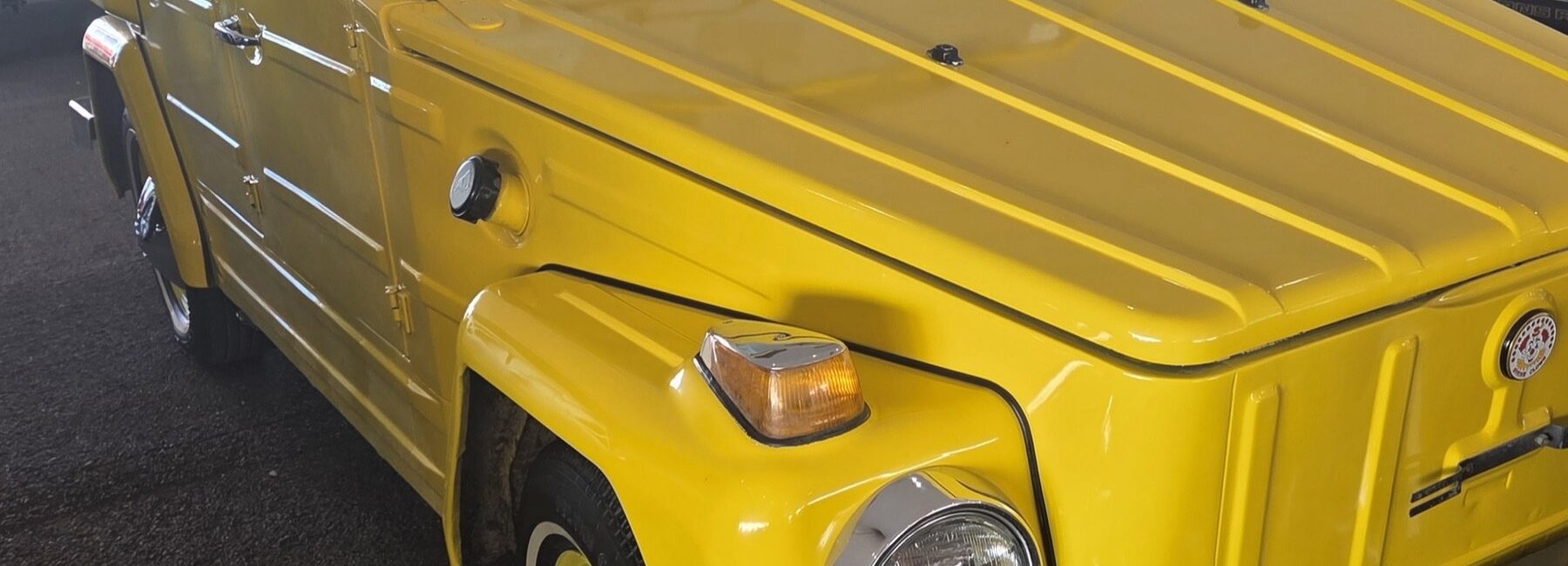
Credit for featured image: Volkswagen Type 181 presented at a Barrett-Jackson sale. Photo by Highpointer, Wikimedia Commons, CC license 0. Image cropped, resized and metadata removed.