The Art of Tuning: A Philosophy All Its Own
Before exploring the most illustrious names, it is essential to understand what a tuner is, especially in an era when customisation was not just a simple options catalogue. Period tuners did not merely enhance aesthetics; they tackled the very heart of the vehicles. Engines, suspensions, brakes, aerodynamics… nothing was left to chance. Their goal? To extract the quintessence of performance, transforming a “good” car into an “exceptional” one. It was a blend of precise engineering, mechanical intuition, and an unwavering passion for speed and precision. Often, these tuners were visionaries, former drivers or engineers frustrated by the compromises imposed by mass production. They saw potential where others saw only constraints, and did not hesitate to invest hours of hard work to realise their vision. It is this determination that forged their legend and gave birth to some of the most desirable cars ever built.Carlo Abarth: The Scorpion Stings Fiat
It is impossible to speak of legendary tuners without mentioning Carlo Abarth. Born in Austria, this brilliant engineer founded his own company in Turin in 1949, with the scorpion (his astrological sign) as its emblem. Abarth’s philosophy was simple yet radical: to make Fiat cars faster, more agile, and louder. He began with performance exhaust systems but did not stop there.From Fiat 500 to Racing Beasts
Abarth transformed the humble Fiat 500 into a formidable rally machine, the 595 or the 695 Abarth, increasing their displacement, modifying their carburettors, camshafts, and exhausts. These little rockets were capable of astonishing performance for their size. He did not merely improve; he recreated. The Fiat 850 TC Corsa, the 1000 TC, and the fantastic Abarth 2000 Sport Tipo SE010 coupes with their twin-cylinder boxer engines were clear examples of his genius. Every modification was designed to optimise the power-to-weight ratio and handling. Abarth’s success lay in his ability to extract sporting performance from mass-market cars, making them accessible to enthusiasts who could not afford exotic sports cars. Abarth exhausts became legendary for their distinctive sound, resonating with the soul of drivers.Carrol Shelby: The American Who Challenged Ferrari
On the American side, one name has left a scorching mark on history: Carrol Shelby. This former Texan racing driver, forced to stop competing for health reasons, channelled his passion into creating extreme sports cars. His dream? To build a car capable of beating the best Ferraris on the world’s circuits.The Birth of the Cobra and the Le Mans Saga
The legend begins with the Cobra. Shelby had the idea to marry a lightweight British AC Ace chassis with a powerful Ford V8 engine. The result? A brutal machine, incredibly fast and with an unforgettable sound. The Cobra 289 and then the monstrous 427 became icons of performance and style. But the pinnacle of his career was undoubtedly his collaboration with Ford on the GT40 programme. Facing Ferrari, Ford called on Shelby American to refine and optimise the project. Under his leadership, the GT40 not only challenged Ferrari but humiliated it at the 24 Hours of Le Mans, with a series of historic victories from 1966 to 1969. Shelby proved that American ingenuity, coupled with fierce determination, could conquer the world of motor racing.The Shelby Mustangs: Power for Everyday Use
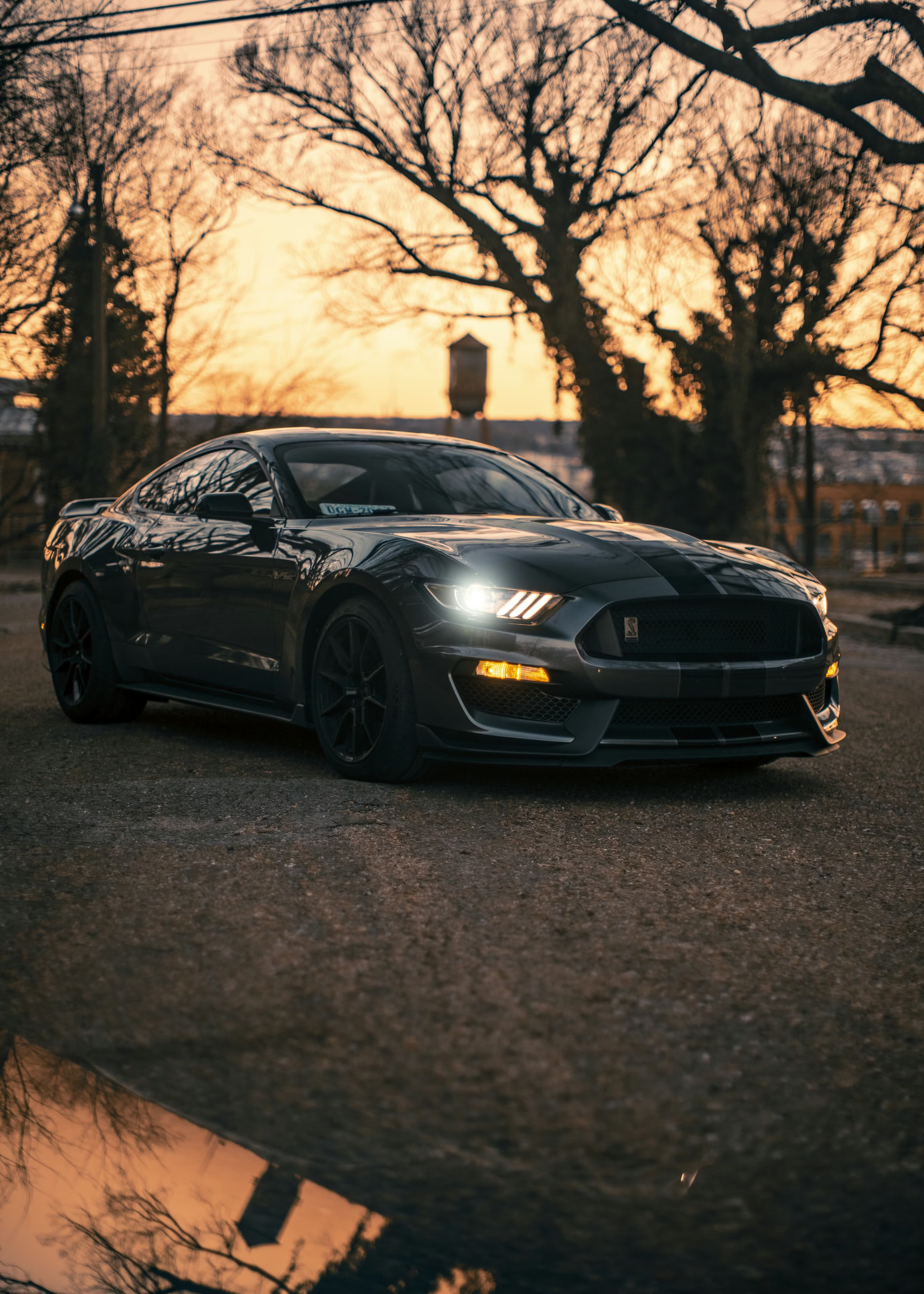
Shelby also applied his magic formula to the Ford Mustang, creating the legendary Shelby GT350 and GT500. These cars were not mere modified versions; Shelby transformed them into genuine race cars homologated for the road, with reworked suspensions, improved brakes, and overpowered engines. They embodied the American dream of the ultimate muscle car.Alpina and Ruf: German Excellence
Germany has also seen the emergence of renowned tuners, each bringing their own touch of perfectionism and engineering expertise.Alpina: The BMW Symbiosis
Burkard Bovensiepen, founder of Alpina in 1965, built his reputation by transforming already exceptional BMWs into even more refined and high-performing machines. Unlike other tuners, Alpina is so closely linked to BMW that it is almost considered a manufacturer in its own right, with its own serial numbers registered with the Kraftfahrt-Bundesamt (the German automotive authority). Alpinas stand out for a more balanced approach than mere brute power. Engines are reworked for torque, smoothness and reliability; suspensions are refined for optimal comfort and handling; and the interior is enhanced with high-quality materials and finishes. Models such as the BMW Alpina C1 2.3 or later the B7 Turbo proved that it was possible to combine luxury, comfort and top-tier performance. Alpina’s multi-spoke wheels have become a signature instantly recognisable to all.Ruf: The Art of Enhancing Porsche
Alois Ruf Jr. took over the family business and propelled it into legend by specialising in Porsche tuning. Ruf is not a mere “tuner”; they rebuild cars from bare chassis, transforming 911 into machines of unmatched brutality and precision. Ruf’s philosophy is to preserve the essence of Porsche while pushing performance and driving dynamics far beyond factory specifications. The Ruf CTR “Yellowbird” of 1987 is perhaps the most famous example. Based on a Porsche 911 Carrera 3.2, it was significantly lightened, fitted with a new 3.4 litre twin-turbo flat-six engine producing 469 horsepower, and featured reworked aerodynamics. The Yellowbird shocked the world by becoming the fastest production car globally, exceeding 340 km/h, with a “Fahrschule” video on the Nürburgring becoming iconic. Ruf demonstrated that it was possible to reimagine a supercar to make it even more extreme.Other Magicians of the Past: Brabus, Irmscher and Koenig Specials
Many other talents marked their era. Brabus, founded in 1977, became synonymous with extravagant and ultra-high-performance Mercedes-Benz vehicles, pushing luxury and power to extreme limits. Irmscher made its mark with Opel, offering sportier and more aggressive versions of the brand’s Blitz models. Koenig Specials, in the 80s, was famous for its exuberant body kits and insane power increases, transforming Ferraris and other supercars into machines worthy of a science fiction film, often equipped with turbochargers delivering power figures absolutely crazy for the time. Each of these tuners contributed their part, demonstrating that engineering and passion could transform simple automobiles into rolling works of art, capable of extraordinary performance and evoking intense emotions.Conclusion: The Enduring Legacy of Tuners
Period tuners, from the ingenious Abarth to the charismatic Shelby, through the precision of Alpina and Ruf, have left an invaluable legacy. They proved that there was always room for improvement, even on the best-designed vehicles. Their creations are not mere modifications; they are embodiments of passion, boldness and human ingenuity. Today, these tuned cars are highly sought-after collector’s items, witnesses to an era when the automobile was still a playground for visionaries. They remind us that performance is not just about raw numbers, but also character, soul and the hand of a master. At Plethore Cars, we salute these magicians of performance who wrote some of the finest chapters in automotive history. Their spirit continues to inspire, proving that the quest for perfection is an endless adventure.For the contemporary continuation of this tradition, see today’s Mercedes-Benz tuners.