In the world of classic cars, some are the fruit of a prestigious lineage, others of revolutionary innovation. And then there is the Clénet Roadster: an icon with an ostentatious style and a singular history, born from the audacity of a man and a dream Americanized with French chic. This car, often spotted in the arms of the biggest Hollywood stars, has managed to impose its neo-classical design and unapologetic luxury on red carpets and screens around the world. Dive into the fascinating history of the Clénet Roadster with us, this automotive gem that has won the hearts of the jet-set and written its own legend.
An American Dream with French Roots: The Origin of the Clénet
The history of the Clénet begins in 1974 with a man, Alain Clénet. Born in France, Alain has design and automotive engineering in his blood. After working for the largest manufacturers, particularly Ford, he decides to take the leap and create his own car, in contrast to the trends of the time. While the 70 years saw angular lines and futuristic designs flourish, Clénet, on the other hand, was inspired by the luxurious European automobiles of the 1930 era, the Bugatti, Duesenberg, and Packard, to create a car with a resolutely retro style but equipped with the reliability and performance of modern technology.
His idea was simple: to offer a car that embodies the luxury, exclusivity and nostalgia of a bygone era, but with contemporary components ensuring a pleasant and hassle-free driving experience. He then founded Clénet Coachworks in Santa Barbara, California, a place conducive to extravagant dreams and bold creations. The concept of “neo-classic” had been born.
The Extravagant Design of the Clénet Roadster Key: Between the Past and Modernity
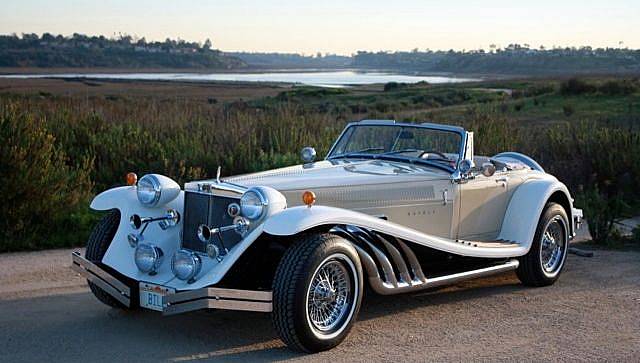
From the very first glance, the Clénet Roadster leaves no one indifferent. Its aesthetic is a bold marriage between vintage stylistic elements and contemporary execution. Every detail screams luxury and opulence.
Inspired Lines and Unconventional Finishes
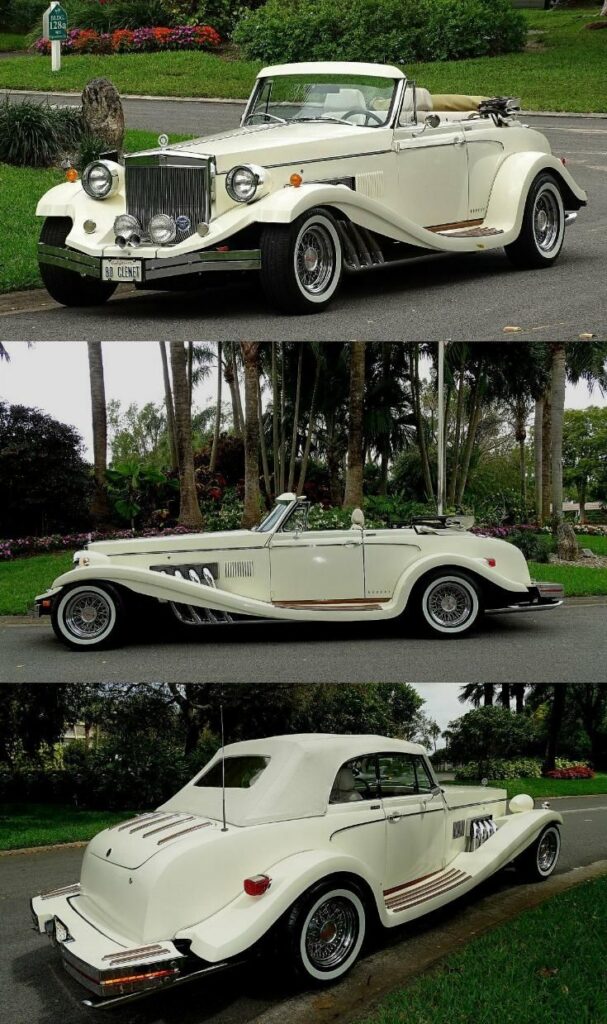
The Clénet Roadster stands out with its generous proportions and its long, endless hood, evoking the limousines of the 30 era. The massive external headlights, often chrome-finished and positioned on the fenders, are a strong visual signature. The integrated step guards, separate fenders, and imposing V-shaped grilles, often adorned with the brand’s emblem, are all elements that remind of the masterpieces of the Thirty Glorious Years. The generous use of chrome, whether on bumpers, radial wheels, or window surrounds, contributes to the overall brilliance of the car.
An Interior Deserving of a Rolling Lounge
The interior of the Clénet is an ode to comfort and refinement. The Connolly leather, precious wood veneers (often in walnut veneer), thick wool carpets, and dashboard instruments with chrome trim transform the interior into a true rolling salon. Each Clénet was largely hand-assembled, allowing for a high level of customization and exceptional finish quality, which justified its high price.
Under the Hood: American Reliability at the Service of Style
If the Clénet is adorned with old European designs, its heart is decidedly American. To ensure reliability and ease of maintenance, Alain Clénet made the sensible choice to use mechanical bases derived from mass production.
Robust Motorizations
The Clénet Roadster were generally built on Ford V8 chassis and engines. The first models used a V8 Ford of 351 cubic inches (approximately 5,8 liters). Subsequently, other engines, such as the 302 listed above (5,0 liters) or the 460 listed above (7,5 liters), were used, depending on the series and availability. These engines, particularly reliable and powerful, provided the Clénet with respectable performance, capable of propelling its imposing mass with certain ease. The transmission was generally an automatic gearbox, prioritizing driving comfort.
A Limited and Exclusive Production
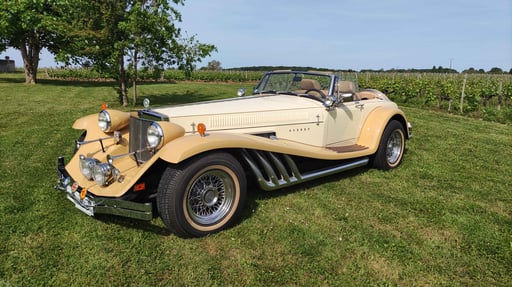
The production of the Clénet was voluntarily limited, reinforcing its exclusive nature. The first series, the “Series I,” was produced in only 250 units between 1977 and 1979. Followed by the “Series II” (Cabriolet), the “Series III” (Ashanti), and the “Series IV” (Sports Roadster). Each series brought its own set of evolutions and refinements, but retained this unmistakable aesthetic signature. The manufacturing process was artisanal, with each car requiring hundreds of hours of work.
Hollywood under the Charm: La Clénet, Star of the Big Screen
The ostentatious look and the embraced luxury of the Clénet Roadster have made it a coveted symbol of status favored by the California elite, and particularly by Hollywood stars.
Prestigious Owners
Frank Sinatra, King Hussein of Jordan, Rod Stewart, Ken Norton, Eddie Murphy… the list of famous owners of Clénet is long and prestigious. Owning a Clénet was a way to show one’s success, their taste for exclusivity, and their belonging to a very exclusive circle. The car was a fashion accessory, a statement, more than just a means of transportation.
A Noteworthy Presence in Cinema and Television
It is not surprising to find the Clénet Roadster in many movies and television series from the 80 era. Its unique look made it instantly recognizable and perfect for embodying luxury and glamour on screen. It appeared in productions such as “Dallas,” “Dynasty,” and “Fall Guy,” becoming itself a cultural icon, inseparable from the Hollywood imagery of the time.
The Legacy of the Clénet Roadster Key: An Indestructible Icon?
The production of the Clénet Coachworks ceased in 1987, after a decade of existence and approximately 500 units produced in all series combined. Despite its short lifespan, the impact of the Clénet was considerable. It demonstrated that it was possible to create a high-luxury car based on a retro style, and inspired other manufacturers to explore the niche of “neo-classics.”
Today, the Clénet Roadster is a sought-after collectible vehicle, particularly favored by enthusiasts of unique and extravagant automobiles. Its oversized design, Hollywood-like history, and high-quality craftsmanship make it a coveted item for those who appreciate uncompromising luxury and bold style. It remains a fascinating testament to a time when automobiles were also a form of art and a powerful social symbol. This era of automotive spectacle already had its emblem twenty years earlier:the Chevrolet Bel Air 1957.
Conclusion: The Clénet, More Than a Car, A Piece of History
The Clénet Roadster is much more than just a car. It is the fruit of a vision, the embodiment of an unapologetic luxury, and an inseparable symbol of the golden age of Hollywood. Its extravagant design, impeccable finishes, and captivating history secure its place as a top choice in the pantheon of classic automobiles. It reminds us that beyond performance and pure engineering, automobiles can also be a rolling work of art, a dream turned into reality, capable of transcending eras and continuing to turn heads. The Clénet Roadster remains, and will always remain, the quintessential neo-classical icon, a machine that transports us with elegance to a golden age of automotive glamour.
“`