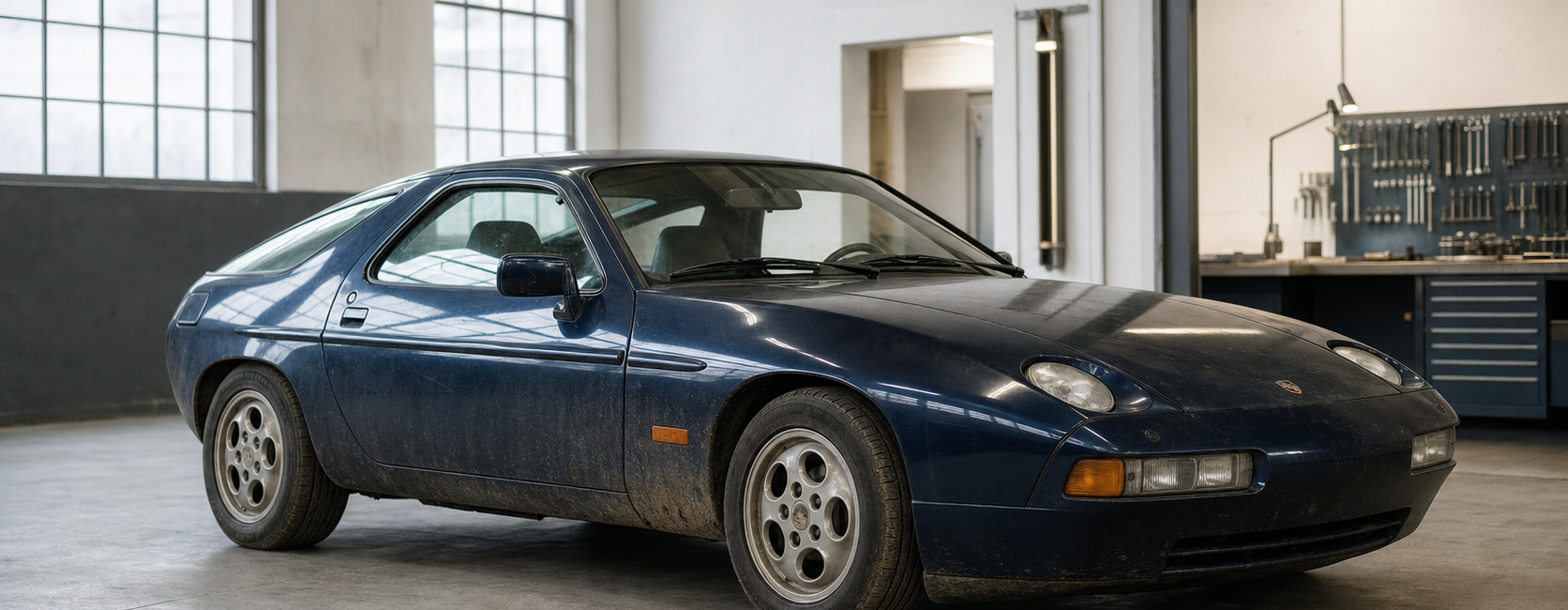
An incomplete Porsche 928 may seem appealing when its bodywork is sound and its interior presents well. However, the real risk in a restoration project often lies in missing references, old adaptations and parts specific to the version. Before negotiating, the buyer must therefore compile a list of dependencies, not just a list of defects.
Short answer: do not buy a 928 to restore before precisely identifying its version, comparing its equipment to the corresponding catalogue and checking the availability of the elements that condition the reassembly. An engine that needs work can be planned for. A car whose rare parts have disappeared can immobilise the project and blur its authenticity.
Why the Porsche 928 requires a documented restoration
The 928 belongs to a unique branch of Porsche history: a large front-engined grand tourer, transaxle architecture, very integrated styling and an interior designed as a whole. This coherence makes substitutions visible. An approximate upholstery, a modified wiring loom, aerodynamic elements from another version or mismatched interior controls are not mere aesthetic details.
Start by comparing the vehicle with the manufacturer’s historical information and the Porsche Classic catalogue. The aim is not to seek artificial perfection, but to understand what is original, what has been replaced with a correct reference and what will need to be recreated. To position the project in the market, also observe the Porsches offered on PlethoreCars and the examples already sold.
First priority: identify the exact version
A name announced by the seller is not enough. Note the chassis number, available option codes, transmission configuration, bodywork equipment and interior particularities. Photograph labels and markings before dismantling. Any parts order must start from this technical identity.
Then check if the car has received elements from another phase. Some transformations may have been done neatly and remain reversible. Others require searching for brackets, connectors, fixings or trims not mentioned in the listing. A main part available does not solve the problem if the small interfaces necessary for assembly have disappeared.
Bodywork and glazing: securing specific shapes
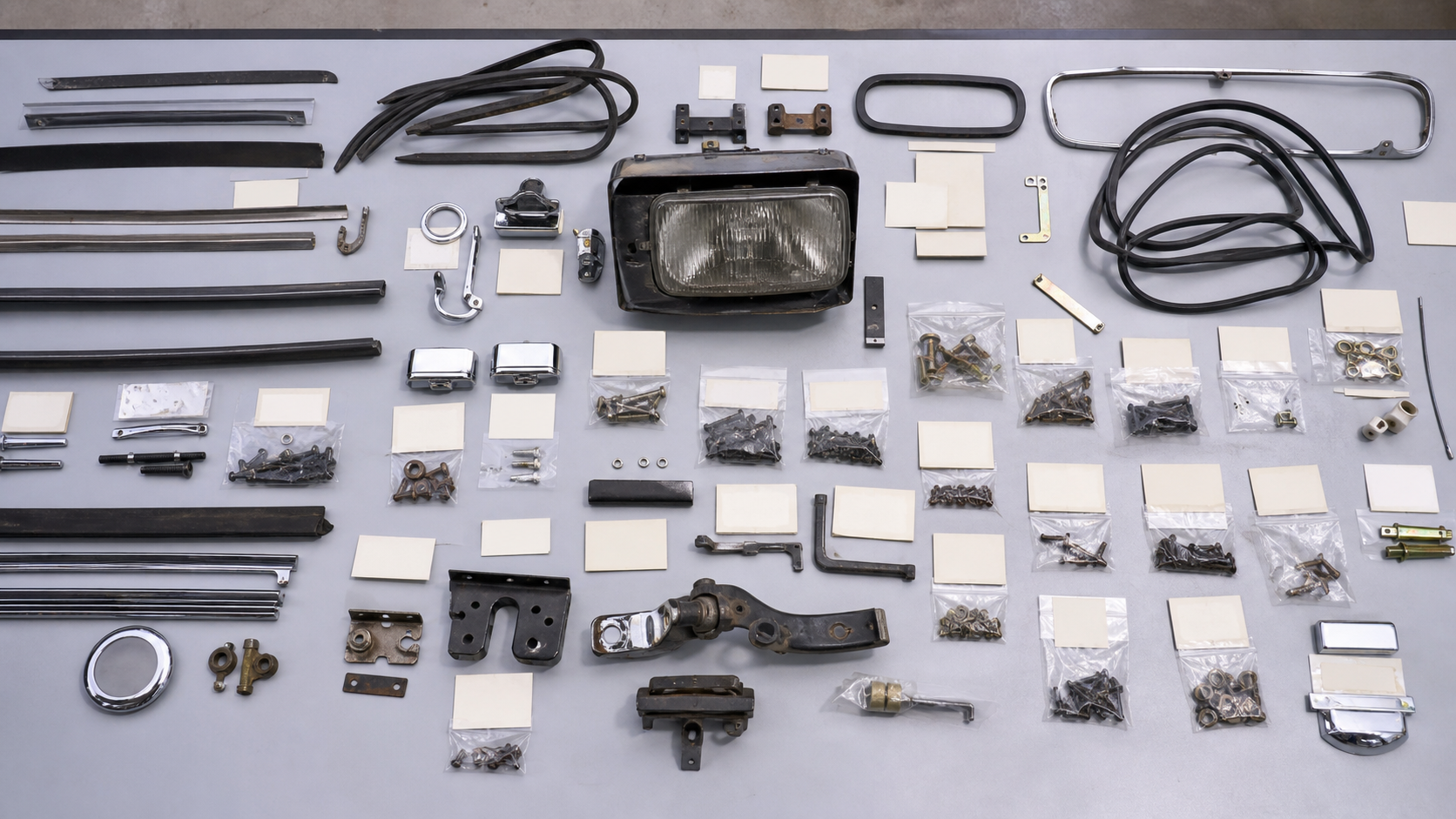
On a 928, the large painted surfaces do not tell the whole story. Inspect the headlights, surrounds, seals, tailgate elements, protections, aerodynamic parts and glazing. Ask if the dismantled elements are present, even when they appear tired. An original restorable part can serve as a model and preserve the fixing points.
Check the quality of previous repairs rather than relying on the paint’s shine. Alignments, signs of dismantling, texture differences and undocumented drillings must be compared with invoices. Our classic car inspection method helps organise this survey without confusing honest patina with concealed repair.
Interior and electrics: refuse anonymous modifications
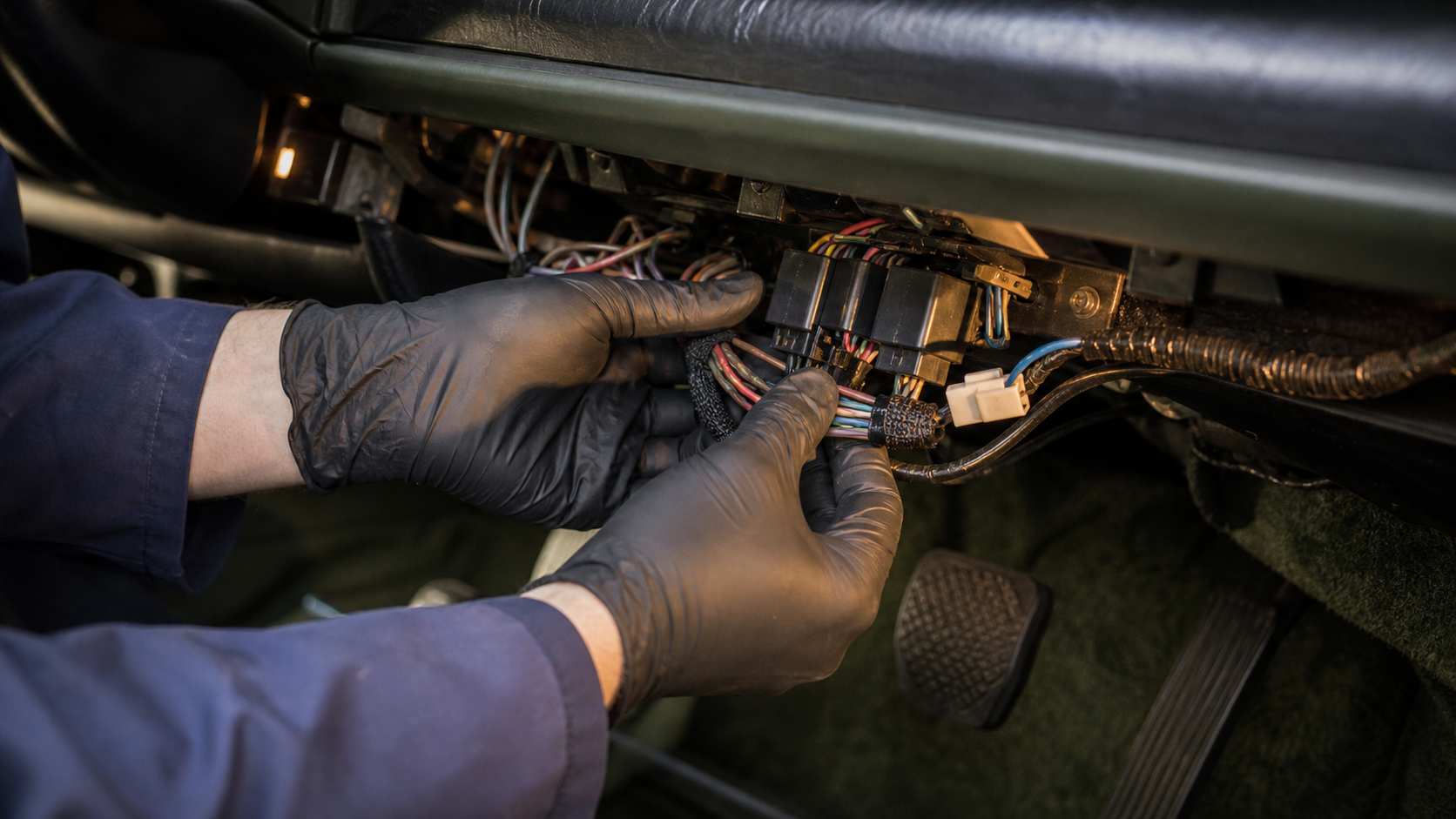
The interior combines upholstery, plastics, instrumentation, controls and wiring looms. A function working today does not prove the intervention is durable. Request diagrams, invoices and references for added equipment. Spot cut cables, derivations, unidentified relays and accessories that prevent restoring the original assembly.
Before purchase, test each control methodically and note the result. Do not let the seller summarise the electrics as “a few false contacts.” The aim is not to establish a definitive diagnosis on site, but to know if the loom remains legible. A modified network without documentation greatly increases the investigation time before any restoration.
Mechanics: distinguishing wear parts from defining parts
Consumables and maintenance operations must be separated from parts that define the version or its assembly. For the engine, transmission, cooling, brakes and running gear, request the references fitted during previous work. A detailed invoice is worth more than a general statement of a “major overhaul.”
Have a diagnosis carried out by a specialist familiar with Porsche transaxles. They should identify leaks, play, noises, abnormal temperatures and deferred work, without turning an inspection into a promise of reliability. Compare the cost and timeline of the project with thatof available classic carsalready running.
The checklist before signing
- Confirm the version and configuration from the available identifiers.
- Obtain a written inventory of all dismantled parts.
- Compare the references with the corresponding official catalogue.
- Photograph modifications to wiring, mounts and fixings.
- Request invoices, diagnostics and contact details of those involved.
- Classify parts into four groups: available, repairable, to be remanufactured, and currently unobtainable.
- Allow a margin in the schedule without inventing a budget before estimates.
If the file remains incomplete, negotiate based on the real risk or walk away. A successful restoration begins with a project that can be described. This discipline also protects the future presentation of the car when it comes time toprepare the resale of an exceptional automobile.
Porsche 928 FAQ and restoration
Should all modified Porsche 928 cars be refused?
No. A documented, technically coherent and reversible modification can be acceptable. The danger mainly comes from anonymous transformations that prevent identification of parts and connections.
Is the parts catalogue sufficient to estimate the project?
No. It helps identify references, but availability, condition of used parts, labour and refurbishment operations must be verified separately.
Is a complete but non-running car preferable?
Not automatically. Completeness reduces certain risks, but the structural condition, wiring, mechanics and quality of past repairs still need to be examined.
What is the best first expenditure?
An independent inspection and an accurate inventory. They allow you to decide if the project truly matches your means, your timeline and your authenticity requirements.
Conclusion: buy the documentation as much as the car
The right 928 to restore is not necessarily the shiniest or the cheapest. It is the one whose technical identity is clear, whose important parts are present or traceable, and whose modifications can be understood. Add to the file a simple timeline of planned work, parts already gathered, and areas still uncertain. The advice remains general: always check the documents, history, independent inspection, and current market conditions before committing.