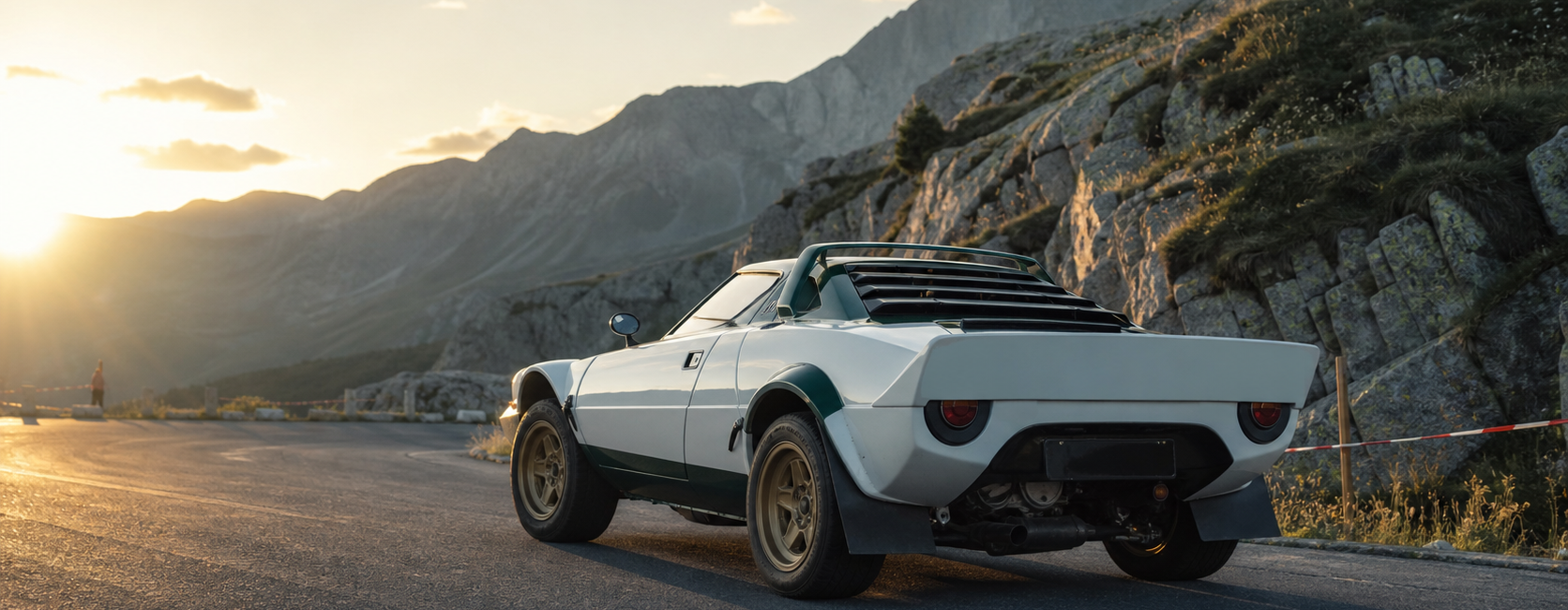
Buying a Lancia Stratos for a historic rally begins with an eligibility check, not a test drive. The right car is one whose identity, specification, modifications and documents correspond to the targeted event. An authentic Stratos, a rebuilt competition car and a very carefully crafted tribute can all be desirable, but they do not grant the same entry rights nor the same interpretation of value.
The short answer: first obtain the regulations and the organiser’s preliminary approval, then compare the car to the relevant FIA form. The FIA historic base links the Stratos HF to Group 4 and to the homologation form 640. The updated Appendix K for 2026 reminds that dating is done according to the car’s specification and imposes compliance and safety requirements. These documents frame the method; they do not remotely validate a particular example. The question of authenticity arises differently for a continuation Bentley Speed Six.
Step zero: choose the event before the car
A regularity rally, a speed competition and an invitation-only event do not pursue the same objective. Request the current regulations, the admitted periods, the list of models, the intended category and the required documents. Ask for clarification on whether an application is assessed based on the model, chassis, record, configuration or a combination of these criteria.
Do not be satisfied with the phrase “eligible for the Tour Auto” in an advertisement. Eligibility may depend on an edition, a category and the decision of a committee. Provide photographs, chassis number, engine details, technical sheet and modification history. Keep the written response, with its date and reservations.
Separating four often confused concepts
Identity refers to what the car materially is.Authenticity examines the relationship with its configuration and history.Compliance compares the current state to a technical rule.Eligibility answers the question posed by an organiser for a given event. One quality does not automatically prove the other three.
This distinction protects the buyer. An official restoration can enhance understanding of a car without guaranteeing sporting admission. A technical passport can attest compliance at a given date without establishing every provenance step. The Lancia Heritage service announces access to archives, authenticity certification and restoration programmes: request the service suited to the file, without asking it to answer on behalf of the FIA.
Building the documentary chain
Create a unique timeline: release, owners, entries, transformations, restorations, sales and inspections. For each step, note the source and its level of proof. A contemporary invoice for work is more useful than an undated account. A photograph must be linked to a place, date, event or identifiable detail.
- Title deed and registration documents consistent.
- Numbers and markings photographed without publishing them in full.
- Invoices allowing identification of parts, workshop and date.
- Old passports, inspection sheets and commitments.
- Correspondence between declared specification and observed condition.
- Explicit list of areas rebuilt, replaced or modified.
To structure the general examination, the PlethoreCars guide how to inspect a classic car provides a framework. For a competition Stratos, supplement it with a specialist in the model and historic regulations.
Read the FIA sheet as a checklist
The FIA database is not just to decorate the file. Use the sheet and its extensions to create a matrix: bodywork, engine, transmission, suspension, brakes, steering, protections and safety. For each line, note what is present, what differs, the documentary justification and the necessary action.
A period part is not automatically the correct part for the chosen specification. Conversely, a recent element may be required for safety, subject to applicable rules. Do not ask the seller for an overall conclusion; ask for evidence item by item. The article on rare parts and counterfeits helps formalise provenance checks of components.
Inspect the structure before discussing settings
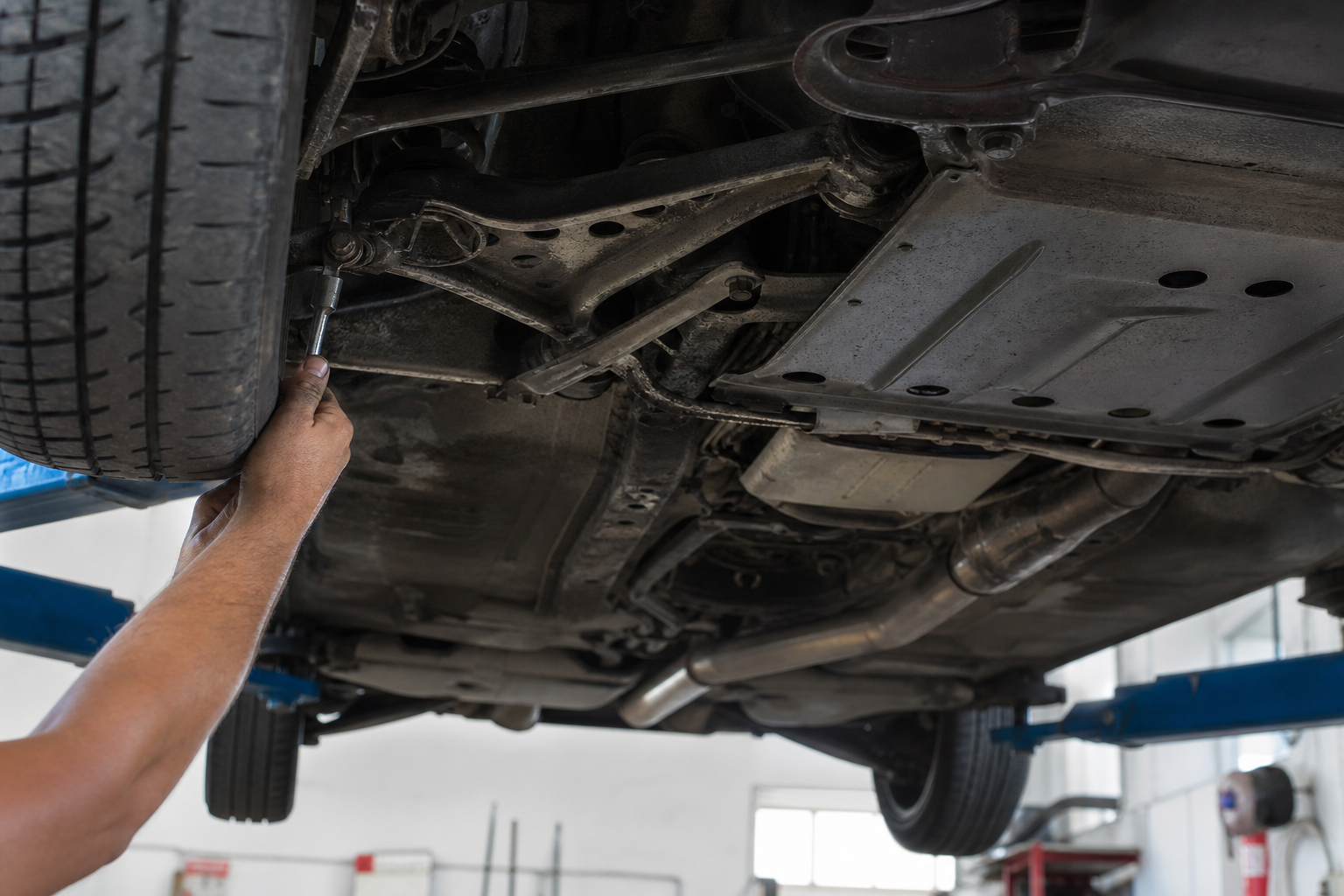
A rally car may have experienced impacts, repairs and evolutions. Have the geometry, anchor points, welds, reinforcements, corrosion traces, suspension fixings and underbody protections checked. Look for consistency between wear, invoices and narrative. A recent paint job may be excellent, but it also reduces visibility on previous work.
Request a photographic report on a lift. Areas not visible during a static visit must appear clearly. If a major repair is identified, demand the method, measurements before and after, the workshop and compatibility with the sought sporting specification.
Budget compliance without inventing a figure
There is no universal budget. Itemise separately the technical compliance restoration, safety equipment, consumables, rare parts, labour, transport, assistance and entry fees. Request dated quotes from specialists who understand the event and specification.
Add a contingency for discoveries after dismantling, but do not turn it into an arbitrary percentage. The risk depends on the quality of the file and physical access to critical areas. The PlethoreCars article on parts to secure before restoration illustrates a transferable method: identify blocking components before immobilising the car.
Original, rebuilt or tribute: deciding without ambiguity
An original car with a continuous history may be the choice of a collector attached to provenance. A documented reconstruction can offer a coherent sporting project if its status is perfectly described. A tribute can provide access to the visual and dynamic experience, but its admission will depend on the regulations. The danger lies less in the category than in an ambiguous presentation.
Include in the contract the exact designation understood by the parties, the documents provided and the statements regarding the structural elements. If the car comes from abroad, add the chain of ownership, formalities and compatibility of use in France. Our checklist for importing a classic sports car recalls the order of checks.
The checklist before signing
- Choose the event and obtain its current regulations.
- Have the category and the intended specification qualified.
- Obtain the FIA sheet and relevant extensions.
- Build the provenance timeline.
- Compare the car on a lift to the technical matrix.
- Submit discrepancies to a competent specialist.
- Obtain compliance quotes before negotiating.
- Clearly describe the car’s status in the contract.
- Condition the decision on unresolved reservations.
Lancia Stratos and historic rally FAQ
Is a road-going Lancia Stratos automatically eligible for historic rallying?
No. Admission depends on the event’s regulations, the category and the car’s conformity to the chosen specification. Request written confirmation from the organiser.
Does the Historic Technical Passport prove authenticity?
It documents technical compliance within a competition framework; it does not replace the audit of identity, manufacturer archives and provenance.
Can a replica participate?
This depends on the precise regulations of the event. Do not assume anything from an advertisement: submit the complete dossier to the organiser before purchase.
Who should inspect a Stratos intended for historic rallying?
Engage a model specialist, a historic preparation professional and, if necessary, the competent sporting authority or organiser.
Conclusion: purchasing a dossier, a specification and a usage
A Lancia Stratos intended for historic rallying must be purchased with a specific event in mind, an open technical sheet and a verifiable chronology. Reject shortcuts between prestige, authenticity and eligibility. Have the rules confirmed, the structure inspected and compliance assessed before signing. The advice remains general: always check the documents, history, inspection, current regulations and market conditions specific to the example.