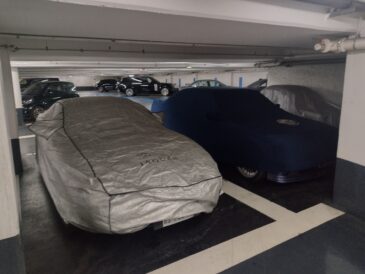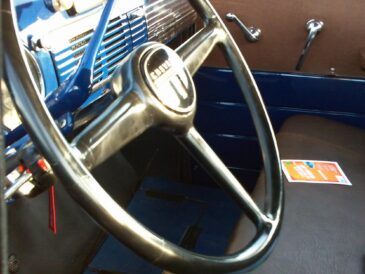
Yes, it is possible to sell a classic car without a technical inspection to a motor trade professional.However, when selling to a private individual, the seller must generally provide a technical inspection report less than six months old for any car over four years old subject to inspection. The exception notably concerns vehicles officially exempted, such as certain cars with classic registration certificates first registered before 1960.
The distinction therefore does not depend solely on the age of the car. It mainly depends on the buyer’s status, the “classic vehicle” mention on the registration certificate, and the condition of the last inspection. Here is the procedure to follow to sell without jeopardising the transaction.
Sale without technical inspection: the answer according to your situation
| Situation | Sale possible? | Documents to prepare |
|---|---|---|
| Direct sale to a garage, dealership or motor trader | Yes, even without a valid technical inspection | Certificate of transfer, registration certificate, administrative status certificate and proof of the buyer’s professional identity |
| Sale to a private individual of a car over four years old subject to inspection | No, not without a valid inspection report | Technical inspection less than six months old, or less than two months if a re-inspection is required |
| Car with classic registration certificate first registered before 1960 | Yes, as it is exempt from technical inspection | Other transfer documents remain mandatory |
| Car with classic registration certificate first registered from 1960 | Not without inspection when selling to a private individual | Technical inspection less than six months old for the transfer |
| Car over 30 years old without classic mention | No automatic exemption | Standard regime: periodic inspection every two years and recent proof for sale to a private individual |
| Non-running car | Only to a motor trade professional | Removal on a flatbed, transfer documents and the buyer’s SIRET number |
This table summarises the rules applicable to passenger cars registered in France. An incomplete vehicle, an import, one without registration documents, or one belonging to an estate may require additional proof.
Why is sale to a professional allowed without a technical inspection?
Article 3 of the decree dated 18 June 1991 requires the seller to provide a recent technical inspection report when transferring a car over four years old to anon-professional buyer. Therefore, the rule does not apply to trade-ins or direct purchases by automotive professionals.
Service-Public.fr explicitly confirms that sale without inspection is permitted to a garage or dealership. The professional can purchase the vehicle, arrange its transport, carry out repairs, and complete the formalities related to their business. If they subsequently resell the vehicle to a private individual, they must comply with the obligations applicable to that new sale.
This exception is useful for a stationary car, a barn find, a restoration project, or a vehicle whose inspection has expired. However, it does not oblige any professional to take the car back. The absence of inspection, the necessary repairs, and the risk of refurbishment will generally be reflected in their offer.
Who exactly is a “professional of the automobile”?
A buyer who presents themselves as a mechanic or dealer is not sufficient. To secure the transfer, verify that they are purchasing within the framework of a company whose activity covers the trade, repair, or acquisition of vehicles.
Before handing over the car, request:
- the exact company name;
- its SIRET number and address;
- the identity of the person signing on behalf of the company;
- a purchase order, invoice or contract mentioning the vehicle, its mileage, condition and price;
- written proof that the company is indeed the buyer, and not merely an intermediary.
Check the existence of the company free of charge on the Business Directory. A transaction between two private individuals does not become professional simply because the buyer promises to “do the paperwork later” or uses the name of a garage without authorisation.
The decisive point is this: the professional must be registered as the buyer on the transfer certificate. If the registration document is crossed out in the name of a private individual, the exemption does not apply.
Direct purchase and consignment sale: do not confuse the two
In a direct purchase, the professional becomes the owner of the vehicle and pays you the agreed price. In a consignment sale, you only entrust them with marketing the car: you remain the owner until the final sale, according to the contract.
The difference is essential. A consignment mandate does not automatically turn the future sale to a private individual into a sale without a technical inspection. The contract must specify who bears the cost of the inspection, repairs, transport, insurance and formalities. To choose the appropriate option, consult our guide toconsignment sale of a classic car.
Sale to a private individual: what technical inspection must be provided?
For a car over four years old subject to inspection, the report given to the buyer must be less than six months old. It must therefore still be valid at the time the buyer requests the new registration document.
Three situations must be distinguished.
Favourable inspection
The vehicle can be sold to a private individual with a report less than six months old. The inspection is not a comprehensive mechanical guarantee: it covers regulatory points and does not replace an expert assessment or a thorough test drive.
Major faults and re-inspection
When the inspection requires a re-inspection due to major faults, the sale to a private individual remains possible within two months following the initial inspection. The buyer may agree to carry out the repairs and the re-inspection, provided they are fully informed.
Record the known defects in the contract or on a signed document and provide the complete inspection report. A vague phrase such as “sold as seen” does not exempt the seller from their duty to inform.
Critical faults
In the presence of a critical fault, Service-Public.fr states that the seller must have the vehicle repaired and the re-inspection carried out before selling it to a private individual. The validity allowing the vehicle to be driven expires at midnight on the day of the inspection. The safest solution is therefore to repair the vehicle or sell it to a professional who will collect it without driving it on the road.
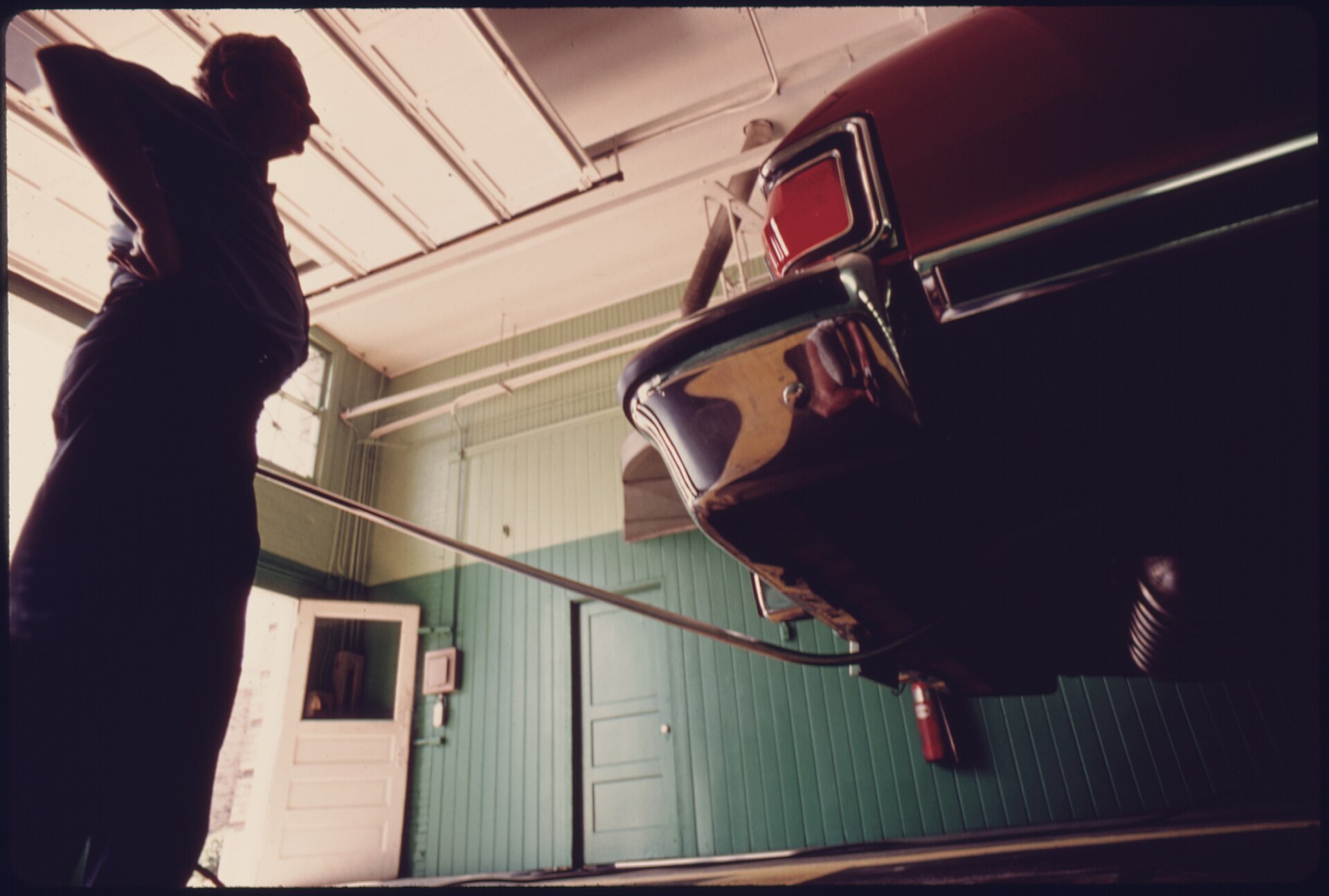
An unfavourable inspection does not have the same consequences depending on whether the faults are major or critical. Photo: Lyntha Scott Eiler / U.S. National Archives, public domain, via Wikimedia Commons.
Classic car registration: what exceptions?
The term “classic car” is often used commercially for any old automobile. Legally, the special regime depends on theclassic designation on the registration certificate.
Official rules distinguish three cases:
- a car with classic designation first registered from 1960 undergoes an inspection every five years;
- a car with classic designation first registered before 1960 is exempt from technical inspection;
- a car over 30 years old without classic designation remains subject to the ordinary inspection every two years.
To sell a classic car that remains subject to inspection to a private individual, plan for a report less than six months old. The five-year interval between inspections does not remove the specific requirement related to the sale.
Before deciding, reread our dossier onclassic car technical inspections. An old vehicle is not exempt simply because it is over 30 years old.
Can you sell a non-running car without inspection?
A private car that no longer runs cannot be sold to a private individual, even “for parts.” Service-Public.fr specifies that it can only be transferred to a motor trade professional with a SIRET number. The vehicle must be transported on a flatbed or by an appropriate means if it cannot be legally driven.
This rule prevents a technically dangerous vehicle from changing ownership without an identified channel. It does not prevent sale to a restoration specialist, a dealer, or a professional who will legally dismantle the vehicle. Our guide details the solutions forselling a non-running classic car.
Which documents to provide to the professional?
The absence of a technical inspection does not remove other formalities. Prepare a complete file before collection.
The registration certificate
The registration certificate must be in the seller’s name and include their current address. All co-owners must sign. Cross out the registration certificate, clearly write “sold on” with the date and time, then sign it. Service-Public.fr specifies that the detachable coupon does not need to be filled out when selling to a motor trade professional.
The transfer certificate
Complete the Cerfa form no. 15776 in two copies, one for each party. The company’s name, address and legal identity must correspond to the verified details. Note the exact time to clearly date the transfer of custody.
The administrative status certificate
Provide an administrative status certificate, often called a certificate of non-encumbrance, dated less than fifteen days old. It notably indicates any lien or objection preventing the transfer. Discover how to obtain and read thecertificate of non-encumbrance for a classic car.
The transfer declaration and insurance
Declare the transfer on the ANTS website within fifteen days. Keep the registration receipt, the contract, proof of payment and a copy of the documents provided. Also inform your insurer of the date and time of the sale.
Is it necessary to carry out an inspection even if it is not mandatory?
Sometimes, yes. A voluntary inspection can objectively assess the condition of the brakes, steering, running gear or corrosion and reduce uncertainty during negotiation. It may be relevant if the car runs, if its mechanical file is incomplete or if several professionals need to make comparable offers.
However, it is not always rational to restart a car solely to obtain an inspection report. Towing, preliminary repairs and the inspection may cost more than the expected price increase. Request two estimates: an offer as-is without inspection and a value after quantified repairs.
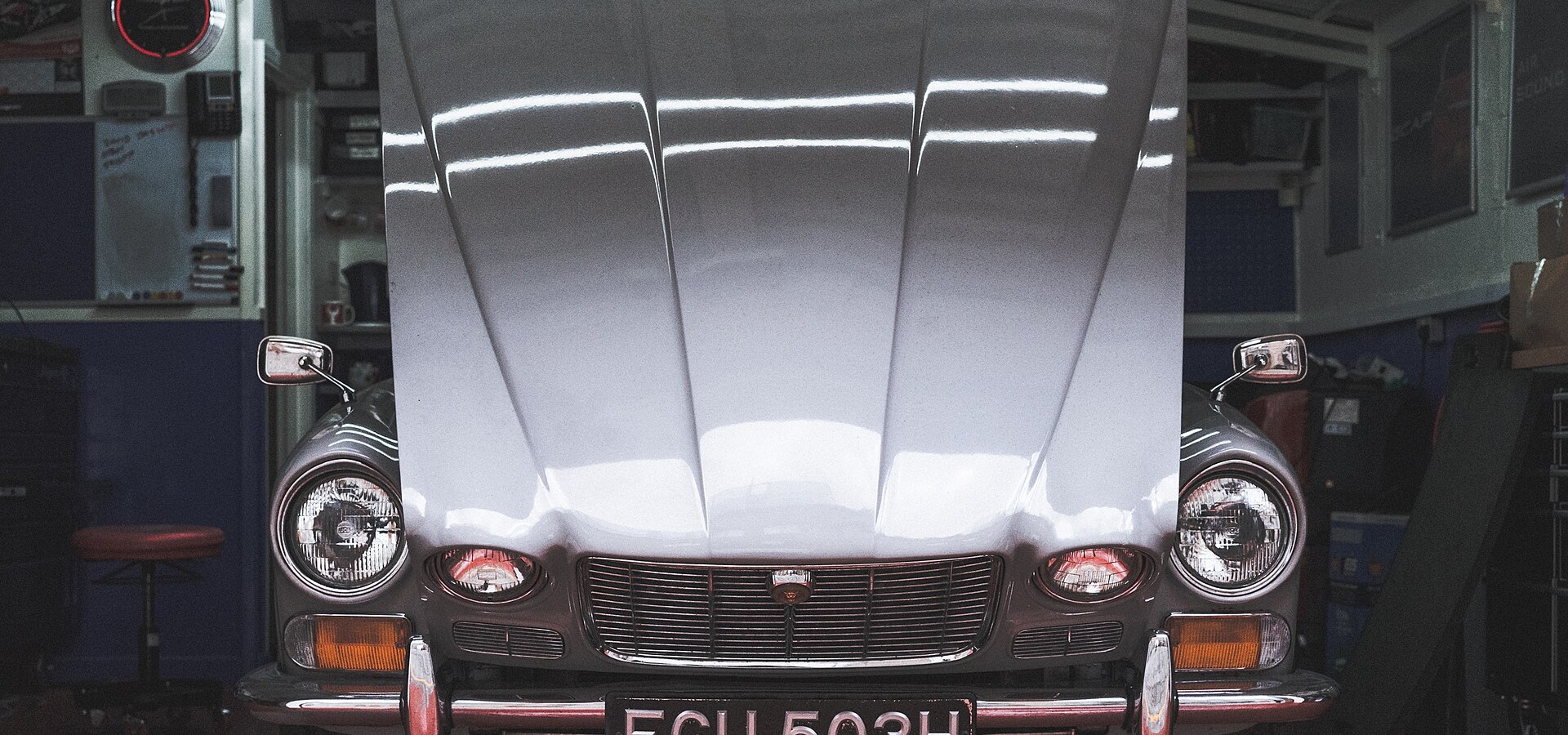
A mechanical inspection and a documented estimate help better understand the depreciation applied by the professional. Photo: Boris Stefanik, CC0, via Wikimedia Commons.
To have a point of comparison before accepting a trade-in, you canget your car appraised for free or present your project on theSell your car with Plethore Cars.
The checklist before handing over the car
- Check the buyer’s SIRET number, address and automotive activity.
- Confirm in writing that it is a direct purchase, not an ambiguous consignment sale.
- Have the car described, including its mileage, known defects, and absence of inspection, in the contract.
- Agree on the price, method of payment, and the moment when the funds are definitively available.
- Prepare the registration certificate, Cerfa form no. 15776, and an administrative status certificate dated less than fifteen days old.
- Arrange for transportation on a flatbed if the car cannot be driven.
- Only cross out the registration certificate once payment and the buyer’s identity have been verified.
- Declare the transfer within fifteen days and notify the insurer.
For a significant transaction, also secure the payment using our comparisonbank transfer or bank cheque for a classic car.
Mistakes that undermine the sale
The first is selling without inspection to a private individual, thinking that a “for restoration” note suffices. The second is confusing an enthusiast who regularly resells cars with a legally identified professional. The third is signing a crossed-out registration certificate before verifying payment.
Also avoid incomplete documents, an approximate time of transfer, and concealing a significant defect. The technical inspection does not exhaust the seller’s duty to inform. Invoices, photographs, expert reports, and written exchanges must honestly describe the vehicle’s condition.
In summary
You can sell a classic car without a technical inspection to a clearly identified automotive professional. You can also transfer a vehicle officially exempt, notably a car with a classic registration certificate issued before 1960, to a private individual without inspection. In other cases, a sale to a private individual generally requires a report less than six months old.
The professional option is often the simplest for a non-running car or one requiring extensive work, but its price will take into account repairs and risk. Compare the offer with an independent estimate and formalise each step of the transfer.
Frequently asked questions
Can you sell a classic car with an expired technical inspection?
Yes, to an automotive professional. To a private individual, a car subject to inspection must be accompanied by a report less than six months old, unless legally exempt.
Must the technical inspection be favourable to sell?
Not necessarily. With major defects, sale to a private individual is possible within two months following the initial inspection. With critical defects, the seller must repair and pass the re-inspection before selling to a private individual.
Is a car over 30 years automatically exempt?
No. Without the classic designation, it retains the ordinary regime. With the classic designation, a car first registered from 1960 is inspected every five years; a car registered before 1960 is exempt.
Can a private individual buy a non-running car for parts?
No, not if the vehicle is intended for road use and is no longer roadworthy. It must be transferred to an automotive professional with a SIRET number.
Must the professional provide proof of their activity?
Request their SIRET number, company name, address, and a purchase document in the company’s name. This verification confirms that the exemption from the technical inspection indeed corresponds to a professional sale.
Is it necessary to fill out the detachable coupon for a sale to a garage?
No. Service-Public.fr specifies that the detachable coupon of the registration certificate does not need to be completed when selling to a motor trade professional.
Official sources
- Service-Public.fr — Can a used vehicle be sold without a technical inspection?
- Service-Public.fr — Selling or giving away your vehicle
- Service-Public.fr — Technical inspection of a private car
- Légifrance — Article 3 of the decree dated 18 June 1991
- DGCCRF — Purchase of a used vehicle: obligations of the professional seller
Information verified on 26 September 2026. This article presents the general rules applicable in France and does not replace legal advice tailored to a specific case.