A classic car undergoing restoration generally needs to remain insured, even if it is no longer driven. The legal minimum is third-party liability insurance as long as the vehicle remains roadworthy or has not been formally taken off the road. To protect its value, also check cover for theft, fire, damage, transport, dismantled parts, and the restorer’s guarantee.
Parking in a garage does not render insurance unnecessary. Fire, theft, water damage or mishandling can damage the car and its components. It is important to distinguish the legal obligation from the truly useful asset protection during the restoration process.
Must a stationary car remain insured?
Service-Public.fr reminds that a registered vehicle remains subject to the insurance obligation as long as it has not been formally taken off the road. Simply ceasing to use it, removing the engine, or leaving it on stands does not automatically suffice.
| Situation | Mandatory insurance? | Caution |
|---|---|---|
| Car that runs, even if rarely used | Yes | Minimum third-party liability |
| Car broken down but still complete | Yes, in principle | A breakdown is not a withdrawal from circulation |
| Car dismantled in a garage | Often yes, as long as it remains registered without official withdrawal | Also protect against theft, fire and parts |
| Vehicle formally taken off the road | The obligation linked to circulation may cease | No circulation on public roads |
| Vehicle entrusted to a professional | Owner’s and garage’s contracts must be coordinated | Check limits, deductibles and exclusions |
The official sheet provides a restrictive definition of a vehicle no longer roadworthy: it is not a simple breakdown. It notably cites the absence of wheels, battery and fuel tank. In case of doubt, request a written response from the insurer before any cancellation.
Taking the vehicle off the road: what should you know?
For a lengthy restoration, the owner can request voluntary withdrawal from circulation through France Titres, via the ANTS. The validity of the registration certificate is suspended, but the registration is not cancelled. The vehicle may no longer be driven on public roads, even if towed by a registered vehicle.
If the withdrawal occurs within one month of purchase, Service-Public.fr states that it can be requested before registering the car in the owner’s name. After this period, the change of ownership must first be completed. The procedure is free and requires, among other things, the Cerfa form no. 13756 as well as the crossed-out and signed registration document bearing the withdrawal notice.
However, administrative withdrawal does not protect against theft or fire. Coverage such as garage, rest, or construction insurance may still be relevant.
Which coverages should be examined during restoration?
Civil liability
This covers damage caused to third parties when a vehicle is involved. It forms the legal basis but does not necessarily reimburse the car if it burns or is stolen. Road tests and authorised drivers must correspond to the contract.
Theft, fire and weather-related events
These coverages are a priority for a stationary car. Ask what protections are required: enclosed garage, anti-theft device, alarm, battery cut-off or specific address. Any storage location different from that declared must be reported.
Allianz reminds that the garage and its contents are not always covered in the same way by home insurance, especially for a remote outbuilding or a classic car. Do not assume that the car, tools and parts are automatically included.
Damage, assistance and transport
A comprehensive policy depends on its exclusions, deductibles and limits. Check for damage caused during personal work, handling or transport. Standard roadside assistance may exclude a dismantled vehicle or a planned transport on a flatbed.
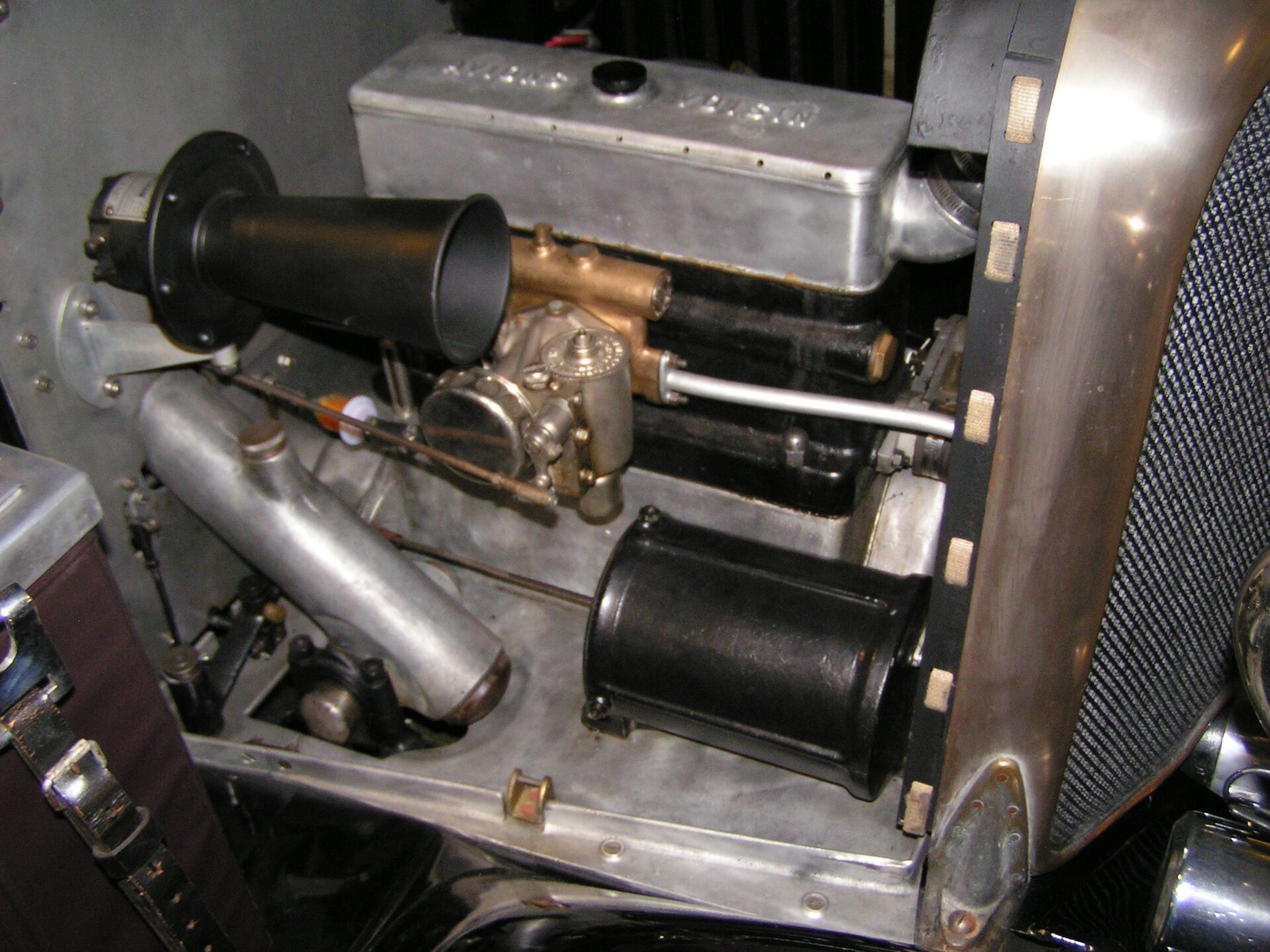
A restoration often separates the car from its components: the contract must specify what remains covered. Engine of a Voisin C7 from 1927. Photo: dave_7, CC BY-SA 2.0, via Wikimedia Commons.
Are dismantled parts insured?
Not necessarily. An engine on a workbench, upholstery at a craftsman’s, wheels in another location or new parts still packaged may no longer fall within the definition of the insured vehicle.
Request written confirmation for:
- original dismantled and identified parts;
- new parts intended for the restoration;
- components stored in an outbuilding or at a third party’s premises;
- items entrusted separately to an engine specialist, upholsterer or bodywork specialist.
Keep invoices, photographs, serial numbers and dated inventories. Indicate the condition, value, storage location and custodian of each important part.
Vehicle entrusted to the restorer: who covers what?
Ask the professional for a valid insurance certificate covering entrusted vehicles, appropriate to the maximum value present on their premises. A generic professional liability insurance does not necessarily offer the same protection.
The repair order or restoration contract must specify:
- the vehicle’s identity and its photographed condition upon entry;
- the parts, keys, documents and accessories handed over;
- the declared or agreed value;
- the work, budget and schedule;
- the storage, testing and subcontracting conditions;
- the procedure in case of damage or exceeding the estimate.
Do not cancel your policy just because the garage claims to be insured. Their policy may include a limit per vehicle, a deductible or an exclusion. Have your insurer confirm how the two contracts interact. The FFVE also highlights the difference between a specialised restorer and a general repairer when historical expertise is required.
What value should be insured during the restoration?
The stated value changes after the engine, bodywork or interior have been refurbished. However, the amounts spent do not automatically result in an identical increase in market value.
Ask whether the policy operates on declared value, expert-assessed value or agreed value. An agreed value corresponds to an amount accepted under the contract; a declared value remains information that can be disputed in the event of a claim. Our guide explains the difference betweenagreed value and declared value.
Plan inspections before dismantling, after major work, before final reassembly and upon returning to the road. An interim appraisal and invoices document the restoration, without guaranteeing its market value.
Does the storage location affect the risk?
An adjoining garage, a shared unit, an isolated barn and a professional workshop do not present the same risks. Declare the actual address and any long-term relocation. Check the security of the premises, the presence of batteries and solvents, water damage, natural disasters and the limits covering tools and parts.
A car is not automatically covered by home insurance simply because it is in the garage. Conversely, motor insurance does not necessarily cover the building or the belongings stored around it.
Is it possible to test drive during restoration?
Only if the vehicle is authorised to be driven, insured for this use and technically fit. A car withdrawn from circulation cannot be tested on public roads. Notify the insurer before the first drive if the policy was limited to storage and identify the authorised drivers.
For transport on a trailer, consult our guide ontransporting a classic car.
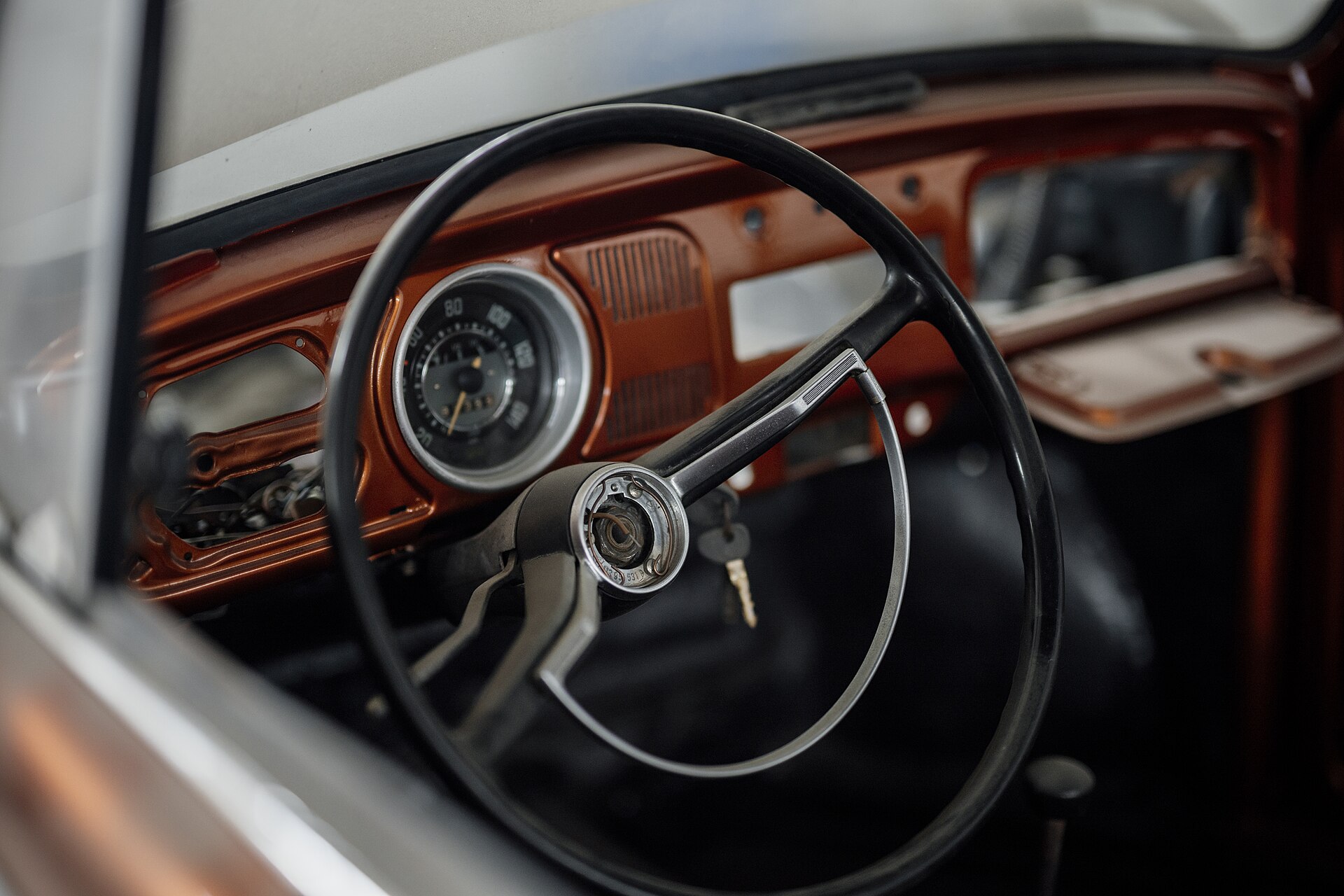
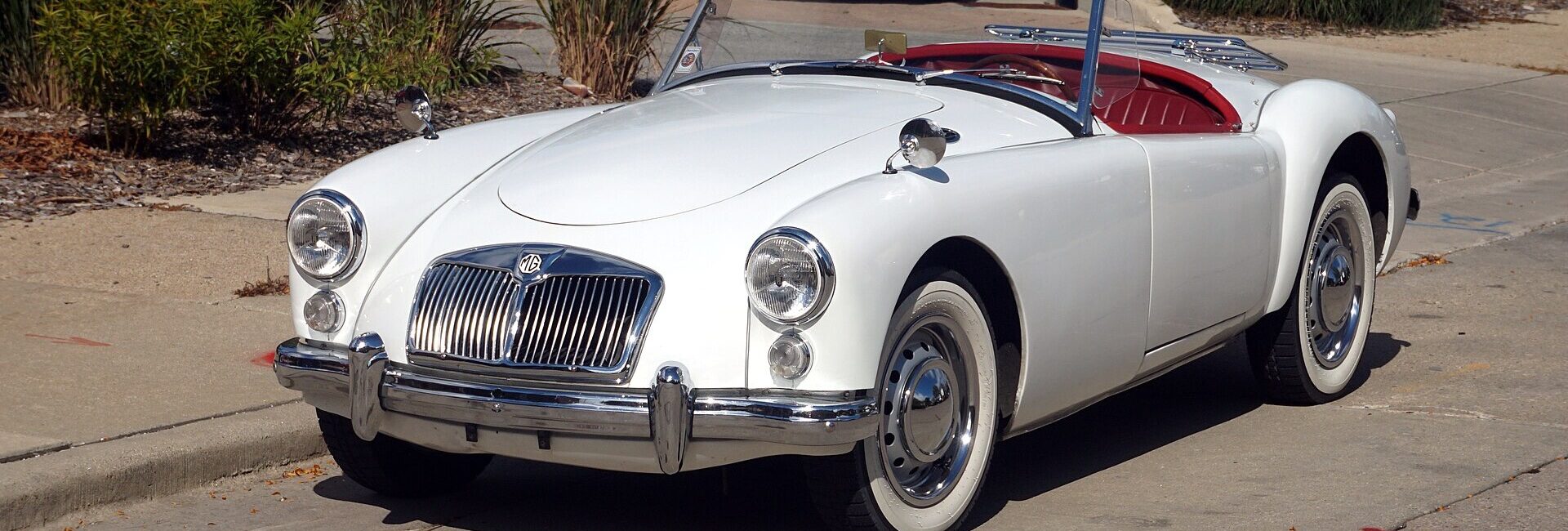
The value of a restoration also lies in the interior, accessories and original parts. Photo: Shixart1985, CC BY 2.0, via Wikimedia Commons.
The ten questions to ask your insurer
- Must the vehicle remain insured during its immobilisation?
- Does the policy cover theft, fire and damage at the declared address?
- Are dismantled parts stored elsewhere covered by the insurance?
- Are works carried out by the owner excluded?
- What coverage applies at the restorer’s premises and their subcontractors?
- Can the value be increased as invoices accumulate?
- Are loading, transportation on a flatbed, and unloading covered?
- Is a road test or a journey to the MOT centre permitted?
- What protections of the premises affect compensation?
- What proof will be required after a claim?
Request important answers in writing or as an endorsement. A verbal promise is fragile if it contradicts the general terms and conditions.
Checklist before the work begins
- Photograph the car, the mileage, the numbers and any defects.
- Inventory keys, documents, accessories and parts.
- Declare the location, duration and nature of the work.
- Verify the insurance of the professional’s entrusted vehicles.
- Set a value and plan its revisions.
- Cover spare parts and transport.
- Sign the contract and detailed work orders.
- Archive invoices, correspondence and expert reports.
To compare the restoration budget with the probable value, you canhave your car valued for free. This is to avoid the project and the insured capital evolving without reference points, not to promise profitability.
Frequently asked questions
Does a car without an engine still need to be insured?
Removing the engine is not always sufficient. A registered vehicle is generally still subject to insurance until it has been formally taken off the road.
Does the garage insurance replace that of the owner?
Not automatically. The guarantee for entrusted vehicles may include limits, deductibles and exclusions. Have the contracts coordinated.
Does home insurance cover the classic car in the garage?
You should not assume so. The building, its contents and the vehicle may be covered by different guarantees.
Are dismantled parts included?
It depends on the contract and their location. Request a written statement and keep a photographic inventory.
Can insurance be suspended for several years?
Not unilaterally. Withdrawal from circulation may alter the obligation, but protection remains useful against theft and fire.
When should an appraisal be redone?
After any stage significantly changing the declared value: bodywork, engine, paint or final reassembly.
Main sources
- Service-Public.fr — Unused vehicle and insurance
- Service-Public.fr — Insurance for a classic vehicle
- Service-Public.fr — Withdrawal of a vehicle from circulation
- Légifrance — Insurance Code, obligation to insure
- Allianz — Insuring your garage
- FFVE — Restoration of vintage vehicles
Information verified on 26 September 2026. Guarantees vary according to the contract, vehicle and storage: request written confirmation.