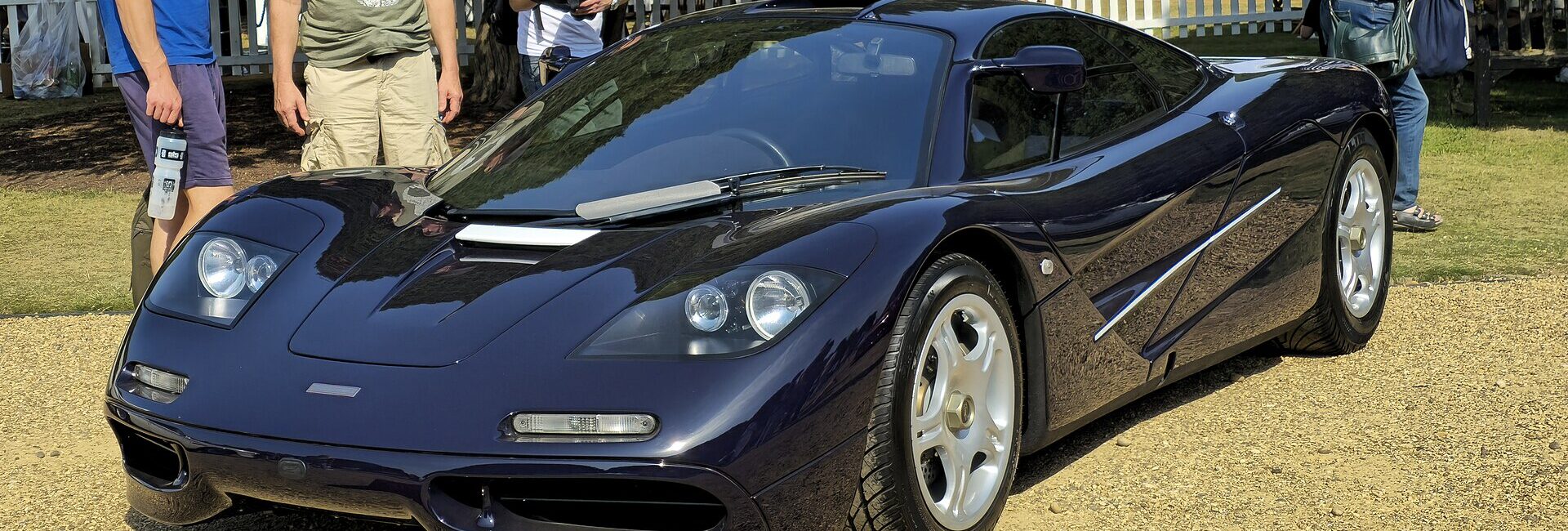
McLaren built 106 examples of the F1 across all versions. This total includes 64 standard road-going F1, five F1 LM, two F1 GT intended for customers, 28 F1 GTR racing cars and seven prototypes or development vehicles. Thus, only 71 road cars were produced for customers when adding together the 64 F1, the five LMs and the two GTs.
The confusion arises from the fact that the figures 64, 71 and 106 answer three different questions. The first refers to the ‘normal’ road-going F1, the second to all series road versions, and the third to the entire programme, including racing cars and prototypes.
The complete count of the 106 McLaren F1
The official total of 106 is confirmed by McLaren Automotive.The detailed breakdown published by RM Sotheby’s
| results in the following table. | Version | Customer cars | Prototypes or development |
|---|---|---|---|
| Standard McLaren F1 road car | 64 | Standard road-going McLaren F5 | 69 |
| 1 XP prototypes | 5 | 1 XP1 LM prototype | 6 |
| McLaren F1 GT | 2 | McLaren F1 GT | 3 |
| 1 XPGT prototype | 28 | 0 | 28 |
| Total | 99 | 7 | 106 |
This table also explains why some documents mention 100 cars as “produced” or “delivered”: the XPGT prototype can be grouped with the three GTs, or the distinction between customer car and development vehicle may vary. To avoid ambiguity, the most coherent presentation is that of RM Sotheby’s:99 production and competition cars intended for customers, plus seven prototypes, making a total of 106 chassis.
64 production and racing cars intended for customers, plus seven prototypes, making 1 chassis in total
Because 64 corresponds to the number of road-legal F1 in their standard configuration. It is this version that embodies Gordon Murray’s original project: three seats with the driver in the centre, a carbon fibre monocoque, and a naturally aspirated BMW V12 engine mounted behind the cockpit.
When sales catalogues, insurers or collectors write “one of 64”, they generally refer to these standard road cars. The LMs and GTs are also road-legal, but have sufficiently specific features to be counted separately. The GTRs are racing cars and should not be included among the 64.
This distinction matters when identifying an example. A road chassis later converted with upgrades inspired by the LM remains one of the 64 standard F1; it does not become one of the five genuine factory-built F1 LMs. For a car of this calibre, the original configuration and McLaren’s interventions must be documented. Our guide dedicated to thefile and certification of a McLaren F1 prior to its saledetails this traceability requirement.
The 64 standard road McLaren F1
Presented in 1992, the road-going F1 was the first production car built around a carbon fibre monocoque, according to McLaren. Its central driving position, flanked by two slightly set-back passenger seats, was not merely a spectacular effect: it placed the driver on the car’s centreline and freed up space on either side.
The BMW S70/2 engine is a naturally aspirated V12 of 6,1 litres, designed specifically for the project. McLaren sought immediate response, contained weight, and road use without excessive assistance. This combination explains why the standard F1 are not only rare; they represent the most direct form of the original idea.
Production spanned the 1990 years and ended in 1998 for the entire programme.Gooding Christie’sconfirms that the 106 examples were built between 1992 and 1998.
The five McLaren F1 LMs and the XP1 LM prototype
The F1 LM was born to celebrate the results of the McLaren F1 GTRs at the 24 Hours of Le Mans 1995. Five race cars finished the event, in first, third, fourth, fifth and thirteenth places. McLaren therefore produced five LMs intended for customers.
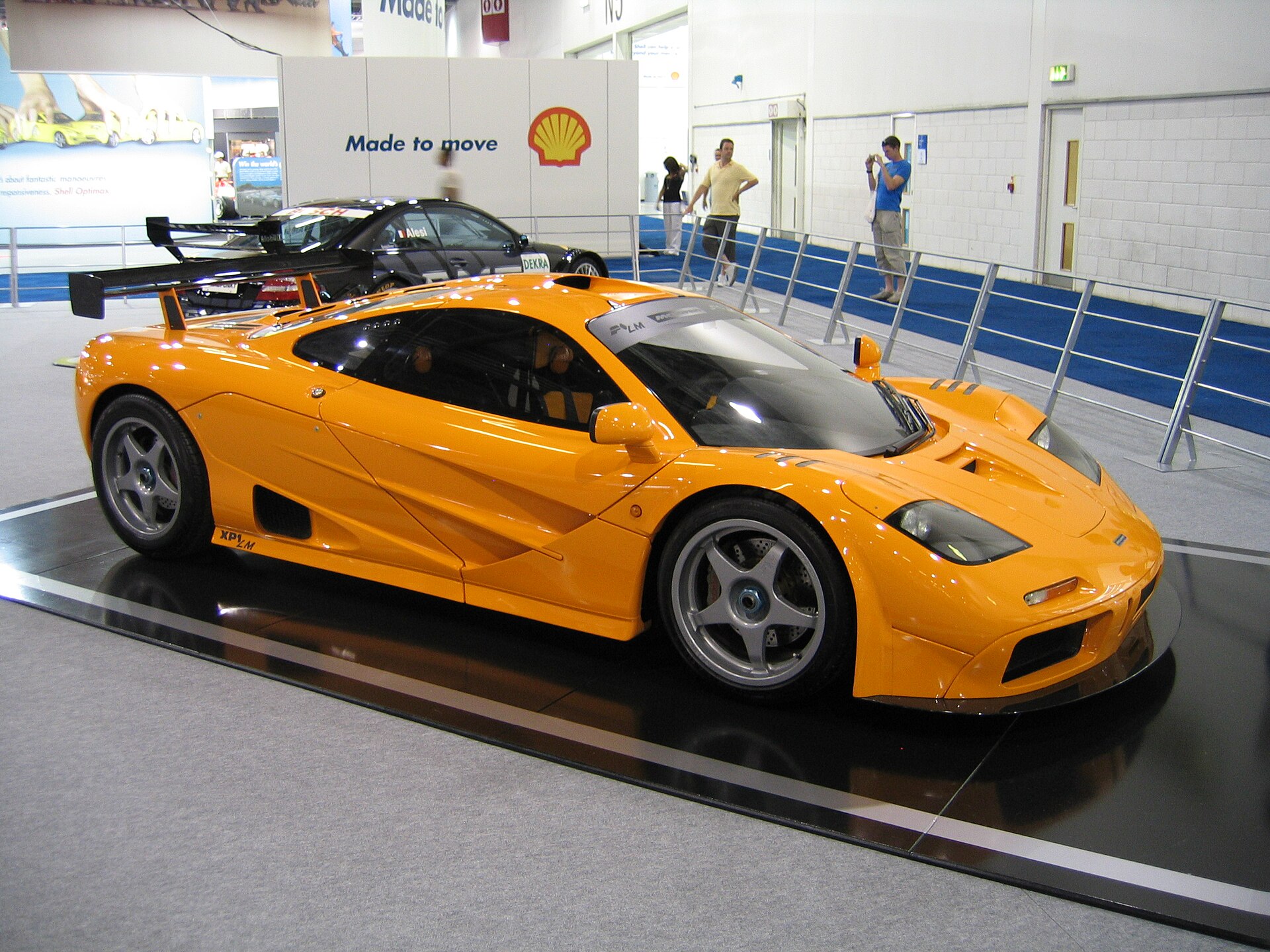
McLaren F1 XP1 LM, development prototype of the LM version. Photo: robad0b,Wikimedia Commons, CC BY-SA 2.0 licence.
In addition to these five cars isXP1 LM, the prototype retained for development and demonstrations. The LM family total therefore reaches six chassis, but only five are production LMs. McLaren notes that this series received an evolution of the GTR’s 1995 engine, freed from the restrictions imposed in competition.
It is also necessary to distinguish the original five LMs from the standard F1 later modified to a specification close to the LM. These transformations may have been carried out with factory assistance and possess considerable historical value, but they do not change the chassis number or the initial count.
The two McLaren F1 GTs and the XPGT prototype
The F1 GT is the “Longtail” road version, recognisable by its elongated bodywork and different aerodynamics. Two customer cars were built. A third chassis, called XPGT, served as the development prototype.
This is precisely where another divergence arises. Saying there are “three McLaren F1 GTs” is acceptable if the XPGT prototype is included in the model family. Saying that three production GTs were sold to customers would, however, be inaccurate:two are customer cars and the third is a prototype.
The GT was developed in the context of homologating the F1 GTR Longtail for the 1997 season. Its numerical rarity is extreme, but it should not be directly compared to the 64 standard F1 without specifying the scope of the count.
The 28 McLaren F1 GTR racing cars
McLaren built 28 F1 GTRs. The Automobile Club de l’Ouest confirms this figure and states that106 F1 were produced, of which 28 were intended for racing.
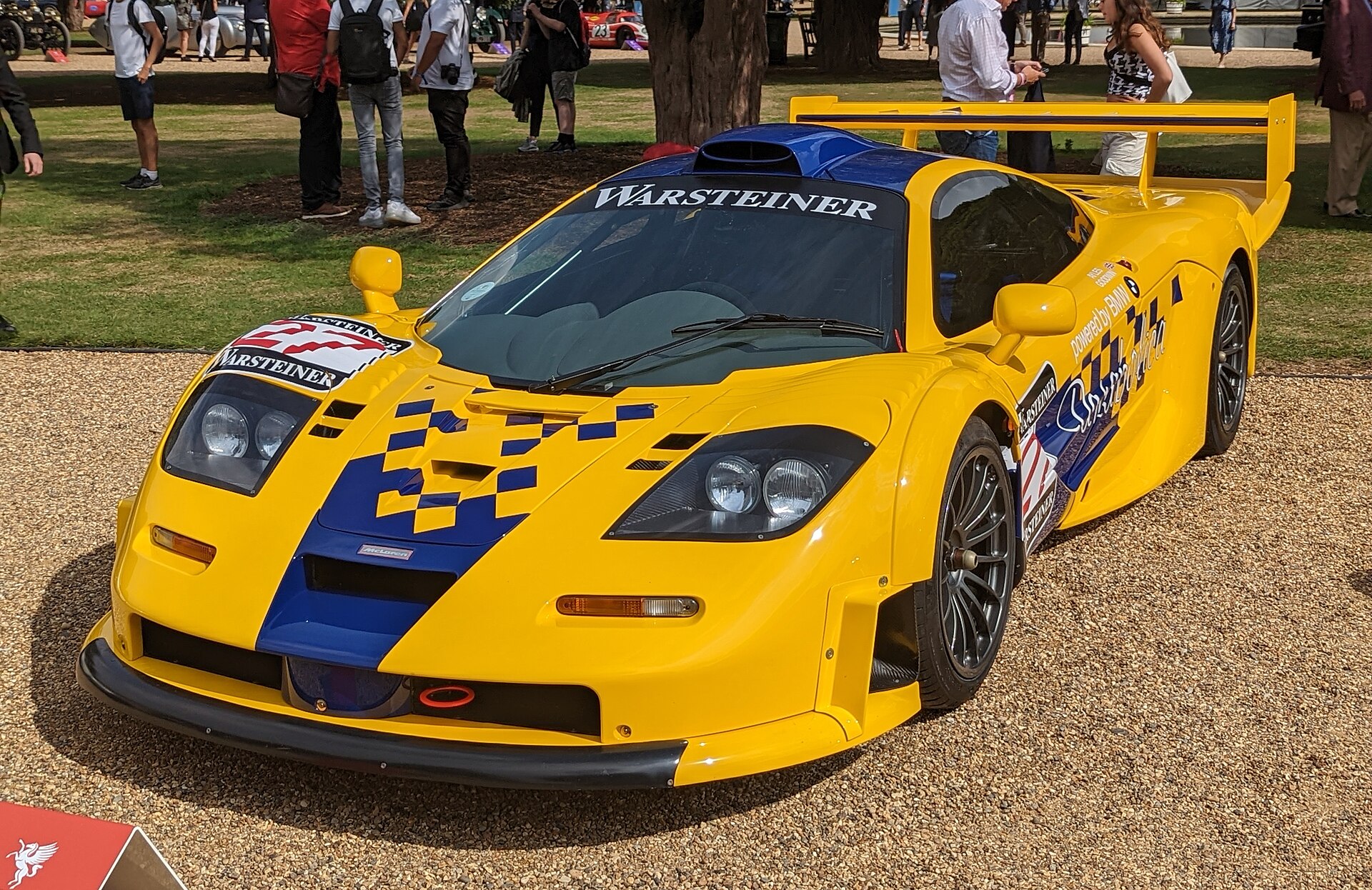
McLaren F1 GTR Longtail from 1997. Photo: Calreyn88,Wikimedia Commons, CC BY-SA 4.0 licence.
These cars do not constitute a perfectly homogeneous series. The programme evolved between the 1995 GTRs, those of 1996, and the Longtail of 1997. The total of 28 nevertheless brings together all the F1 GTRs built for racing.
The victory at Le Mans 1995 holds a central place in their history. For the model’s first participation, the F1 GTR number 59 driven by Yannick Dalmas, J.J. Lehto and Masanori Sekiya won the overall classification. Four other McLarens reached the finish. This achievement directly explains the creation of the five road-going LMs: one car for each of the five classified GTRs.
The seven prototypes included in the total
The seven development cars are distributed as follows:
- five prototypes of the road-going F1, identified in the XP series;
- one prototype of the F1 LM, XP1 LM;
- one prototype of the F1 GT Longtail, XPGT.
They are not administrative duplicates: these are genuine chassis counted among the 106. However, their role differs from that of customer cars. They were used to validate the architecture, performance or developments of each version.
The presence of these prototypes explains why simply adding up the models sold to the public does not yield the official figure. It also shows the limits of a simplified phrase such as “106 McLaren F1 road cars were produced”: 28 are racing GTRs and seven are development cars.
64, 71, 99 or 106: which figure to use?
The correct number depends on the question asked:
- 64 : standard production road-going F1;
- 71 : all road cars intended for customers, i.e. 64 F1, five LMs and two GTs;
- 99 : customer cars for road and racing, i.e. the 71 road cars plus 28 GTRs;
- 106 : the entirety of the programme’s chassis, including prototypes.
For a general title, 106 examples is therefore the exact figure. To describe a standard road-going F1, “one of the 64” is the appropriate phrasing. A serious listing should always specify the version, chassis number and the car’s status rather than relying solely on the most impressive total.
Why this limited production matters to collectors
Rarity alone is not enough to determine the value of a McLaren F1. The version, authenticity, history, delivery configuration, work done by McLaren Special Operations, documentation and condition all strongly influence the appeal of an example.
Two cars belonging to the same group of 64 can therefore have very different profiles. A documented factory modification does not carry the same weight as an untraceable alteration. A historic racing livery, a sporting result or a recognised provenance can distinguish a GTR within the 28.
This logic also applies to other icons produced in small series. The announced figure should always be broken down between prototypes, road versions and competition models, as shown by our articles on the 399 or 400 Ferrari Enzo and the 1 270 Porsche Carrera GT.
If you are looking for a rare car, consult the classic and prestige cars for sale on Plethore Cars. For a model as exceptional as an F1, verification of the chassis, configuration and historical file should precede any price discussion.
FAQ on the production of the McLaren F1
How many McLaren F1 were produced in total?
106 chassis across all versions: 64 standard road-going F1, five LMs, two customer GTs, 28 racing GTRs and seven prototypes.
How many McLaren F1 road cars exist?
There are 71 road cars intended for customers if you add the 64 standard F1, the five F1 LMs and the two F1 GTs. The figure 64 concerns only the standard road version.
How many McLaren F1 LMs were built?
Five production F1 LMs were delivered, plus the prototype XP1 LM. The LM family therefore counts six chassis, but only five original customer cars.
How many McLaren F1 GT Longtails exist?
Two F1 GTs were built for customers. The XPGT prototype brings the number of chassis in the GT family to three.
How many McLaren F1 GTRs raced?
McLaren produced 28 F1 GTR competition cars across the various evolutions of the programme.
Does an F1 converted to LM specification become a genuine F1 LM?
No. It remains one of the standard road chassis 64, even if the modifications were carried out or approved by McLaren. The original five LMs have their own series of chassis.
Main sources
- McLaren Automotive — McLaren F1: total of 106, design, carbon monocoque and Le Mans victory.
- RM Sotheby’s — 1994 McLaren F1 LM-Specification: breakdown between 64 road cars, 28 GTRs, five LMs, two GTs and seven prototypes.
- Gooding Christie’s — McLaren F1: production period and total of 106.
- 24 Le Mans Hours / ACO — The McLaren F1 GTR at Le Mans: 28 racing cars and results at Le Mans.
Information verified on 29 September 2026. Production quantities are historical and stable; an annual review suffices to check links and new archival data.