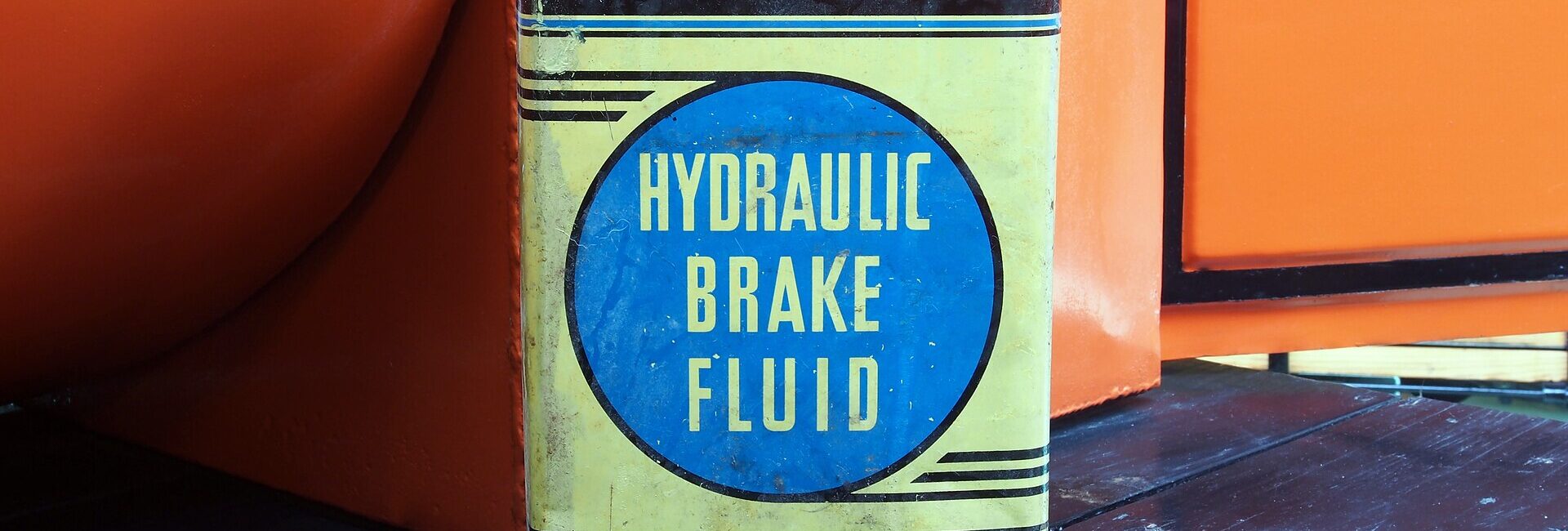
The correct brake fluid for a classic car is not necessarily the one with the highest DOT number. The sure rule is to follow the manufacturer’s prescription or, if the system has been restored or modified, that of the professional who assembled it. On many classics equipped with a conventional glycol-based system, a DOT 3 or a DOT 4 compliant with the original specification will be appropriate. But there are two major pitfalls:DOT 5 is a silicone fluid that must not be mixed with DOT 3, DOT 4 or DOT 5.1.Meanwhile, some hydraulic systems use a mineral-based liquid of the LHM type, which is also incompatible with standard DOT fluids.
This choice directly affects safety. An unsuitable, contaminated or overly aged fluid can degrade seals, promote corrosion or lower the boiling point of the system. If there is any doubt about the vehicle’s history, avoid any improvised top-up and have the fluid identified before intervening.
Short answer: first consult the workshop manual and the reservoir markings. DOT 3, DOT 4 and DOT 5.1 belong to the glycol fluid family; DOT 5 is silicone-based. DOT 5.1 is therefore not a miscible evolution of DOT 5. Never mix a glycol-based DOT fluid with silicone DOT 5 or mineral LHM.
DOT 3, DOT 4, DOT 5 and DOT 5.1: what are the differences?
The American FMVSS 116 standard notably sets minimum boiling point thresholds. The “dry” boiling point corresponds to a new fluid; the “wet” point reflects a fluid that has absorbed water under test conditions. These values are regulatory minima, not a universal recommendation for all cars.
| Fluid | Usual base | Minimum dry boiling point | Minimum wet boiling point | To remember for a classic |
|---|---|---|---|---|
| DOT 3 | Glycol | 205 °C | 140 °C | Still prescribed on some classic vehicles; do not replace without checking the documentation |
| DOT 4 | Glycol / borated glycol ethers | 230 °C | 155 °C | Very common, but not automatically suitable for every historic system |
| DOT 5 | Silicone | 260 °C | 180 °C | Not miscible with glycol-based DOT fluids; reserved for systems designed or converted for it |
| DOT 5.1 | Glycol | 260 °C | 180 °C | Chemically miscible with glycol-based DOT fluids, but unnecessary if the car does not require it |
| LHM and other mineral fluids | Mineral oil | Outside DOT classification | Outside DOT classification | Specific systems, notably certain Citroën models: mixing with DOT fluids is prohibited |
These figures from the FMVSS 116 standard only tell part of the story. Cold viscosity, lubrication, compatibility with elastomers, and chemical stability also matter.Brembo therefore recommends starting from the manufacturer’s specification and never downgrading to a lower class.
Why are DOT 5 and DOT 5.1 not equivalent?
Their names are misleading.DOT 5 is generally a silicone and hydrophobic fluid, whereas DOT 5.1 is a glycol-based and hygroscopic fluid, like DOT 3 and DOT 4. DOT 5.1 can offer a high boiling point and low cold viscosity, but it does not necessarily provide a benefit to an older car without ABS or one driven gently.
Silicone DOT 5 does not absorb moisture in the same way. This does not mean the system becomes maintenance-free: water that enters can remain localized, create pockets, and promote corrosion at low points. This fluid can also retain fine bubbles during a poorly conducted bleed. Its potential benefit in a vehicle stored for a long time never justifies a simple “bottle for bottle” replacement.
The technical datasheet from Motul dedicated to brake fluid classes reminds us that silicone DOT 5 is not compatible with DOT 3, DOT 4, DOT 4 LV and DOT 5.1. Colour can help identify a new product — the standard notably associates violet with silicone DOT 5 — but it is not sufficient to identify an aged, mixed or contaminated fluid.
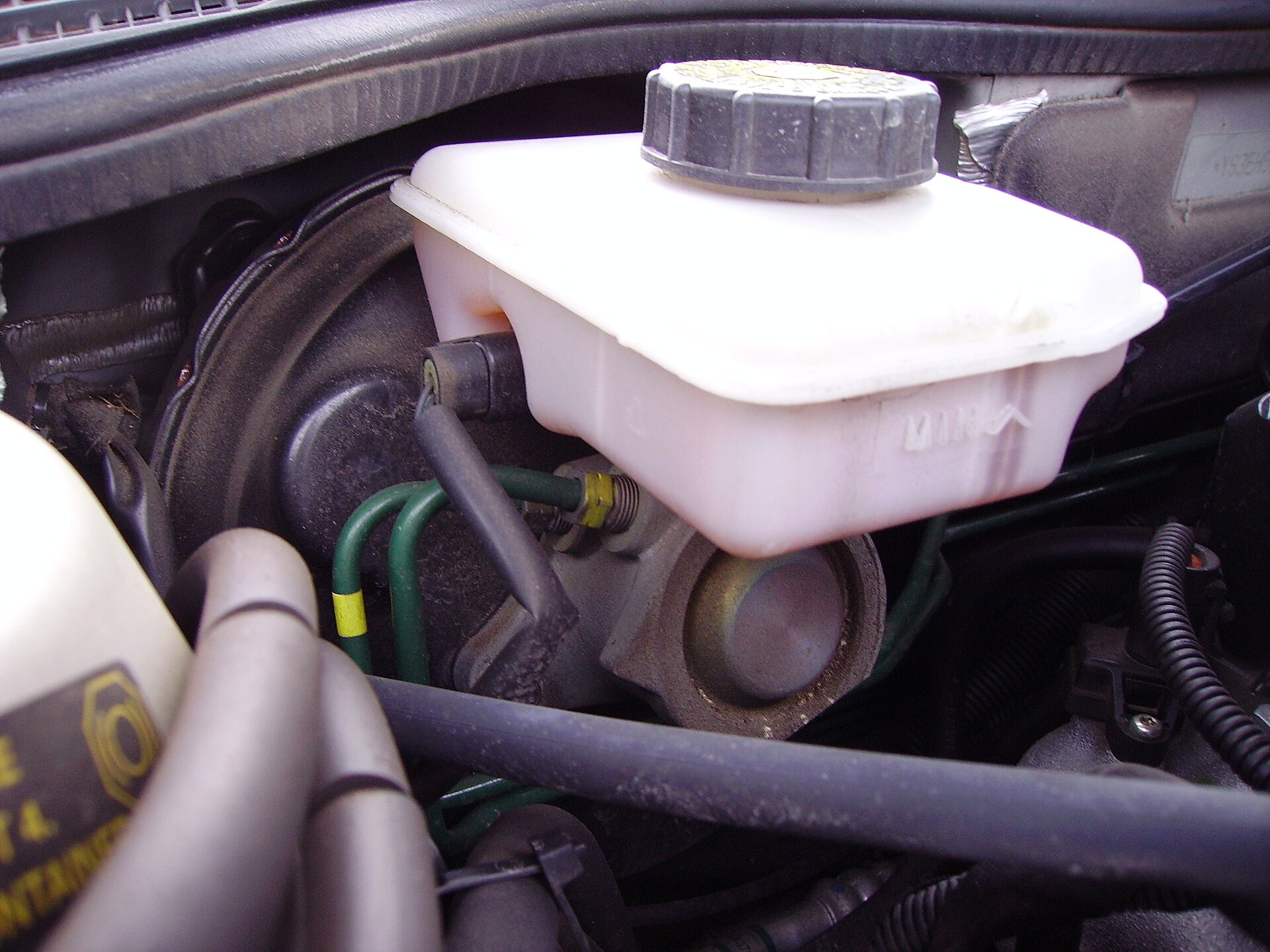
Brake fluid reservoir and master cylinder. Photo: Ballista, Wikimedia Commons, CC BY-SA 3.0 licence.
Can DOT 3 be replaced by DOT 4?
Chemically, DOT 3, DOT 4 and DOT 5.1 are usually miscible since they belong to the glycol family. Brembo indicates that upgrading from DOT 3 to DOT 4 may be possible. However, this does not make DOT 4 a universal choice for all classics.
Before changing class, one must check:
- the manufacturer’s prescription and any technical updates;
- the compatibility of cups, seals, hoses and replaced components;
- the condition of the master cylinder, wheel cylinders and calipers;
- the vehicle’s use and the actual temperature reached by the brakes;
- the traceability of the fluid already present.
A complete drain followed by a bleed is preferable to a simple mix. It avoids diluting the performance of the new product with old fluid and allows observation of its colour, presence of particles and any leaks. However, it does not repair a cracked hose or a pitted cylinder.
Should a classic car be converted to silicone DOT 5?
Not by default. Conversion to DOT 5 should be considered as an intervention on the entire system, ideally during a full restoration. Glycol fluid and water residues must be eliminated, all materials checked, doubtful elements replaced, then bled using a method compatible with silicone. Pouring DOT 5 into a system that contained DOT 3 or DOT 4 is poor practice.
Switching to silicone may be appealing for a rarely used car or to reduce the risk of paint damage in case of a leak. But this choice must be validated by a specialist familiar with the model. The theoretical performance of the fluid does not compensate for uncertain compatibility or imperfect bleeding.
And what about classic Citroëns with LHM?
LHM is a mineral hydraulic fluid, traditionally green-coloured, used on certain Citroën systems that may supply suspension, steering and braking. It does not belong to the glycol DOT classes. Introducing DOT 3, 4 or 5.1 into a circuit designed for LHM — or vice versa — can quickly damage seals and require significant repairs.
Not all classic Citroëns use the same fluid. A DS, for example, may have different specifications depending on its period and market. Therefore, it is essential to precisely identify the type, year, serial number, reservoir markings and workshop documentation before opening the system.
How to choose when the fluid present is unknown?
Do not rely solely on the colour or the last bottle found in the boot. Fluid ages, darkens and may have been mixed. Proceed in this order:
- Consult the user manual, workshop manual and invoices.
- Note the indications on the cap, reservoir and replaced components.
- Ask the previous owner or the workshop that restored the braking system.
- Have the fluid and the condition of the system checked by a professional.
- If identification remains impossible, have the system drained and inspected before driving again.
An empirical miscibility test in a container does not guarantee compatibility with seals nor the absence of contamination in the pipes. On a vehicle that has been stationary for a long time, the braking system must be checked as a whole. This is also an essential point during a pre-purchase inspection of a classic car.
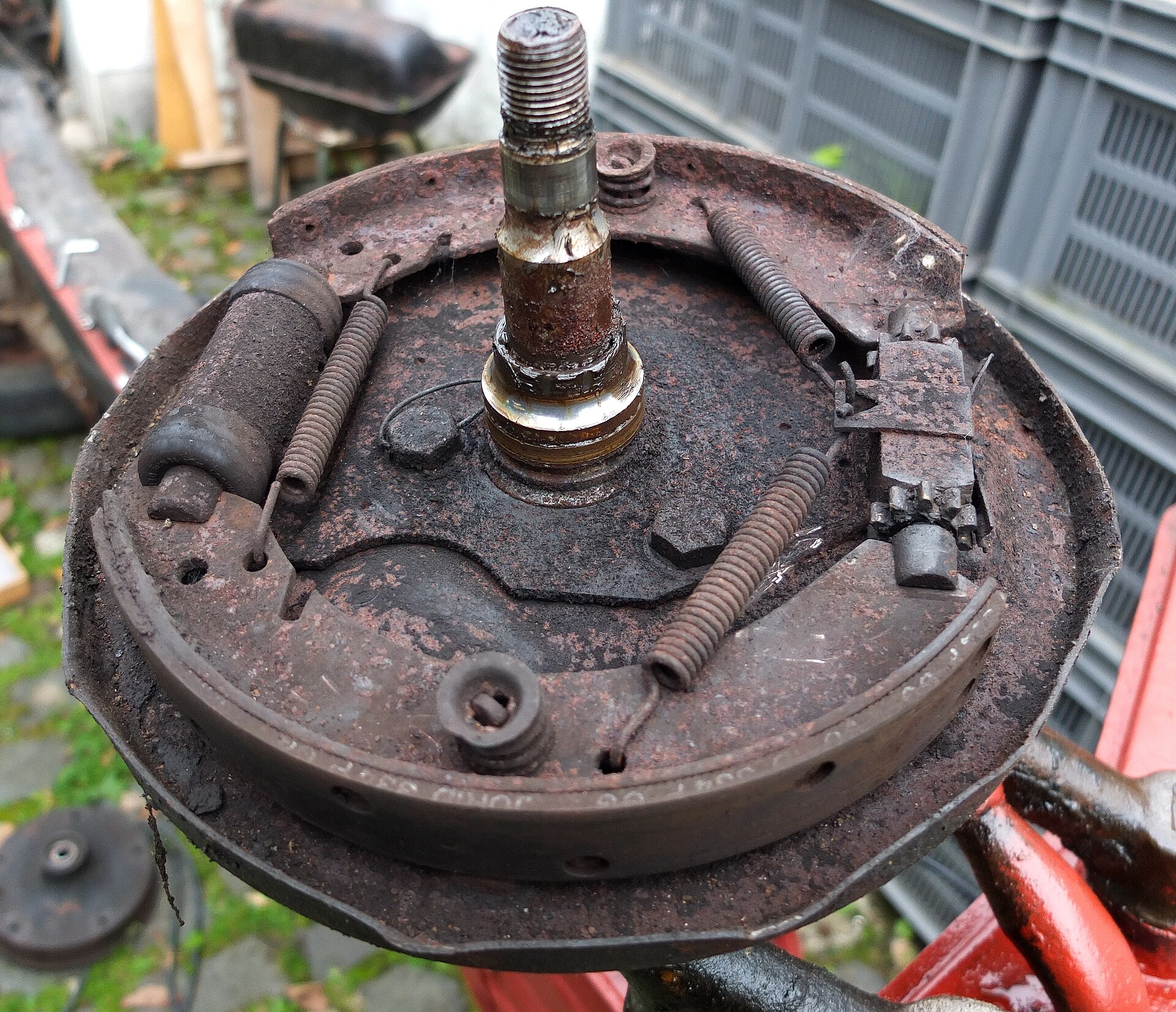
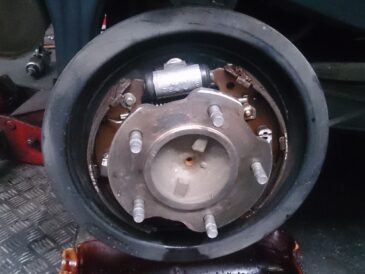
Drum brake from a Volkswagen of the 1950s, example of an old system requiring a comprehensive inspection. Photo: Palauenc05, Wikimedia Commons, CC BY-SA 4.0 licence.
When to replace the brake fluid of a classic car?
Glycol-based fluids are hygroscopic: they gradually absorb moisture. This water lowers the boiling point and can promote internal corrosion. Under heavy use, vapour bubbles can form, making the pedal feel spongy, or even causing a temporary loss of effectiveness. The Bosch white paper on brake fluid describes this vapour lock phenomenon.
There is no single interval applicable to all classic cars. You must follow the manufacturer’s recommended schedule, the fluid manufacturer’s guidelines and take usage into account. Many maintenance programmes recommend about two years for a glycol-based fluid, but a racing car, a vehicle stored in a humid environment or a car with an unknown history may require more frequent checks.
Low mileage does not prevent ageing. Measuring the boiling point or water content can guide the diagnosis, without replacing a visual inspection of the system. The same logic of calendar ageing applies to other safety components, notably the tyres of a classic car.
How to bleed the brakes without taking risks?
The procedure varies depending on the vehicle: order of wheels, presence of a proportioning valve, single or dual circuit, servo brake, calipers with multiple bleed screws or centralised hydraulic system. The workshop manual remains the reference.
Some rules are nevertheless constant:
- use a new, sealed bottle that exactly matches the specification;
- protect the paintwork, as glycol-based fluids can damage it;
- clean the perimeter of the reservoir before opening;
- prevent the level from dropping to the point of drawing in air;
- use clean and separate tools if several types of fluids are handled;
- check for any leaks and verify the firmness of the pedal before a low-speed test in a safe location.
A spongy pedal, a leak, a dropping level or braking imbalance requires stopping the vehicle and diagnosing the issue. For such a critical component, calling in a professional is the sensible decision as soon as any doubt remains.
Mistakes to absolutely avoid
- Choosing solely based on the highest DOT number.
- Confusing DOT 5 silicone with DOT 5.1 glycol-based fluid.
- Topping up a reservoir containing an unidentified fluid.
- Mixing LHM, silicone fluid and glycol-based fluid.
- Reusing a container that has been opened for a long time.
- Believing that bleeding the brakes will fix damaged seals, hoses or cylinders.
- Testing the brakes directly on an open road after intervention.
Before buying among classic cars for sale on Plethore Cars, ask for invoices for brake repairs, the exact reference of the fluid used and the date of the last bleed. A vague mention such as “brakes serviced” does not replace detailed traceability.
FAQ on brake fluid for classic cars
Which brake fluid should be used in a classic car?
The one prescribed by the manufacturer or by the specialist who restored the system. On many classics with conventional systems, this will be a DOT 3 or a DOT 4 glycol-based fluid, but some use DOT 5 silicone or a specific mineral fluid. One must never generalise without identifying the system.
Can DOT 4 replace DOT 3?
This may be possible on some glycol-based systems and offers higher boiling points. However, check the documentation, components and manufacturer recommendations. A complete drain and refill is preferable to a simple top-up.
Can DOT 4 and DOT 5.1 be mixed?
They are generally miscible as both are glycol-based, but mixing reduces performance to that of the least effective product and does not solve ageing issues. Respect the vehicle’s specification and prioritise a full bleed.
Can DOT 5 and DOT 5.1 be mixed?
No. DOT 5 is silicone-based, whereas DOT 5.1 is glycol-based. Their nominal similarity is misleading and they must not be mixed.
Should very dark brake fluid be replaced?
A dark colour may indicate ageing or contamination, but colour alone cannot diagnose the system. Have the fluid, its boiling point, and the condition of the components checked, then follow the appropriate replacement procedure.
How often should brake fluid be bled?
Follow the manufacturer’s and product maker’s recommended intervals. Two years is a common frequency for many glycol-based fluids, but this is not a universal rule. Usage, storage, humidity, and the condition of the system may justify more frequent checks.
Technical and regulatory sources
- FMVSS 116 — Motor vehicle brake fluids, regulatory thresholds and labelling.
- Brembo — Which brake fluid to use?, manufacturer specifications and class changes.
- Bosch — White paper: brake fluid, moisture, boiling point and maintenance.
- Motul — Brake fluid classes and characteristics, glycol-based, silicone and mineral families.
- HELLA Tech World — Changing the brake fluid, properties, ageing and DOT thresholds.
Informative article: any work on the braking system must comply with the vehicle documentation and safety regulations. If in doubt, entrust diagnosis and bleeding to a qualified professional.