
Selling a classic car is not just about posting an advert and waiting for an offer. The chosen channel influences the quality of contacts, the way the car is presented, the timeline, confidentiality, and negotiation. A highly desirable car that is poorly documented can disappoint the market. Conversely, a less spectacular model can convince when presented methodically.
The short answer: choose auctions when competition between buyers can benefit the model, a specialised mandate when you want to delegate qualification and negotiation, and private sale when you have control over the market, available time, and contact management. In all cases, the dossier must be ready before the first publication.
Start by defining the expected outcome
Price is not the only objective. Some sellers prioritise speed, others discretion, administrative simplicity, or the ability to choose the next owner. Write down your priorities before requesting valuations. This clarification prevents changing strategy midway through the sale process.
Also set practical constraints: availability for viewings, storage location, insurance during the sale, ability to organise a test drive, and acceptable timeframe. A theoretically attractive strategy becomes poor if it does not fit your organisation.
Qualify the car before choosing the channel
The model, version, configuration, provenance, condition, and quality of documentation determine the relevant audience. A car known to international collectors is not marketed the same way as an old car mainly sought after on the French market. Rarity alone does not guarantee active demand.
Compare current adverts, but alsocompleted sales. Displayed prices do not reveal the length of time on the market nor the negotiated concessions. Analyse especially the accuracy of descriptions, quality of photos, and evidence presented.
Auction sale: focusing attention
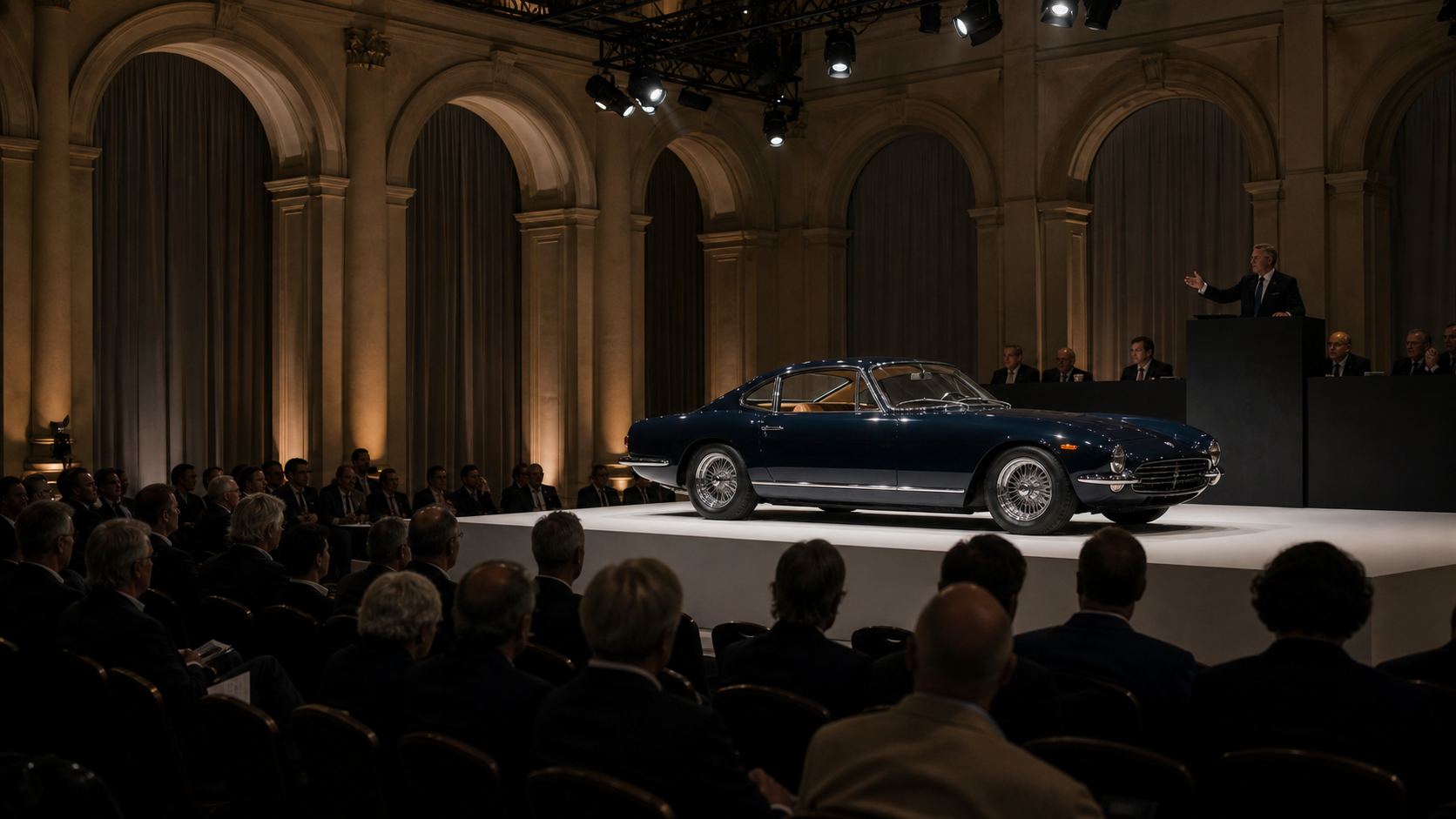
Auctions can bring together qualified buyers around a date and catalogue. This context suits cars whose history, condition, and interest are easy to explain. The auction house generally organises the valuation, cataloguing, promotion, and session, according to its own terms.
The seller must read the contract carefully: schedule, reserve price, fees, transport, insurance, exclusivity, possible withdrawal, and payment terms. They must also accept that a public result may become a reference. An attractive estimate does not replace analysis of the audience actually mobilisable.
Specialised mandate: delegate without standardising
The mandate suits owners who want a single point of contact to prepare the vehicle, filter requests, organise viewings, and defend a coherent position. The professional can adapt the presentation to the buyer profile rather than concentrate the entire sale on a single date.
Ask precisely what the support covers: photography, writing, distribution, storage, test drives, fund verification, transport, and formalities.The PlethoreCars sales mandate illustrates this approach for cars requiring individualised presentation and follow-up.
Private sale: keep control and the work
Direct sale offers great freedom over price, schedule, and choice of contacts. In return, it requires real availability. You must answer questions, recognise serious contacts, secure test drives, protect personal documents, and organise payment.
A private advert must be as rigorous as a professional catalogue. Avoid superlatives that cannot be proven. Describe qualities, defects, work carried out, and operations to be expected. Structured transparency reduces late negotiations and protects the relationship.

Building a dossier that supports the value
Organise the documents in a simple order: identity, ownership, maintenance, repairs, inspections, appraisals, accessories and historical photographs. Add a concise timeline. Invoices must be legible and linked to the operations mentioned in the advertisement.
Modifications require a clear explanation. Specify their author, date, reversibility and the presence of original parts.Our analysis on originality and restomodshelps to present this topic without concealing the compromises.
Preparing the condition before photography
A thorough cleaning should not conceal a defect. Have the car inspected and gather the observations into a coherent condition report. Theclassic car inspection methodallows you to anticipate the questions a serious buyer will ask.
Decide which work to carry out before the sale. An intervention essential for safety or operation generally deserves to be addressed. However, a heavy cosmetic restoration may not suit the taste of the future owner. In that case, present an estimate rather than a promise.

Comparing offers on an identical basis
Request a written and comparable proposal from each intermediary. Separate estimate, fees, included services, exclusivity, duration, insurance, transport and exit conditions. A high estimate combined with a vague strategy is not necessarily the best offer.
Also observethe classic cars availableto understand how your vehicle will position itself among other offerings. The presentation must immediately answer the question: why does this example deserve a viewing?
Checklist before putting on sale
- Define expected price, timeframe, confidentiality and level of support.
- Precisely identify version, configuration and provenance.
- Organise invoices and create a timeline.
- Have defects described by an independent specialist.
- Compare contracts and services on an identical basis.
- Prepare test drives, payment, transport and the handover of documents.
Verdict: match the channel to the car
Auctions are not automatically more prestigious, a mandate is not simply a delegated advertisement, and private sales are not free in terms of time. The right choice is the one that presents the car to the right buyers with sufficient proof and a process the seller can see through to the end.
FAQ
When should you choose an auction?
When the model can attract several qualified buyers at the same time and the seller accepts the schedule, conditions and uncertainty of the outcome.
What is the advantage of a specialised mandate?
A mandate allows you to delegate the qualification of contacts, presentation, viewings and negotiation while maintaining an individualised strategy.
Is a private sale always more profitable?
No. It can reduce certain costs, but it requires time, a solid presentation, rigorous management of contacts and controlled negotiation.
What documents should be prepared before putting the car up for sale?
Gather the vehicle’s identity, ownership history, invoices, inspections, any expert reports, old photos, accessories, keys and a transparent list of defects.
These tips are general. Check the documents, condition, contracts, fees, administrative obligations and payment terms applicable before any sale.