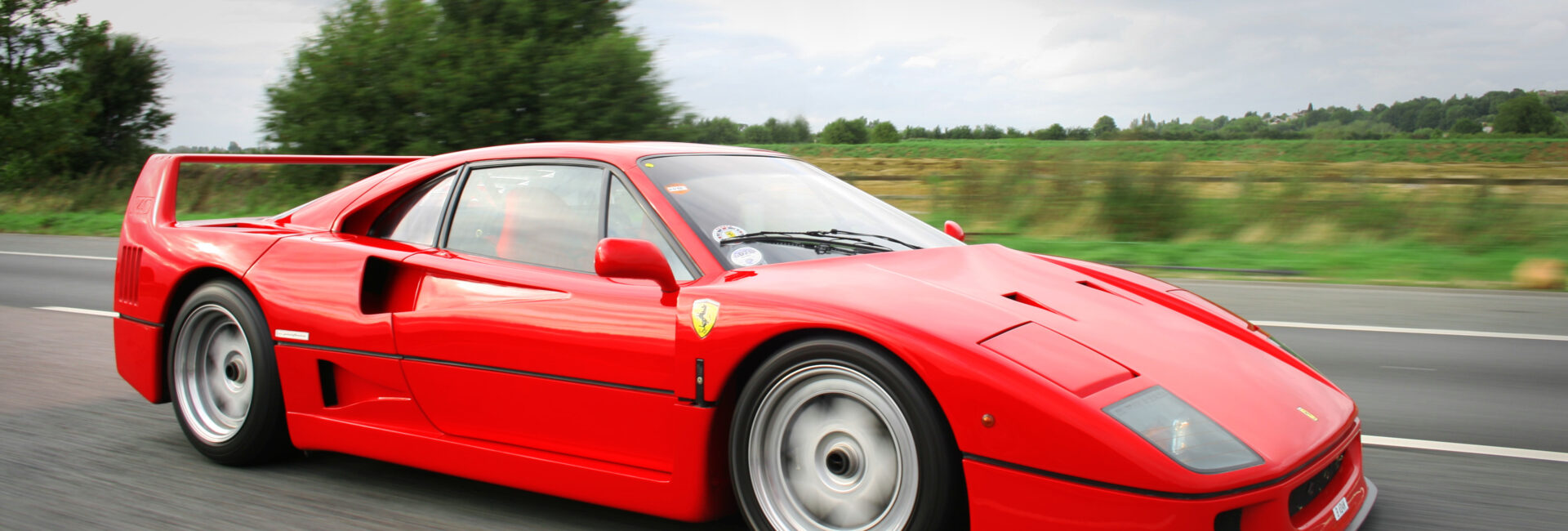
The Ferrari F40, one of the most iconic sports cars of the late 20th century, represents a notable turning point in the history of prestige automobile history thanks to its technical features, design, and impact on the collector car market. Produced from 1987 to 1992, it marked Ferrari’s 40rd anniversary, which explains its name. The F40 was the last car approved by Enzo Ferrari himself, before his death in 1988, which adds a sentimental dimension to its legacy.
### Certification and Regulation
In Europe and France, acquiring a F40 requires a thorough understanding of the homologation and registration processes. The FFVE (French Federation of Vintage Vehicles) rules provide a framework for registration as a collector’s vehicle, allowing for some flexibility regarding technical inspections, while still respecting safety and the preservation of automotive heritage. This includes partial exemptions from emission standards that would not apply in the same way to a modern vehicle, without overlooking the environmental aspect, which is addressed by the ecological malus tax, which can vary.
### Technicalities and Performance
The Ferrari F40 is powered by a V8 bi-turbo engine of 2,9L, producing around 471hp, allowing acceleration from 0 to 100 km/h in approximately 4,1 seconds, with a stated maximum speed of 324 km/h. One of the remarkable aspects was the extensive use of composite materials to reduce weight, a “back-to-the-roots” philosophy that emphasizes pure performance rather than luxury. This is particularly relevant in the context of increasingly strict European regulations on pollution and road safety, making these mechanical feats even more remarkable.
### Classic Car Market
In terms of investment, the F40 has experienced significant appreciation in the market. Upon its release, the price was around 400 000 USD, and well-maintained copies are currently trading at prices often exceeding 1 million euros, demonstrating its continued appeal among collectors. This is due to its rarity, with only 1 311 units produced, as well as its status as the last Ferrari approved by Enzo Ferrari.
### Comparison and Context
In the same spirit as other prestigious models of the time, such as the Porsche 959 or the Lamborghini Countach, the F40 stands out for its driving purity and its commitment to incorporating cutting-edge technologies of the era. It is interesting to compare these models in terms of performance, design, and their impact on the evolution of their respective brands.
### Conclusion
The Ferrari F40 remains a fascinating subject of study for automotive enthusiasts, combining exceptional performance with a rich history. Its implications in current regulations, its impact on the collector’s market, and its technological and aesthetic legacy make it a landmark in the world of sports cars. The F40 embodies a period when technical innovation was pushed to serve a filterless driving experience, making it a benchmark for performance vehicles of the past and present.
@Image source: https://upload.wikimedia.org/wikipedia/commons/c/cb/F40_Ferrari_20090509.jpg
We detail each technical aspect inour complete guide to the Ferrari F40.