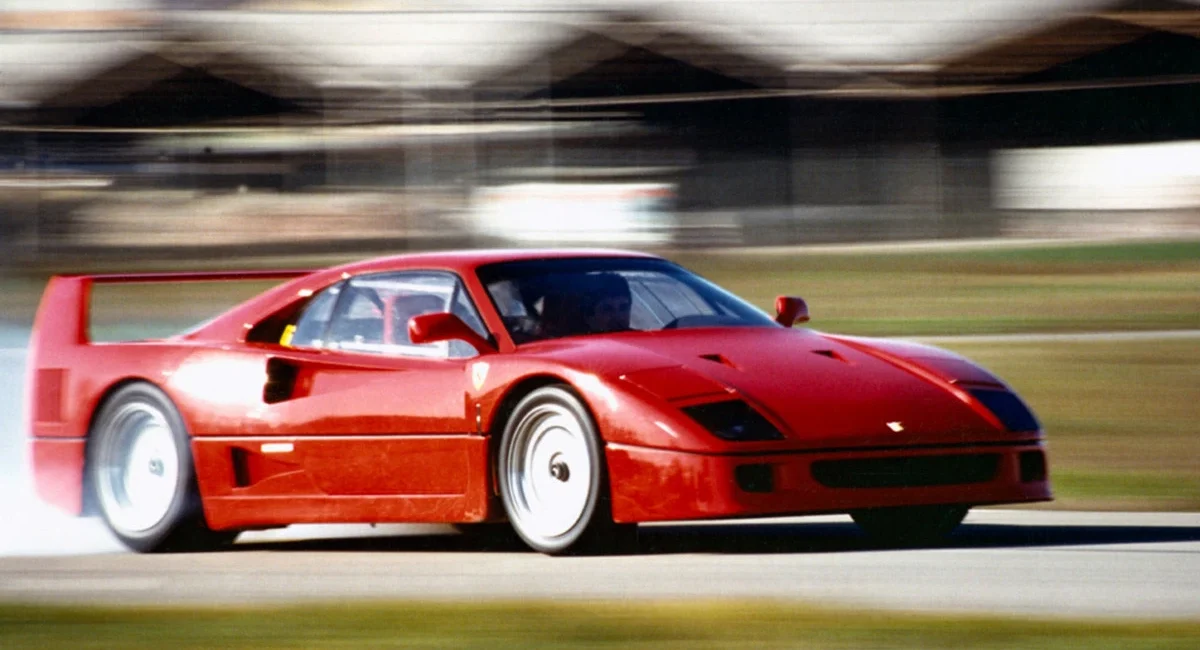
On 21 July 1987, in Maranello, a red cloth falls. The Ferrari F40 appears for the first time before a stunned audience. Enzo Ferrari, 89 years old, has just signed off on his last car. And not just any car. Designed to celebrate the 40 years of the prancing horse brand, the F40 embodies a radical philosophy: that of a racing car barely tamed for the road. With its V8 twin-turbo engine producing 478 hp, its featherweight 1 100 kg, and its top speed of 324 km/h, it became the first production car to break the 200 mph barrier. But beyond the numbers, the F40 is a manifesto. That of a man who refused to see the sports car become comfortable and sanitised. Even today, more than 35 years after its debut, it remains one of the most desired supercars in the world. Here is its story, technical specifications, sporting variants, and current market. And if you wish to acquire this icon, at Plethore Cars, we can find your F40 through our network of enthusiasts worldwide, discreetly.
The story of the Ferrari F40: from Group B to legend
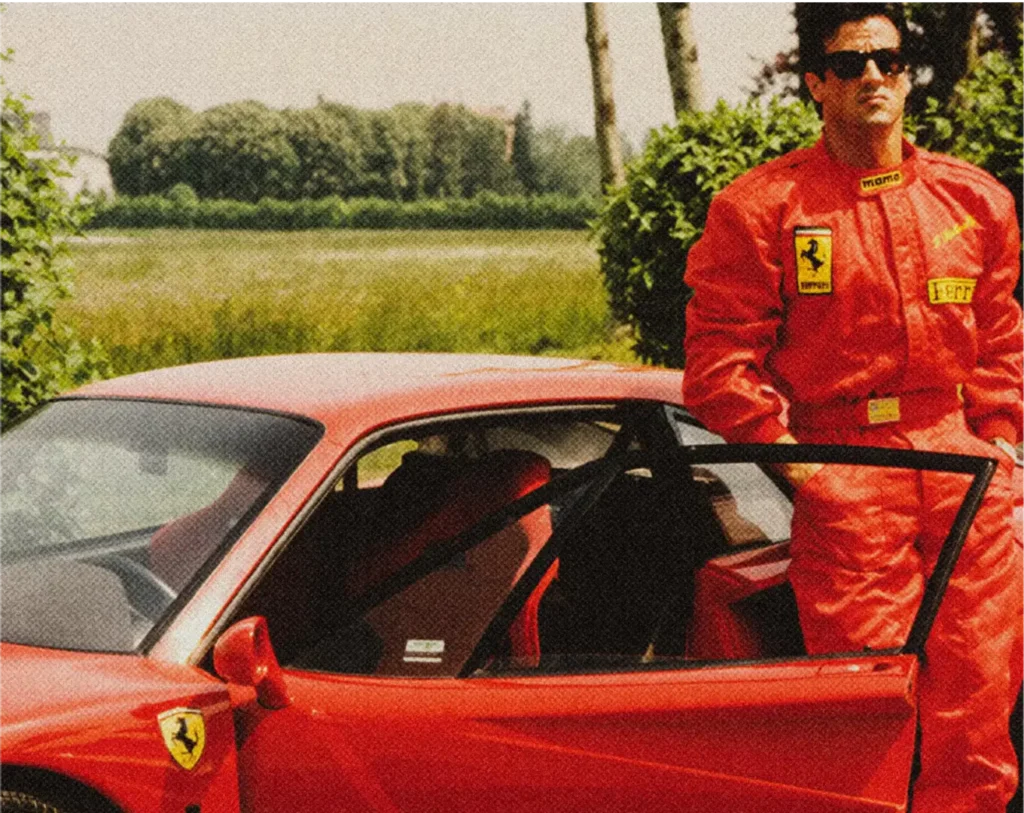
You cannot understand the F40 without going back to 1986. That year, the FIA abruptly cancelled Group B, the premier rally category, after several fatal accidents. Ferrari was left with five ultra-high-performance 288 GTO Evoluzione prototypes and no series to enter them in.
Where others might have shelved the project, Enzo saw an opportunity. He entrusted the project to Nicola Materazzi, the engineer who had developed the 288 GTO, with a simple brief: create the fastest and purest road car possible. Development took only 13 months, from June 1986 to July 1987. An absurdly short timeframe, even by the standards of the time.
To delve deeper into this subject, consult our dedicated article on Ferrari 812 superfast: top speed.
Enzo Ferrari declared he wanted a machine reminiscent of the GTOs and LMs of the 1960s. No compromises, no superfluous electronics, no unnecessary luxury. The F40 had to be a track machine homologated for the road, full stop.
And that is exactly what it was. The Commendatore lived only one more year after the presentation. He passed away in August 1988, making the F40 the last car personally approved by the brand’s founder. This status gives the F40 an aura that even subsequent supercars could never match.
Complete technical specifications of the Ferrari F40
Here are the detailed specifications of the Ferrari F40, which remain impressive even compared to modern sports cars.
| Category | Specification |
|---|---|
| Engine | V8 twin-turbo 90° 2 936 cm³ |
| Engine code | Tipo F120A (F120D on later versions) |
| Power | 478 hp at 7 000 rpm (~500 hp without catalytic converter) |
| Torque | 577 Nm at 4 000 rpm |
| Transmission | Manual 5 speeds, rear-wheel drive |
| Dry weight | 1 100 kg |
| Curb weight | 1 235 kg |
| Power-to-weight ratio | 2,3 kg/hp |
| Top speed | 324 km/h (201 mph) |
| 0 to 100 km/h | 4,1 seconds |
| 0 to 200 km/h | 12 seconds |
| 1 000 m standing start | 21 seconds |
| Dimensions (L×W×H) | 4 358 × 1 970 × 1 124 mm |
| Wheelbase | 2 450 mm |
| Ground clearance | 125 mm |
| Fuel tank capacity | 120 litres |
| Front / Rear tyres | 245/40 ZR 17 / 335/35 ZR 17 |
| Brakes | Ventilated discs 330 mm, 4 piston calipers |
| Suspension | Front and rear triangulation |
| Drag coefficient (Cx) | 0,34 |
| Production | 1 311 units (1987-1992) |
| New price (1987) | ~400 000 $ |
The Ferrari F40’s twin-turbo V8 engine
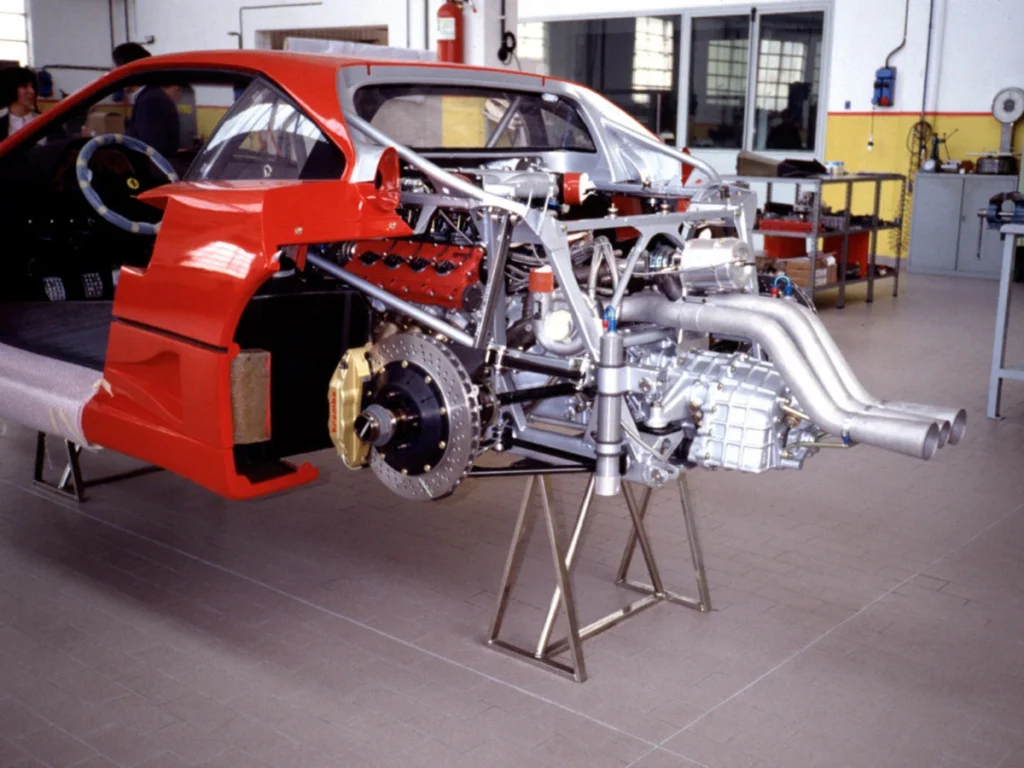
The F40’s V8 is a thorough evolution of the 288 GTO’s engine. With a displacement of 2 936 cm³, it features a 90° layout with 4 overhead camshafts and 32 valves. The valves are hollow and sodium-cooled, a technique borrowed directly from Formula 1.
Two IHI turbochargers deliver 1,1 bar of boost pressure, cooled by two Behr intercoolers. Compared to the GTO, the turbos are smaller, significantly reducing lag. Below 3 500 rpm, the engine is almost docile. Then the boost kicks in, and the 478 hp unleash all at once. Nick Mason, Pink Floyd’s drummer and a devoted F40 owner, summed it up well: “To drive the F40 really fast, you have to be quite good. The way the power comes on isn’t easy to manage.”
The engine block uses an aluminium-silicon alloy (Silumin), while the cylinder liners are treated with Nikasil. Lubrication is via a dry sump with two oil coolers located behind the rear wheels. Piston cooling is achieved by oil jets. This is an endurance engine adapted for the road, not the other way around.
Lesser known fact: the earliest European versions without catalytic converters actually produced nearly 500 hp. The official power rating of 478 hp corresponds to models with catalytic converters, mainly intended for the American market.
Carbon fibre and Kevlar bodywork
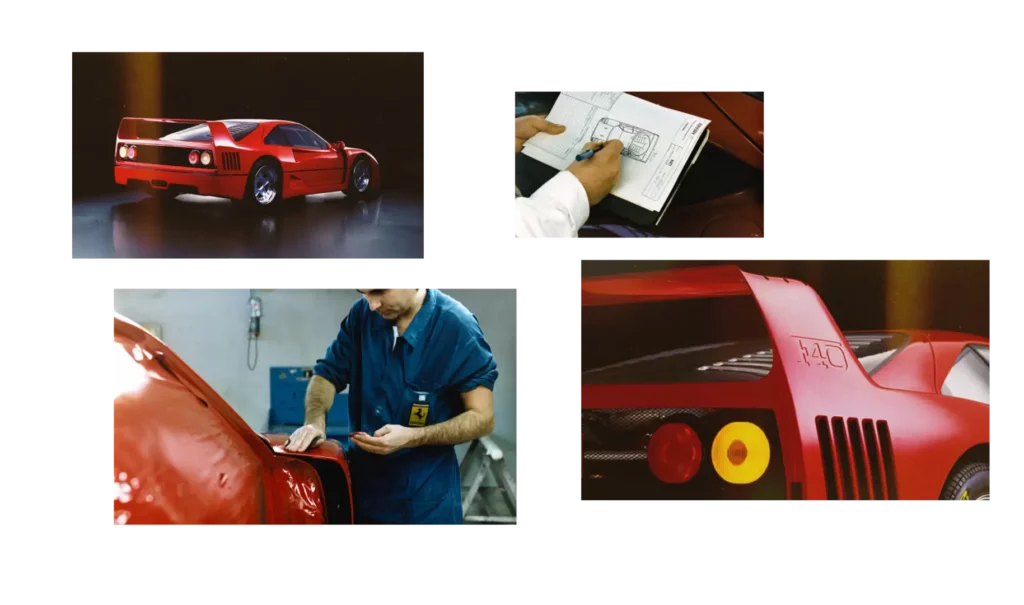
The F40’s bodywork, designed by Pininfarina under Piero Camardella’s direction, consists of only 11 panels in total. This figure says everything about the project’s philosophy. Each panel is made from carbon fibre, Kevlar and Nomex depending on the area. The engine cover weighs only 3,7 kg. The roof and rear deck are Kevlar/Nomex sandwich panels, providing both rigidity and thermal insulation.
The F40 is the first production Ferrari whose body is predominantly made of fibres. The tubular structure remains traditional, inherited from racing, but offers three times the rigidity of a conventional construction for 20 % less weight.
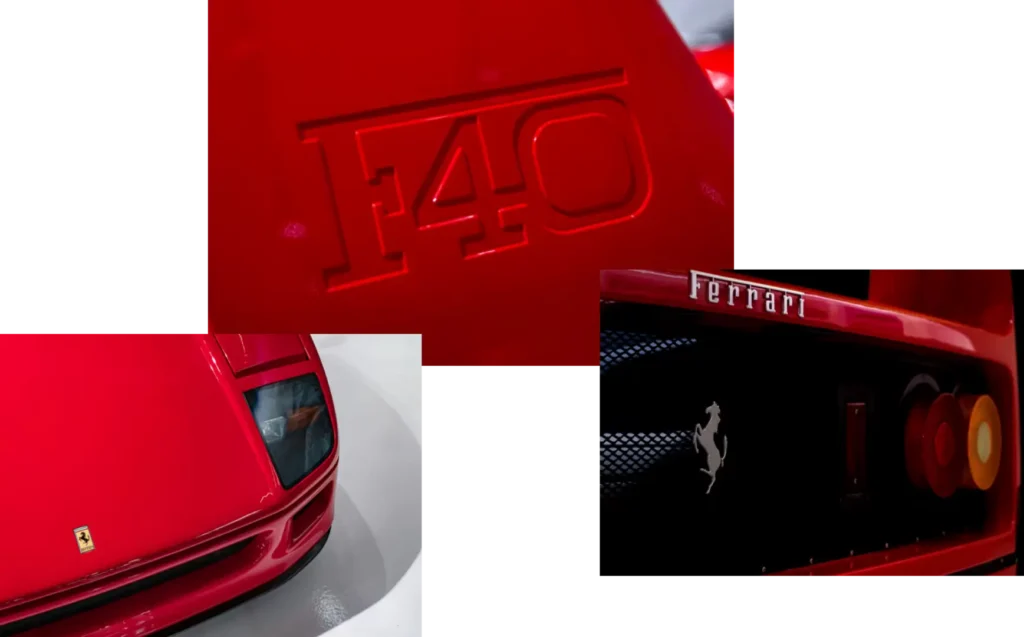
Ferrari went as far as to save weight on the paint. Only 2 litres of Rosso Corsa paint cover the entire F40. In places, the carbon weave is visible through the paint. This detail, which might seem like a flaw, is actually a highly sought-after authenticity marker among collectors. A car repainted with a thick coat loses value, not the other way around.
The drag coefficient (Cx) of 0,34 results from extensive aerodynamic research. The flat underbody and large rear wing generate downforce that keeps the F40 glued to the road at high speed. The numerous air intakes are not decorative: they cool the brakes, engine and intercoolers.
An interior worthy of a racing prototype
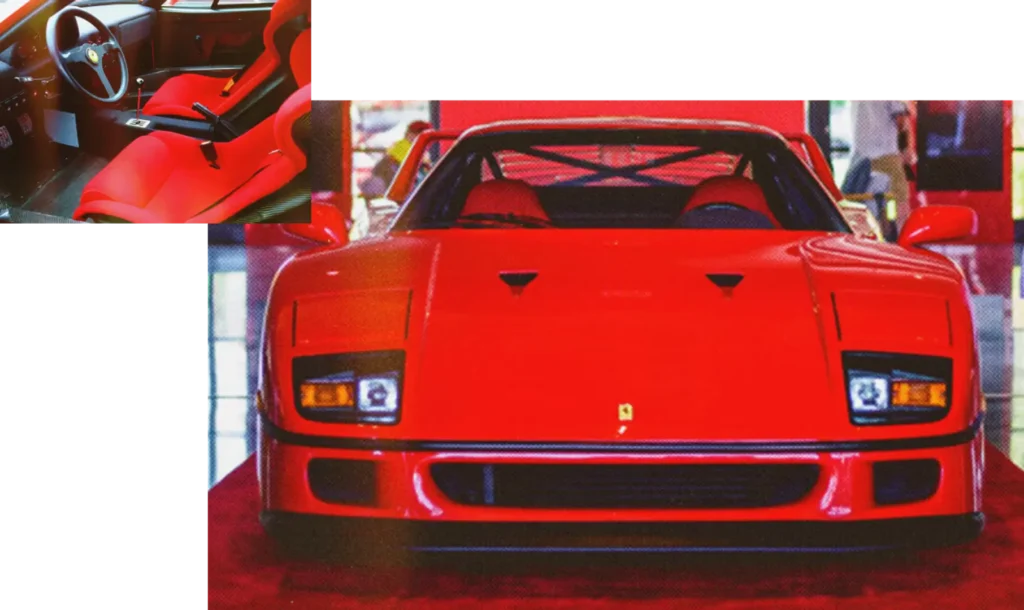
Opening the door of an F40 involves pulling a cable. No handle. Inside, no leather, no carpet, no soundproofing. The carbon-Kevlar door panels are left bare, exposing the weave. The dashboard is covered in matte black felt. The Kevlar bucket seats, covered with a fine fabric, are fitted with safety harnesses.
Early models have sliding Lexan side windows, like a prototype. Later versions (from 1991 onwards) received crank-operated windows, a concession to customers wanting a minimum of comfort. Air conditioning is standard. Not for luxury: without it, the heat from the V8 engine placed just behind the cabin would make the interior unbearable.
A few details reveal the project’s radical nature. The pedals are offset to the right to the point it feels like your feet are in the passenger space. The engine cover has no gas struts, deemed too heavy, and requires two people to open. The space intended for the spare wheel actually houses a bespoke, round, fitted luggage set. And the F40 has two fuel filler caps, one on each side, so you never have to worry about the pump’s side. Neither is lockable.
But this stripping back is not a whim. The power-to-weight ratio of 2,3 kg/hp placed the F40 on par with the sports prototypes of the time. Every gram saved translated into tenths of a second gained.
Road behaviour of the Ferrari F40
The first production car to exceed 200 mph (322 km/h), the F40 covers the 0 to 100 km/h sprint in 4,1 seconds and the 0 to 200 km/h sprint in 12 seconds. These figures remain respectable even compared to current supercars, considering that the F40 has neither launch control, nor automatic gearbox, nor all-wheel drive.
Car and Driver, in a famous 1992 test, described the acceleration sensation as “bending the steering wheel while trying to hold on, like an electrocuted bull.” Chris Harris, automotive journalist, summed it up: “The experience is raw and unfiltered. No driving aids, just pure adrenaline.”
No ABS, no power steering, no traction control. The front and rear double wishbone suspension, inherited from the 288 Evoluzione, offers surgical handling on the track. Two anti-roll bars complete the suspension setup. A three-position ride height corrector allows raising the ground clearance by 25 mm for manoeuvres. Ferrari later added an optional adjustable height suspension, as the original 125 mm ground clearance posed problems for daily use.
Braking is up to standard. 330 mm ventilated discs with aluminium centres are clamped by four-piston calipers. The hydraulic circuit uses hoses inherited from Formula 1 that do not expand under heat. Central locking wheel nuts, as in racing, allow quick changes.
But the F40 has its limits. On rough roads, it becomes physical and demanding. In the rain, oversteer is a constant threat. The noise level makes long journeys exhausting. The F40 is not made for motorways: its domain is the track, where it excels without reservation.
Competition variants: F40 LM, GTE, Competizione and GT
The F40 was not originally developed as an official Ferrari race car, but its architecture naturally made it suitable for circuit use. Its potential was such that several variants were born, all developed by Michelotto, the Ferrari tuner based in Padua.
The F40 LM is the best known. Introduced in 1989, it develops 720 hp for a weight of 1 040 kg. It was with an F40 LM that Jean Alesi achieved a 3th place in IMSA GTO at Laguna Seca in October 1989, the very first race result for the F40. Only 19 examples were built.
The F40 Competizione, produced in 10 examples in 1990, targeted gentleman drivers wishing to race without aiming for the world title. The F40 GT, meanwhile, had 7 examples converted into 1993 for the Italian GT championship, with 560 hp. These same cars raced in Japan in 1994 and 1995.
The F40 GTE represents the final chapter. From 1995 to 1997, the LM and GT received an engine increased to 3,5 then 3,6 litres for 660 hp. They competed in the BPR Global GT Series and at the 24 Hours of Le Mans, achieving successes against the McLaren F1 GTR before the latter took over. A blue F40 LM entered by RFR Sport finished 12th at Le Mans in 1995 and 1996.
According to counts generally accepted by specialists:
| Version | Examples | Power | Years |
|---|---|---|---|
| F40 LM | 19 | 720 hp | 1989-1994 |
| F40 Competizione | 10 | ~700 hp | 1990 |
| F40 GT | 7 | 560 hp | 1993 |
| F40 GTE | 7 | 660 hp | 1995-1997 |
Ferrari F40 versus Porsche 959: two irreconcilable philosophies
One cannot write about the F40 without mentioning its direct rival: the Porsche 959. Both cars were born in the same year but embody diametrically opposed visions of the supercar.
The 959 relies on technology: computer-controlled all-wheel drive, adaptive suspension, sequential turbocharging. It aims to be usable in the rain, comfortable on the motorway, competitive in rallying. It is a technological showcase.
The F40 chooses the exact opposite. Rear-wheel drive, no ABS, no electronic assistance. It compensates with lightness: 1 100 kg versus 1 450 kg for the 959. The Lamborghini Countach contemporary needed a V12 of 5,2 litres to produce 375 hp. The twin-turbo V8 of 2,9 litres in the F40 produced 478, proving that forced induction could surpass large displacement.
In 1987, testers often preferred the Porsche for its refinement. Three decades later, the verdict has reversed. The 959 is respected. The F40 is revered. And on the market, the price gap confirms it: a 959 in good condition is worth around 1,5 million euros, a F40 exceeds 2,5 million.
Production, speculation and value of the Ferrari F40
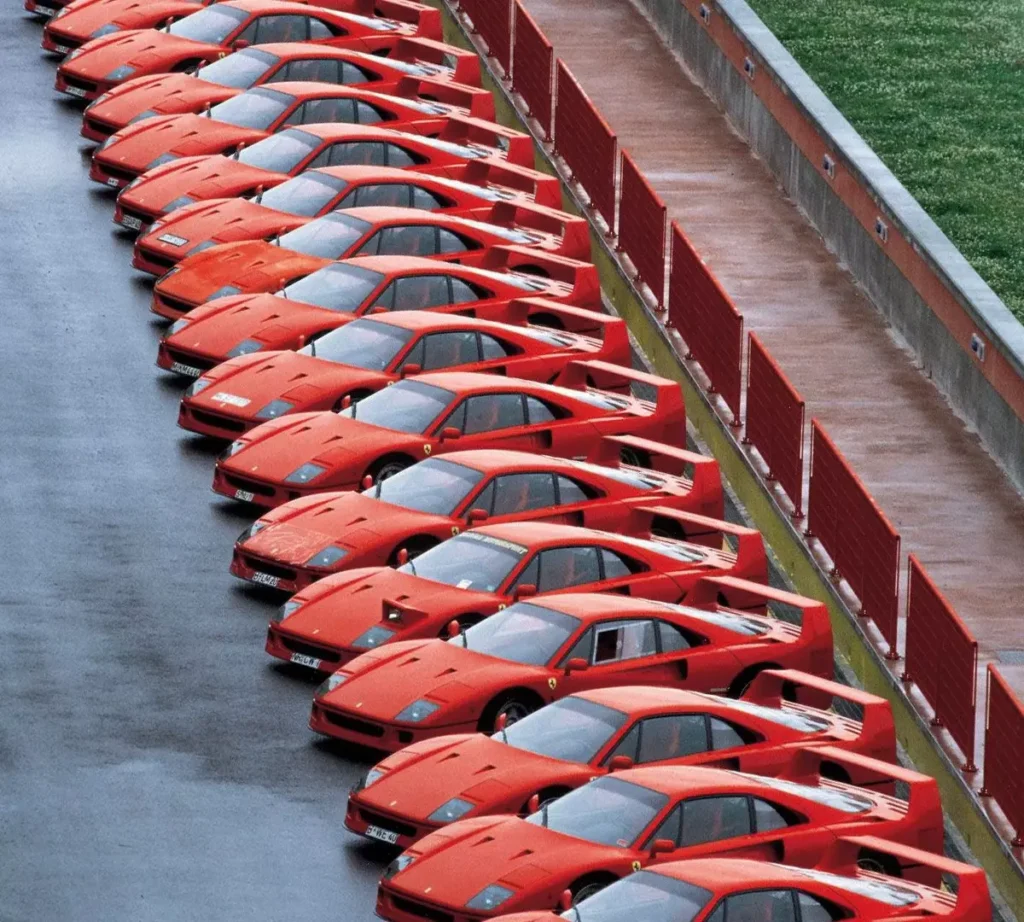
Ferrari had planned 400 units. Demand was so strong that production rose to 1 311 units between 1987 and 1992, including 213 units in American specification and 60 for the French market.
The death of Enzo Ferrari in August 1988 triggered a historic speculative bubble. F40s were resold for up to five times their catalogue price even before delivery. Nigel Mansell, Formula 1 champion, sold his for 1 million pounds sterling in 1990. When the bubble burst in the early 1990s, some buyers lost fortunes.
The market stabilised in the early 2000s. At that time, decent F40s could be found for under a million dollars. Since then, values have steadily risen. A good American-spec example that traded for 1,2 million dollars in 2014 now exceeds 3 million. The 22 American F40s from 1992, the last production year, are the rarest and most sought after. The 19 F40 LM models reach dizzying heights, sometimes beyond 5 million.
For potential buyers, an authenticity indicator to know: if you see the carbon-Kevlar weave under the thin paint, that’s a good sign. The F40 carries its original paint, those famous 2 litres applied at the factory. A repainted example with a thick layer masks the weave and loses value.
Maintaining an F40 is no trivial matter. Carbon-Kevlar parts are extremely costly. A simple body repair can reach tens of thousands of euros. One must budget significantly annually to keep the F40 in good condition.
The legacy of the Ferrari F40
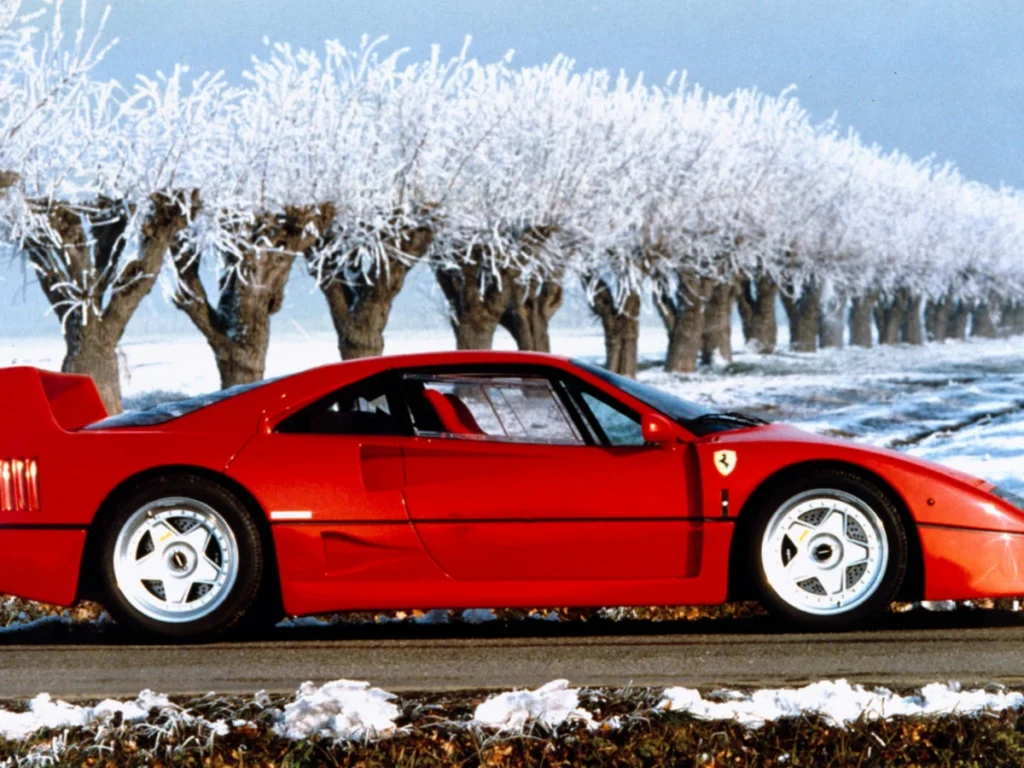
The influence of the F40 extends far beyond Maranello. Its formula, lightweight plus compact turbo engine, redefined what a supercar could be. Modern McLarens, with their carbon fibre monocoques and twin-turbo V8 engines, descend directly from the innovations of the F40. Even current hybrid hypercars, despite their electronic complexity, pay homage to the founding principle of the F40: the pinnacle of performance through minimal weight.
FAQ on the Ferrari F40
What is the price of a Ferrari F40 today?
A Ferrari F40 in good condition trades between 2 and 3 million euros depending on mileage, history and specification (European or American). The US-spec 1992 examples, the rarest, can exceed 3,5 million. The sport variants (LM, GTE) reach 5 million and more.
How many Ferrari F40 were produced?
Ferrari manufactured 1 311 units of the F40 between 1987 and 1992. This figure includes 1 268 road versions, 19 F40 LM, 10 F40 Competizione, 7 F40 GT and 7 F40 GTE. The initial production was planned at 400 units, but demand pushed Ferrari to triple that number. We also look back atwhat made the F40 a legend, beyond the production figures.
What is the top speed of the Ferrari F40?
The F40 officially reaches 324 km/h (201 mph). It thus became the first production car to exceed 200 mph, a record that marked an entire generation of supercars.
Why is the Ferrari F40 so expensive?
Several factors explain the high value of the F40. It is the last car approved by Enzo Ferrari himself. Only 1 311 examples exist. Its construction in carbon fibre and Kevlar and its twin-turbo V8 engine were revolutionary. And modern regulations make creating a similar car impossible, which makes it irreplaceable.
What is the power output of the Ferrari F40?
The official power is 478 hp at 7 000 rpm, produced by a twin-turbo V8 engine of 2 936 cm³. The European versions without a catalytic converter actually developed nearly 500 hp. The track variant F40 LM could reach 720 hp.
On 21 July 1987, at Marane
Image source: https://www.ferrari.com/fr-FR/auto/f40