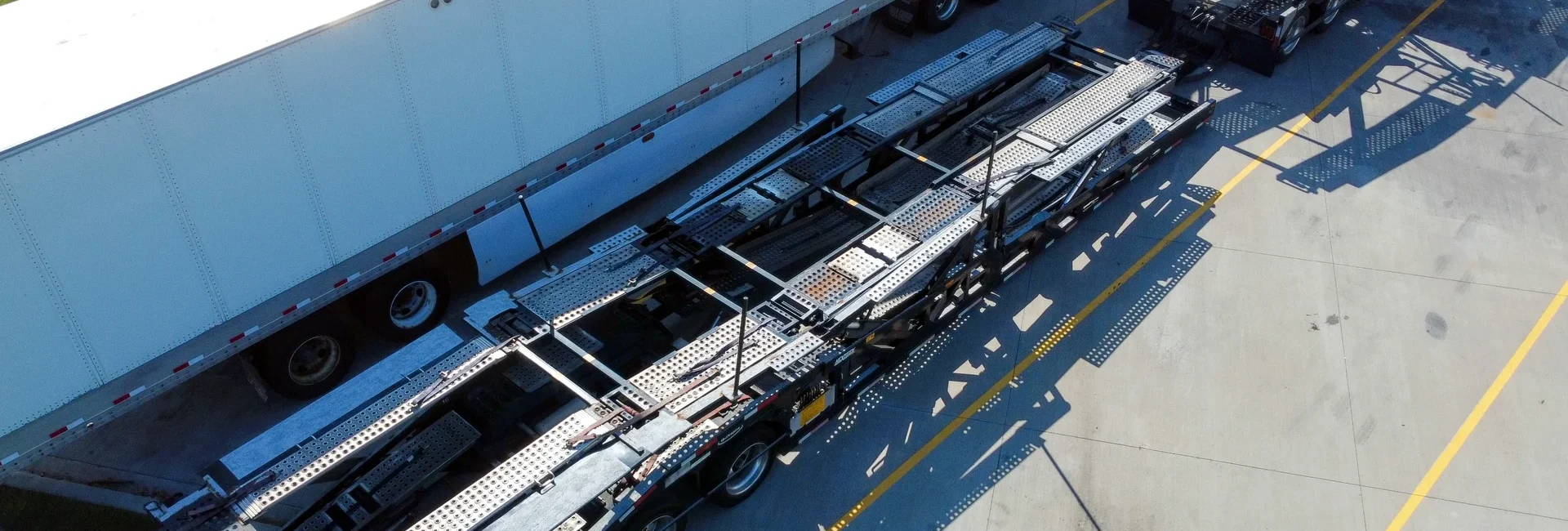
Transporting a classic car is not just about booking a flatbed. You need to choose equipment suited to the ground clearance, accurately declare the vehicle and its value, organise a joint condition report both at departure and arrival, then verify the actual extent of the insurance cover. For a valuable vintage car, the most frequently overlooked point is also the most costly:without a written declaration of value, the compensation limit provided by the standard contract can be far below the market value..
Here is the method to follow to have a classic car transported while minimising risks, whether the journey leads to a workshop, an auction, a concours or the garage of a new owner.
Which transport option to choose for a classic car?
There is no universal solution. The choice depends on the value, running condition, ground clearance, distance and level of protection sought.
| Solution | Appropriate use | Point of caution |
|---|---|---|
| Dedicated flatbed or car transporter | Direct journey, non-running vehicle or low ground clearance | Check ramps, winch and tie-down points |
| Enclosed truck | Rare, fragile, restored or very valuable car | More protective, but generally more expensive and less available |
| Group transport | Flexible journey and optimised budget | More handling and less precise timings |
| Road convoy | Reliable car, insured and authorised to drive | Additional mileage, wear, weather and road risk |
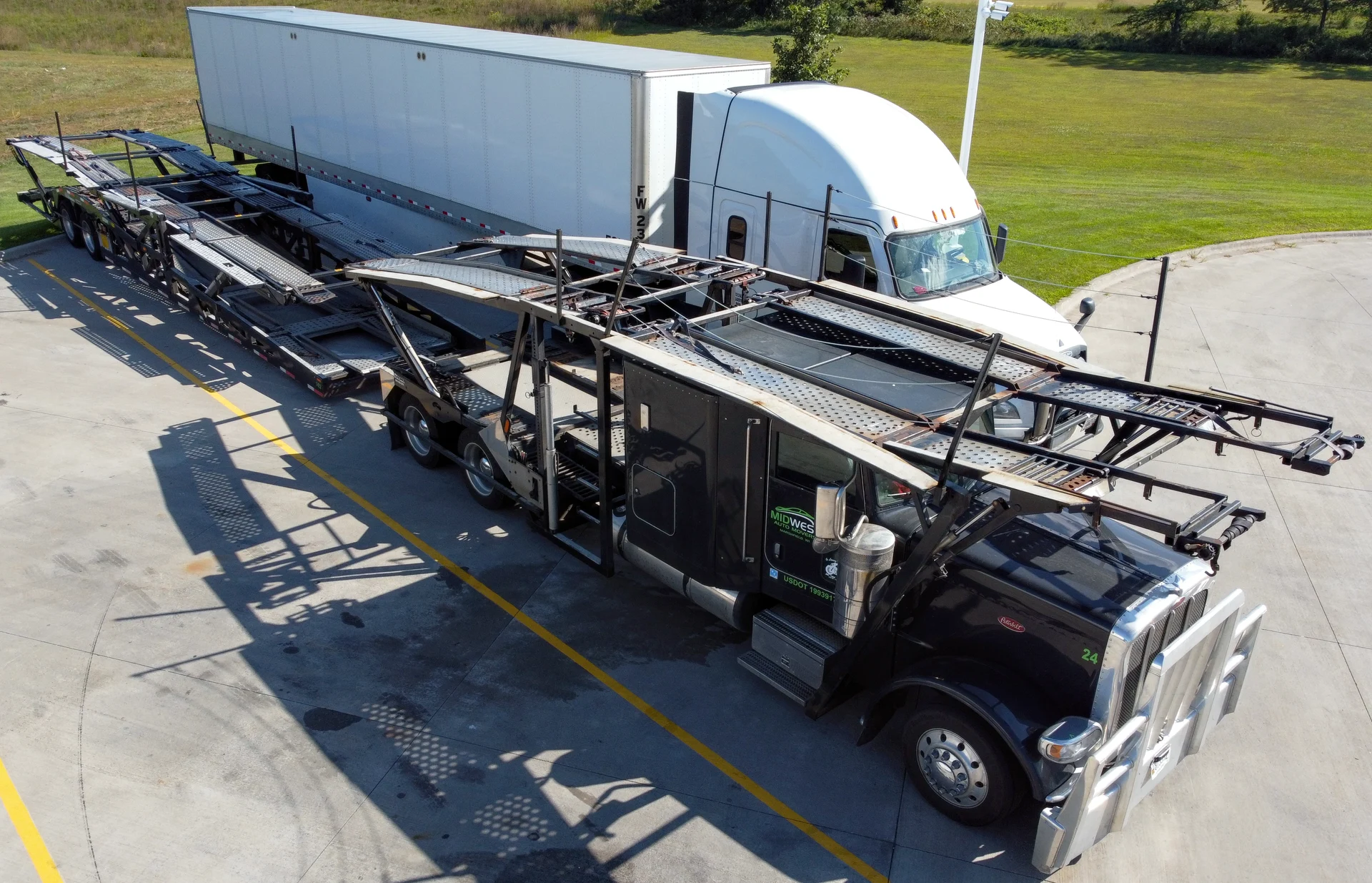
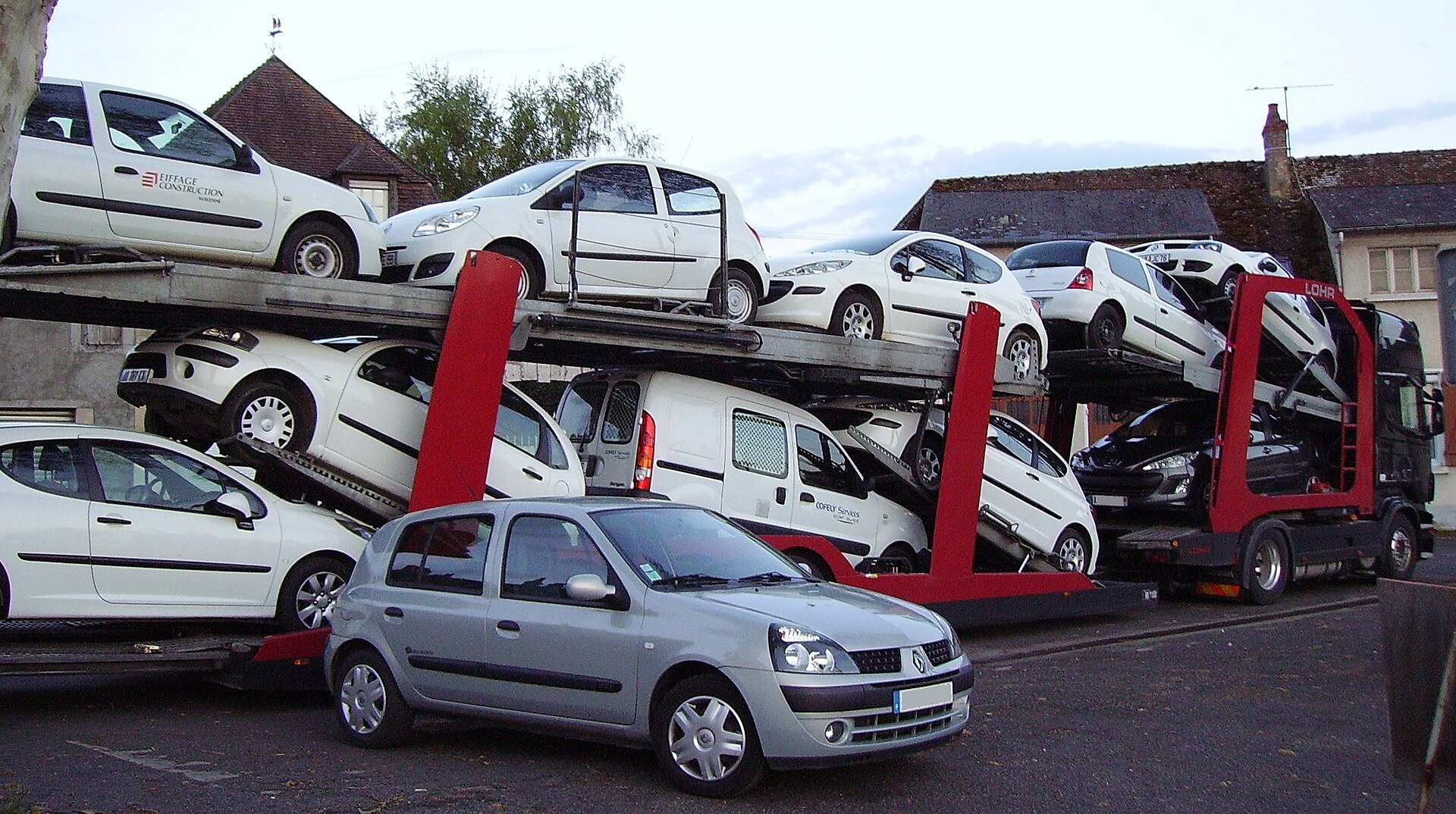
For a freshly restored bodywork, a very rare example or an open car, the enclosed truck offers better protection against the weather, debris and prying eyes. A dedicated flatbed can be perfectly suitable for a more common car, provided ramps with a low angle are used and the tie-down is by the wheels so as not to unnecessarily stress the suspension or chassis.
Convoying avoids loading, but it is not a neutral solution: it adds mileage, exposes the car to traffic hazards and assumes it is in running order. The standard French road vehicle transport contract also includes convoying by driving or towing when it is ancillary to a main transport.
Before signing: information to provide to the carrier
The standard contract annexed to the Transport Code provides a useful checklist. The principal must notably communicate the addresses and dates, access conditions, the type of vehicle, its identification number or registration, its weight, dimensions and particularities.
In the case of a classic car, add in writing:
- the value of the vehicle and the supporting documentation used;
- whether it is operational or non-operational;
- the ground clearance and overhangs;
- the condition of the brakes, steering and handbrake;
- known leaks, possible absence of battery or fuel;
- fragile or removable elements: spoiler, convertible roof, antenna, mirrors, kill switch;
- the number of keys and entrusted accessories;
- the need for rain protection or enclosed transport.
These details are not bureaucratic. They determine the equipment, handling method and sometimes the price. The Code requires the carrier to use a vehicle suited to the characteristics of the vehicle being transported and to the conditions of loading, securing and access.
If the car has been stationary for a long time, also consult our guide to getting a classic car back on the road before considering transportation.
Declaration of value: the essential verification
A carrier’s insurance certificate does not automatically guarantee reimbursement up to the actual market value of your car. It is necessary to distinguish the carrier’s liability, their contractual limits, and any additional insurance covering the declared value.
The standard contract applicable in the absence of a different written agreement provides several limits. For a used vehicle no longer listed in the Argus guide, compensation for total loss or equivalent damage is limited to 1 000 euros per vehicle, excluding special cases provided by law, notably gross negligence or fraud. This amount is obviously unrelated to the value of many classic cars.
The safeguard provided by the same text is a written declaration of value made at the time of contract conclusion. The declared amount then replaces the default limit, subject to payment of the corresponding premium. Therefore, before collection, you must obtain:
- written confirmation of the declared value;
- the applicable compensation ceiling;
- the exclusions and the deductible;
- the identity of the insurer and, if necessary, a certificate;
- confirmation that loading, intermediate parking and unloading are covered.
A recent appraisal, restoration invoices and comparable listings help justify the value. To obtain an initial estimate, you can also request a free valuation from Plethore Cars, then have the value specified by a professional when the stakes require it. Our feature on agreed value in classic car insurance explains the difference between appraisal, declared value and agreed value.
Condition report and photographs: establishing proof
The carrier is responsible for loading, securing, lashing, strapping and unloading under the standard contract. This also provides for a joint inspection of the vehicle’s apparent condition and its accessories before collection, then after unloading, with recording on written or electronic media.
Do not be satisfied with the mention “used condition”. Photograph the clean car in daylight before the truck departs:
- four bodywork angles;
- wheels and tyres;
- windscreen, lights and lower parts;
- interior, odometer and fuel level;
- engine compartment and visible underside;
- accessories, spare parts and entrusted tool kit.
Files must retain their date. Have every scratch, dent, paint defect, crack or missing accessory noted on the collection document. Upon arrival, inspect the vehicle before signing without reservation. If damage is visible, make precise reservations on the delivery note, photograph it and promptly notify the carrier and insurer according to the contractual procedure.
How to prepare the car before collection?
The carrier’s exact instructions take precedence, but methodical preparation avoids most incidents.
- Remove any unsecured items from the interior and boot.
- Close windows, sunroof, convertible top and doors; deactivate the alarm if it might trigger during the journey.
- Check that the tyres are inflated and that the steering is not locked, unless otherwise instructed.
- Report any leaks and protect sensitive parts without covering the tie-down points.
- Only leave the fuel level requested by the transporter.
- Do not hand over the vehicle’s original documents unless expressly agreed; inventory everything travelling with the car.
- Provide starting instructions: kill switch, choke, fuel pump, gearbox procedure or handbrake.
A low car requires special attention: ask about the ramp angle and possible use of extensions. Never allow the driver to improvise a towing point on a fragile bodywork or suspension component.
Transporting yourself with a trailer: which licence?
The required licence is determined based on the GVWRs recorded on the registration certificates, not just the weight observed on the day of the journey. Service-Public summarises the main cases as follows:
| Configuration | Required category |
|---|---|
| Trailer with GVWR less than or equal to 750 kg | Category B licence under the specified conditions |
| Trailer over 750 kg and total GVWR less than or equal to 3 500 kg | Category B licence |
| Total GVWR greater than 3 500 kg and less than or equal to 4 250 kg | Category B licence with 96 endorsement |
| Total GVWR greater than 4 250 kg, trailer GVWR less than or equal to 3 500 kg | Category BE licence |
Beyond this, other categories may be necessary. Also check the towing capacities recorded on the towing vehicle’s registration document, the actual weight of the combination, trailer braking, the payload of the platform and insurance coverage. A car transporter trailer and its load quickly exceed the limits of a simple Category B licence.
Proof of insurance must identify the covered vehicle and mention the trailer when applicable. Request written confirmation from the insurer for the intended use, especially if the transported car is of high value.
How much does it cost to transport a classic car?
A serious price depends on the mileage, the vehicle, its running condition, the equipment, the dedicated or grouped nature of the journey, tolls, access, and the level of coverage. The standard contract of the Transport Code specifies that the price notably depends on the equipment deployed, weight, volume, distance, and particular constraints.
Be wary, therefore, of a per-kilometre price presented as universal. Request at least three quotes based on the same criteria and ask for details on:
- collection and delivery;
- open flatbed or enclosed truck;
- any waiting and storage fees;
- declared value and additional insurance;
- tolls, access surcharges or non-running vehicle fees;
- cancellation conditions.
For a purchase abroad, transport represents only part of the process. Consult our guide to importing a classic car from the United States and anticipate customs documents before shipping.
The checklist before departure
- Verify the identity, professional registration, and insurance of the carrier.
- Have the vehicle, its condition, dimensions, and constraints recorded in the order.
- Declare its value in writing and know the compensation limit.
- Validate the equipment, ramps, and securing method.
- Carry out a detailed joint condition report with time-stamped photos.
- Inventory the keys, documents, and accessories handed over.
- Keep the quote, contract, transport document, and correspondence.
- Arrange for a competent person to be present at departure and arrival.
- Inspect the vehicle immediately after unloading.
- Note any precise reservations before signing and promptly follow the prescribed procedure.
Frequently asked questions
Should you choose an enclosed truck for a classic car?
Not necessarily. It is particularly relevant for a very rare, open, fragile or freshly restored car. A dedicated open flatbed may be suitable if the equipment, securing, weather and insurance coverage are appropriate.
Does the carrier’s insurance cover the full value of the car?
Not necessarily. You need to check the limits and exclusions. For a classic car that is no longer listed, the standard contract typically provides a very low limit by default; a written declaration of value or additional coverage is therefore essential.
Can a classic car that does not run be transported?
Yes, provided this is declared before the quote. The carrier must provide a winch, suitable ramps and a handling method compatible with the brakes, steering and ground clearance.
Can a car without registration documents be transported on a flatbed?
Transport on a flatbed does not mean the vehicle is moving under its own power, but it is necessary to justify its origin and precisely identify the asset. The carrier may require specific documents. Our guide dedicated to buying a classic car without registration documents details the registration procedures.
Who is responsible for securing the car on the truck?
Under the standard French contract, the carrier is responsible for loading, bracing, securing, strapping and unloading. However, the owner must report any particularities likely to affect these operations.
Sources and date of verification
Information verified on 15 September 2026 from the standard contract applicable to public road transport of rolling vehicles published on Légifrance, from the fact sheet which driving licence category to tow a trailer? and from the fact sheet car insurance: proof and applicable rules from Service-Public. The practical recommendations have been cross-checked with the public instructions of specialised carriers; they must be adapted to the vehicle and the signed contract.
This article provides general information and does not replace either the analysis of the transport contract or advice from an insurer or legal professional.