After an accident involving a classic car, do not immediately start repairs. Report the claim within the timeframe specified in the contract, keep the evidence, request the expert report, and document the vehicle’s value prior to the accident. If the assessment or compensation seems insufficient, you may submit a written dispute, request a counter-expertise, and if necessary, use the complaint procedure and contact the Insurance Ombudsman.
A classic car is not valued like a standard used vehicle. An older restoration, a rare configuration, the quality of parts, provenance, or the condition before the accident can significantly affect the repair cost and replacement value. The key is therefore to provide the expert with a precise dossier, without confusing sentimental value with demonstrable market factors.
Information verified on 7 October 2026 for a vehicle registered and insured in France. Guarantees, deductibles, contractual values, and counter-expertise procedures depend on the contract. This article does not replace the analysis of your insurer, a qualified automotive expert, or legal advice.
Immediate steps after the accident
Begin by securing people and the scene. If the car’s condition allows, photograph its position, the damage, the road surface, skid marks, and other vehicles before they are moved. Complete an amicable accident report if a third party is involved and collect contact details of any witnesses.
For an old or rare automobile, add detailed views of elements that may be difficult to replace: handcrafted bodywork, chassis, wheels, headlights, glazing, specific mechanical parts, and identification numbers. Also photograph the interior and the dashboard, even if they appear intact.
Next, report the claim to the insurer within the deadline set by the contract. Submit the requested documents, but keep the originals and a dated copy of each exchange. Request in writing where the car will be stored, who is responsible for towing, and from when storage fees may be charged.
Avoid dismantling, repairing, or discarding any parts before the expert’s visit, except for essential protective measures. Premature intervention can complicate identifying damage attributable to the claim. If urgent action is necessary to prevent worsening—such as protecting the car from rain, disconnecting the battery, or containing a leak—document its condition before and after.
How does the automotive expertise process work?
The insurer may appoint an expert to examine the car, determine the causes and extent of the damage, estimate repair costs, assess the feasibility of restoring the vehicle, and propose a pre-accident value. The examination usually takes place at the garage where the car has been taken.
Service-Public specifies that the expert notably verifies the circumstances of the claim, the damage, their consistency with the declaration, necessary repairs, and the vehicle’s value. Their report then serves as a technical basis for the insurer, but the guarantees and compensation limits remain those of the contract.
Promptly inform the expert that the vehicle is of collector interest. Provide information that precisely distinguishes the example: version, year, chassis number, original specification, known modifications, restoration, and history. A complete dossier does not guarantee a value; it prevents a rare car from being compared to a different version or irrelevant listings.
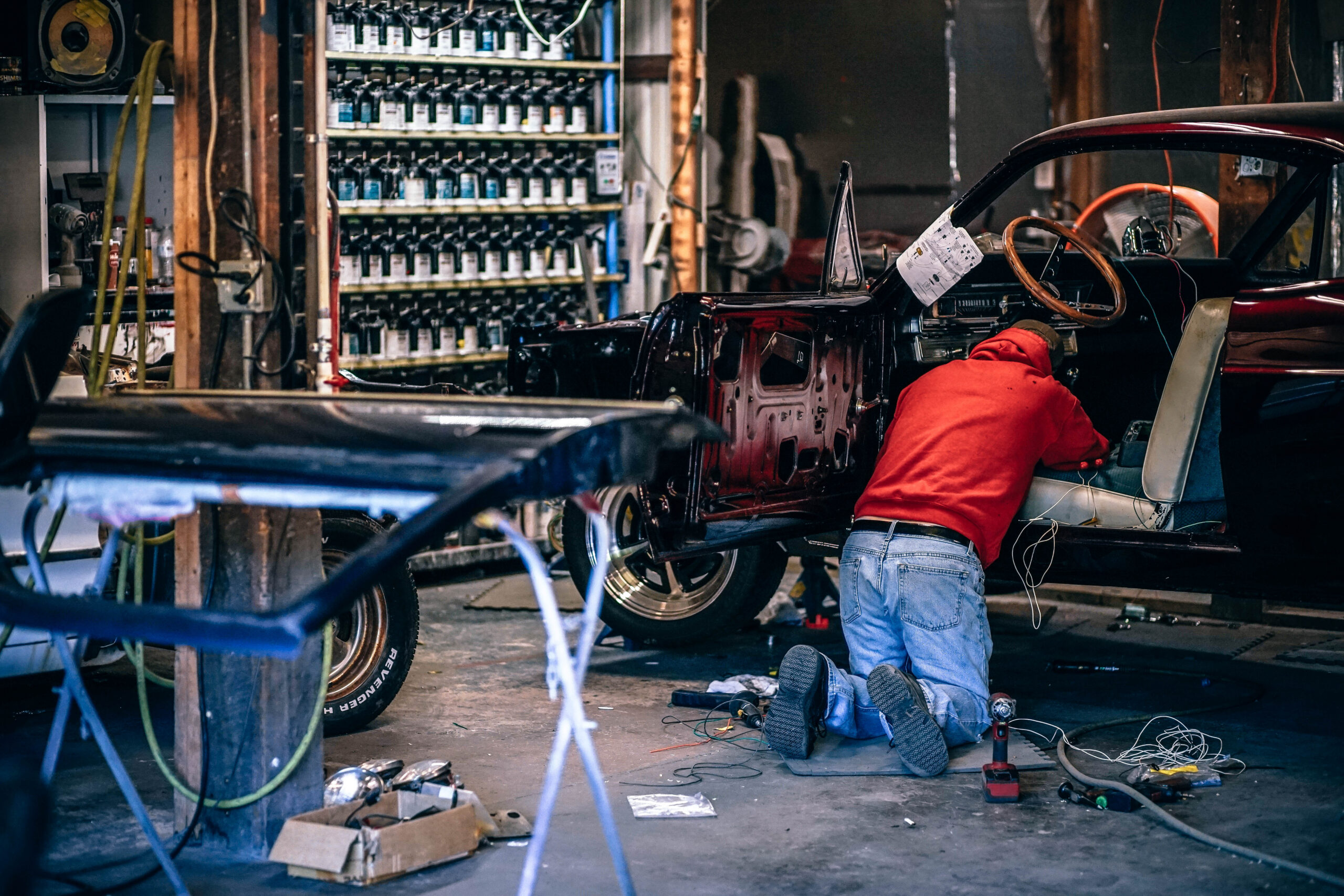
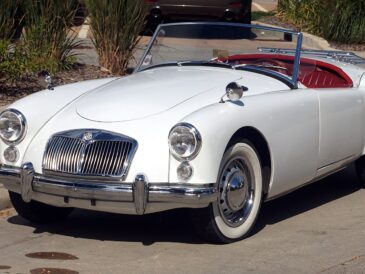
A damaged classic often requires skills and parts not included in a standard estimate. Photo: Igor Ovsyannykov, Wikimedia Commons, CC0.
Documents to provide to the expert
Prepare an organised digital dossier, with a summary page and readable files:
- registration certificate and proof of ownership;
- insurance contract, special conditions, and latest endorsement;
- previous expert report, if available;
- purchase invoice or auction receipt;
- dated photographs taken before the accident;
- maintenance, restoration, and parts invoices;
- historical file, certificates of authenticity and provenance elements;
- technical inspection and mileage record;
- comparable listings genuinely close by version, condition, history and market;
- estimate from a restorer or workshop familiar with the model.
Invoices do not mechanically add to the market price: a restoration costing 60 000 euros does not necessarily increase the value by 60 000 euros. However, they do prove the nature, date and quality of the work, which helps to reconstruct the pre-accident condition.
A well-organised historical file becomes particularly useful after an accident. It allows distinguishing prior defects from recent damage and establishing the car’s configuration before it was immobilised.
Declared value, agreed value and pre-accident value
Review the exact definitions in the contract. The “declared value” may be merely information provided to the insurer or a basis for calculating the premium. The “agreed value” may correspond to a value accepted for a specified period and under certain conditions. In both cases, deductibles, limits, depreciation, exclusions and revision rules can affect the compensation.
The value retained after an accident therefore depends on the contract and the technical file. An old report may be insufficient if the market, condition or configuration of the car has changed. Our comparison between agreed value and declared value details these differences.
To argue a value, prioritise comparable and dated references: same generation, engine, bodywork, delivery market, condition and quality of restoration. Separate listed prices from actual concluded sales results. A single listing at an ambitious price does not alone constitute a valuation.
You can also have your classic car appraised to obtain a market reference, notably before renewing the contract. However, a commercial appraisal does not replace the report required by the insurer nor a joint expertise after damage.
Repairable, VEI or VGE: understanding the consequences
Three different questions must be distinguished: can the car be technically repaired, can it be driven safely, and do the repair costs exceed its pre-accident value?
| Conclusion | Practical meaning | Main continuation |
|---|---|---|
| Repairable without particular administrative procedure | The damage can be restored within the terms of the contract | Agreement on the estimate, choice of workshop and monitoring of the work |
| Economically irreparable vehicle (EIV) | The estimated repair cost exceeds the value of the vehicle | Offer of transfer and compensation; possibility to accept or refuse |
| Seriously damaged vehicle (SDV) | Safety elements make driving dangerous | Driving ban and monitoring of repairs by a qualified expert |
According to Service-Public, when the repair costs exceed the value of the vehicle, the insurer must propose, within fifteen days following the submission of the report, a total loss compensation with transfer of the vehicle. The owner then has thirty days to accept or refuse.
In case of refusal or no response, an opposition to the transfer of the registration certificate may be registered. To lift a driving ban or opposition after repair, a second report must notably certify that the required work has been carried out, that the car can be driven normally and that it has not undergone any significant modification.
For a classic car, the economic classification deserves particular attention: an underestimated pre-accident value can tip the case into EIV when a suitable comparison would lead to a different conclusion. This does not change safety requirements; it only justifies checking the valuation method.

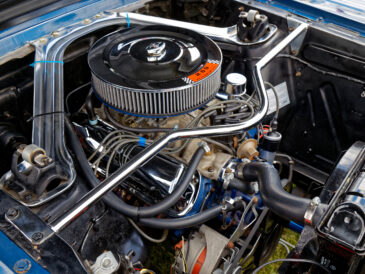
Restoring a classic car may require a workshop capable of documenting and preserving its characteristics. Photo: Y. Leclercq,Wikimedia Commons, CC BY-SA 4.0.
Can you choose the repairer?
Ask the insurer if the contract requires an approved network or provides specific conditions for coverage. For a classic, the choice should not be based solely on the hourly rate. The workshop must understand the construction techniques, materials, availability of parts and the consequences of a repair on authenticity and future value.
Before agreeing, have the following specified in writing:
- the scope of dismantling and additional checks;
- the use of new, period, reproduced or repaired parts;
- structural, bodywork, paint and mechanical work;
- any discrepancies between the workshop estimate and the expert’s valuation;
- coverage of discoveries after dismantling;
- transport, storage and custody fees;
- the inspections and reports necessary for returning to circulation.
Do not authorise significant substitution without assessing its documentary impact. Keep the removed parts whenever possible, photographs of the worksite, detailed invoices and references of the fitted components. This information will become part of the car’s history and must be disclosed honestly during any future sale.
How to contest the report or compensation?
Start by requesting a copy of the expert report. Service-Public states that the expert must send their report to the vehicle owner. Then compare the essential elements: exact identification, condition before the incident, assessed value, market references, list of repairs, cost of parts and labour, reparability and any administrative procedures.
Send a reasoned dispute to the insurer and the expert. Do not merely state that the amount is too low: provide missing documents, correct inaccurate comparables and request a response on each point.
If disagreement persists, you may request a counter-expertise carried out by an expert of your choice. This is usually paid for in advance by the insured, unless covered by a legal protection guarantee or the contract. The two experts then try to reach a common conclusion. In case of disagreement, a third expert assessment may be arranged; its costs are usually shared according to contractual provisions.
Ensure that the chosen expert is listed on the national register and has experience appropriate to the type of vehicle. The Highway Code requires the independence of the automotive expert and makes this profession incompatible with certain activities, notably those of insurer, repairer or car dealer.
Complaint and Insurance Mediator
A technical counter-expertise and a contractual complaint do not address exactly the same issue. The first discusses the vehicle analysis; the second contests the insurer’s decision or contract application.
Follow the procedure indicated in the general conditions: usual contact, then complaints department. Write chronologically, state the requested solution and attach the contract, reports, estimates, proof of value and previous correspondence.
The Insurance Mediation service can be contacted free of charge after internal procedures and, in any case, two months after the first written complaint, whether or not the insurer has responded. The referral must be made within one year following this complaint. The mediator handles disputes concerning the application or interpretation of the contract; they do not replace a mechanical expertise.
Legal action remains possible when mediation is unsuitable or unsuccessful. Given limitation periods and amounts involved, seek legal advice promptly if the car is rare, liability is disputed or the value gap is significant.
Checklist before accepting compensation
- Have you received the complete report?
- Are the model, version and chassis number correct?
- Is the condition and configuration before the incident accurately described?
- Have invoices and previous expertise been examined?
- Do the comparables truly correspond to your car?
- Does the estimate include the necessary parts, methods and skills?
- Are transport and storage costs clarified?
- Does the offer specify the deductible and the vehicle’s fate?
- Does a VEI or VGE procedure affect the registration document?
- Is the response deadline clearly identified?
Do not accept a transfer of the vehicle nor a settlement presented as final without understanding its consequences. For a significant automobile, an independent review of the report and contract can prevent an irreversible decision.
Frequently asked questions
Does the insurance expert alone determine the compensation?
The expert provides the technical assessment and the value which serve as the basis for the file. The compensation is then calculated by the insurer according to the contract, the coverages, the deductible, and the liabilities.
Can I obtain the expert report?
Yes. Service-Public states that the automotive expert must send a copy of their report to the vehicle owner.
Who pays for the automotive counter-expertise?
It is generally requested and advanced by the insured, but the contract or legal protection insurance may provide coverage. Check the limits and conditions before commissioning the expert.
Must a vehicle classified as VEI be destroyed?
No. VEI means that the estimated cost of repairs exceeds the retained value, not necessarily that the repair is technically impossible. The owner can refuse the transfer, but an opposition to the transfer and expert monitoring may then apply.
Can you drive a vehicle classified as VGE?
No, when the prefecture has notified a driving ban. The lifting of the ban requires the planned repairs and an expert report certifying that the vehicle can safely circulate again.
Does an agreed value prevent any discussion?
Not automatically. You must read the definition, the validity period, the revision clauses, the deductibles, and the exclusions of the contract. The handling depends on the commitments actually subscribed.
Official sources
- Service-Public — Car insurance: how does the expertise process work? : role of the expert, content of the report, transmission to the owner, and counter-expertise.
- Service-Public — Road accident: compensation for material damage : declaration, compensation offer, and dispute.
- Service-Public — Accident-damaged vehicle: consequences on the registration certificate : VGE and VEI procedures, deadlines, opposition, and return to circulation.
- Légifrance — Highway Code, articles R. 327-1 to R. 327-6 : expert reports and damaged vehicles.
- Légifrance — Highway Code, article L. 326-6 : independence and incompatibilities of the automotive expert.
- The Insurance Mediation — Mediator’s charterConditions, deadlines and free mediation.