A classic car is not quite an ordinary asset. It can embody significant financial value, a family history, and documentation accumulated over decades.It is possible to bequeath a classic car by will, but a vague or imprecise phrase can create disputes among heirs, make the identification of the vehicle uncertain, or expose the beneficiary to unforeseen taxation.
To pass on a Ferrari, a Porsche, an old Citroën or a long-preserved popular model, three matters must be distinguished: the validity of the will, the rights of reserved heirs, and the formalities that will then allow the legatee to take possession of the vehicle and register it. Here is the procedure to follow in France.
Can a car be specifically bequeathed by will?
Yes. A will can provide for a specific legacy, that is to say the allocation of a determined asset to a designated person. The official website Justice.fr explicitly lists vehicles among the assets that may be bequeathed. However, the testator must be the owner of the asset and retain the capacity to modify or revoke their dispositions until death.
The Civil Code provides that the specific legatee acquires a right over the bequeathed item from the moment of death, subject to the necessary formalities for the delivery of the legacy. The vehicle is transferred with its necessary accessories and in the condition it is in on the day of death. For a classic car, the notion of accessories deserves clarification: set of keys, historical file, logbook, invoices, onboard tools, original dismantled parts or certificate of authenticity can have considerable value.
The legacy does not circumvent inheritance rules. In the presence of children, a portion of the estate is reserved for them. The vehicle can only be freely allocated within the limit of the available portion, unless there is an agreement or an appropriate legal mechanism. If its value exceeds this available portion, the legacy may be reduced or give rise to compensation.
First step: verify who actually owns the car
Before drafting the will, the ownership of the vehicle must be established. The registration certificate identifies the administrative holder, but France Titres reminds that it does not constitute proof of ownership. Therefore, useful evidence must be gathered: purchase invoice, sales contract, proof of payment, import file, prior inheritance inventory and, if applicable, matrimonial agreement.
This verification is essential when:
- the vehicle was purchased during a marriage;
- the registration document lists multiple holders;
- the restoration was financed by several family members;
- the car belongs to a company or a joint ownership;
- the vehicle has already been received by donation or inheritance.
A person can only bequeath what belongs to them. The Civil Code also provides that the legacy of an asset belonging to another is null. If the car is jointly owned by spouses or held in joint ownership, the will must be drafted according to the testator’s real rights, not just the name visible on the registration document.
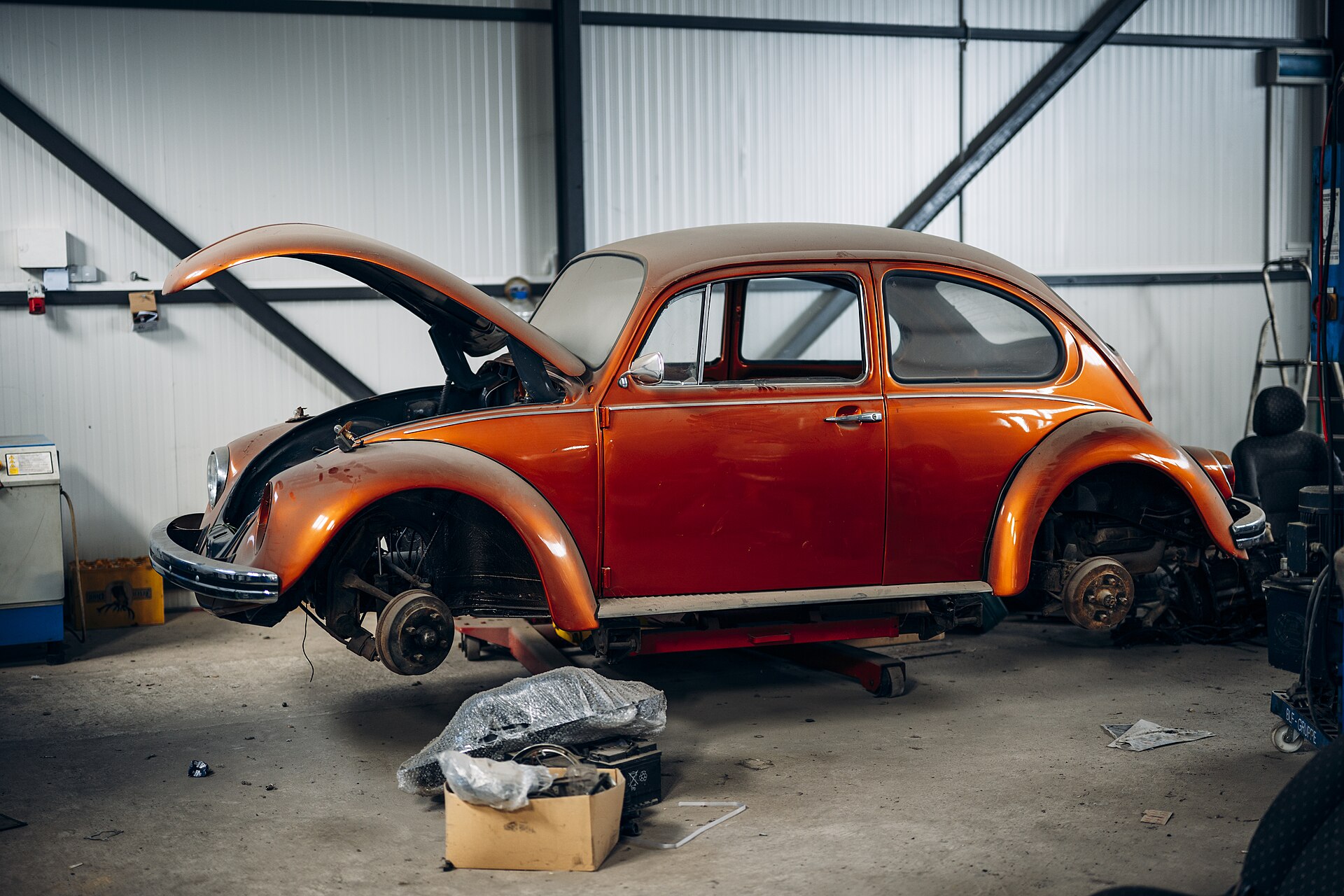
Before drafting the will, the ownership file and the condition of the car must be documented. Photo: Shixart1985, CC BY 2.0, via Wikimedia Commons.
How to designate the car unambiguously?
Writing “I bequeath my vintage car to my nephew” is risky if several vehicles later become part of the collection. The will must enable the notary and heirs to identify the asset without interpretation.
It is prudent to specify:
- the make, model, version and year;
- the serial number or VIN;
- the current registration number;
- the colour and, if useful, the engine number;
- the usual place of storage;
- the full identity of the beneficiary;
- the fate of the historical file, keys, parts and accessories.
A formulation prepared with a notary can also provide for what happens if the vehicle is sold, destroyed or replaced before death. A specific bequest concerning a car no longer in the estate may become moot. For an evolving collection, the will should therefore be reviewed after each significant sale or acquisition.
Holographic or authentic will: which to choose?
The holographic will must be entirely handwritten, dated and signed. It is simple but can be lost, poorly worded or contested. Depositing it with a notary and registering it with the Central File of Last Wills facilitates its discovery upon death.
The authentic will is received by a notary according to legal formalities. For a rare car, a beneficiary outside the family, a blended family or a value likely to affect the reserved portion of inheritance, this option offers a safer drafting. The notary can verify the testator’s capacity, the coherence of the bequest and its civil and tax consequences.
The will may include a charge or condition — for example, to keep certain documents with the vehicle — provided it is lawful and feasible. The Notaries of France remind that an impossible, illegal or contrary to public order charge poses problems. Very long obligations, such as forbidding any resale for decades, should therefore be examined with caution.
Have the car appraised before drafting the bequest
The value of a classic car directly influences the balance of the estate. An old appraisal, an insurance price or a general valuation are not always sufficient. Two examples of the same model can show considerable differences depending on their authenticity, condition, history, provenance and quality of restoration.
A documented appraisal allows to:
- measure the impact of the bequest on the disposable portion;
- prepare any compensation between heirs;
- anticipate inheritance taxes;
- inventory original accessories and parts;
- reduce disputes over value at the time of death.
However, the value must be updated at the time of inheritance. To prepare the file, you can consult our guide on the appraisal of a classic car in an inheritance or request a free valuation of your car.
What taxation applies to the beneficiary?
The vehicle is included in the estate assets at its declared value. The duties owed by the beneficiary mainly depend on their relationship to the deceased, applicable allowances, the net value transferred, and other assets received. Furthermore, the Civil Code states that the registration duties on a specific legacy are, in principle, borne by the legatee, unless the will provides otherwise within legal limits.
Therefore, one should not choose a beneficiary solely based on their attachment to the car. A legacy to a distant relative or unrelated person can result in a high tax burden and may force them to sell the vehicle to pay the duties. The notary can simulate this cost and consider other solutions.
Lifetime transfer can sometimes be more appropriate. Our dossier giving a classic car during one’s lifetime outlines the main procedures and differences. However, this option should not be decided without a comprehensive study of the estate.
What happens after death?
The first instinct is not to take the car out on the road. The vehicle, keys and documents must be secured, the notary in charge of the inheritance notified, and insurance coverage checked. The beneficiary must then assert their rights and obtain delivery of the legacy according to the succession situation.
France Titres requires, to register a vehicle received by inheritance and keep it, supporting documents including:
- the application for registration certificate;
- the old registration document;
- proof of address;
- proof establishing heir or legatee status, depending on the file;
- the technical inspection certificate when required;
- declarations relating to the driving licence and insurance.
In the presence of co-heirs, renunciations or a notarised deed specifying the allocation of the vehicle may be necessary. The procedure is carried out online via France Titres or through an authorised professional.
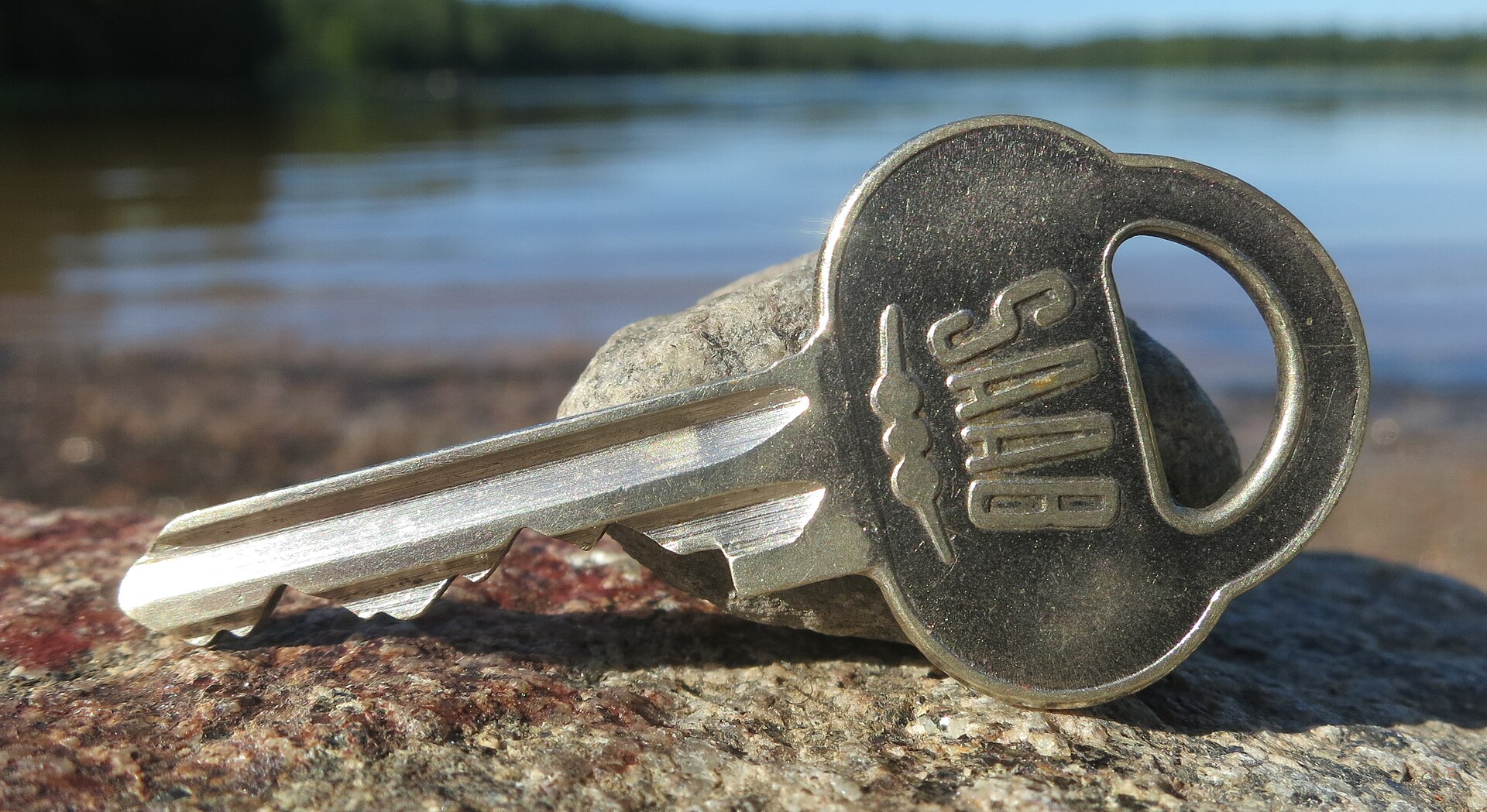
Handing over the keys does not replace either the settlement of the inheritance or the new registration. Photo: R. Henrik Nilsson, CC BY 4.0, via Wikimedia Commons.
Can the inherited car be sold without re-registering it?
In principle, the vehicle kept must be registered in the name of the new owner. However, France Titres provides exceptions when resale occurs within three months of death or when the vehicle has not been driven on public roads since the death. Proof of inheritance remains necessary.
If the car must be sold, consult our guide selling the car of a deceased person. If several heirs hold competing rights, our article on the classic car in joint ownership details the precautions to be taken.
The mistakes that cause the most difficulties
Problematic cases often have a very concrete cause:
- The vehicle is poorly identified. The model or registration number is not always sufficient; the VIN must be added.
- Ownership has not been verified. The testator believed they solely owned a common or jointly owned car.
- The value is underestimated. The bequest exceeds the available quota or the taxation becomes impossible to finance.
- The will remains unfound. A document kept only at home can disappear.
- The car was sold without updating the will. The specific bequest no longer corresponds to the estate.
- Documents and papers are scattered. The collector value decreases and the registration becomes complicated.
- The beneficiary discovers the costs too late. Storage, recommissioning, insurance, appraisal and duties must be anticipated.
Checklist to prepare the bequest of a classic car
Before the appointment with the notary, gather:
- the registration document and the VIN number;
- the invoice or the deed establishing ownership;
- the maintenance and restoration file;
- certificates, expert reports and import documents;
- a photographed list of parts and accessories;
- a recent valuation;
- the precise identity of the beneficiary;
- information on the matrimonial regime and co-heirs;
- contact details of the garage, storage facility and insurer.
It is also useful to leave a practical note separate from the will: starting procedure, battery cut-off, appropriate fuel, location of duplicate keys and contact details of the specialist who maintains the car. This note does not have the same legal weight as the will, but it can prevent material damage.
FAQ: bequeathing a classic car
Can you bequeath a car to someone who is not a family member?
Yes, provided the reserved portion of the estate is respected. However, taxation can be significantly heavier depending on the relationship with the deceased. A notarial simulation is essential.
Is the registration certificate sufficient to prove that the car belongs to me?
No. France Titres specifies that the registration certificate is not a proof of ownership. Keep the invoice, the sales deed and evidence tracing the acquisition.
Should the value of the car be stated in the will?
This is not necessarily the best solution, as the value changes. A separate and regularly updated expert appraisal allows better documentation of the file without fixing an amount that has become obsolete.
Can the beneficiary use the car immediately after the death?
They must first verify their rights, insurance, technical inspection and administrative status. Possession of the keys alone does not authorise driving.
What happens to the bequest if the car is sold before death?
A specific bequest concerning a vehicle that no longer belongs to the testator may become void. The will should be reviewed and updated after a sale or replacement.
Can you refuse only the car?
The answer depends on the nature of the bequest and the estate. The beneficiary should not decide alone based on a reading of the will. Our file also explains what happens to a car when the estate is refused.
Conclusion
Bequeathing a classic car requires more than just a name and a signature. One must prove ownership, precisely identify the vehicle, assess its value, respect the rights of the heirs, and anticipate the beneficiary’s tax obligations. An authentic will, or at the very least a will reviewed and kept by a notary, significantly reduces risks.
The objective is straightforward: that the car genuinely passes to the chosen person, along with its history, accessories, and the administrative means to preserve it. This dossier provides a general method; the final drafting must be adapted by a notary to the family and estate composition.
Official and professional sources
- Justice.fr — Making a will
- Légifrance — Civil Code, specific legacies, articles 1014 to 1024
- France Titres — Inheritance and death: vehicle registration
- Service-Public.fr — Inheriting a vehicle registered in France
- Service-Public.fr — Inheritance tax
- Notaires de France — Charges relating to donations and legacies