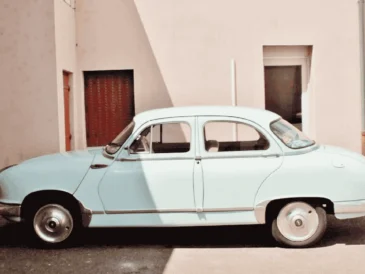
One day, you are handed a key. It opens a garage that you were rarely allowed to visit. Inside, a Porsche, a Mercedes Pagode, a Citroën SM: a piece of family history resting on four wheels, now in your name. A classic car inheritance is unlike any ordinary succession. It is neither a portfolio nor an apartment. It is a living object, with a maintenance log, a registration plate, insurance, sometimes a dizzying value. And a set of procedures that cannot wait.
This guide accompanies you step by step: defining the status of a vintage vehicle, deciding the fate of the car, renewing the registration document, correctly assessing the price, calculating inheritance tax, possibly choosing to sell, and planning ahead for future generations. The rules evolve, as do the amounts. Here is the essential information to remember in 2026.
Have you just inherited a classic car and don’t know what to do with it? Plethore Cars supports you from A to Z: free valuation, expert appraisal, sale management and buyer handling. Contact our experts for an initial no-obligation discussion.
What is a classic car in the fiscal sense?
A classic car is a vehicle over 30 years old, whose production has ceased and which has not undergone any substantial modification of its original components. This status, recognised by the FFVE and the tax authorities, entitles the owner to specific regulatory and fiscal advantages.
In a vintage vehicle inheritance, the legal definition takes precedence over perceived age. The tax authorities and the National Federation of Vintage Vehicles (FFVE) apply three cumulative criteria: over 30 years old, production discontinued, and original condition without substantial modification of the chassis, engine, bodywork, transmission, steering, braking or suspension. Restorations are permitted provided authenticity is preserved.
Models that have competed in a major race or participated in a documented historic event may also qualify for this status. An Alpine A110 rally car or a Porsche 917 from Le Mans fall into this category, sometimes even before reaching their 30 years.
A registration document bearing the mention “classic vehicle” is not mandatory to benefit from this regime. As soon as the three criteria are met, the qualification applies automatically. However, it offers concrete advantages: technical inspection every five years instead of two, possibility to register a non-homologated car, and sometimes exemptions in low emission zones. In return, it restricts commercial use and requires the FFVE certificate.
The first three decisions to make after the death
Even before thinking about administrative formalities, three questions structure everything else. You must answer them within weeks following the death, ideally with the written agreement of the other heirs.
Keep, sell, or transfer to the State? Keeping requires a new registration document and appropriate insurance. Selling can be done quickly (less than 3 months after death and without driving) without renewing the registration. Transferring to the State, via dation or donation, only makes sense for items of major patrimonial interest.
Alone, jointly, or in co-ownership?A single heir recovers the car after the other heirs have formally renounced their rights. Two entitled parties can become co-owners. Joint ownership is rarely sustainable for a mechanical object that requires regular maintenance.
Drive or wait?As long as the registration document remains in the deceased’s name and the car is driven, the heir risks a fine of 135 € and a lack of insurance coverage in the event of an accident. It is better to park the vehicle and sign a sworn statement of non-use.
Registration procedures according to your heir status
Since the implementation of the New Prefectures Plan in 2017, everything goes through the ANTS (National Agency for Secure Documents) or an authorised service provider appointed by the Ministry of the Interior. No more counters, no more mail: an online procedure, using FranceConnect or the France Identity app.
You are the spouse
Under the community property regime, the registration can be transferred to your name without heavy formalities. The cost becomes zero. Required documents: cerfa form 13750, proof of address less than 6 months old, valid identity card, previous registration document, family record book attesting to the death and matrimonial regime.
Under separation of property, if the vehicle was solely in the deceased’s name, it forms part of the estate. You will then need to provide a letter of renunciation from the other co-heirs in your favour, or a certificate of allocation from the notary. The regional tax applies.
In both cases, you have one month to act. Beyond that, a fine of 135 € may be imposed in the event of a roadside check, even if the car is stationary.
You are the sole heir
You can put the registration in your name as with a standard transfer. You must prove your status as an entitled party with one of these three documents: a certificate from the notarial office handling the estate liquidation, a notarial certificate of notoriety issued by the office, or a death certificate accompanied by a signed declaration certifying the absence of a will and ongoing disputes.
You are in joint ownership with other heirs
Two options. One of you takes over the vehicle after written renunciation by all the others or a notarial certificate confirming their agreement. Or several entitled parties become co-owners, each providing their identity document. Only the first two appear on the registration document, but the SIV records all of them.
Should you request a classic car registration (FFVE)?
If the vehicle is over 30 years old and you intend to keep it, the question is worth serious consideration. The classic car registration offers three real advantages and one notable disadvantage.
The advantages first. The technical inspection is every five years instead of two, with requirements adapted to vintage cars. Driving restrictions are eased in several low-emission mobility zones (ZFE-m). Finally, for an imported or non-homologated model, it is sometimes the only way to obtain French registration.
The disadvantage: commercial use becomes prohibited. Forget rental, paid transport or professional activity. The car becomes an object of passion, not a work tool.
The application is made via the FFVE, which issues a certificate confirming eligibility criteria. This document, together with cerfa form 13750, your identity card, proof of address, the old registration document and a certificate of no encumbrance, allows you to request the new registration marked “collection”.
How to evaluate an inherited classic car
The classic car valuation is the crux of the matter: the Argus price guide, which is the reference for used cars, is worthless for a Jaguar Type E or a Ferrari 308. Other benchmarks are needed.
The LVA (La Vie de l’Auto) valuation guide is authoritative in the field. It records the actual prices observed at auction sales and transactions by specialised dealers. It is the first point of reference for a common model.
The agreed value insurance contract constitutes the second reference. If the deceased had taken out a classic car policy with a specialised insurer, the amount stated in the contract will serve as the minimum basis for the inheritance declaration. This figure generally results from a prior appraisal.
The hammer price at auction, when the car was acquired in this way, is retained by Article 764 I 1° of the General Tax Code. The catalogues from Artcurial, RM Sotheby’s or Bonhams are authoritative.
An approved vehicle appraisal remains the safest solution for a rare or disputed model. Expect to pay between 300 and 800 € for a comprehensive report taking into account condition, authenticity of components, documented history, matching numbers and market trends.
One piece of advice many regret ignoring: keep all restoration invoices carefully. They increase the cost price in the event of a future resale and reduce the taxable capital gain.
Have your classic vehicle appraised free of charge by a Plethore Cars expert. Our specialists analyse condition, authenticity and market trends to give you a real value — not an unsuitable Argus valuation.Request a free appraisal
At Plethore Cars, we regularly assist heirs in selling classic vehicles. We know this situation well: it combines administrative urgency, emotional burden and sometimes significant financial stakes. Each case is unique, but our approach remains the same — honest evaluation, pressure-free advice, and finding the buyer who will give the car a worthy second life.
One example among many: an heir contacted us after discovering in the family garage a Porsche 911 2.4 from 1972, which had been stationary for ten years. After appraisal and light refurbishment, the car was sold within three weeks to a passionate collector, for a price far exceeding what any general platform would have listed.
Inheritance tax on a classic car: how much will you pay?
The classic car taxation in the context of an inheritance provides no automatic exemption: vintage vehicles are subject to inheritance tax like any other movable asset. The value taken is added to the gross estate, and it is the degree of kinship that determines the final bill.
Each heir benefits from a personal allowance on their share:
- Direct line (child, parent): 100 000 €
- Siblings: 15 932 €
- Nephews and nieces: 7 967 €
- Grandchildren: 1 594 € in inheritance
- Disabled person: an additional 159 325 € deductible, cumulative
Beyond the allowance, the progressive scale applies. In the direct line, rates rise from 5 % up to 8 072 €, then 10 %, 15 %, 20 % up to 552 324 €, and reach 45 % beyond 1,8 million. Between siblings, the rate starts at 35 %. For more distant relatives, the tax authorities demand 55 %, or even 60 % outside the family.
A major exception: spouses and PACS partners are completely exempt, regardless of the car’s price, even for a Bugatti worth two million.
Donation to the State and dation in payment: two exceptional fiscal solutions
When the car has significant heritage value, two little-known mechanisms allow for a radical reduction of the bill.
Donation to the State (article 1131 of the CGI) grants a total exemption from inheritance tax on the concerned asset. The heir offers the vehicle to the public authorities, who decide whether to accept it to enrich their collections. The Musée des Arts et Métiers or certain regional institutions may welcome these cars. Only cars of historical importance pass the filter.
Dation in payment (article 1716 bis of the CGI), a scheme devised by André Malraux in 1968, allows settling all or part of the duties by handing over the car to the State. The offer must cover at least 10 000 € of duties, be approved by the Minister of Budget after advice from an interministerial commission. Prototypes and competition models have entered the national heritage through this route.
These two tools are not suitable for everyone. They require relinquishing the asset, thus both the object and the heritage. But for a beneficiary who does not want the car and would have to pay 200 000 € in tax, dation can become the obvious solution.
Selling an inherited car: deadlines, channels and taxation of the sale
Selling an inherited car within the framework of an inheritance follows two distinct regimes depending on the timing.
Within 3 months following the death, and if the car has not been driven, you can sell it without reissuing the registration document. The heirs jointly complete form cerfa 15776 (certificate of sale), hand over to the new owner the old crossed-out registration document, a certificate of administrative status less than 15 days old, the notarial certificate or the notarial certificate of notoriety, a sworn declaration of non-use if the car has not been driven, and a valid technical inspection.
After 3 months, or if the car has been driven, it must first be registered in the name of one or more beneficiaries before being sold. This is longer and in practice two transfer taxes are added.
Regarding sales channels, three options stand out. Specialist auction houses (Artcurial Motorcars, Aguttes, RM Sotheby’s) suit rare models with commissions from 10 to 15 %. Specialist dealers buy faster with a discount of 15 to 25 %. Private platforms (Leboncoin, Car & Classic) ornetworks specialised in selling classic cars take time but preserve the margin.
Would you like to entrust the sale of your inherited vehicle to an expert? Plethore Cars manages the entire process: valuation, showcasing, promotion to a network of qualified buyers and follow-up until signing. No hidden fees, no unnecessary delays.Entrusting the Sale to an Expert
Capital gains tax is levied at 6,5% on the sale price for classic cars (flat rate 5% + CRDS 0,5% + an additional 1%), with an allowance of 5% per year after the second year. After 22 years of ownership, the exemption is total. Note: the period resets to zero for the heir, unless the regime is applied by option.
Insuring an Inherited Classic Vehicle
As soon as the succession is opened, notify the deceased’s insurance company. The contract does not transfer automatically. Driving an uninsured car, even for a few metres, exposes you to severe penalties in the event of an accident.
Classic car insurance policies offered by specialised insurers (Mascotte, Gan Eurocourtage, April Moto) provide unbeatable value for leisure use. The annual premium often ranges between 200 and 500 € for an agreed value of 30 000 to 80 000 €, which is three to five times less than a standard insurance policy. The trade-off: limited mileage, a minimum driver age, and sometimes a second vehicle required for daily use.
Planning Ahead: Transferring Your Collection Without Delay
For enthusiasts still alive reading this guide in advance, a donation with usufruct reservation is the most elegant tool. You transfer the bare ownership to your children while retaining use until your death. Only the bare ownership is taxed, at 40 to 60% of the total price depending on your age. Upon death, full ownership is reconstituted without additional duties.
The allowance of 100 000 € per child renews every 15 years. A parent can thus give a car worth 90 000 € without paying any duty, then repeat the process 15 years later. Over two or three cycles, an entire estate can be transferred duty-free.
Mistakes to Avoid When Inheriting a Classic Vehicle
Underestimating the asset in the declaration. The tax authorities consult auction databases and registration files. A reassessment may be imposed with penalties ranging from 40% to 80%.
Failing to declare. Omitting an asset in the succession exposes you to surcharges and may constitute inheritance concealment punishable by civil sanctions.
Driving the car without a new registration certificate beyond the legal deadlines. The fine is the least of the consequences. Lack of insurance, hidden defects in the event of an accident, and refusal of coverage by the insurer are far more serious.
Concealing the existence of the asset from co-heirs. Inheritance concealment leads to loss of the share in the concealed asset, and sometimes the obligation to return it with damages.
Confusing the Argus valuation with the real value. A Lancia Fulvia HF is worthless according to Argus but highly valued on the specialised market. Underestimating due to ignorance deprives you of legitimate valuation or exposes you to a contradictory expert appraisal demanded by a co-heir.
Frequently Asked Questions
Can you sell an inherited car without a registration certificate?
Yes, within three months following the death and if the vehicle has not been driven. The heirs complete form cerfa 15776 (certificate of sale) and hand over the old registration certificate crossed out with proof of entitlement. After this period, or if the vehicle has been driven, prior registration in the heirs’ name becomes mandatory.
How much is an inherited classic car worth?
For a reliable classic car valuation in the context of an inheritance, four factors come into play: the model and its history (matching numbers, competition, limited edition), the general condition and authenticity of components, the available documents (restoration invoices, maintenance logbook), and current market trends. The Argus valuation does not apply. The LVA valuation, an independent appraisal or an estimate by a specialised dealer provide reliable references.
Is it mandatory to go through a notary to inherit a classic car?
For an estate with a gross asset value below 5 000 €, a notary is not mandatory. A certificate signed by the heirs or a certificate of inheritance suffices. Beyond this threshold, the notarial office issues the notarial certificate of notoriety required for formalities. In the case of a classic car, this threshold is almost always exceeded.
How much does it cost to change the registration holder for a classic vehicle?
The cost depends on the department, the fiscal horsepower, and the status. The married spouse who keeps the asset pays nothing. For co-heirs, expect the regional tax (between 33 and 55 € per fiscal horsepower), plus the management fee of 11 € and the delivery charge of 2,76 €. A model with 7 HP in Île-de-France approaches 330 €. Classic cars often benefit from a capped fiscal horsepower of 2 HP in several regions.
What are the disadvantages of a classic vehicle registration certificate?
Commercial use is prohibited; the vehicle can no longer serve as the primary car for a professional, and some spare parts are only recognised in period versions. On the positive side, the extended technical inspection intervals and ZFE exemptions more than compensate for leisure use.
What is the new law on classic vehicles?
No recent law has overturned the regime. The reference texts remain the customs circular of 8 September 2014 for the fiscal definition, and Articles R322-1 to R322-14 of the Highway Code for registration formalities. The 2025-2026 developments mainly concern ZFEs and usage tolerances, not inheritance taxation.
Can the car be transferred while keeping the classic status?
Yes. The buyer can keep the classic registration certificate without redoing the FFVE attestation. The status follows the asset, not the person.
In summary: key points to remember
A classic car inheritance, involves managing both a heritage object and an emotional burden. The best approach is neither to rush nor to delay. In the first weeks, secure the car in a garage, notify the insurer, gather proof of entitlement, and seriously assess the asset’s value. Within the following month, decide whether to keep, sell, or pass it on. Within three months, finalise the registration or the certificate of transfer.
A notary skilled in inheritance law, an accredited vehicle expert, and a specialist classic car insurer are well worth their fees. They save you from costly mistakes running into thousands of euros and allow you to experience this transfer as it deserves: with respect for those who drove the vehicle before you, and with clear understanding of what it now represents for those who will receive it after.
Would you like support with the inheritance of your classic vehicle?Free valuation, targeted legal advice, full handling of the sale: Plethore Cars experts stand by heirs at every stage, from the first step to handing over the keys.Contact an expert