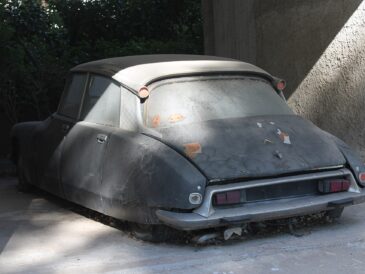
No, a person who renounces an inheritance cannot keep, drive, or sell the deceased’s classic car. Legally, they are considered never to have been an heir. If another heir accepts the inheritance, it is their responsibility to manage the vehicle. If all heirs renounce, the State must be appointed as curator of the vacant estate; only it can then inventory, preserve, and possibly sell the car.
This rule is important for a vintage car: retrieving the keys, placing an advertisement, or removing a part may seem trivial, but certain actions can imply tacit acceptance of the inheritance. The proper approach is to secure the vehicle without acting as its owner, document its condition, and promptly pass on the information to the notary, the accepting heirs, or the State.
Can one refuse the debts while keeping the car?
No. The inheritance option is indivisible: one cannot choose the car and abandon the debts. Service-Public distinguishes three possibilities:
- accept the inheritance outright;
- accept up to the net assets, so that debts are paid only within the value of the inherited property;
- renounce the inheritance.
The third option excludes both liabilities and assets. The Civil Code states that the renouncing heir is deemed never to have been an heir. Therefore, they cannot register the vehicle in their name, use it as their own, give it away, sell it, or remove parts from it.
This consequence applies even if the car mainly has sentimental value. An oral agreement among family members does not entitle the renouncer to recover it outside the normal settlement of the inheritance.
What happens to the car after renunciation?
The answer depends on the other heirs.
| Situation | Who manages the car? | What the renouncer must do |
|---|---|---|
| At least one heir accepts | The accepting heir(s), with the notary if necessary | Hand over the keys, documents and information; cease using the vehicle |
| All known heirs renounce | The State, after appointment as curator | Report the vehicle and request the opening of the appropriate procedure |
| Heirs of the next rank exist | They become eligible to inherit and must make their own choice | Do not assume they have accepted or renounced |
| The inheritance remains pending | No heir should act as the owner | Limit actions to justifiable protective measures |
When the renouncing party has descendants, they may be called to the inheritance by representation. They must then make their own choice. A parent’s renunciation does not automatically apply to their children.
Which actions risk being considered tacit acceptance?
Service-Public explicitly cites the sale of an item belonging to the estate as an example of tacit acceptance. For a classic car, it is therefore necessary to avoid, in particular:
- signing a transfer or publishing an advertisement in its name;
- transferring the registration certificate into one’s own name;
- regularly using the car;
- dismantling or selling parts, accessories or documents;
- exchanging it for another vehicle;
- accepting a deposit or the sale price;
- presenting the car as one’s own property to a garage, insurer or buyer.
The risk does not depend solely on the value of the act. It depends on what it reveals: behaving as the owner of an estate asset may be incompatible with the intention to renounce.
In case of doubt, request a written opinion from the notary before taking any action. An urgent conservation expense and a disposal operation do not have the same legal implications.
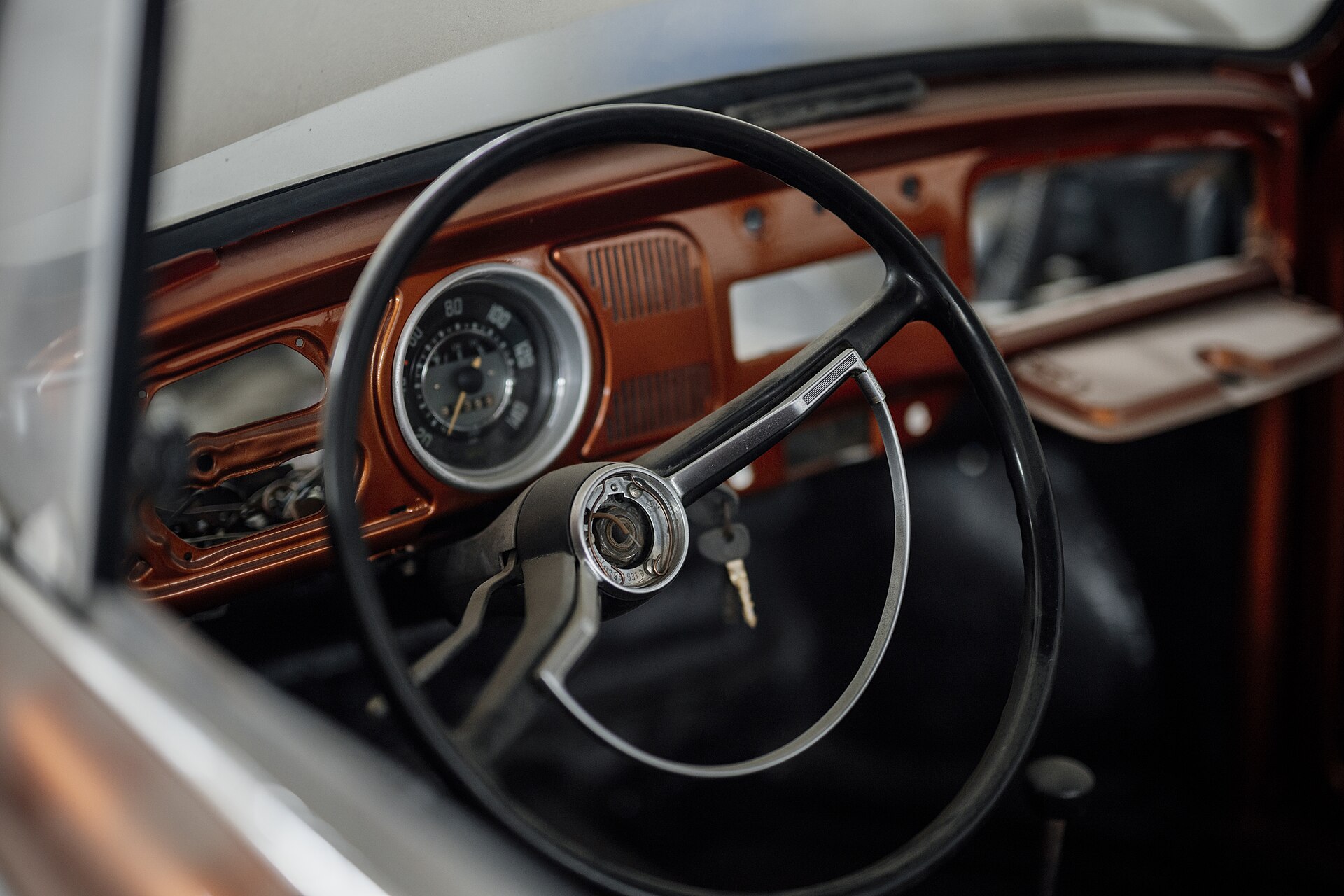
Holding the keys does not grant the right to use a car belonging to an estate. Photo: Shixart1985, CC BY 2.0, via Wikimedia Commons.
Can the car at least be secured?
Yes, certain purely protective or supervisory acts may be carried out without constituting acceptance, provided one does not assume the status of heir. Article 784 of the Civil Code authorises these measures when they serve to preserve assets or prevent the worsening of liabilities.
For a classic car, this can reasonably include:
- locking the garage and keeping the keys in a safe place;
- photographing the vehicle, the odometer, the serial number and its surroundings;
- noting immediate risks: fuel leaks, dangerous battery, water ingress or theft threat;
- informing the notary, insurer and site custodian;
- request instructions before any movement, repair or significant expense.
The boundary depends on the context. Moving a car a few metres to prevent imminent damage does not have the same purpose as using it for several weeks. The safest approach is to keep proof of the risk, the decision made and the expenses incurred.
The Civil Code also provides that expenses legitimately incurred by an heir before renouncing the inheritance are charged to the estate. This does not mean that every restoration will be reimbursed: an aesthetic intervention or a non-urgent refurbishment is not equivalent to a necessary conservatory measure.
Should the car insurance be maintained?
Death should not lead to cancelling the contract without verifying the situation. Article L121-10 of the Insurance Code generally provides for the continuation of insurance for the benefit of the heir, who must comply with the contract obligations. However, a person who renounces is deemed never to have been an heir.
In practice, promptly inform the insurer of the death and the status of the estate. Indicate where the car is located, whether it is being driven or not, and who holds the keys. Do not drive it relying on the old contract: the administrative continuity of the contract does not constitute personal authorisation to dispose of the asset.
A stationary car still carries risks of theft, fire, breakage or damage to the premises. Accepting heirs, the notary or the curator must decide which coverages to maintain. The renouncing party must not make a decision alone that will have a lasting impact on the estate.
What is the procedure to renounce an inheritance?
Renunciation is not presumed. For an estate opened after October 2017, an adult may send or file their declaration:
- at the registry of the judicial court of the deceased’s last domicile;
- or with a notary, who will forward a copy to the competent court.
The official form is the Cerfa no. 15828*05. Its instructions specify the documents to attach and the competent jurisdiction. Keep the receipt: it notably allows you to respond to creditors who may contact you.
Deadlines to be aware of
During the first four months following the opening of the estate, no one can force a potential heir to decide. After this period, a creditor, a co-heir, a subsequent heir or the State may summon them to take a position. They then have two months, unless an extension is granted by the judge. Without a choice within this period, they may be considered to have accepted unconditionally.
If no one forces them, the maximum deadline is generally ten years. Beyond that, the potential heir is considered to have renounced, subject to exceptions provided by law.
Before deciding, having an inventory drawn up and the car evaluated can be crucial. A valuation of a classic car in an inheritance helps compare the vehicle’s value with debts, storage costs and necessary repairs. However, an estimate does not authorise use or sale by the person considering renunciation.
What happens if all heirs renounce?
The car does not become abandoned or freely appropriable. When all heirs renounce and the estate meets the conditions of vacancy, the judicial court may appoint the State Property Department as curator.
The request may notably be made by a notary, the public prosecutor, a person who managed the deceased’s assets or a creditor. Once appointed, the State Property Department inventories, manages the assets and settles debts according to legal order.
For a car, it may:
- identify and secure the vehicle;
- locate the documents and assess its value;
- decide on the method of preservation;
- arrange a sale if it is necessary for the settlement of the estate;
- allocate the net proceeds to the payment of expenses and debts.
The tax authorities indicate that movable assets of sufficient value can be entrusted to auctioneers from the Public Domain, auctioneers or judicial commissioners and sold at auction, either individually or in lots. The person renouncing the inheritance does not choose the buyer or the price.
Can a former heir repurchase the car from the Public Domain?
Renunciation does not reserve any preferential right over the vehicle. If the Public Domain puts the car up for sale in a procedure open to the public, the former potential heir can, in principle, become the purchaser like any other participant, according to the conditions of the sale. However, they must not organise a private transfer with themselves nor keep the car while awaiting a hypothetical sale.
It is also necessary to distinguish between two operations: renouncing the inheritance, then subsequently buying an asset sold regularly. The second does not automatically cancel the first, but it must be completely separate and transparent.
What should be done with the keys, the registration document and the historical file?
Do not throw them away or scatter them. For a classic car, the documents can represent a significant part of the value: old registration document, logbook, invoices, manufacturer’s certificate, restoration file, photos, original tools and parts.
Prepare a simple inventory:
- photograph each document without publishing it;
- place the originals in a labelled envelope or box;
- note who holds the keys, the car and the papers;
- hand over the entire set against receipt to the accepting heir, the notary or the curator;
- keep only the copies necessary to justify your actions.

The keys and the file must be handed over to the person legally responsible for the estate. Photo: R. Henrik Nilsson, CC BY 4.0, via Wikimedia Commons.
The most costly mistakes to avoid
Driving “just to maintain it”
A road outing is not essential for immediate preservation and exposes the vehicle to an accident, a breakdown and a dispute over tacit acceptance. Have any movement organised by the authorised person, with confirmed insurance.
Selling quickly to pay the garage
A sale is an act of disposal. A person renouncing the inheritance cannot sell the car to pay expenses, even if the intention seems reasonable. Forward the invoices to the notary or the curator.
Removing “worthless” accessories
A set of wheels, a car radio, a tool kit or a manufacturer’s plate are part of the estate. On a rare model, these items can have significant value and affect the authenticity of the car.
Confusing a certificate of inheritance with acceptance
The certificate of inheritance serves to prove heirship, but Service-Public specifies that its issuance alone does not mean the estate has been accepted. It is the subsequent actions taken and the formalised choice that determine the situation.
Underestimating the value of the car
A stationary or incomplete car can still be valuable. Before any decision by the accepting heirs, a free vehicle appraisal provides an initial benchmark; a joint expert assessment may be necessary for a rare model. If the family ultimately decides to sell the vehicle, the page selling a car with Plethore Cars presents the sales and mandate options. These procedures must be undertaken by authorised persons, never by the renouncing heir.
Checklist: the 48 first hours
- do not drive, sell or dismantle the car;
- secure the premises, keys and documents;
- take dated photos of the condition and mileage;
- note the registration number and VIN;
- inform the notary and ask who can give instructions;
- notify the insurer of the death without unilaterally cancelling the policy;
- identify urgent parking or security expenses;
- keep receipts for any protective measures;
- do not sign as owner or accepting heir;
- formalise the renunciation with the appropriate form and recipient.
FAQ
Can you keep a car if you renounce the inheritance?
No. Renunciation applies to the entire estate. The renouncer is considered never to have been an heir and cannot keep any property of the deceased.
Can the car be sold before renouncing the inheritance?
The sale of an inherited asset may constitute tacit acceptance. Therefore, one must refrain from selling and seek advice from the notary before any disposal act.
Who pays for the garage if all heirs renounce?
The costs are a matter for the estate. The garage must declare its claim and contact the notary or, once appointed, the curator. The person renouncing must not sell the car to pay the bill themselves.
Can one change their mind after renouncing?
The Civil Code allows, under certain conditions, the revocation of renunciation by accepting outright, provided the right to accept has not expired, no other heir has accepted, and the State has not already taken possession.
Do the children also have to renounce?
They may be called to the inheritance by representation and must then exercise their own option. Specific rules apply for minors; the notary or registry office should be consulted.
Can a car without registration documents be included in the inheritance?
Yes. The absence of a registration certificate does not eliminate the asset. Its ownership and identity must be established from the VIN, invoices, archives or other evidence, but the person renouncing cannot appropriate it.
Key points to remember
Renouncing an inheritance also means renouncing the car, regardless of its value or sentimental attachment. The prudent role of the renouncer is solely to temporarily preserve the asset, pass on information, and leave management to the accepting heir or the State.
The priority is not to get the car running again, but to avoid three risks: tacit acceptance, vehicle deterioration, and loss of its documentation. A formalised decision, a precise inventory, and written instructions protect both the estate and the vehicle.
Main sources
- Service-Public — Accepting or renouncing an inheritance: inheritance options, deadlines, tacit acceptance and renunciation procedure.
- Service-Public — Renunciation: who handles debts and assets?: role of accepting heirs and the State.
- impots.gouv.fr — I have renounced: what to do with the vehicle?: impossibility of taking possession of the vehicle and seizure by the State.
- impots.gouv.fr — Sale of goods from vacant estates: inventory and sale of movable goods by the curator.
- Service-Public — Cerfa no. 15828*05: renunciation form for an adult.