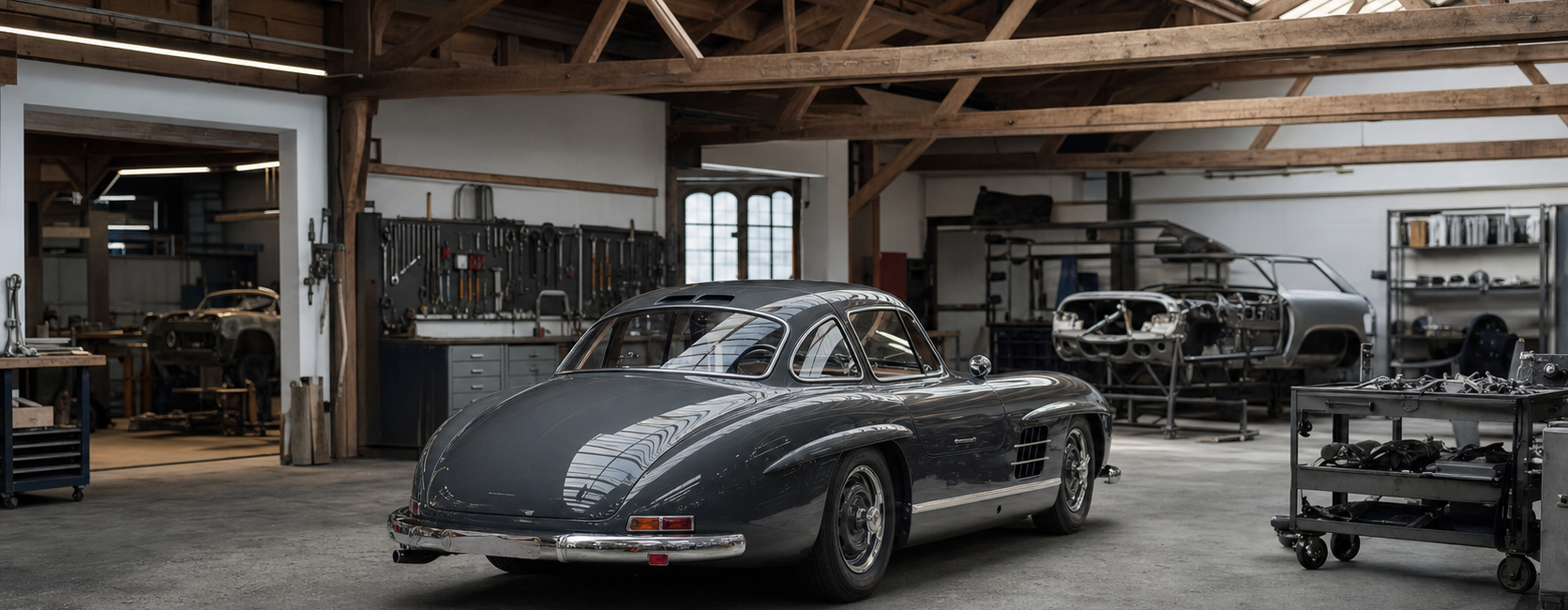
Short answer:Before restoring a Mercedes 300 SL, create a parts register and have each reference validated before ordering. Mercedes-Benz Classic offers parts for historic vehicles and describes the remanufacture of body panels intended for the 300 SL “Gullwing”. This does not mean that one reference fits all cars: the chassis identity, variant, condition and scope of work remain decisive.
A premium restoration is judged as much on what has been preserved as on what has been replaced. The file must show the initial condition, the decision, the chosen part, the fitting method and the result. Without this chain, a fine finish can mask a history that has become impossible to read.
Freeze the initial condition before any dismantling
Photograph the entire car, body panel gaps, the interior, engine compartment, underside and every area to be dismantled. Add location views then close-ups. Images must be dated, sorted and linked to a plan of the car. A general video complements the file but does not replace detailed photographs.
Note visible references without jumping to conclusions about their origin. An old part may have been replaced long ago; a recent part may be an official remanufacture. The aim of the first inventory is to establish facts, then submit questions to the specialist and available archives.
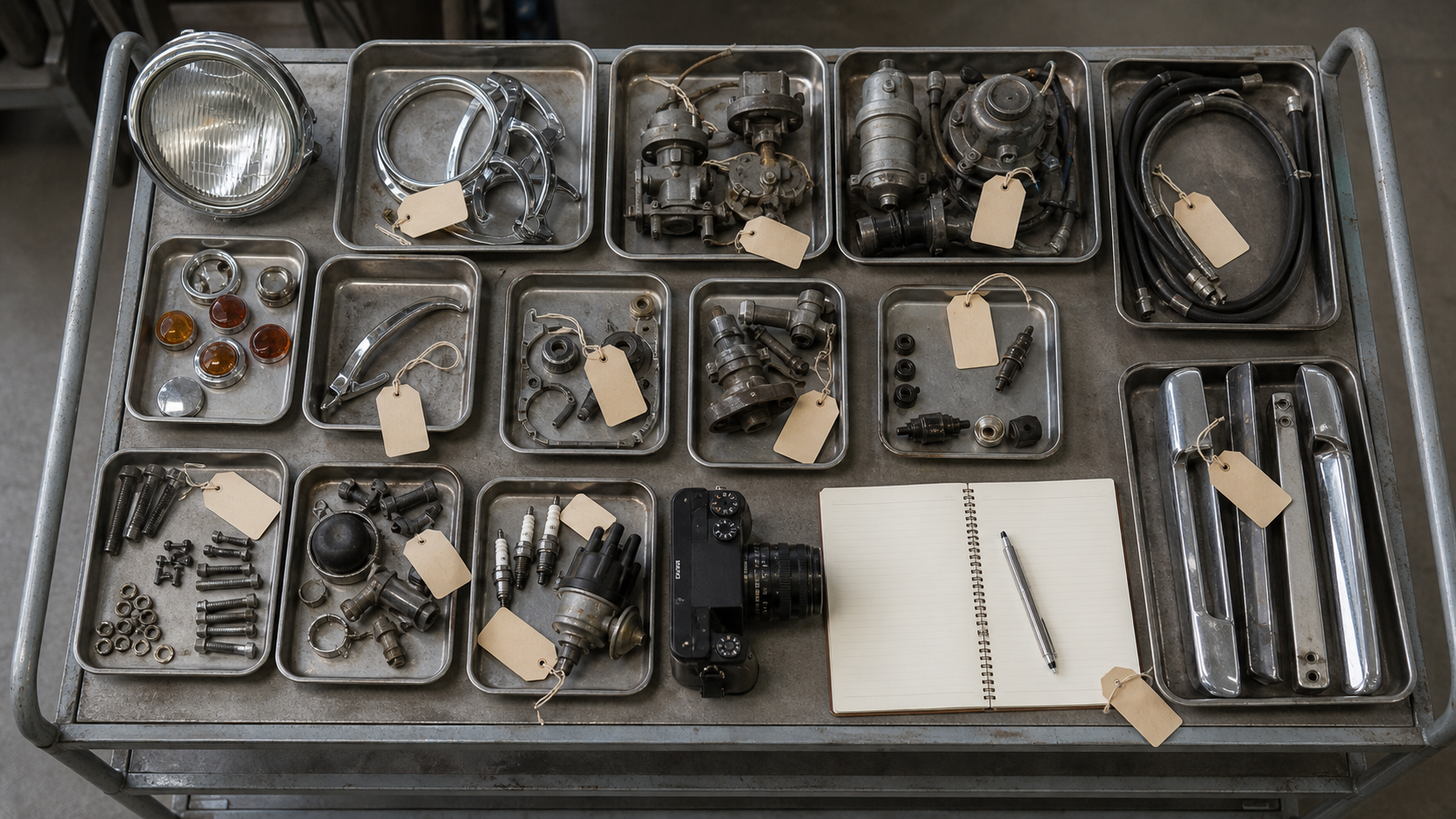
Create a usable parts register
For each item, record the area, designation, reference read, condition, intended decision, supplier, associated document and storage location. Add a “validation” column with the name of the person or organisation confirming compatibility. A spreadsheet is sufficient if it remains linked to images and invoices.
This preparation follows the logic of securing parts before a restoration: identifying critical elements before dismantling, delays and orders dictate the project. For a 300 SL, the register must also distinguish bodywork, structure, mechanics, braking, electrics, upholstery, glazing, fittings and tools.
Verify a reference before ordering
Request written confirmation based on the exact identity of the car. A commercial designation is not enough. The 300 SL coupe of the 198 series is officially presented by Mercedes-Benz for the period 1954 to 1957; even within this period, the history of an example and parts evolutions require individual verification.
The catalogue, supplier and restorer must refer to the same reference. In case of substitution, document the old reference, the new one and the reason. Do not erase uncertainty: place it in the file, with the decision taken to resolve it.
Original part, official remanufactured part or adaptation
These categories do not have the same meaning. A part present since delivery, a period part fitted later, an official remanufacture and a bespoke manufacture must be named separately. The role of the file is not to automatically rank these options, but to allow the future expert or buyer to understand the choice.
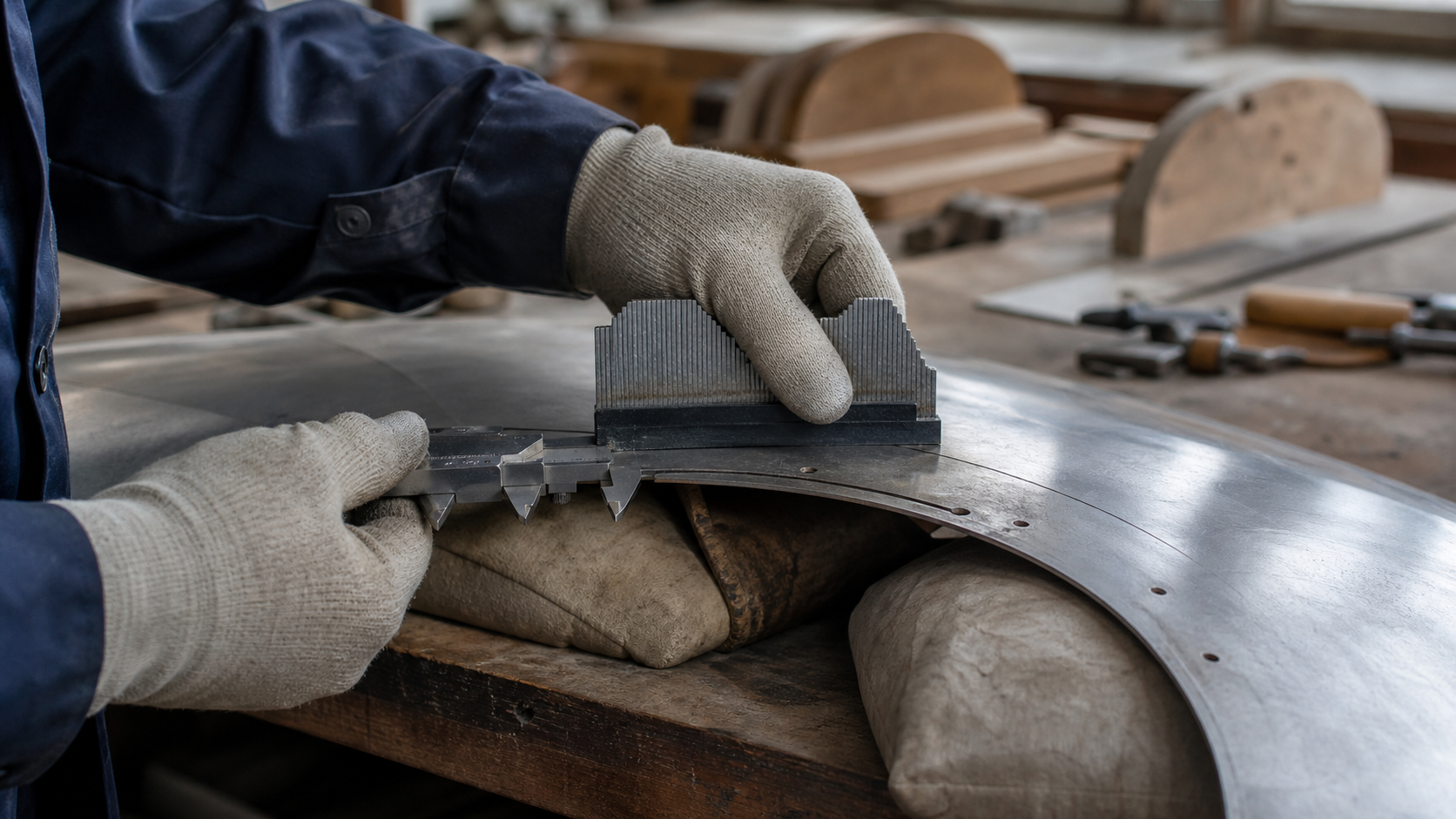
Mercedes-Benz Classic describes the remanufacture of body parts with a dimensional accuracy objective for the 300 SL Gullwing. This source confirms the existence of a manufacturer approach; it does not prove either the immediate availability of a given part or its compatibility with your car. Obtain availability, reference, lead time and conditions directly from the relevant network.
Arbitrate preservation and replacement
Start with safety and structure, then examine repairability and historic material. A marked but sound part can tell more than a new part; a critical weakened part can conversely make preservation unjustifiable. Have the specialist describe the diagnosis, measurements and limits.
Request comparable scenarios: preservation with treatment, repair, official replacement or manufacture. Each scenario must specify expected result, reversibility, lead time, risks and parts preserved. For mechanics, our guide helps to prepare the scope of an engine restoration without providing a universal budget for a 300 SL.
Document the work during the restoration
Set mandatory checkpoints before irreversible operations. No area should be stripped, cut, welded, painted or trimmed without photography and validation when its condition can inform the history. The restorer must regularly submit images and update the record, not reconstruct the file at the end.
Keep successive quotes, amendments and reasons for changes. Discoveries during dismantling are not unusual; they become problematic when neither photographed nor costed before decision. The method used to frame a certification before restoration recalls the importance of linking archives, certification and work.
Inspect the car before acceptance
Arrange an independent inspection before the final payment. Compare the delivered scope with the quote, the record and the validations. Check functions, assemblies, possible leaks, adjustments and reservations. A visual check in a showroom is not enough; prepare a structured acceptance and, if possible, a suitable test drive.
Our method for organising the inspection of a classic car provides a general basis. For the 300 SL, appoint a specialist who knows the series, repair methods and documentation points. Have the file corrected as well as the material defects.
Prepare the future transfer of the file
Provide an organised copy on durable media, accompanied by a paper inventory. Separate historical archives, initial diagnosis, decisions, invoices, photographs, parts references, inspection reports and post-restoration maintenance. Sensitive originals remain protected.
Avoid absolute statements. Write what is known, by whom, on what date and with what evidence. A documented restoration does not guarantee value; it allows a more honest reading of the car and facilitates subsequent inspections.
Checklist before starting work
- Exact identity of the car confirmed.
- Initial condition photographed and indexed.
- Parts register created.
- References and variants validated before ordering.
- Conservation, repair and replacement scenarios compared.
- Checkpoints before irreversible operations defined.
- Removed parts stored and labelled.
- Independent inspection planned before acceptance.
Frequently Asked Questions
Is a Mercedes-Benz Classic part automatically compatible with my 300 SL?
No. Have the reference, variant, relevant chassis number and necessary adaptation confirmed before ordering or fitting.
Should an old but still functional part be replaced?
Not automatically. Compare safety, condition, reparability, origin and impact on the historic fabric with a specialist of the model.
How should a remanufactured part be documented?
Keep the reference, supplier, date, invoice, any certificate, before-and-after photographs and reason for replacement.
What should be done with removed parts?
Catalogue them, protect them and return them with the car if they have historical interest or help to understand the work carried out.
Conclusion
On a Mercedes 300 SL, restoration must remain transparent. The parts register, validations and before-and-after images protect this transparency better than any discourse on perfection. These recommendations are general: verify identity, archives, references, condition, inspection and current market conditions before undertaking work.