
Short answer:Le Mans Classic Legend 2026 should be viewed as a full-scale laboratory. The spectacle showcases the models; the buyer must observe the records, the quality of restorations, the technical support, and the ease with which a car can actually be driven. The event does not provide a valuation, but it reveals the questions that distinguish a usable icon from an object difficult to pass on.
The official programme opens the 2 circuit on 5 July 2026. The new Legend format brings together racing cars from 1975 to 2015 in the 6 to 10 grids. This chronological depth allows comparison of several generations of prototypes and GTs without confusing the model’s fame with the quality of a specific chassis.
The new format changes the market reading
From 2026, Le Mans Classic becomes annual and alternates between two focuses: Legend for the recent endurance period and Heritage for earlier years. This separation is useful for the buyer. A GT from the nineties, a prototype from the early two thousands, and an older racing car do not require the same skills, parts, or logistics.
Start by choosing a period your technical network can support. The right purchase is not necessarily the most applauded car. It is the one whose identity, eligibility, and maintenance can be explained without grey areas. To understand the strength of a sporting story, rereadthe history of the Ford GT40 at Le Mans, then return to the chassis that interests you.
Observe the chassis identity before the livery
A historic livery can be accurate, recreated, or simply evocative. It alone proves nothing. Ask for the chassis number, ownership documents, entry forms, results, dated photographs, and invoices. Verify that each stage truly belongs to the car presented, not just the model in general. A concrete example of this verification:distinguishing a road BMW M1 from a Procar.
Modifications must be placed in context. Some respond to modern safety or eligibility; others move the car away from its significant configuration.our method for arbitrating origin and restomodhelps structure this debate. Here, the aim is not to condemn all evolution, but to know who carried it out, why, and with which parts retained.
Reading the paddock as a support audit
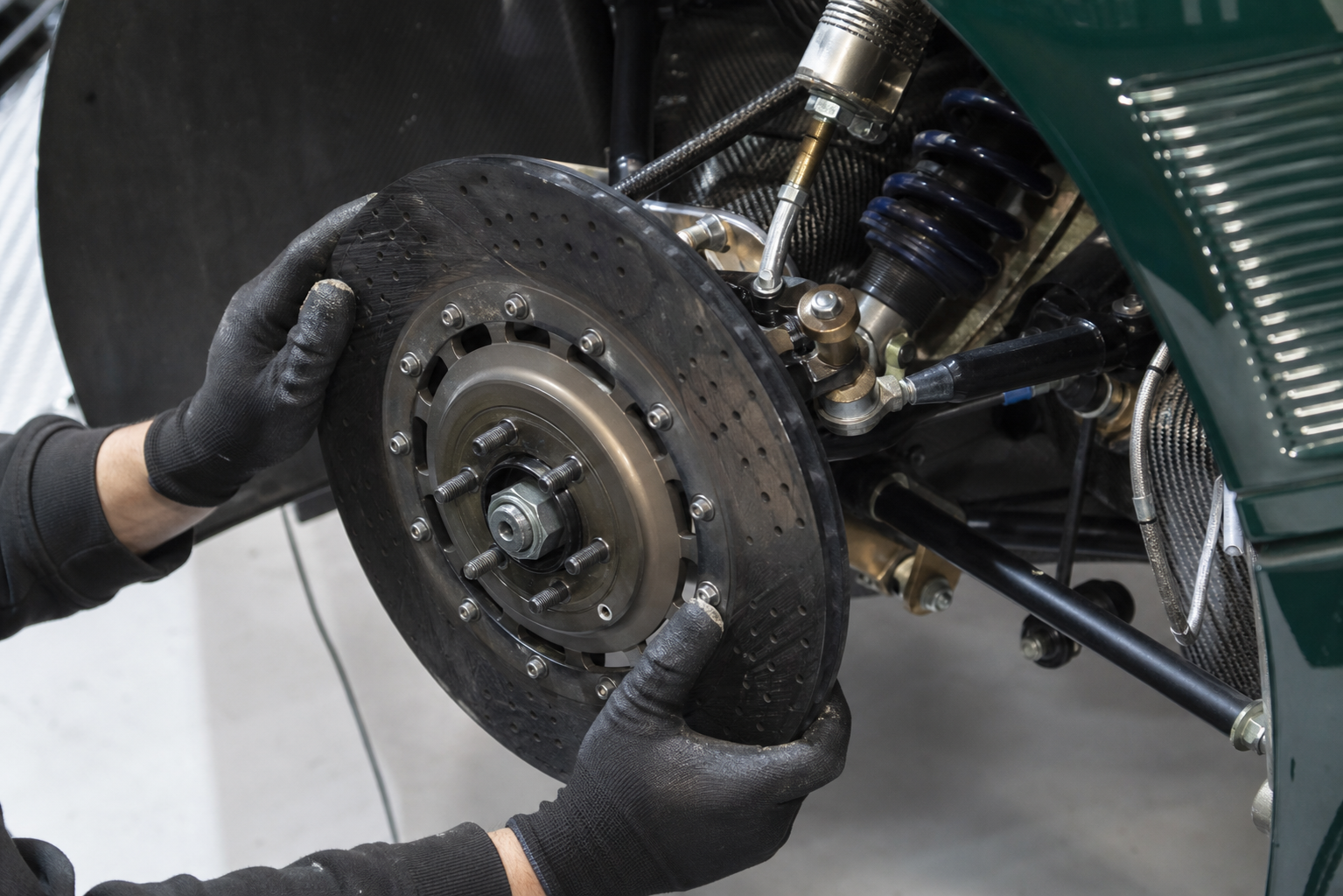
Look less at the crowd than at the organisation around the car. Who has the tools, data, and parts? How many people are needed to start it? What operations are carried out between sessions? A car that depends on rare expertise can remain exciting, but its owner must accept this dependence.
Ask the specialist for a list of wear parts, post-run checks, and supply lead times. A precise answer is worth more than a promise of reliability. Independent inspection remains essential;classic mistakes of a first collector purchasereminds of general checks not to sacrifice to emotion.
Compare actual use, not just the record
The programme announces night sessions, support races, and several families of grids. These situations show what a future owner must assume: starts, temperatures, braking, cockpit access, visibility, noise, transport, and assistance. Note the constraints you accept and those that would make the car unusable for you.
The Supercars Run scheduled for Saturday also brings together more contemporary automobiles. It offers a useful contrast between historic racing cars and modern supercars. Do not turn this comparison into an absolute ranking. It serves to clarify your intention: to drive in events, participate in demonstrations, keep a historical witness, or build a heritage dossier.
What the event does not say about the price
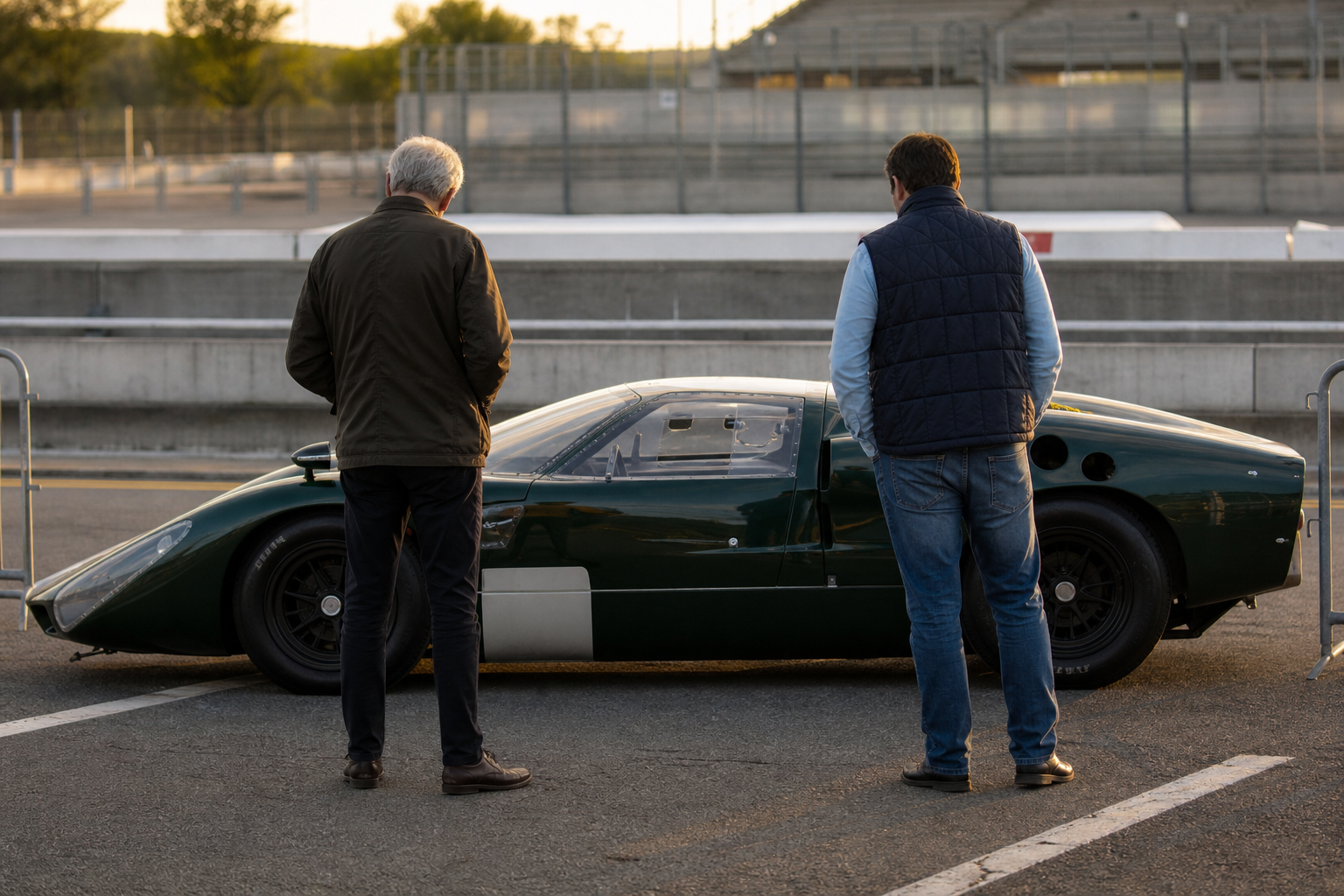
Presence at Le Mans Classic can enhance the visibility of a model or chassis. It guarantees neither a future transaction nor a price. Reject shortcuts such as “model seen at Le Mans” without proof relating to the car itself. Build your comparables with configurations, conditions, histories and usage rights that are genuinely close.
Prepare the exit file in advance: photographs before and after intervention, invoices, mileage data, replaced parts and reasons for the work. If the car is to be sold later,preparing the sale of a classic carwill be simpler with a continuous chronology.
Turning observations into decisions
After the visit, sort each element into three columns: evidence obtained, point to confirm and unacceptable risk. An interesting conversation with a mechanic is not yet evidence; ask for the document, part reference or corresponding report. Then set a deadline to receive the missing elements. Lack of response is decision information, not an invitation to imagine the most favourable scenario.
Finally, compare at least two usage options: buying the observed car or renting, sharing or choosing a simpler car for the same events. This comparison puts desire in its proper place and reveals the cost of complexity.
Checklist to use on site
- Identify the chassis and the actual owner.
- Distinguish the model’s history from the individual car’s history.
- Verify the conformity of the livery and modifications.
- Request proof of entry and invoices.
- Assess parts, specialists, transport and storage.
- Define the events for which the car is eligible.
- Commission an independent inspection before any offer.
- Write a resale scenario without promising returns.
Frequently asked questions
When does Le Mans Classic Legend 2026 take place?
The official programme announces the opening on Thursday 2 July and activities until Sunday 5 July 2026.
Which cars does the Legend format cover?
The organiser reserves Legend for racing cars from the period 1975 to 2015, divided into grids 6 to 10.
Does participating at Le Mans guarantee a car’s value?
No. The value depends on the specific chassis, its verifiable history, condition, authenticity, and the depth of the market.
What should you ask before buying a vintage racing car?
You need to obtain the chassis identity, the chronology of entries, the work carried out, consumable parts, eligibility, and an independent inspection.
Conclusion
Le Mans Classic Legend offers access to an exceptional concentration of automobiles, specialists, and uses. Take the opportunity to test your assumptions, not to rush a decision. These tips remain general: always verify the identity, documentation, condition, eligibility, and current prices before any commitment.