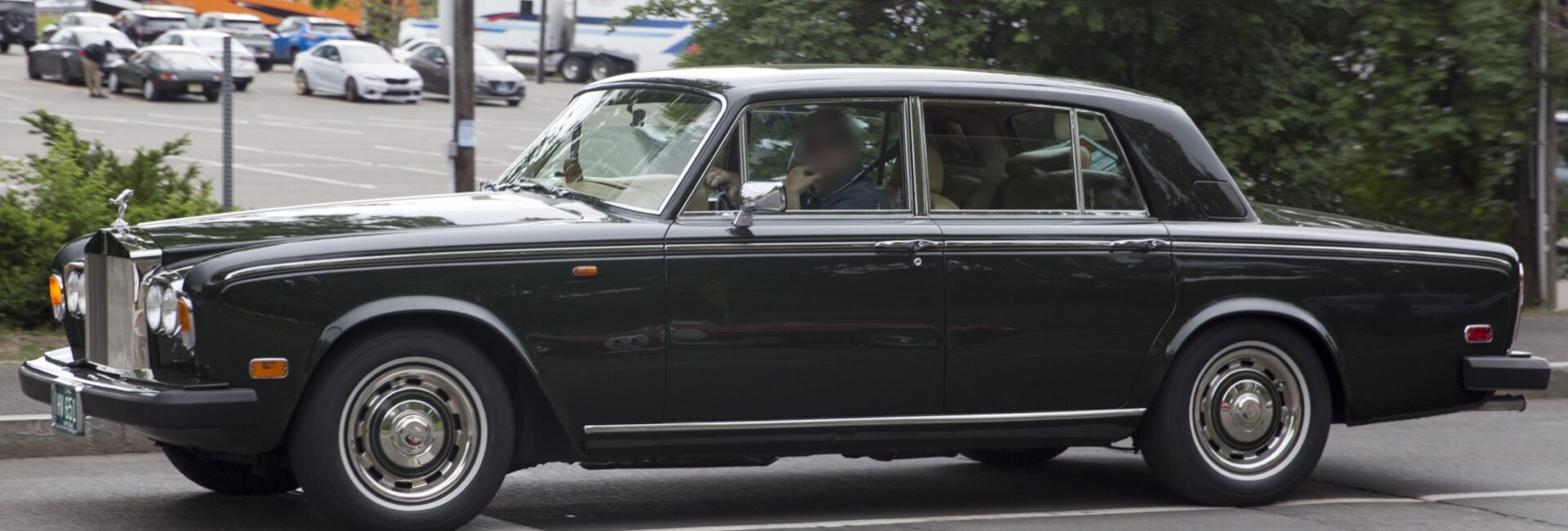
The Rolls-Royce Silver Shadow remains one of the most accessible entry points into the world of classic Rolls-Royce cars. You can still find examples offered at the price of an ordinary used saloon. However, the listed price only tells a small part of the story: for this model, a sound bodywork, a well-maintained hydraulic system, and a coherent service history often mean more than low mileage or a shiny paintwork.
In 2026, British auction results tracked by Marque place the median around 9 901 pounds sterling, while DriveIndex notes an international median of 17 600 dollars over 92 verified sales. These figures do not constitute a universal French market value: they mainly illustrate the extreme variability of the market. A neglected car may seem cheap, whereas a documented and properly refurbished example can justify a significantly higher price.
This guide explains the history of the Silver Shadow, the differences between the series, its actual reliability, the faults to check, and the procedure to follow before a purchase or sale.
The short answer: should you buy a Rolls-Royce Silver Shadow?
Yes, provided you buy the condition and history rather than the price. The Silver Shadow can be a great, comfortable, quiet, and surprisingly usable grand tourer. Its V8 engine is generally robust when maintained. On the other hand, its high-pressure dual hydraulic system, sometimes hidden corrosion, and the cost of restoring woodwork, leather, or air conditioning make tired cars dangerously expensive.
Before any commitment, an inspection by a Rolls-Royce/Bentley specialist of this generation should be planned, checking the pressure of both hydraulic circuits, examining the underbody on a lift, and reading the invoices. An independent appraisal is more useful than a simple technical inspection. See our guide on pre-purchase appraisal for classic cars to organise this check.
A revolution in Rolls-Royce history
Presented at the Earls Court London Motor Show in October 1965, the Silver Shadow breaks with the brand’s traditional architecture. Rolls-Royce adopts for the first time a monocoque structure as standard, more compact than a separate chassis while retaining very robust subframes for the powertrain and running gear.
This evolution allows for a lower, more modern, and more spacious car than the Silver Cloud it replaces. It features four disc brakes, independent rear suspension, hydraulic self-levelling, and sophisticated air conditioning. The manufacturer today presents the Silver Shadow as a pivotal model and the starting point of an architecture that, deeply modernised, will survive into the 1990s.
The model also becomes an unprecedented commercial success on the scale of Rolls-Royce. Generally accepted figures state 16 717 first series Silver Shadow saloons and 8 425 Silver Shadow II, that is 25 142 standard wheelbase saloons. Added to these are the long-wheelbase Silver Shadow LWB and Silver Wraith II versions, as well as the two-door derivatives and Corniche. Rolls-Royce estimates that approximately 37 000 Silver Shadow and Corniche models, all variants combined, were produced.
Silver Shadow I or Silver Shadow II: what are the differences?
The term “Silver Shadow I” is now used to distinguish the cars produced before the official arrival of the Silver Shadow II in 1977.
| Version | Period | Main characteristics | Intended use? |
|---|---|---|---|
| First series Silver Shadow | 1965-1977 | Recirculating ball steering, classic presentation, V8 6,2 then 6,75 litre engine | For the original style and a very smooth drive |
| Silver Shadow II | 1977-1980 | Rack and pinion steering, revised suspension, black bumpers, front spoiler, modernised dashboard | For more regular use and more precise driving |
| Silver Shadow LWB | From 1969 | Extended wheelbase and more rear space | For a discreet limousine configuration |
| Silver Wraith II | 1977-1980 | Long version associated with the Shadow II updates | For rear comfort and rarity |
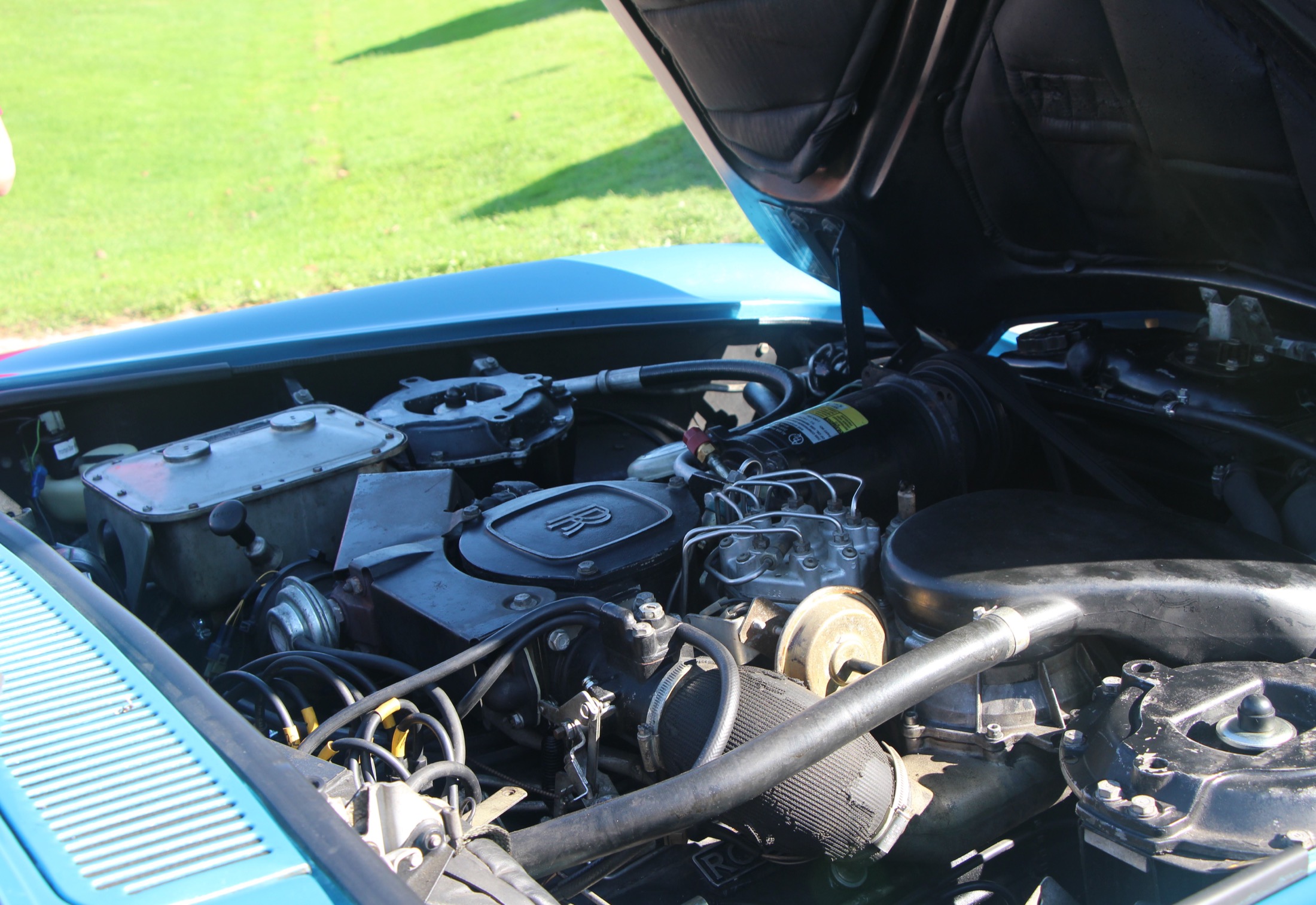
The first cars used a V8 of 6,2 litres. The engine capacity increased to around 6,75 litres around 1970. From 1968, the GM Turbo-Hydramatic 400 three-speed automatic transmission became widespread, gradually replacing the older four-speed gearbox. Rolls-Royce did not officially announce spectacular power figures: the aim was smoothness, silence and effortlessly available torque.
For frequent driving, the Shadow II is often the most rational choice. Its rack and pinion steering significantly improves precision. However, the first series retains a purer elegance and the particularly soft character sought after by some collectors.
What is the price of a Rolls-Royce Silver Shadow in 2026?
The valuation depends less on the year than on the quality of maintenance, absence of structural corrosion, originality, and work already carried out. Available data should be read with caution: the volume of transactions is low and an exceptional car can skew an average.
In October 2026, DriveIndex recorded 92 verified sales, with a median of 17 600 dollars and a very wide range from 10 250 to 93 500 dollars. Marque noted in the United Kingdom a median of 9 901 pounds on recent sales, with results ranging between 3 250 and 16 910 pounds. Hagerty estimates that a clean saloon is generally sought from 15 000 pounds and that a very fine example can approach 30 000 pounds.
For the European market, one can retain the editorial orders of magnitude below, to be confirmed car by car:
| Apparent condition | Indicative budget | Risk assessment |
|---|---|---|
| Project or stationary car | Less than 12 000 € | High risk; hydraulics, corrosion and interior may exceed the final value |
| Running car to be restored | 12 000 to 20 000 € | Inspection essential and significant provision for work |
| Well-maintained fine example | 20 000 to 35 000 € | Often the most coherent zone if invoices are solid |
| Exceptional example or rare configuration | More than 35 000 € | Justified by condition, provenance, version and restoration |
These amounts are neither an official valuation nor a sales promise. A serious estimate must include left- or right-hand drive, colours, wheelbase, backrest, conformity, numbers and the targeted market. If you already own a car, you can request a free appraisal of your Rolls-Royce before setting a price.
Reliability: the V8 is robust, peripherals require monitoring
The Silver Shadow is not inherently fragile. Its aluminium block V8 was designed to operate with a large safety margin. A well-maintained engine can cover long distances. However, it is necessary to watch for oil leaks, cooling, oil pressure, cold lifter noises and the quality of starts. Past overheating may have left costly damage.
The GM three-speed gearbox fitted to the majority of cars is known to be robust. Gear changes should be smooth, without slipping, excessive delay or jolts. The very first cars equipped with the older four-speed gearbox require more specialised expertise.
The challenge lies mainly in the equipment that precisely defines the car’s refinement: hydraulics, air conditioning, electric windows, seat adjustments and numerous comfort features. A Silver Shadow that is driven infrequently is not necessarily better preserved. Seals dry out, fluids age and accumulators lose pressure.
The hydraulic system: priority inspection
The Silver Shadow uses two high-pressure hydraulic circuits inspired by Citroën technology to assist braking and manage ride height correction. Each circuit has its own low-pressure warning light. On start-up, these lights should go out quickly; their complete absence may also indicate that a bulb has been removed.
The spherical accumulators, engine-driven pumps, hoses, valves and pipes must operate without leaks. The car should remain level and not sag abnormally on one side. An unusual brake pedal feel, persistent warning lights or fluid traces justify stopping the test and seeking specialist diagnosis.
The correct fluid is essential. Silver Shadows generally use the RR363, formulated to lubricate the system’s pumps. One must never add a randomly chosen fluid nor confuse this circuit with the green LHM fluid used in some Citroëns. The type of fluid and procedures must always be verified in the documentation corresponding to the chassis number.
Corrosion: where should you look?
A glossy paint finish can conceal old repairs. Inspection should focus on:
- the sills and their reinforcements;
- the wheel arches and inner wings;
- the suspension mounts and cradle anchor points;
- the front and rear skirts;
- the windscreen and rear window frames;
- the bumper mounts;
- the floor, boot and areas hidden beneath trims;
- the edges of any vinyl roof, which can retain moisture.
A well-executed structural repair is possible, but it quickly becomes disproportionate relative to the value of an average saloon. An inspection on a lift, supplemented by paint thickness measurements, prevents confusing restoration with concealment.
Interior, woodwork and air conditioning: luxury is expensive to restore
Patinated Connolly leather can often be cleaned, nourished and recoloured. Dry, torn leather or leather replaced in an incorrect shade detracts more from the car. Cracked or delaminated wood veneers require cabinetmaking work: a simple varnish coat is not enough to restore the original appearance.
Each control must be tested: air conditioning, heating, ventilation, windows, seats, lighting, instruments, antenna, locking and wipers. Complex air conditioning systems must produce cold air and distribute it correctly. Restoration may involve much more than a simple gas refill.
Also check for the presence of tools, manuals, keys, hubcaps, chrome elements and original accessories. Specific small parts may be available from specialists, but their accumulation quickly adds up to the budget.
Road test: signs of a good Silver Shadow
When cold, the engine must start briskly and settle without persistent knocking. After the hydraulic warning lights go out, braking must be powerful, progressive and perfectly straight. The car should not pull to one side or vibrate.
On the road, check the following points:
- the temperature remains stable in slow traffic;
- the gearbox selects gears quickly and downshifts without shock;
- the steering shows no excessive play;
- the suspension absorbs imperfections without bouncing or noise;
- repeated braking does not cause the pressure warning lights to reappear;
- no smell of fuel, hot fluid or brake lining is present;
- all electrical equipment is tested with the engine running.
A ten-minute test is not enough. Request an urban route, a fast section and a hot restart. Then have any leaks appearing under the car examined.
Documents to require before purchase
The ideal file includes chronological invoices, previous technical inspections, the manual, references for fluids used and proof of hydraulic work. Recent invoices must specify exactly what has been replaced: “complete service” does not have the same value as a list of accumulators, hoses, pumps, brakes and seals.
Compare the chassis number with the documents and verify the consistency of the configuration. Right-hand drive is not a defect for a knowledgeable enthusiast, but it may reduce the number of buyers in France. Steering conversions, colour changes and mechanical modifications must be documented.
How much to budget for maintenance?
It would be misleading to announce a universal annual package. A car already made reliable may require reasonable maintenance; a vehicle left unused for a long time may absorb several years’ budget at the first service. The best approach is to obtain, before purchase, a quote separating:
- immediate safety work;
- hydraulic system overhaul;
- corrosion and bodywork;
- cooling and ignition;
- the air conditioning and equipment;
- the interior cosmetics.
Keep a reserve after purchase. Spending the entire budget on the price of the car is the classic mistake. A more expensive but well-maintained Silver Shadow often ends up costing less than an attractive example without invoices.
Selling a Rolls-Royce Silver Shadow: how to defend its value?
For an owner, the best way to attract a serious buyer is to reduce uncertainty. Gather the invoices, have the undercarriage photographed, document the operation of the hydraulic circuits, and present the car cold. A start-up video and a recent inspection report can be more convincing than a long list of adjectives.
The price must take into account comparable sales, but also the work the buyer will not have to bear. Refurbished hydraulics, a sound bodywork and a preserved interior make a real difference. To prepare a confidential or public sale, discover the Plethore Cars service for selling a classic car. Buyers can also consult the prestige and classic cars currently offered.
Verdict: the best Silver Shadow is the one with the best evidence
The Rolls-Royce Silver Shadow offers a rare combination: an immediately recognisable silhouette, significant technology in the brand’s history, and still a moderate entry price. However, it should never be bought as a “cheap” luxury car.
The right car is sound, maintained, complete and checked by a specialist. Between a car at 12 000 £ without history and another at 25 000 £ accompanied by hydraulic invoices and a reassuring inspection, the latter can be the real saving. The value of a Silver Shadow is read beneath the bodywork and in its file, not just on its odometer.
FAQ about the Rolls-Royce Silver Shadow
How many Rolls-Royce Silver Shadows were produced?
Generally accepted figures indicate 16 717 first series saloons and 8 425 Silver Shadow II standard wheelbase, totalling 25 142 cars. Long versions and Corniche derivatives add to this total.
What is the price of a Rolls-Royce Silver Shadow in 2026?
Sales vary greatly depending on condition. Medians published in 2026 are around 9 901 £ in the United Kingdom and 17 600 $ on an international sample. For a nice, maintained saloon in Europe, an indicative budget of 20 000 to 35 000 € is more realistic than a purchase at the floor price.
Is the Rolls-Royce Silver Shadow reliable?
Its V8 and GM gearbox can be robust. Reliability mainly depends on maintenance of the hydraulic circuit, cooling, brakes, air conditioning and corrosion protection.
Which version to choose: Silver Shadow I or II?
The first series appeals with its more classic style and very smooth ride. The Silver Shadow II, equipped with rack and pinion steering and revised suspension, is often easier to use regularly.
Which hydraulic fluid should be used?
Most Silver Shadows use RR363 fluid. It should never be replaced without verification by a generic fluid or by LHM. The chassis number and technical documentation must confirm the exact specification.
Is a Silver Shadow that has been immobilised for a long time a good deal?
Rarely without thorough inspection. Immobilisation degrades seals, hoses, accumulators, brakes and the fuel system. The cost of recommissioning can quickly exceed the difference compared to a car already made reliable.
How to have a Silver Shadow appraised before selling it?
Prepare invoices, photos of the underside, chassis number, mileage, configuration and list of work done. An appraisal must compare actual completed sales and adjust the result according to the precise condition of the car.
Main sources
- Rolls-Royce Motor Cars — Models of the Marque: the Silver Shadow
- Sir Henry Royce Memorial Foundation — Silver Shadow
- Rolls-Royce Owners’ Club — Silver Shadow Buyer’s Guide
- Hagerty UK — Rolls-Royce Silver Shadow Buying Guide
- Flying Spares — Silver Shadow, Bentley T and Corniche Buying Guide
- DriveIndex — Silver Shadow verified auction results
- Marque — Rolls-Royce Silver Shadow market data
Photo credits
- Featured image: Rolls-Royce Silver Shadow II 1979, photograph by Mr.choppers, Wikimedia Commons, CC BY-SA licence 4.0.
- Engine: photograph by Wikisympathisant, Wikimedia Commons, CC BY-SA licence 4.0.
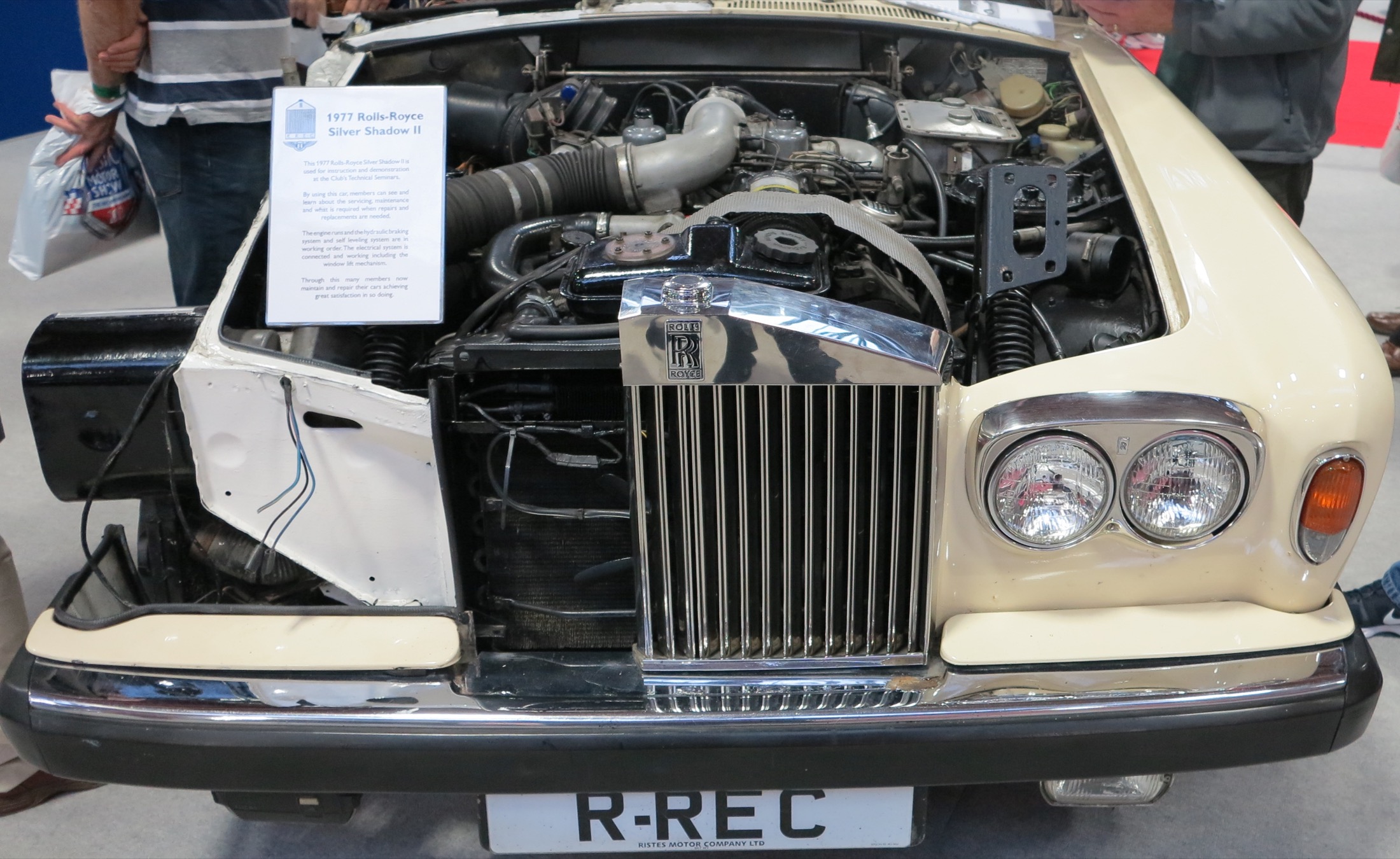
- Technical cutaway: photograph by Thomas’s Pics, Wikimedia Commons, CC BY licence 2.0.