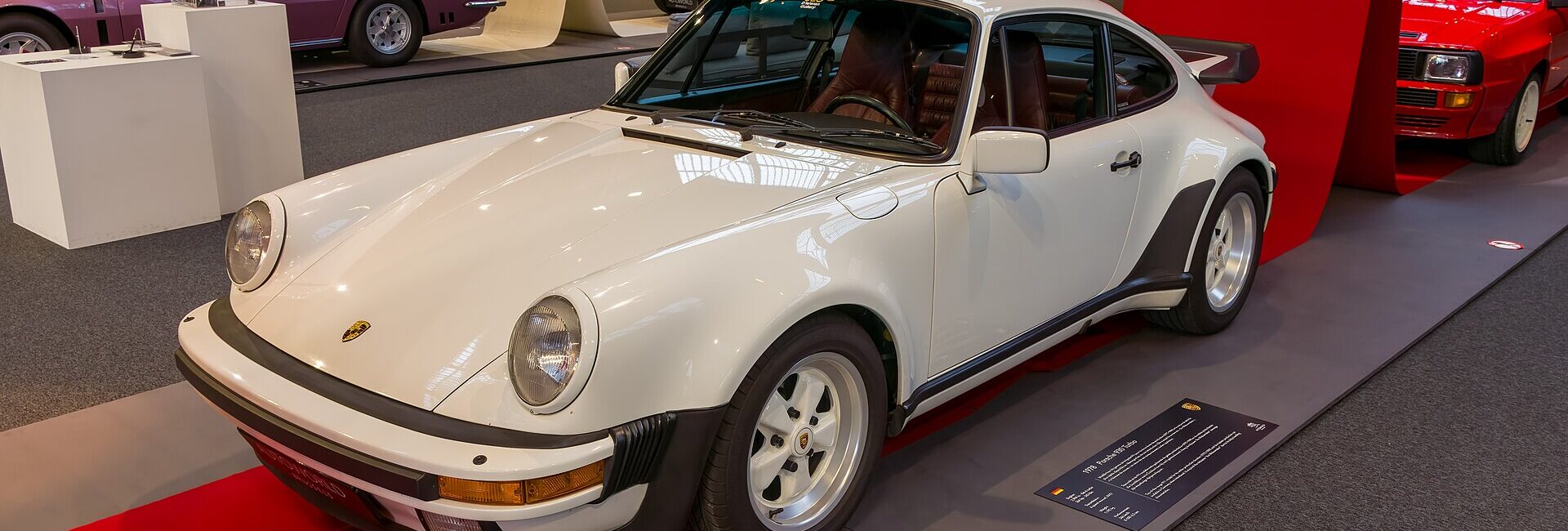
The Porsche 911 Turbo type 930 is a demanding classic car: the model is robust when properly maintained, but a rough restoration, outdated preparation or a tired engine can turn an appealing purchase into a very costly project. In 2026, it is important to distinguish the rare 3.0 litre 1975 to 1977, the 3.3 litre produced from the 1978 model year onwards, and the highly sought-after 1989 version equipped with the five-speed G50 gearbox. The price should never be judged without the history, authenticity and a specialised inspection.
Porsche 930: the essentials before buying
| Version | Period | Engine and European power output | Gearbox | Particularities |
|---|---|---|---|---|
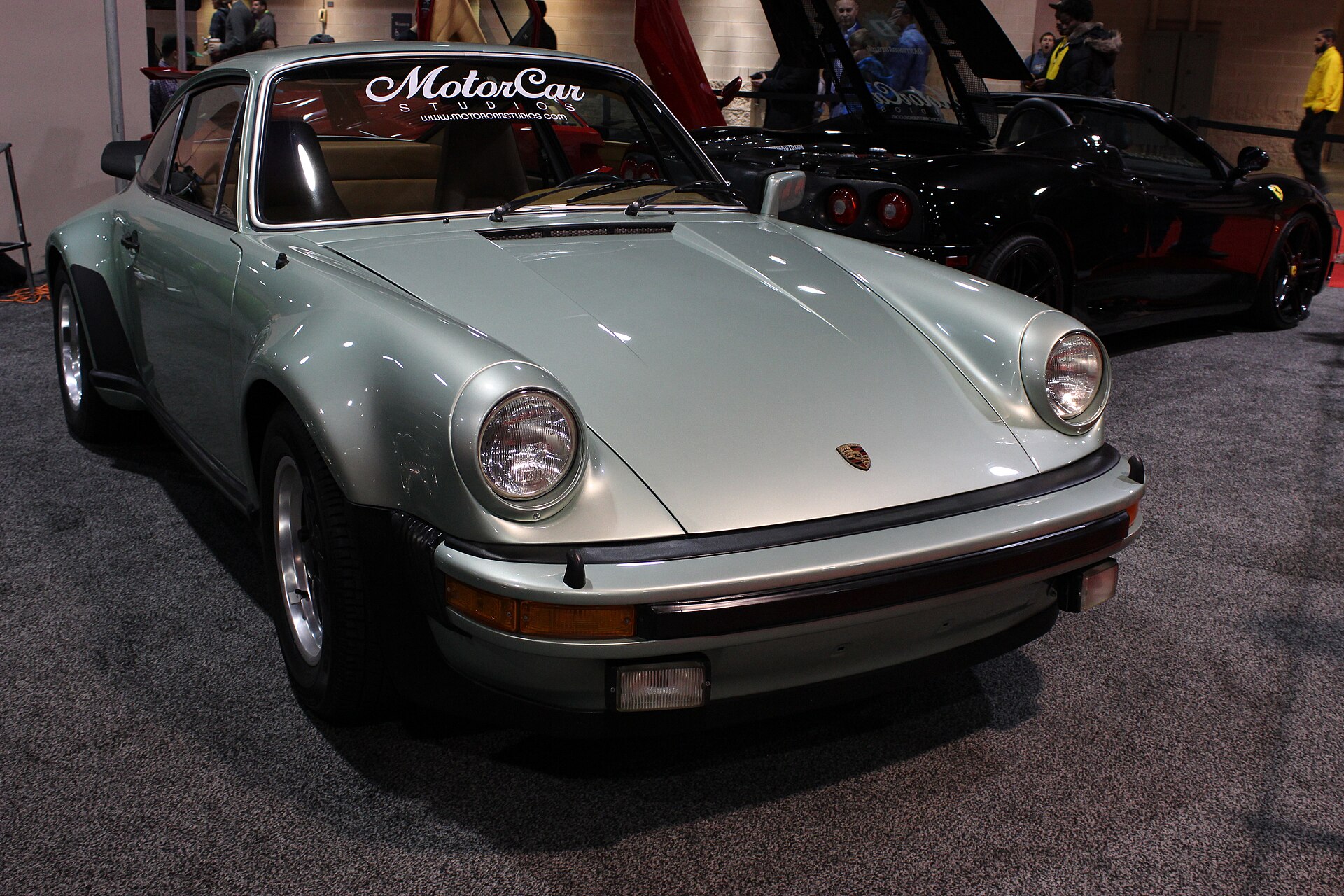
| 911 Turbo 3.0 | 1975-1977 | Flat-six 3,0 l, 260 hp | Manual 4 speed | First generation, rarer, “whale tail” spoiler |
| 911 Turbo 3.3 | 1978-1988 | Flat-six 3,3 l, 300 hp | Manual 4 speed | Air-to-air intercooler, brakes derived from the 917, most common evolution |
| 911 Turbo 3.3 G50 | 1989 | Flat-six 3,3 l, 300 hp | Manual 5 speed | Last model year, superior driving pleasure, high demand |
These figures describe the common European versions. Power, equipment and emissions devices may differ depending on the country of delivery. Before any comparison, it is therefore necessary to identify the original market with the chassis number and the car’s documents.
Why the 930 matters in the history of the 911
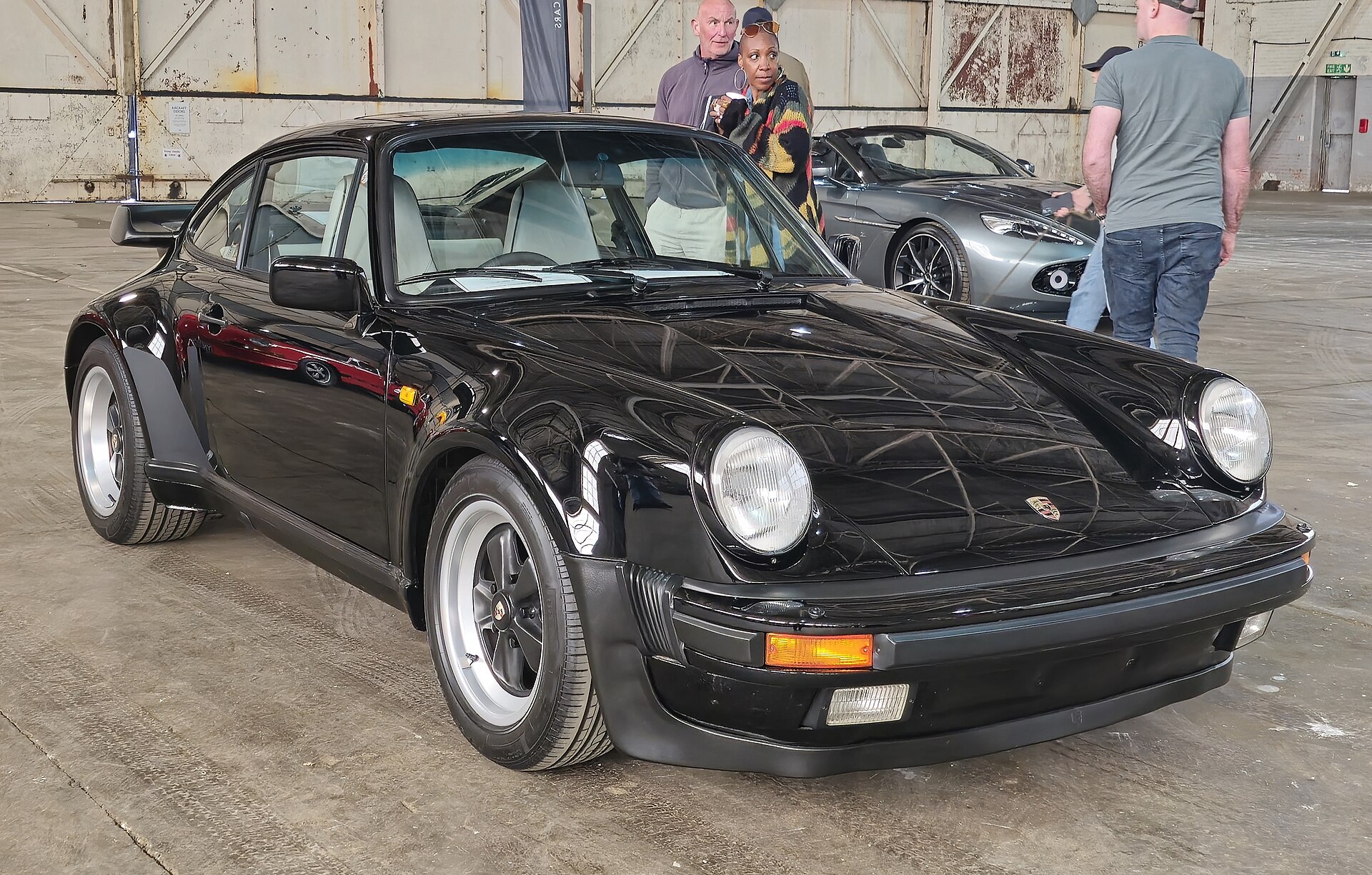
Presented in the context of Porsche’s work on forced induction in motorsport, the first production 911 Turbo entered production for the 1975 model year. Porsche states that the 3.0 litre develops 191 kW, or 260 hp, and reaches 100 km/h in 5,4 seconds. Its widened bodywork, imposing spoiler and late surge immediately make it a 911 apart.
For the 1978 model year, Porsche increased the displacement to 3,3 litres and installed an intercooler under the rear spoiler. The European power output reaches 221 kW, or 300 hp, with 412 Nm of torque. The ventilated alloy brakes are inspired by those of the Porsche 917. The manufacturer then announced a top speed of 260 km/h.
The range was then enriched with Targa and Cabriolet bodies in spring 1987. The Sonderwunsch programme also allowed orders for Flachbau executions, recognisable by their front end inspired by the 935. Finally, the 1989 model year received the five-speed Getrag G50 gearbox: this evolution, limited to the last year, explains part of its current premium.
What is the price of a Porsche 911 Turbo 930 in 2026?
There is no single valuation for the 930. The model year, bodywork, delivery market, originality and quality of documentation cause the value to vary dramatically. The prices shown in advertisements are also not transaction prices.
As of 16 October 2026, the CLASSIC.COM market database publishes indicators in dollars of approximately 205 000 $ for a 3.0 litre, 165 000 $ for a 3.3 litre coupe, 159 000 $ for a 3.3 convertible and 235 000 $ for a Slantnose coupe. These benchmarks aggregate an international market and should not be mechanically converted into a French valuation.
Two results obtained in Paris by RM Sotheby’s in February 2025 better illustrate the differences between versions: a 3.0 litre 1977, matching numbers but offered without registration papers, was sold for 132 250 €; a 1989 coupe with a G50 gearbox, documented and showing 78 800 km in the catalogue, reached 161 000 €. These results include the context specific to each sale and are not sufficient to value another example.
The proper method is to compare truly similar cars: same version, same bodywork, same year, comparable condition and equivalent quality history. A cheaper 930 requiring engine refurbishment, compliance work and body repairs can cost more than a sound and documented car.
To place a car in the market context, consult the classic and prestige cars offered for sale, then compare asking price, condition and provenance without confusing advertisement and concluded transaction.
Which version of Porsche 930 should you choose?
The 3.0 litre for rarity and historical purity
The 3.0 litre is closest to the original concept. Porsche announces 2 850 units produced during the first three years, while some databases and auction houses count 2 819 cars for the model years 1975 to 1977. This discrepancy may come from the scope of counting; it advises against promising a rarity ranking based on a single figure.
Its appeal lies in its historical significance, limited production and specific details. Conversely, sourcing bodywork, trim or mechanical parts that are correct can become lengthy and costly. A restoration should therefore be judged on its accuracy, not just its shine.
The 3.3 litre for usability and available choice
The 3.3 litre combines 300 hp, an intercooler and improved braking. It remains a car without ABS or modern electronic aids, but offers a more refined engine and a wider choice on the market. It is often the most rational entry point into the 930 world, provided the cost of refurbishment is not underestimated.
The 1989 model year for the G50 gearbox
The five-speed G50 makes the gear ratios more usable. The rarity of the model year and its position as the last 930 support its value. However, this premium is only justified if the car is authentic: gearbox, engine, chassis number, equipment and manufacturing date must correspond to the documentation.
Flachbau, Targa and Cabriolet: buy the configuration, not the story
Open bodies and genuine factory Flachbau models can command a premium. However, many 911 have subsequently received wide arches, a flat nose or a “Turbo look” presentation. One must distinguish an authentic 930, a documented period modification and a recent conversion. The manufacturer’s certificate, option codes and invoices must confirm the history told by the seller.
Reliability of the Porsche 930: critical points
The 930 is not inherently fragile, but its age, turbo heat and accumulated modifications require a methodical inspection. The check should be entrusted to a specialist in air-cooled Porsches, independent of the seller.
Engine, turbo and fuel system
A cold start allows observation of oil pressure, smoke, timing noises and idle stability. A brief puff can have several causes on an older flat-six; persistent blue smoke, high oil consumption or smoke under load require diagnosis.
One must look for leaks at oil return pipes, crankcases, cylinder head covers and turbo lines, then check the condition of the heat exchangers and exhaust. The turbocharger, wastegate, Bosch K-Jetronic injection and ignition must operate according to specifications. A modified boost pressure without serious documentation is a warning sign.
Request a compression test, supplemented if necessary by a cylinder leak-down test. The figures must be interpreted by the professional conducting the test: their consistency and the conditions under which they were measured are as important as the raw values.
Gearbox and clutch
The four-speed gearbox is robust but must shift gears without crunching or refusal when hot. A stiff clutch, imprecise control or noise under load require investigation. On a 1989, check that the G50 gearbox is indeed the expected one and that it is not a conversion used to present an earlier car as a more sought-after model year.
Chassis, brakes and handling
A healthy 930 should follow its line without wandering or inconsistent reactions. Bushes, shock absorbers, torsion bars, geometry, bearings and tyres all strongly influence its behaviour. Classic Trader notably highlights wear on the rear shock absorbers and bushes. The calipers must release the wheels properly and the discs must not cause vibrations.
The test should be progressive. The rear engine, absence of aids and the introduction of forced induction require anticipation. An open road is not the place to abruptly test the grip limit of an unfamiliar car.
Bodywork: where to look for repairs and corrosion
The width of the wings makes repairs costly and conversions difficult to assess. Measure the paint thickness on each panel and examine the welds, alignments, undersides and anchor points. Areas to check include in particular:
- the battery tray and front boot;
- the sills, door bottoms and wheel arches;
- the suspension and torsion bar anchor points;
- the windscreen and rear window surrounds;
- the floor, jack supports and impact marks under the shell;
- the rear wings, especially when a narrower 911 has been converted.
Repainted bodywork is not automatically a defect. However, the cause, extent and quality of the work must be established. A poorly documented previous structural repair affects both safety and value.
Authenticity: checks that protect value
On a 930, authenticity is not limited to the term “matching numbers” written in an advertisement. Record the chassis number, engine number, gearbox type, colour and equipment codes, then compare them with a Porsche certificate or documentation when available.
Then build the chronology: service book, invoices, MOT certificates, foreign ownership titles, old photographs and expert reports. Our guide dedicated to the historical file of a classic cardetails the documents to gather and inconsistencies to look for.
Modifications are not all deal-breakers. An exhaust, suspension adjustment or different steering wheel may suit a buyer who wishes to drive the car. Their quality, reversibility and declaration must however be known. An old engine preparation without invoices, power measurements or parts identification increases risk.
The pre-purchase inspection in 12 steps
- Precisely identify version, model year, original market and bodywork.
- Check the chassis number and its consistency with the documents.
- Inspect the engine and gearbox numbers and types.
- Reconstruct the history of owners and mileage.
- Examine invoices for engine, turbo, clutch and brake overhauls.
- Measure the paint thickness and inspect the bodywork on a lift.
- Perform a cold start without the engine being preheated by the seller.
- Check compression and sealing if the mechanical history is incomplete.
- Test the injection, wastegate and boost build-up for smoothness.
- Inspect the running gear, tyres, alignment and brakes.
- Obtain an immediate estimate for any work from a specialist.
- Make the purchase conditional on a written report and administrative compliance.
An expert pre-purchase inspection of a classic car costs little compared to an engine rebuild or poorly repaired bodywork. Ideally, it should take place before the final deposit is paid.
Running budget: plan for more than routine maintenance
The annual budget depends on mileage, initial condition and level of expectation. It is wiser to set aside a reserve for tyres, hoses, brakes, engine sealing, injection and suspension components than to rely on a universal flat rate.
A car that is driven infrequently is not necessarily economical. Being stationary promotes dry seals, degraded fuel, seized brakes and aged tyres. Regular maintenance, appropriate fluids and a full warm-up reduce risks without eliminating them.
Insurance should be based on a value consistent with the specific car. Have the valuation updated when the car undergoes significant work or when its market value changes markedly.
Verdict: which Porsche 930 to buy?
For regular driving, a standard 3.3 litre model that is sound, documented and close to original is often more relevant than a rare version imperfectly restored. For a collection focused on rarity, a 3.0 litre or a coherent 1989 G50 may justify a premium. In all cases, the individual car must take precedence over the dream colour and the listed price.
The best 930 is therefore not automatically the cheapest, the most powerful or the one with the lowest mileage. It is the one whose identity, structure, mechanics and history mutually confirm each other.
Frequently asked questions about the Porsche 930
Which is the most sought-after Porsche 930?
The older 3.0 litre models, the genuine factory Flachbau, and the 1989 coupes with G50 gearbox are generally highly sought after. Provenance, condition and authenticity can, however, weigh more heavily than the model year alone.
Is the Porsche 930 reliable?
Yes, a model maintained by specialists can be reliable. However, its age, the turbo, mechanical injection, and any possible modifications require a thorough inspection and a financial reserve.
Do all Porsche 930 have a four-speed gearbox?
No. The majority of 930 use a four-speed manual gearbox, but the 1989 model year is equipped with the five-speed Getrag G50.
How many Porsche 930 3.0 were produced?
Porsche states 2 850 units over the first three years. RM Sotheby’s and several specialised references cite 2 819 cars for the 3.0 litre 1975 to 1977 models. It is important to specify the source and scope rather than conceal this discrepancy.
Can a Porsche 930 be used regularly?
Yes, if it is well tuned, fitted with recent tyres, and properly maintained. However, its steering, braking without ABS, and forced induction require more attention than a modern 911.
Should low mileage be prioritised?
Not in isolation. Documented mileage, regular use, and continuous maintenance are often preferable to a low odometer reading without proof or serious recommissioning.
Sources and credits
- Porsche Newsroom, “The 911 Turbo generations”: official history, performance, announced production of the 3.0, characteristics of the 3.3 and range developments.
- RM Sotheby’s, Porsche 911 Turbo 1977, Paris 2025 and Porsche 911 Turbo 1989, Paris 2025: results, documentary status and particularities of the two examples.
- CLASSIC.COM, Porsche 911 Turbo type 930 market: market indicators by version consulted on 16 October 2026.
- Classic Trader, “The Porsche 930 Buying Guide”: mechanical checkpoints, running gear and differences between versions.
Information and market data verified on 16 October 2026. Values are volatile: update recommended every six months.