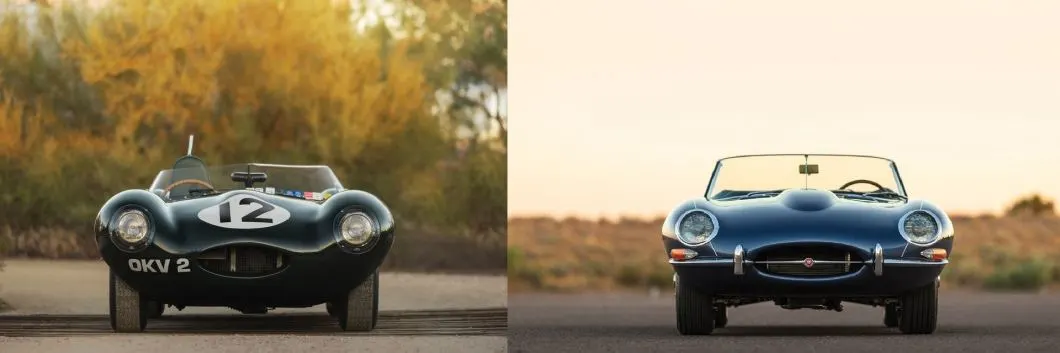
Few cars can boast of having been called “the most beautiful car ever built” by Enzo Ferrari himself. The Jaguar Type E — or XK-E for the North American market — is one of those rare exceptions that transcend eras. Produced from 1961 to 1975 in Coventry, it defined an entire era of automotive design and remains today one of the most coveted collector cars in the world, with a total of 72 528 units produced.
But behind this unique icon lie in fact multiple versions, series and sub-variants. Series 1, 1.5, 2 or 3, engine 3.8, 4.2 or V12, coupe, roadster or 2+2 bodywork… the landscape can seem complex for the potential buyer. Understanding these differences is essential, however, as they directly influence market value, driving pleasure and rarity of each model. Here is a complete guide to decipher the world of the Jaguar Type E and guide your choice with full knowledge.
At the origins of the Type E: from the racetrack to the road
The genesis of the Type E is directly linked to Jaguar’s racing successes. The Type C then Type D had dominated the 24 Hours of Le Mans, winning the race in 1951, 1953, then three consecutive years from 1955 to 1957. Building on this heritage, William Heynes, technical director, entrusted aerodynamicist Malcolm Sayer with the mission to design a road-going GT embodying this sporting lineage.
Sayer, trained at Bristol Aeroplane Company, brought an unprecedented mathematical approach. His lines are not just beautiful: they are the result of precise airflow calculations. The Type E borrows from the Type D its monocoque construction with front subframe, reducing weight to 1 315 kg for the first examples.
On 15 March 1961, the unveiling at the Geneva Motor Show caused a sensation. The “9600 HP” coupe was still in England the night before: Bob Berry, a Jaguar executive, had to convoy it overnight from Coventry to Geneva, arriving twenty minutes before the presentation. The success was such that Jaguar immediately sent the “77 RW” roadster, driven flat out by driver Norman Dewis.
Series 1 (1961–1968): the original purity
The 3.8 litre: birth of the myth
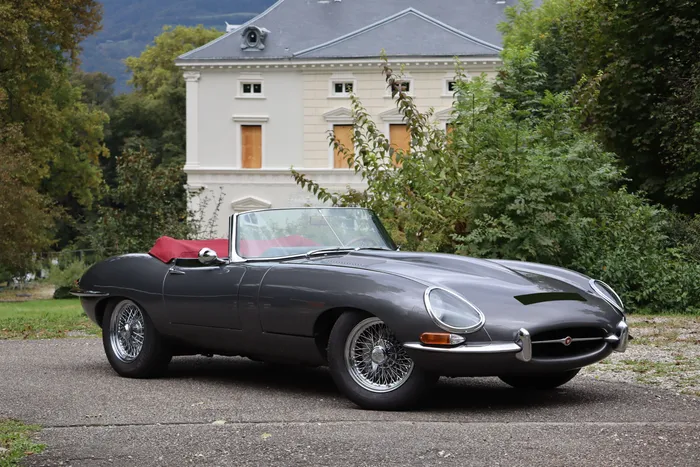
The first Type Es, produced from March 1961 to October 1964, are equipped with the XK inline six-cylinder engine of 3,8 litres fed by three SU carburettors. This engine delivers 265 hp and propels the car to a claimed top speed of 240 km/h, with a 0 to 100 km/h sprint completed in approximately 7 seconds. For the time, these figures are truly extraordinary — and all for a price of around 2 097 pounds sterling, which is two to three times less than a comparable Ferrari.
The Type E also introduced major technical innovations: four disc brakes (mounted inboard at the rear), independent suspension on all four wheels and rack and pinion steering. The four-speed Moss gearbox, without synchromesh on first gear, required some skill but contributed to the sporty character of the whole.
Among the 3.8, the very first so-called “flat floor” examples, produced between 1961 and early 1962, are the most sought after. These 500 first cars, identifiable by their flat floor and external bonnet latches, can exceed 200 000 € at auction for well-preserved examples. In total, 15 498 Series 1 3.8 litre examples were produced (7 670 FHC coupes and 7 828 OTS roadsters).
The 4.2 litre: the accomplished evolution
In October 1964, Jaguar increased the displacement to 4,2 litres (4 235 cm³). Power remained identical at 265 hp, but torque increased by 18 %, rising from 325 to 384 Nm. This evolution greatly improved everyday drivability, with better low-end response. The Moss gearbox gave way to a fully synchromesh Jaguar four-speed transmission, much more pleasant to operate.
The cooling system was revised, an alternator replaced the dynamo, and the seats gained reclining adjustment. Aesthetically, the car remained unchanged — only a “4.2 Litre” badge on the boot distinguished it from the 3.8. The 4.2 Series 1 is considered by many as the best compromise between design purity and driving pleasure. Production: 16 195 units. Thirty years later, another roadster took up this promise at a much more accessible price: the BMW Z3.
The 2+2 coupe: the family Type E
In 1966, Jaguar responded to American demand by launching a 2+2 coupe with a 229 mm extended wheelbase. The roofline was modified and two small rear seats allowed children to be carried. It was also the first Type E available with an automatic gearbox. Less valued than the strict coupe or roadster, the 2+2 is an interesting entry point with a more modest budget.
The Lightweights: the ultimate exception
Alongside the production models, Jaguar planned to build 18 lightweight competition cars, with aluminium bodywork and engine block. Only twelve were ultimately built. In 2014, Jaguar Classic announced the manufacture of the six missing examples, offered at around one million pounds each. An original Lightweight from 1963 reached 7,37 million dollars at the Scottsdale auction in 2017. These exceptional pieces are the rarest and most valuable of the entire Type E lineage.
Series 1.5 (1967–1968): the little-known transition
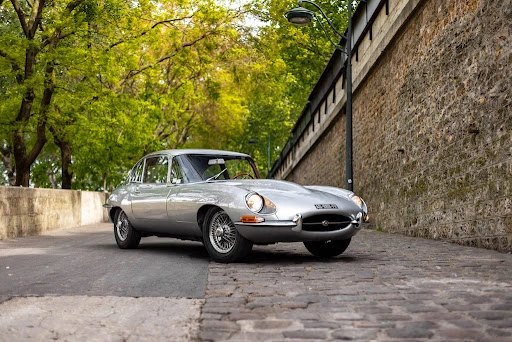
Often overlooked by novices, Series 1.5 (or “1½”) designates a transitional series produced for the 1968 model year. It was never officially named as such by Jaguar, but this term has become established among specialists to describe cars that retain the Series 1 bodywork while incorporating modifications imposed by American regulations.
The main changes concern headlights now uncovered (without glass covers), toggle switches replaced by rocker switches, and especially for the American market, the switch from three SU carburettors to two Zenith-Stromberg units. This downgrade in fuel supply causes a power drop from 265 to 246 hp and torque reduced from 384 to 357 Nm. The valve covers, formerly polished aluminium, are now painted black with brushed ribs.
Series 1.5 are interesting for knowledgeable collectors: they offer the visual charm of Series 1 at lower prices, with some practical improvements such as two cooling fans. 6 726 examples were produced.
Series 2 (1968–1971): the regulatory compromise
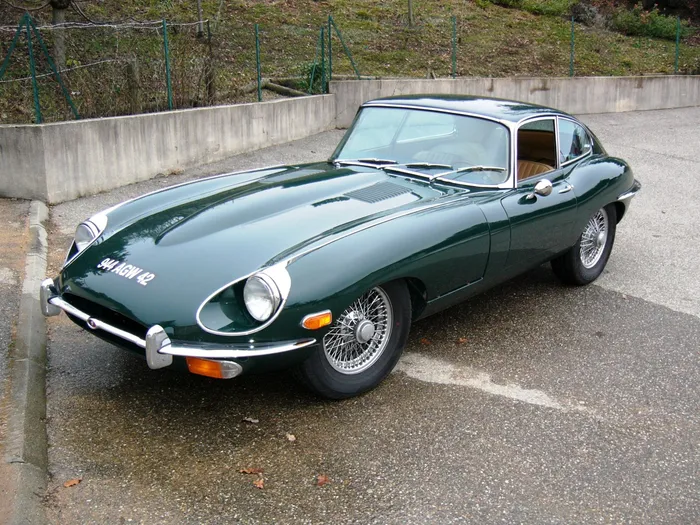
Launched in October 1968, Series 2 continued adaptation to American standards. Uncovered headlights became standard on all markets, the air intake grille was enlarged to improve cooling — a weak point of Series 1 — and the front indicators as well as rear lights changed position. The front bumper wrapped more around the bodywork. At the same time, another European coupe was attempting a radical formal gamble: the Volvo 1800ES, Swedish shooting brake.
Mechanically, Series 2 adopted a Girling braking system replacing the original Dunlop, reputed more reliable and durable. Power steering appeared as an option. Powered by the 4.2 litre six-cylinder, the car showed slightly lower power on American versions (246 hp), while European versions retained the three SU carburettors and full power of 265 hp.
Long considered the “poor relation” by purists, Series 2 actually offers a more civilised driving experience and improved reliability. It is a wise choice for those wishing to drive their Type E regularly. 18 808 examples were assembled between 1968 and 1971, in three body styles: FHC coupe, OTS roadster and 2+2 coupe.
Series 3 (1971–1975): the V12 era
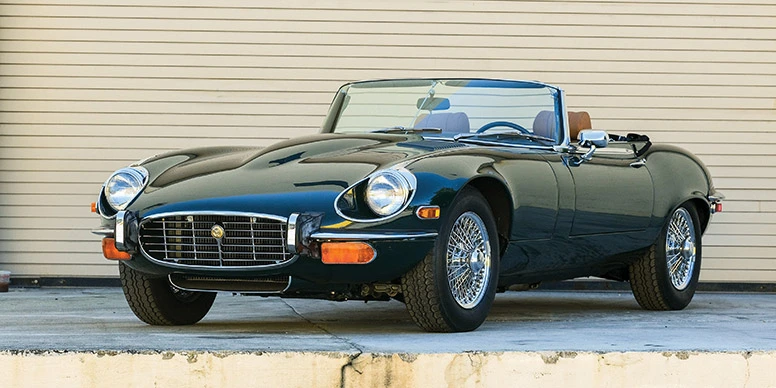
The 3 Series, introduced in 1971, marks a major turning point. The inline six-cylinder gives way to an entirely new V12 of 5,3 litres developing 272 hp and 412 Nm of torque. This exceptionally smooth and quiet engine gives the Type E a radically different character, more grand tourer than pure sports car. The 0 to 100 km/h sprint is completed in under 7 seconds, and the top speed approaches 240 km/h.
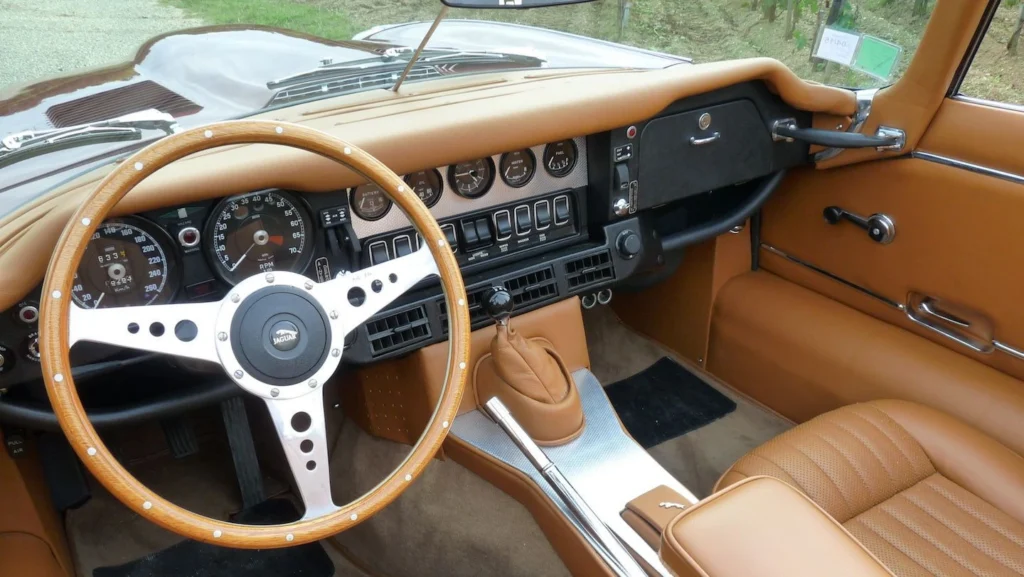
The short wheelbase coupe was abandoned: Series 3 exists only as a roadster and 2+2 coupe. It is distinguished by a chrome horizontal grille, widened wheel arches, four exhaust outlets and ventilated Girling brakes. Power steering is now standard.
15 287 examples were produced before final cessation in February 1975, making way for the XJS. Long shunned in favour of earlier series, Series 3 is experiencing renewed interest. Its V12 is unanimously praised as a mechanical masterpiece, and the price gap with the six-cylinder models seems less and less justified.
Values and market: how much is a Jaguar Type E worth today?
The Jaguar Type E market appears overall stable to slightly rising over the period 2021–2026, with significant dispersion depending on versions. Here are the main trends:
Series 1 — 3.8 litres: the most sought-after examples. A roadster or coupe in good condition trades between 150 000 and 250 000 €. The very rare “flat floor” models from 1961–1962 regularly exceed 200 000 € at auction.
Series 1 — 4.2 litres: the heart of the market, with prices ranging from 100 000 to 200 000 € for coupes and roadsters. This version offers the best balance between desirability and driving pleasure.
Series 1 — 2+2: less sought after, the 2+2 sits between 50 000 and 75 000 € depending on condition, constituting the most accessible entry point into the Type E Series 1 universe.
Series 2: prices range between 60 000 and 100 000 € depending on body style. Increased reliability and a more reasonable acquisition budget make it a relevant choice for regular use.
Series 3 V12: the entry ticket now stands around 80 000 to 100 000 € for a decent example. Beautiful restored roadsters can reach 150 000 € and more. The price gap with the six-cylinder models is gradually narrowing.
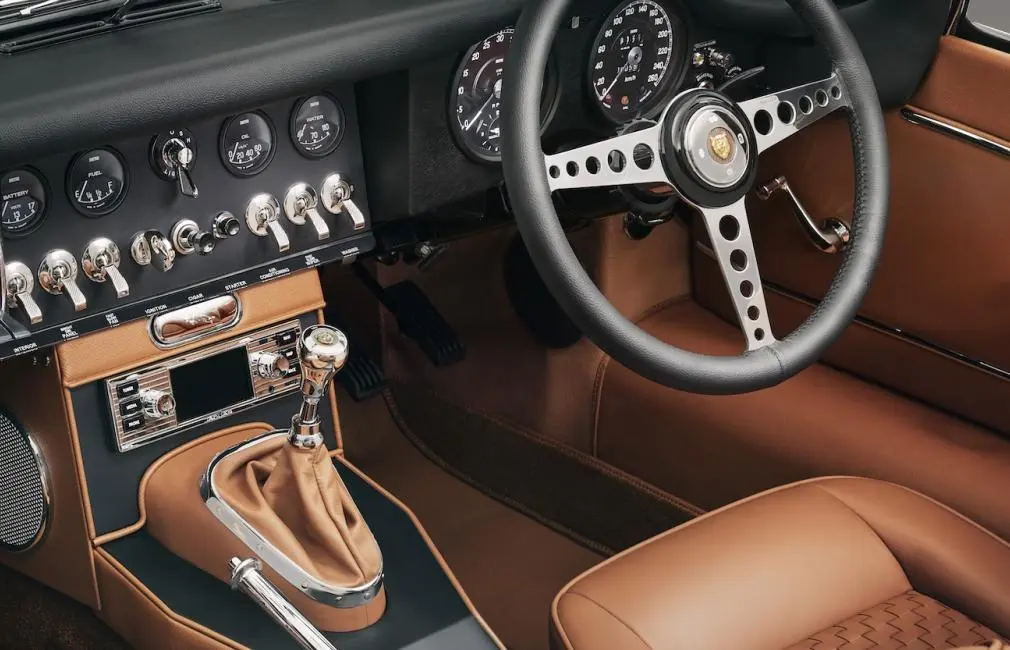
Mistakes to avoid when buying a Type E
Purchasing a Jaguar Type E is a quintessential passion purchase, but it requires rigour. Corrosion is the number one enemy: the Type E is notoriously prone to rust on the monocoque chassis, sills and floor pans. A car with impeccable bodywork can conceal a weakened chassis. Expert assessment by a specialist is essential before any commitment.
Another point of vigilance: “matching numbers.” A vehicle whose engine, gearbox and body correspond to the original numbers recorded in Jaguar Heritage registers will be worth significantly more than a reassembled example. Also beware of American imports: specifications sometimes differ from European models, and some restorations of uneven quality mask structural defects. A good file of invoices and a complete history are always better than an attractive paint job on a dubious base.
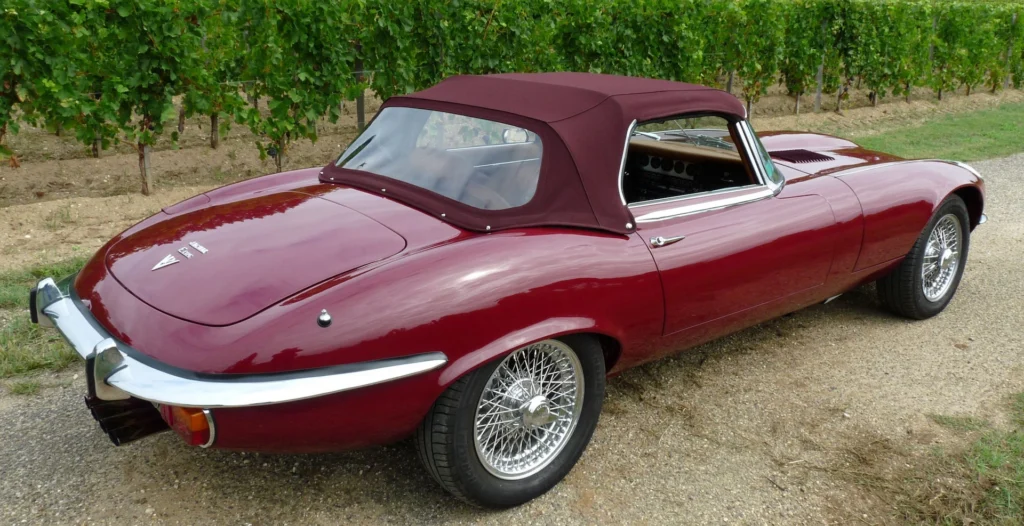
Type E Zero and “60” Collection: the myth reinvented
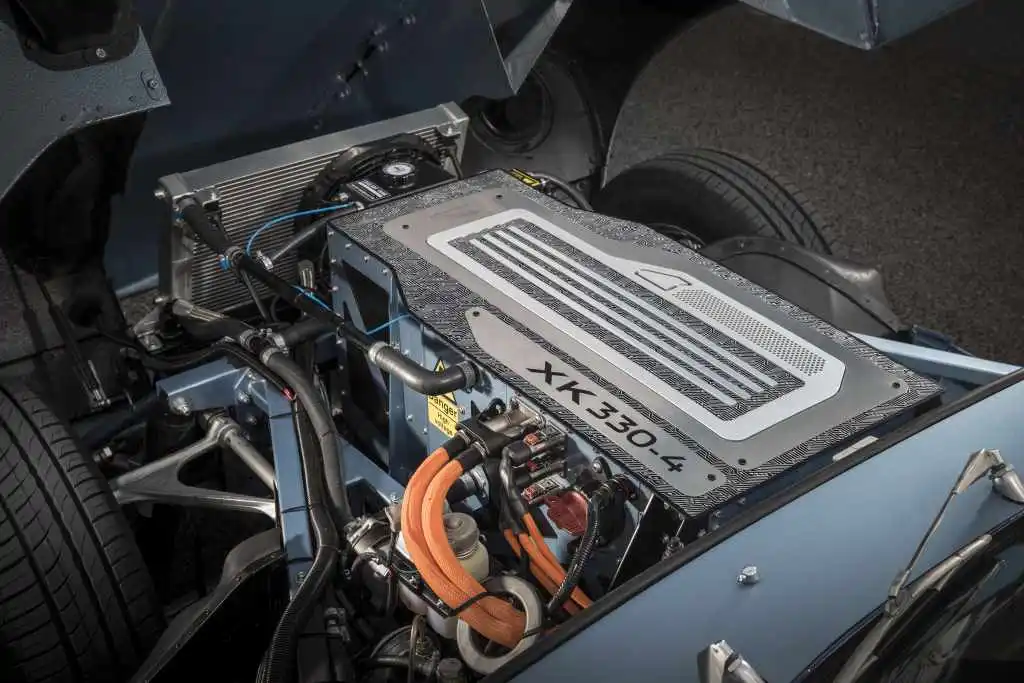
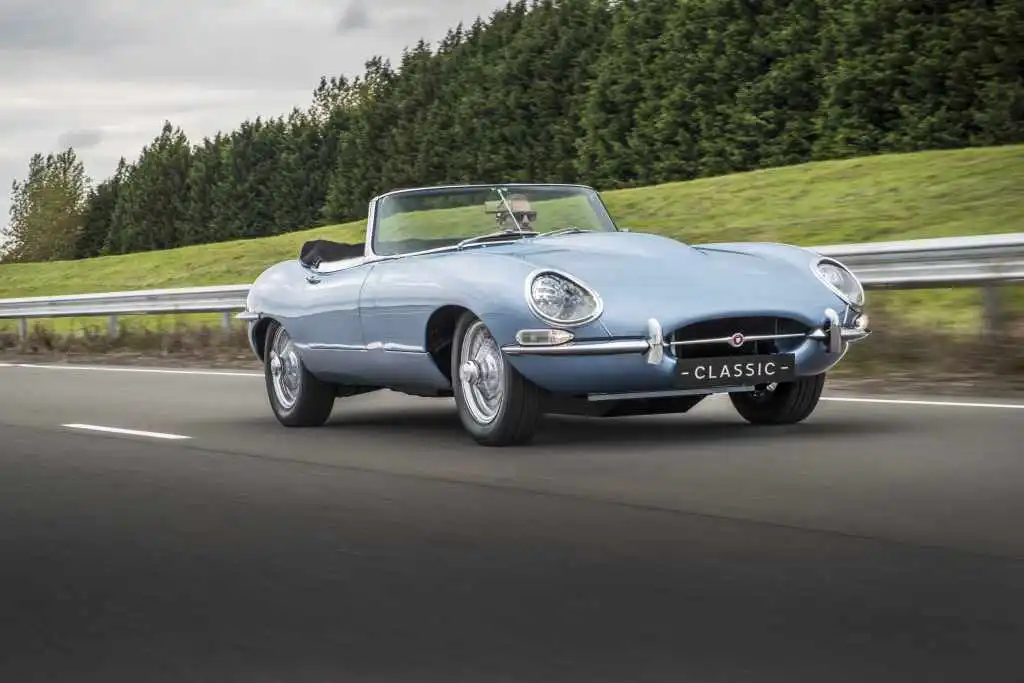
In 2017, Jaguar Classic unveiled the Type E Zero, a 1.5 Series roadster of 1968 equipped with an electric motor of 220 kW and a lithium-ion battery of 40 kWh occupying exactly the space of the original six-cylinder engine. The 0 to 100 km/h sprint drops to 5,5 seconds for 270 km of range. However, the commercialisation project, announced for 2020, was suspended in 2019.
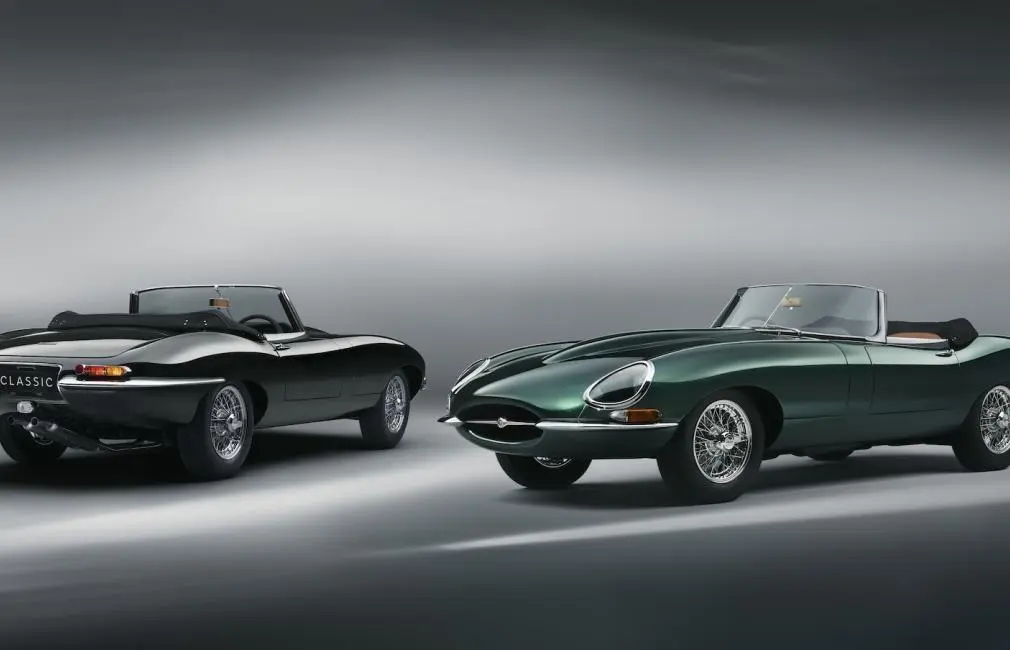
For the sixtieth anniversary in 2021, Jaguar Classic restored twelve Series 1 3.8 litre examples — six “Flat Out Grey” coupes and six “Drop Everything Green” roadsters — in exclusive colours inspired by the two cars unveiled at Geneva in 1961. Offered in pairs with a specific five-speed manual gearbox, these examples illustrate the Type E’s ability to inspire passion six decades after its birth.
Expert advice: what to remember before buying
Firstly, define your use. For an investment, opt for a Series 1 in 3.8 or 4.2 litres with matching numbers. For regular driving, a Series 2 or a Series 3 V12 will offer more comfort and reliability for a lower budget.
Secondly, never neglect a pre-purchase inspection by an independent Jaguar specialist, and prioritise documentation: Heritage certificate, invoice file and maintenance history are guarantees of seriousness that support the vehicle’s valuation.
Finally, anticipate maintenance costs. Oil change every 5 000 km, corrosion monitoring, carburettor adjustment, electrical wiring check… the Type E generously rewards those who give it the care it deserves.
Frequently asked questions
How many Jaguar Type Es were produced?
In total, 72 528 Jaguar Type Es were assembled between 1961 and 1975: about 38 400 in Series 1, 18 800 in Series 2 and 15 300 in Series 3.
What is the difference between Series 1 and Series 1.5?
Series 1.5 retains the Series 1 bodywork but adopts uncovered headlights and, on US versions, two Zenith-Stromberg carburettors instead of three SU, resulting in a power drop from 265 to 246 hp.
Which version appreciates the most in value?
Series 1 in 3.8 litre “flat floor” from 1961–1962 experience the most spectacular appreciation. The Lightweights reach several millions. More accessible, the 4.2 Series 1 with matching numbers enjoy steady and sustained demand.
Conclusion
The Jaguar Type E is not just a collector car: it is a monument of global automotive heritage. From the purity of the first Series 1 to the nobility of the V12 of Series 3, each version tells a chapter of this exceptional story. The choice between the different series depends primarily on your project: investment, regular use or concours piece.
One certainty remains: whatever the chosen version, owning a Type E is holding a fragment of living history. And if you still hesitate, remember that a legend never truly depreciates. Which version will make your heart beat?