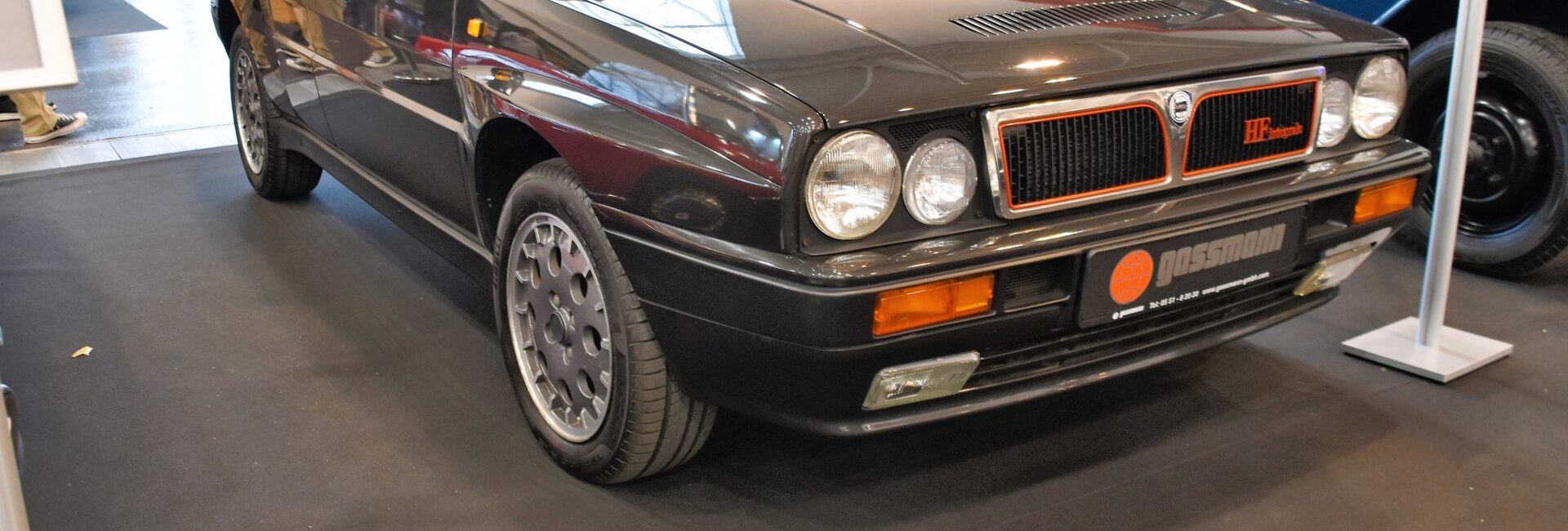
A Lancia Delta HF Integrale can be an excellent collector’s purchase, but only if the bodywork, history and authenticity take precedence over the version or colour.In October 2026, the asking prices observed in Europe range approximately from 27 000 to 50 000 € for a 8 valve Integrale, from 40 000 to 65 000 € for a 16V, and from 65 000 to over 150 000 € for the Evoluzione and special series. These amounts are listings, not guaranteed sale prices: a documented restoration, original configuration and clear history can justify a strong premium, whereas corrosion, modifications and a poorly explained competition past should lead to a discount.
The difficulty is therefore not in finding “an Integrale”, but in precisely identifying its version and understanding what has happened to it over nearly forty years. A nice paint job, low mileage shown or a Martini livery do not replace an inspection on a lift or a file of invoices.
Why the Delta Integrale became an icon
The Delta, designed by Giorgetto Giugiaro, first appears as a compact saloon. Its career changed with the HF versions featuring four-wheel drive developed for rallying. Lancia and Stellantis recall that the four generations of four-wheel drive Delta HF contributed to six consecutive manufacturers’ world titles between 1987 and 1992, four drivers’ titles and 46 overall victories in the World Rally Championship.
This record explains part of the current demand, but the road car must not be confused with a factory Group A rally car. The production models feature a very sophisticated architecture for their time: a 2,0 litre four-cylinder turbocharged engine, permanent four-wheel drive, central differential with viscous coupling and Torsen rear differential depending on the versions.
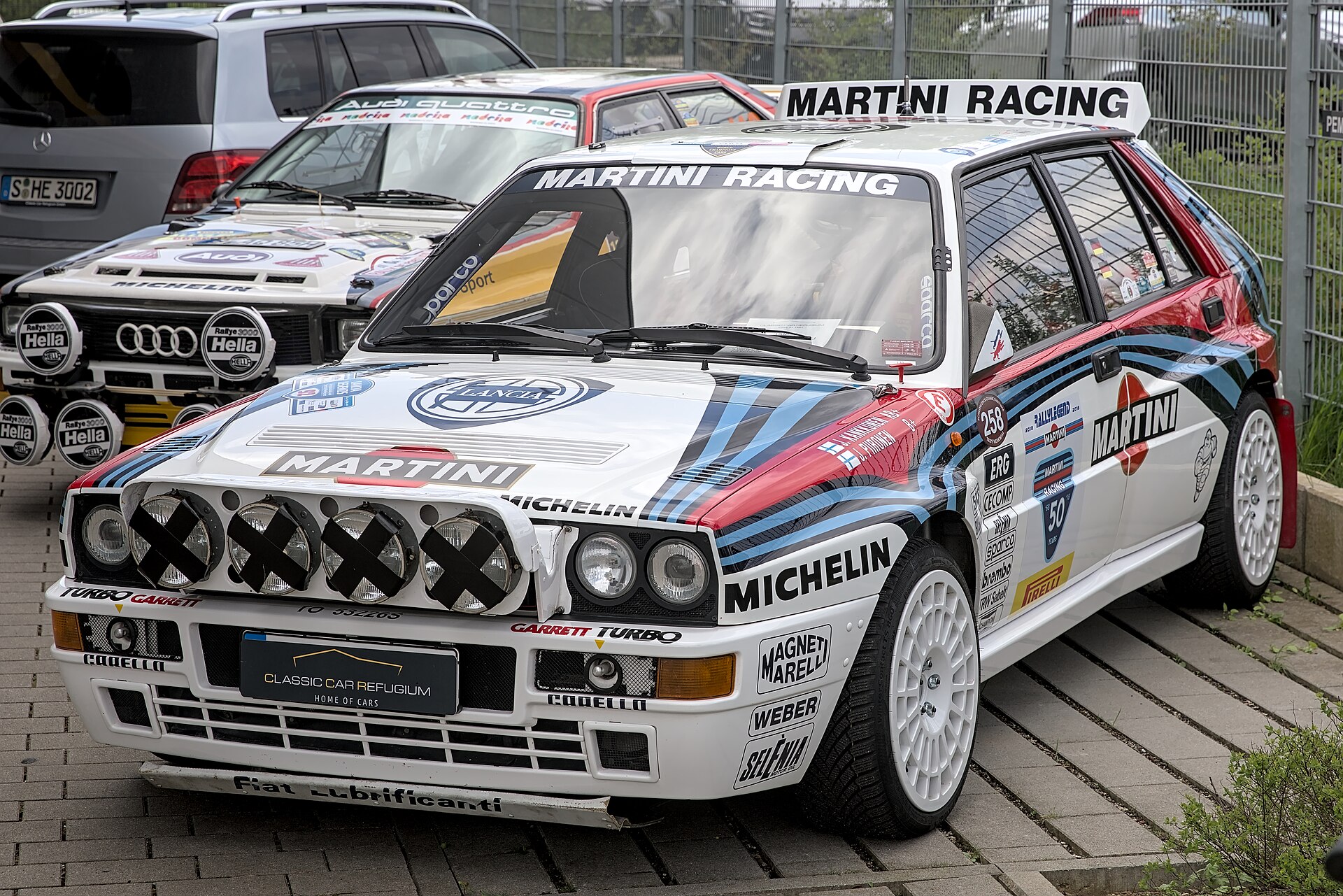
Competition built the legend of the Integrale, but a road car must be judged on its identity and actual condition. Photo: Alexander-93, CC BY-SA 4.0, via Wikimedia Commons.
What are the main versions of the Lancia Delta Integrale?
The word “Integrale” is often used for any four-wheel drive Delta HF. To buy correctly, one must distinguish the stages of its evolution.
| Version | Indicative period | Original power output | Main features |
|---|---|---|---|
| Delta HF 4WD | 1986-1987 | 165 hp | First Delta HF with four-wheel drive, still narrow bodywork |
| HF Integrale 8V | 1987-1989 | 185 hp | Widened wings, revised cooling, specific bonnet |
| HF Integrale 16V | 1989-1991 | 200 hp | 16 valve cylinder head, bulged bonnet, torque distribution more rear-oriented |
| Evoluzione I | 1991-1992 | 210 hp | Widened tracks, more generous wings, revised brakes and suspension, adjustable spoiler |
| Evoluzione II | 1993-1994 | 215 hp | Smaller water-cooled turbo, catalytic converter, revised electronic management, 16 inch wheels |
Classic & Sports Car indicates 5 298 units for the HF 4WD, 9 841 for the Integrale 8V and 12 860 for the 16V. For the Evoluzione and limited editions, published figures vary depending on whether markets, catalysed versions and special editions are counted. An advertisement should therefore never be validated based on a production number copied without documentation corresponding to the car.
How to recognise a 8V from a 16V?
The 8V normally has a flatter bonnet with vents towards the front, whereas the 16V adopts a bulging bonnet to accommodate the new cylinder head. The Evoluzione are distinguished by their even wider wings and tracks, their five-stud wheels and their adjustable rear spoiler. However, many cars have received bonnets, wheels, bumpers or interiors from another version. Visual clues are not enough: check the VIN, type, mechanical numbers, archives and invoices.
Our guide on the matching numbers of a classic car explains why a consistent number must always be cross-checked with documents and the specifications of the model year.
What is the price of a Lancia Delta Integrale in 2026?
The market is very stretched. A European survey published in August 2026 placed asking prices around 27 000 to 50 000 € for a 8V, 40 000 to 65 000 € for a 16V, 75 000 to 120 000 € for an Evo I and 90 000 to over 150 000 € for an Evo II or a rare series. Listings visible on mobile.de in October 2026 confirmed an abundant supply of Evoluzione between approximately 65 000 and 120 000 €, with Martini special editions or very low mileage examples significantly above.
These figures are only a snapshot of the listed prices. Actual sales may tell a different story. Collecting Cars recorded in September 2026 an Integrale 16V from 1990 to 25 250 £ and, in October, an Evoluzione from 1993 to 72 500 £. Bonhams sold in October 2026 an Evo II Giallo Ginestra for 92 000 € including fees. The differences are explained by version, country, condition, originality, credible mileage and quality of documentation.
| Family | Observed asking price range in 2026 | What creates the premium |
|---|---|---|
| Integrale 8V | 27 000 to 50 000 € | Sound body, original configuration, continuous history |
| Integrale 16V | 40 000 to 65 000 € | Documented maintenance, no modifications, good presentation |
| Evoluzione I | 65 000 to 120 000 € | Authenticity, colour, justified low mileage, complete file |
| Evoluzione II and special editions | 90 000 to over 150 000 € | Verified rarity, concours condition, provenance and conformity |
High demand does not prove value. Before comparing two cars, bring them to the same scope: exact version, tax or commission included, country of registration, mileage, restoration, original parts available and immediate work required. A free valuation of your car can also help a seller distinguish listing price, market value and achievable price.
Is the Lancia Delta Integrale reliable?
The mechanics can be robust when they remain close to the original and are properly maintained. The problem often comes less from a single defect than from accumulation: heat, forced induction, four-wheel drive, corrosion, old modifications and long periods of inactivity. A car followed by a specialist can cover many miles; a shiny car without invoices can absorb a considerable budget.
Engine, turbo and cooling
The four-cylinder from the Lampredi family handles its original power well, but it tolerates neglect poorly. When cold, listen for abnormal noises and observe the smoke. When hot, check temperature stability, oil pressure, fan activation and absence of bubbles or overpressure in the cooling circuit.
Blue smoke on acceleration or deceleration may point to the turbo or engine wear. Oil traces are not uncommon, but they must be located. Inspect the turbo, oil lines, intercooler, hoses, radiator and exhaust manifold. A prepared car must have invoices, documented tuning and a consistent power measurement.
The timing belt is a non-negotiable point. Published intervals differ between 8V, 16V and usage conditions. If the date, mileage, rollers and water pump are not proven by invoice, plan their replacement before stressing the engine.
Gearbox, clutch and four-wheel drive
The gearbox must shift without crunching, especially on the most used gears. Check the clutch under load, bearing noises, drive shafts and gaiters. The differentials and four-wheel drive system are durable when they have the correct lubricants and have not undergone excessive power increase.
Four tyres of the same brand, size, structure and comparable wear are essential. Different circumferences unnecessarily stress the transmission. Irregular wear can also reveal geometry defects, worn suspension or a chassis that has been stressed.
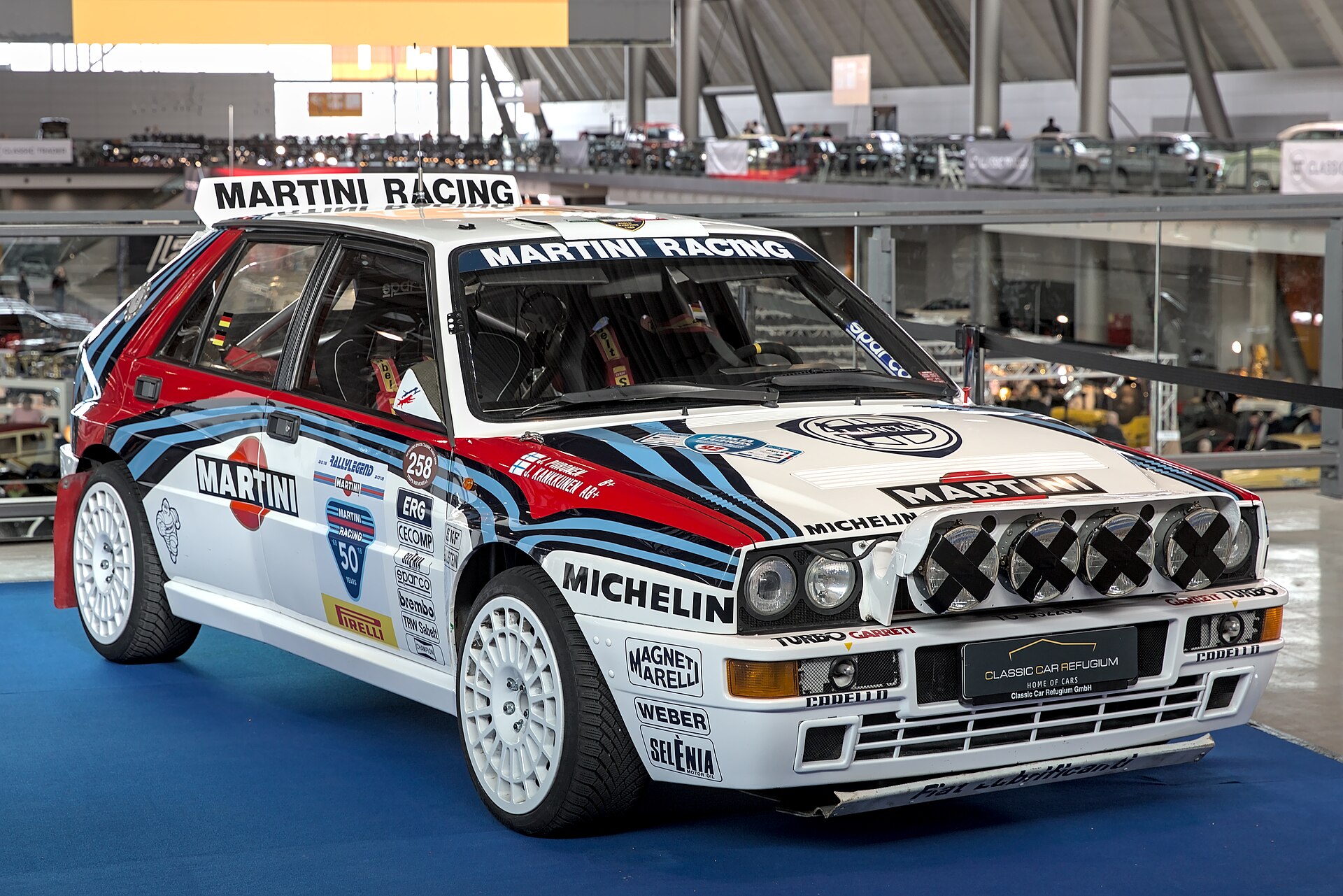
The demands of rallying shaped the Integrale; on the road, the transmissions and chassis mainly suffer from excessive tuning and deferred maintenance. Photo: Alexander-93, CC BY-SA 4.0, via Wikimedia Commons.
Where do corrosion and cracks hide?
The bodywork is often the most important area. Inspect the car dry, clean and on a lift, without settling for a recently covered underside. Areas to check include:
- the sills, jacking points and floors;
- the wheel arches and wing returns;
- the suspension mounts and rear strut towers;
- the side members, the front crossmember and the areas near the steering rack;
- the pillars and the perimeter of the windscreen;
- the windscreen aperture, the roof edge and the tailgate;
- the welds and linings concealed beneath filler or stonechip protection.
PistonHeads and Classic & Sports Car also report possible cracks around the aperture, bulkhead and stress points affected by the suspension. A very stiff suspension, intensive use or a powerful tune-up accelerate chassis stresses. Look out for non-standard welds, colour mismatches, modern seals, irregular alignments and signs of a previous roll cage.
A restoration is not a fault if it is documented. Request photos of the bare metal, replaced parts, treatments and geometry measurements. Our method for detecting rust before buying a classic car details the checks to carry out before discussing price.
Interior, electrics and specific parts
The Recaro seats, fabrics and Alcantara, door panels, steering wheel, instruments and wheels strongly influence value. Seat bolsters wear out and some specific components become costly to source. Compare the interior with the year’s catalogues: an attractive upholstery may come from another series.
Test all electrical functions: instrumentation, gauges, lighting, fan, windows, locking and any air conditioning. Worn earths or relays can cause intermittent faults, but an electrical anomaly should not automatically be considered minor. A cut wiring loom, modified for competition or repaired without a schematic can require many hours.
Finally, check the wheels. Early versions and the Evoluzione do not use the same fixings. Non-standard wheels may conceal modified brake or hub assemblies. Verify dimensions, offset, references and the possible presence of original wheels.
Are modifications deal-breakers?
No, but they change the risk and value. A reversible, documented and properly fitted upgrade does not have the same impact as an old tune-up without an invoice. The further the power departs from original, the more you need to examine cooling, injection, clutch, gearbox, differentials, brakes and chassis rigidity.
For a car intended for collecting, a standard and complete configuration is generally easier to appraise and resell. If you are looking for a modified car, ask who carried out the work, with which parts, what engine programme and what tuning evidence. Allow a margin to bring the car back into conformity and enquire about administrative and insurance consequences.
What to check during the road test?
Start with a cold engine. A seller who warms the car before your arrival deprives you of important information. During the test:
- check the starting, idling and exhaust smoke;
- monitor temperature, oil pressure and warning lights;
- check the turbo boost build-up without cut-out or hesitation;
- shift through all gears at low then medium load;
- listen to transmissions, bearings and differentials during acceleration and deceleration;
- test braking in a straight line and for absence of vibration;
- observe steering precision and suspension noises;
- After the test drive, check for new leaks, fuel smell or expelled fluid.
An enjoyable test drive does not replace an inspection. On an Integrale, a pre-purchase expert assessment carried out by a specialist familiar with the differences between versions is proportionate to the price and complexity of the vehicle.
Which documents should you request from the seller?
The file should allow you to link the car to its history: registration certificate, VIN, service book, invoices, technical inspections, expert reports, old photos, import documents and restoration proofs. Check the chronology of mileages and changes of country.
A car imported from Italy can be excellent, but its origin guarantees nothing. The formalities, tax clearance certificate and registration documents must be consistent; consult our guide to import a classic car from Italy.
Beware of recreated special editions. A Martini livery, numbered plates or a rare colour must be verified with the chassis number, delivery documentation and original features. The cost of an expert assessment is low compared to the value difference between an authentic edition and a replica.
Which Lancia Delta Integrale should you choose?
The best version is first and foremost the best car available within your budget.
- HF 4WD : the closest to the original Delta, interesting for history, but rare and often less visually spectacular.
- Integrale 8V : relatively affordable access to the experience, simpler mechanics and very distinctive character.
- Integrale 16V : sought-after compromise between performance, enjoyment and price, provided you find a sound example.
- Evoluzione I : iconic silhouette and refined chassis, but higher price and many modified cars.
- Evoluzione II : ultimate road-going version and highly collectible, with a strong premium for authentic colours and special editions.
Do not sacrifice a sound body and continuous history to obtain a tired Evo. A well-maintained 8V or 16V can offer more pleasure and less risk than a supposedly rare series whose identity remains unclear.
Is the Delta Integrale a good investment?
Its record, design and historical importance support demand, but no future increase is guaranteed. Restoration costs can wipe out several years of appreciation. The best protection is to buy an authentic, sound, documented car, then keep the original parts and proof of every intervention.
To compare this model with others classic and prestige cars for sale, consider the total cost: purchase price, appraisal, transport, registration, initial maintenance, insurance, storage and any potential restoration to original condition.
FAQ about the Lancia Delta HF Integrale
How much does a Lancia Delta Integrale cost in 2026?
European listings observed range approximately from 27 000 to 65 000 € for the 8V and 16V models, then from 65 000 to over 150 000 € for the Evoluzione and special series. Condition and authenticity explain much of the price difference.
Which Delta Integrale is the most reliable?
No version exempts you from a thorough inspection. A standard, sound and well-maintained 8V can be more reassuring than a heavily modified Evo. The quality of maintenance matters more than the version hierarchy.
What are the main defects to watch out for?
Corrosion, shell cracks, timing belt without proof, cooling system, turbo, gearbox synchros, suspension, electrical issues and undocumented modifications.
Is a modified Integrale worth less?
Often, especially if the modifications are irreversible or lack invoices. A recognised tuning may interest a specific buyer, but generally reduces the number of buyers seeking a compliant classic car.
Should I choose an Evo I or an Evo II?
The Evo I retains a more raw response, while the Evo II is the ultimate road version and enjoys strong demand. The choice should remain secondary to the condition of the bodywork, documentation and authenticity.
Is a pre-purchase appraisal essential?
It is not legally mandatory, but highly recommended. Value differences and repair costs justify a specialised inspection on a lift.
Main sources
- Lancia, “Lancia synonymous with rallying worldwide” — Stellantis Media
- Lancia Delta Integrale buyer’s guide — Classic & Sports Car
- Lancia Delta HF Integrale buying guide — Magneto
- Lancia Delta Integrale PH Used Buying Guide — PistonHeads
- Lancia Delta sales results — Collecting Cars
- Lancia Delta Integrale Evo II Giallo Ginestra — Bonhams, October 2026 sale
Information and market verified on 29 October 2026. Prices are volatile and should be reviewed at least every six months.