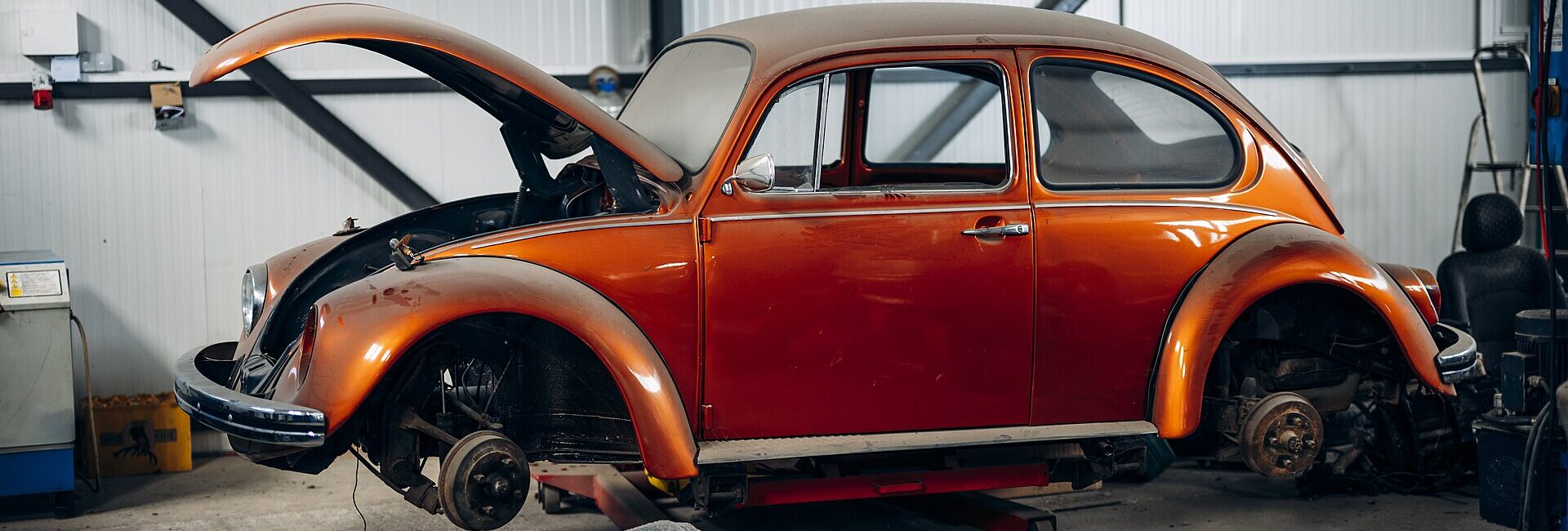
Buying a classic car from several hundred kilometres away is nothing unusual. The rarity of a particular version, configuration, or condition often necessitates broadening the search well beyond one’s local area. However, a good advert and a set of photos are not enough: before paying any deposit, you must verify the seller’s identity, the administrative status, the actual condition of the car, the payment terms, and the liability during transport.
The essential rule: at a distance, every significant promise must become verifiable evidence or a written commitment. If the seller refuses an independent inspection, a live video call, or the provision of necessary documents, it is better to halt the transaction.
Here is the method to follow, in order, to reduce risks without turning the purchase into an obstacle course.
Remote purchase: private individual or professional, the protection is not the same
The first question is not the car’s brand, but the legal status of the seller. The protections are not identical.
| Point to verify | Private seller | Professional seller |
|---|---|---|
| Right of withdrawal | No general legal right for a sale concluded directly between private individuals | Generally 14 days for a contract concluded at a distance with a consumer, subject to legal conditions and exceptions |
| Legal guarantee of conformity | No | Yes, for a vehicle sold to a consumer |
| Hidden defects guarantee | Yes | Yes |
| Contractual information | To be detailed precisely in the sales contract | Enhanced information duties, notably on characteristics, price and delivery |
| Practical recourse | Strongly depends on the evidence gathered | Broader protective framework, without exempting from checking the vehicle |
The right of withdrawal applicable to distance sales generally lasts for 14 days from the receipt of the goods when a consumer purchases from a professional. However, the contract must be read carefully: the return procedure, transport costs, and any exceptions must be known before placing the order. This right should not be presented as an automatic solution in a sale between two private individuals.
1. Verify the seller’s identity and their right to sell the car
Request the full name of the seller, their address, a verifiable phone number, and if they are a professional, the details of their business. The holder listed on the registration certificate must correspond to the seller. In the case of co-owners, the necessary signatures must be gathered. A person claiming to sell on behalf of a relative, a company, or an estate must provide the appropriate mandate or supporting documents.
Then compare the information on the registration certificate with the car: registration number, make, model, date of first registration, and especially the chassis number. Request clear photos of the VIN stamped on the chassis, the manufacturer’s plate, and the document, accepting that some unnecessary personal data may be masked on the initial copies. Originals will be checked before final handover.
Never be satisfied with just messaging exchanges. Call the seller on a number found or independently confirmed and arrange a live video call with the car. An urgent payment request to an account in the name of a third party is a major warning sign.
2. Demand the administrative file before the deposit
The seller must be able to provide a coherent file. For a car already registered in France, specifically request:
- a legible copy of the registration certificate;
- a HistoVec report shared by the seller from the official service;
- a certificate of administrative status dated less than 15 days at the time of sale;
- the technical inspection report when mandatory;
- available maintenance and restoration invoices;
- previous documents, logbooks, certificates of authenticity, and declared provenance elements;
- the list of keys, accessories, wheels, parts, and documents delivered with the car.
HistoVec allows consultation of information from the registration system: date of first registration, changes of ownership, administrative status, and certain accidents that resulted in a controlled repair procedure. However, it does not replace a mechanical inspection or examination of invoices. Also consult our method for tracing the history of a classic car.
An incomplete file is not always fraudulent on a classic car, but each omission must be explained and factored into the risk assessment and price.
3. Arrange a genuinely useful video visit
A video prepared by the seller shows what they have chosen to show. Prefer a live video call and guide the sequence yourself. Request a completely cold engine start: the seller can show the engine block and touch a safe metal part before starting, without risk. Observe the start-up, smoke, warning lights, oil pressure, temperature, and idle regularity.
Then have the following filmed slowly:
- the four sides, the alignments and the bodywork reflections;
- the sills, wheel arches, floors and lifting points;
- the engine compartment, fluids and signs of leaks;
- the boot, spare wheel well and seals;
- the interior, the gauges and the operation of the equipment;
- the VIN, identification plates and the markings stated;
- the main invoices and the numbers linking the documents to the car.
Request original files rather than compressed images. A short driving video can complement the dossier, but it does not replace a test drive or an inspection on a lift.
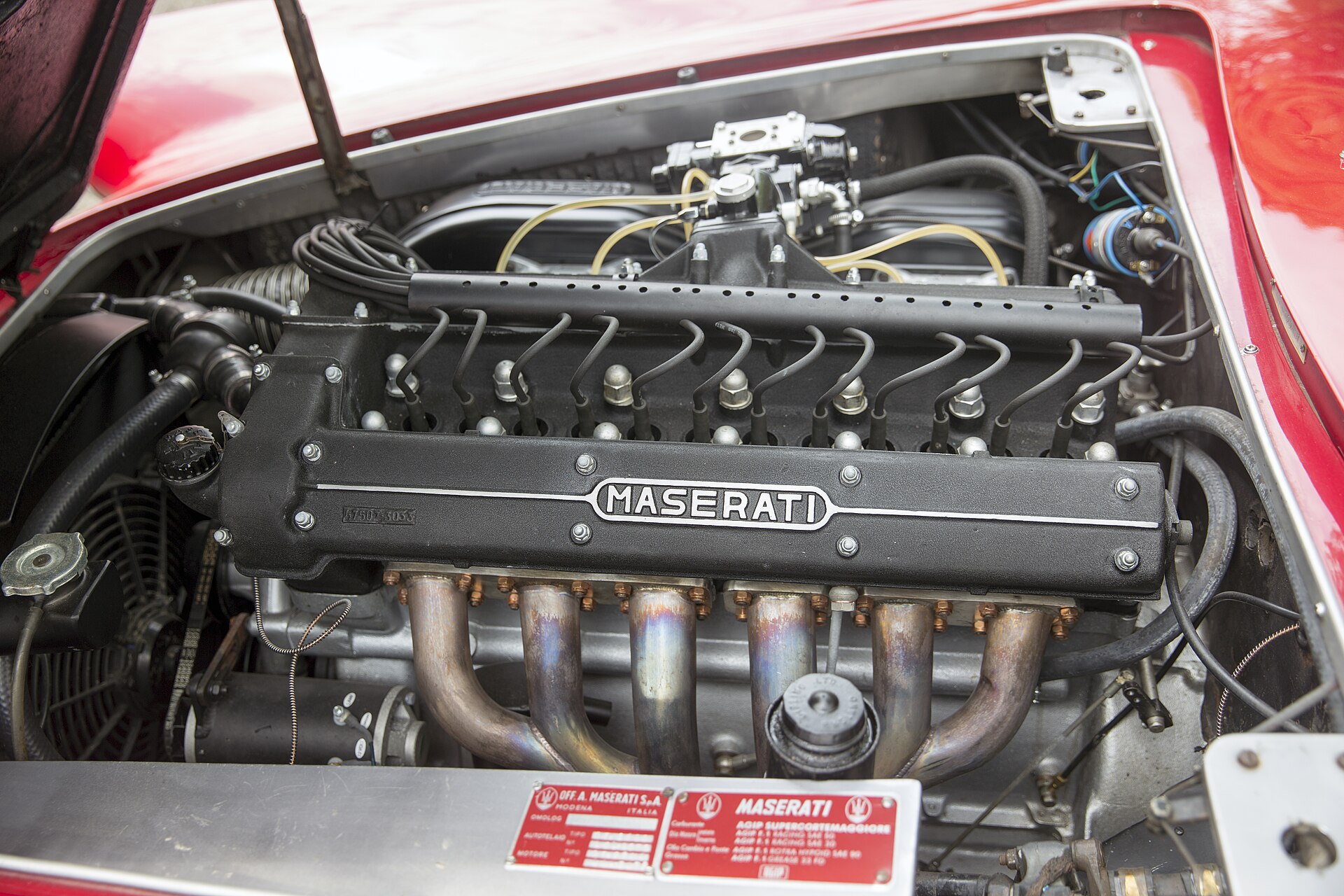
Engine compartment of a Maserati 3500 GTI from 1962. Photo: Mr.choppers, CC BY-SA 3.0 licence, via Wikimedia Commons.
4. Commission an independent expert near the car
For an expensive, rare, restored or technically complex car, an independent inspection is the most cost-effective step. Choose the professional yourself and pay them directly. Avoid the “expert” imposed by the seller whose independence you cannot verify.
The specifications must be written: vehicle identity and numbers, cold start, road test if possible and permitted, underbody inspection, corrosion, leaks, braking, tyres, electrical system, paint measurements, electronic diagnostics for relevant models, equipment compliance and consistency of the historical dossier.
For a high-value vehicle, add verification of provenance and authenticity. The notions of “matching numbers”, “concours condition” or “complete restoration” must be documented: these are claims to be proven, not guarantees in themselves. Our guide details what an expert report before purchasing a classic car.
The report must indicate the limits of the assignment. A visual check does not reveal everything that mechanical removal or in-depth analysis would uncover.
5. Have the promised condition written into the contract
An advertisement may disappear after the sale. Save it and annex the decisive information to the contract: displayed mileage and, if possible, whether it is guaranteed or not; condition of the bodywork and chassis; known defects; declared accidents or restorations; identification numbers; included accessories; work promised before delivery; date and place of handover.
With a professional, the DGCCRF reminds that the sales document must notably allow precise identification of the vehicle, its first registration, its mileage, its price and the delivery deadline. When buying remotely, the professional must also confirm the contractual information on a durable medium.
If the purchase depends on a satisfactory inspection, financing or number conformity, provide a written condition and define what happens to the amount paid. The words “deposit” and “earnest money” do not have the same consequences: do not sign a vague receipt.
6. Secure the deposit and the balance payment
Before any transfer, check that the IBAN indeed belongs to the person or company signing. Confirm the bank details by a second known channel: fraud can involve intercepting an email and replacing the IBAN. Never pay in full based solely on photos and refuse arrangements involving a third-party account, cryptocurrencies or payment methods difficult to trace.
The safest schedule separates the steps: a small amount defined in writing to reserve the car, independent inspection, contract signing, then balance payment at the agreed time against the documents and taking delivery of the vehicle. Instant payment can be convenient, but banking limits and controls must be prepared. Find the advantages and limitations of each solution in our comparison Bank transfer or bank cheque to pay for a classic car.
7. Managing transport and insurance
The contract must specify who chooses the carrier, who pays for it, and at what point the risk is transferred. Ask the transport professional for their identity, general terms and conditions, level of insurance, exclusions, deductible, and claims procedure. For a very low, non-running, rare or high-value car, enclosed transport may be preferable.
Before loading, have a detailed condition report drawn up with photographs: bodywork, windows, rims, interior, mileage, fuel level, parts and documents handed over. The photos must be dated and taken from multiple angles. The same procedure should be repeated upon delivery before signing without reservation.
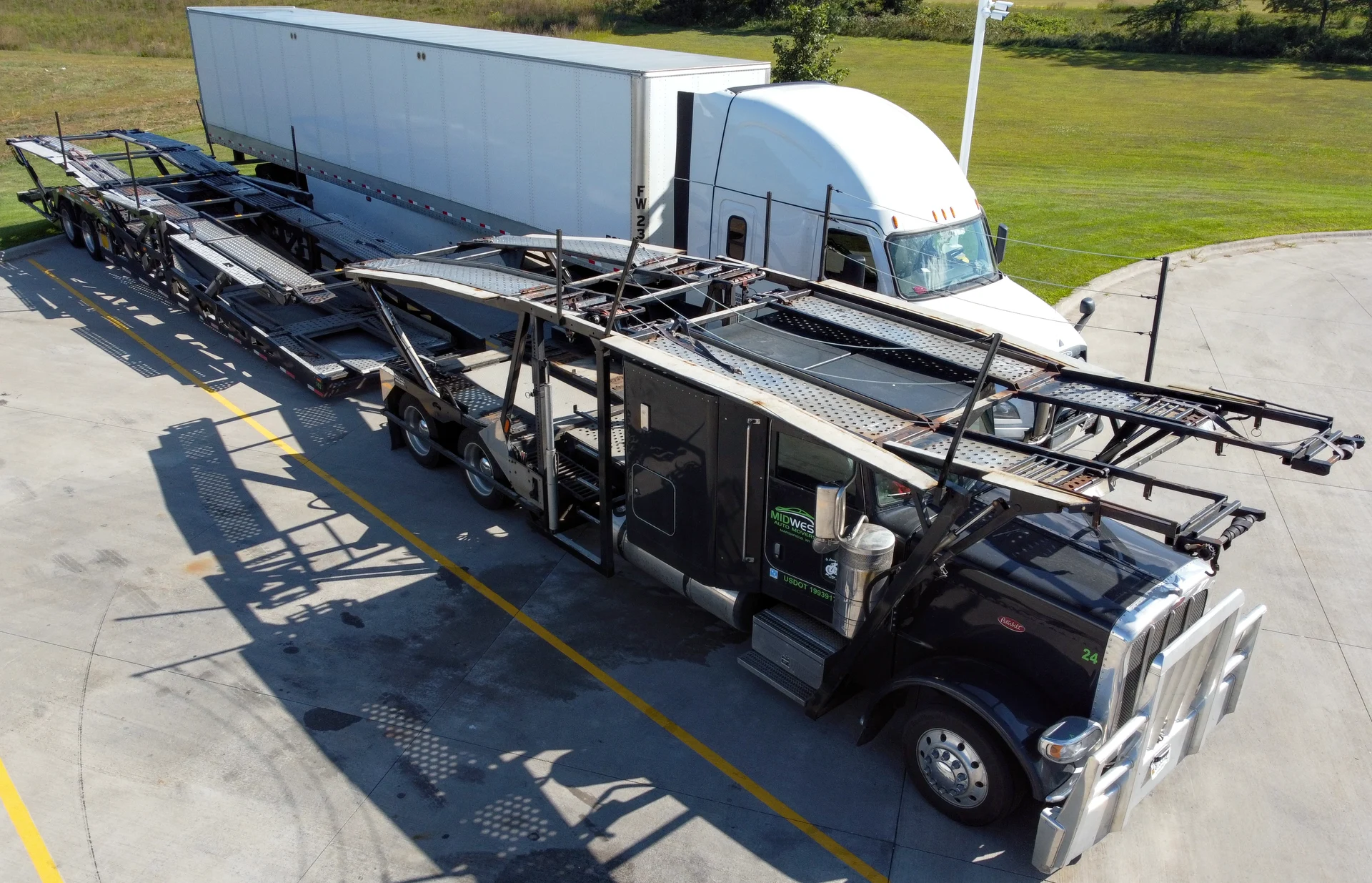
Car transporter. Photo: Wikideas1, public domain CC0, via Wikimedia Commons. The visible markings belong to the professional vehicle photographed.
In case of visible damage, note precise reservations on the delivery receipt and immediately keep evidence. A general remark such as “subject to unpacking” offers poor protection. Our guide on transporting a classic car helps to choose between open flatbed, enclosed truck and delivery driving.
8. Inspect the car upon delivery
Do not accept the car in a hurry or in the dark. Compare it to the inspection report and initial condition. Check the VIN, mileage, keys, accessories, original documents, new damage and any leaks that may have appeared during transit. Photograph the car before moving it.
If the seller is a professional and the delivery does not comply with the contract, the rules of distance purchase delivery provide remedies. For a defect not apparent at the time of sale, the legal conformity guarantee may apply to purchases from a professional; the hidden defects warranty can apply to both professional sellers and private individuals, provided that the hidden, serious and pre-existing nature of the defect is demonstrated.
Insure the vehicle before any use. If you wish to compare available models or entrust your search to a specialist, consult the classic and prestige cars offered on Plethore Cars.
The checklist before paying
Before transferring the balance, you must be able to tick these ten points:
- The seller’s identity and ownership status are established.
- The car’s VIN matches the documents.
- The HistoVec report and the administrative status have been checked.
- The technical inspection is available when it is mandatory.
- The history, known defects and accessories are described in writing.
- A live video conference and an independent inspection have been conducted.
- The contract specifies the price, amounts already paid, delivery and any conditions.
- The IBAN has been confirmed through an independent channel and matches the contracting party.
- The carrier, their insurance and the condition reports at departure/delivery are arranged.
- The vehicle insurance and registration procedures are anticipated.
If even one essential element remains unclear, delay the payment. A rare car may attract several buyers, but manufactured urgency is one of the most effective ways to make someone accept an unjustified risk.
FAQ: buying a classic car without seeing it
Is it possible to buy a classic car without travelling?
Yes, legally and practically, but the personal visit must be replaced by a system of evidence: official documents, live video exchange, independent appraisal, detailed contract, traceable payment and insured transport.
Do I have 14 days to change my mind?
In principle, a consumer benefits from a 14-day withdrawal period for a contract concluded remotely with a professional, starting from receipt of the goods. This right does not automatically apply to a direct sale between private individuals. The conditions, exceptions and return costs must be read before signing.
Is HistoVec sufficient to know the entire history of the car?
No. HistoVec provides useful official administrative data, but it does not constitute a mechanical appraisal nor a comprehensive maintenance history. It must be cross-checked with invoices, previous technical inspections, provenance and examination of the vehicle.
Who should choose the automotive expert?
The buyer is advised to select and mandate an independent professional themselves, located near the vehicle and competent for the model concerned. The mission and requested checks must be in writing.
Should payment be made before the carrier collects the car?
The schedule depends on the contract, but the balance should not be sent until the identity, documents, vehicle condition, delivery conditions and IBAN have been verified. The precise moment of transfer of ownership and risk must be stipulated.
What should be done if the car arrives damaged?
Photograph the damage immediately, note precise reservations on the delivery document and contact the carrier, their insurer and the seller without delay. Keep the initial condition, contract, communications and all evidence.
Main sources
- DGCCRF — Purchase of a used vehicle: seller obligations
- Economie.gouv.fr — Right of withdrawal for distance sales
- Service-Public.fr — Delivery of a distance purchase
- Service-Public.fr — Administrative status certificate and HistoVec
- Service-Public.fr — Legal guarantee of conformity
- Service-Public.fr — Guarantee against hidden defects