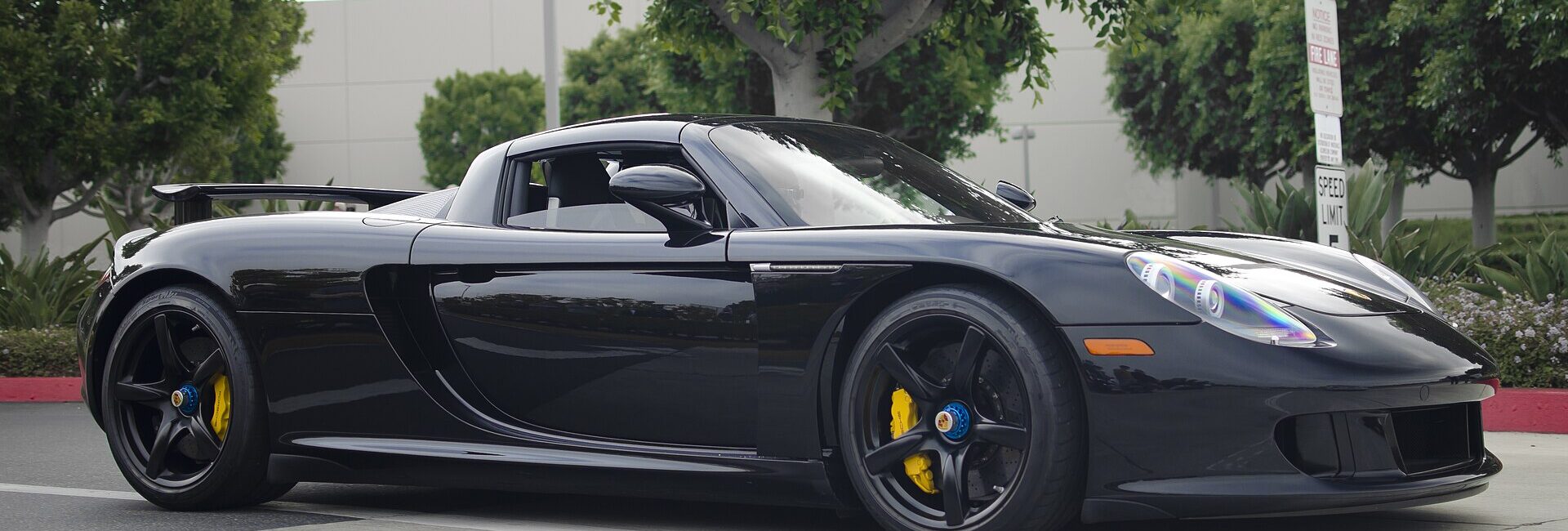
Porsche produced exactly 1 270 Carrera GTs.The brand states that these cars were hand-assembled between autumn 2003 and early May 2006. This official total is the figure to remember, even though other volumes sometimes appear in accounts dedicated to the model.
The confusion mainly arises from mixing an industrial target considered before launch with the number actually coming out of the workshops. For a collector, this distinction is essential: a production intention is not actual production. Here is what the Porsche archives allow us to establish, without extrapolation.
Porsche Carrera GT: key figures
| Data | Official value |
|---|---|
| Number produced | 1 270 units |
| Manufacturing period | Autumn 2003 to early May 2006 |
| Manufacturer type | 980 |
| Final assembly | Leipzig, Germany |
| Engine | Naturally aspirated V10 of 5,7 litres |
| Power output | 450 kW, i.e. 612 hp |
| Gearbox | Manual with 6 speeds |
| Advertised top speed | 330 km/h |
| Weight indicated by Porsche | 1 380 kg |
These data are taken from several Porsche publications as well as from the Porsche Classic page dedicated to Type 980. They allow us to answer the main question: the number of Carrera GTs produced is neither an estimate nor a rounded figure, but an official manufacturer total of 1 270 cars.
Why is a different number sometimes found?
Before a limited series model is industrialised, its manufacturer establishes a forecast volume. This figure can then evolve depending on demand, production constraints, homologations and the commercial schedule.
In a technical sheet preserved by the Porsche Museum, the brand explains that it initially calculated a production of 1 000 units. The actual manufacturing ultimately exceeded this initial estimate to reach 1 270 units. Some secondary publications also mention other commercial targets, but these should not be confused with the number of completed cars.
The most reliable method is therefore to distinguish three concepts:
- the volume studied at the start of the programme;
- the possible commercial objective communicated during the launch;
- the total actually produced, confirmed after the end of manufacturing.
For the Carrera GT, only the third figure answers the research intent:1 270 units were built.
From Paris to Leipzig: the production timeline
The Carrera GT first appeared as an almost production-ready study at the Paris Motor Show in September 2000. Three years later, Porsche presented the definitive version at the Geneva Motor Show on 3 March 2003.
Production began in autumn 2003. Porsche assembled the V10 in its engine factory in Zuffenhausen, while the cars were hand-assembled in Leipzig. Manufacturing ended at the beginning of May 2006; a Porsche Museum sheet specifies the date as 6 May.
This organisation illustrates the special status of the Carrera GT. It was not an adapted 911, but a full programme: carbon structure, mid-engine, pushrod suspension and manual transmission designed around a very compact ceramic clutch.
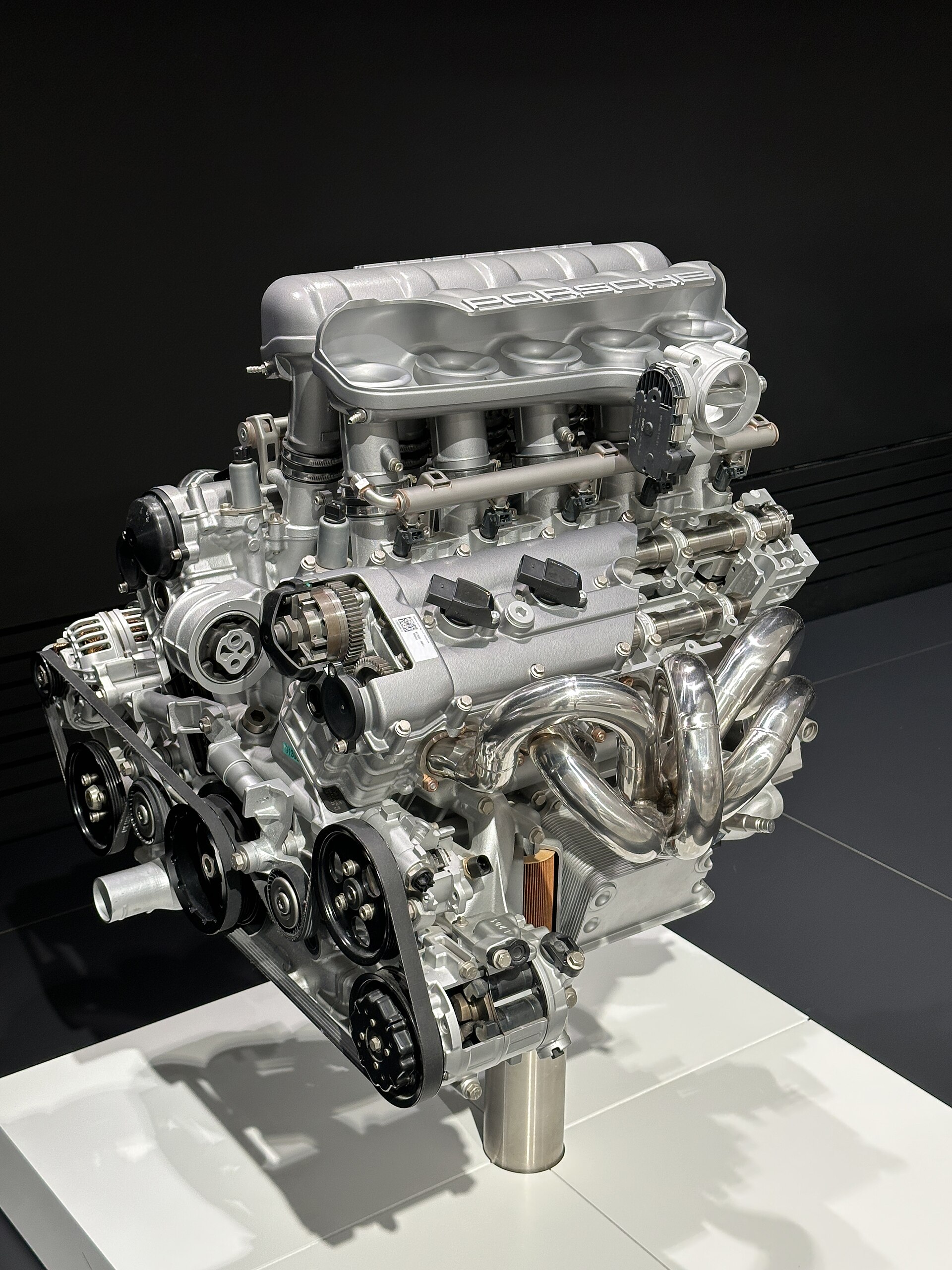
Photo: GerdeeX, Wikimedia Commons, CC BY-SA 4.0 licence. Possible automatic WordPress cropping.
A racing V10 that became a road engine
The exceptional character of the Carrera GT is largely due to the origin of its engine. Porsche recalls that this V10 comes from the LMP 2000 programme, a prototype intended for endurance racing that ultimately never started a race.
In its first definition, this engine had a displacement of 5,5 litres. For the production Carrera GT, Porsche increased it to 5,7 litres. The naturally aspirated V10 then develops 450 kW, or 612 hp, at 8 000 rpm. It is paired with a six-speed manual gearbox and allows a top speed of 330 km/h.
The motorsport lineage is not limited to the engine. The Carrera GT was the first production Porsche to feature both a monocoque and an engine cradle made of carbon fibre reinforced plastic. Porsche also credits it with the first dual-dry-plate ceramic clutch used on a production car.
These choices explain why the Carrera GT remains a unique automobile, even among supercars of the 2000s. Its appeal does not rest solely on the number of units produced: it also comes from an architecture without direct descendants, a naturally aspirated racing engine and a manual gearbox.
Is the Carrera GT rarer than other Porsche supercars?
The total of 1 270 units places the Carrera GT in a very limited series, but not at the same level as all Porsche icons.
Porsche states it produced only 292 units of the 959 in series between 1987 and 1988. The 918 Spyder, on the other hand, carries in its very name the planned volume of the series: 918 cars. With 1 270 units, the Carrera GT is therefore numerically less rare than these two models if one compares only their original production.
However, this comparison must be approached with caution. The number built does not indicate how many cars still exist, how many remain in original condition, nor how many have a complete history. Porsche does not publish a public register showing the number of Carrera GTs still in existence. Therefore, any precise statement about the survival rate should be considered an estimate, not a manufacturer-provided figure.
To put these figures into the context of the brand’s history, also consult our feature on the Porsche 959, its history and price evolution.
Are the 1 270 Carrera GTs numbered?
The total production is documented, but this does not mean that a visible plaque inside the cabin will always simply read “number X of 1 270”. The best way to identify an example remains its chassis number, combined with its original documentation and the archives accessible through the Porsche network.
When conducting an appraisal or purchase, the production figure never replaces the need to verify:
- the consistency of the chassis number with the documents;
- the delivery date and market;
- the maintenance invoices and completed campaigns;
- the condition of the monocoque and carbon structural elements;
- the conformity of the engine, gearbox and equipment;
- the presence of accessories and documents delivered with the car.
The model requires a specialised inspection. Our guide on the inspection of the carbon and clutch of a Porsche Carrera GT details the areas that go far beyond simply reading the mileage.
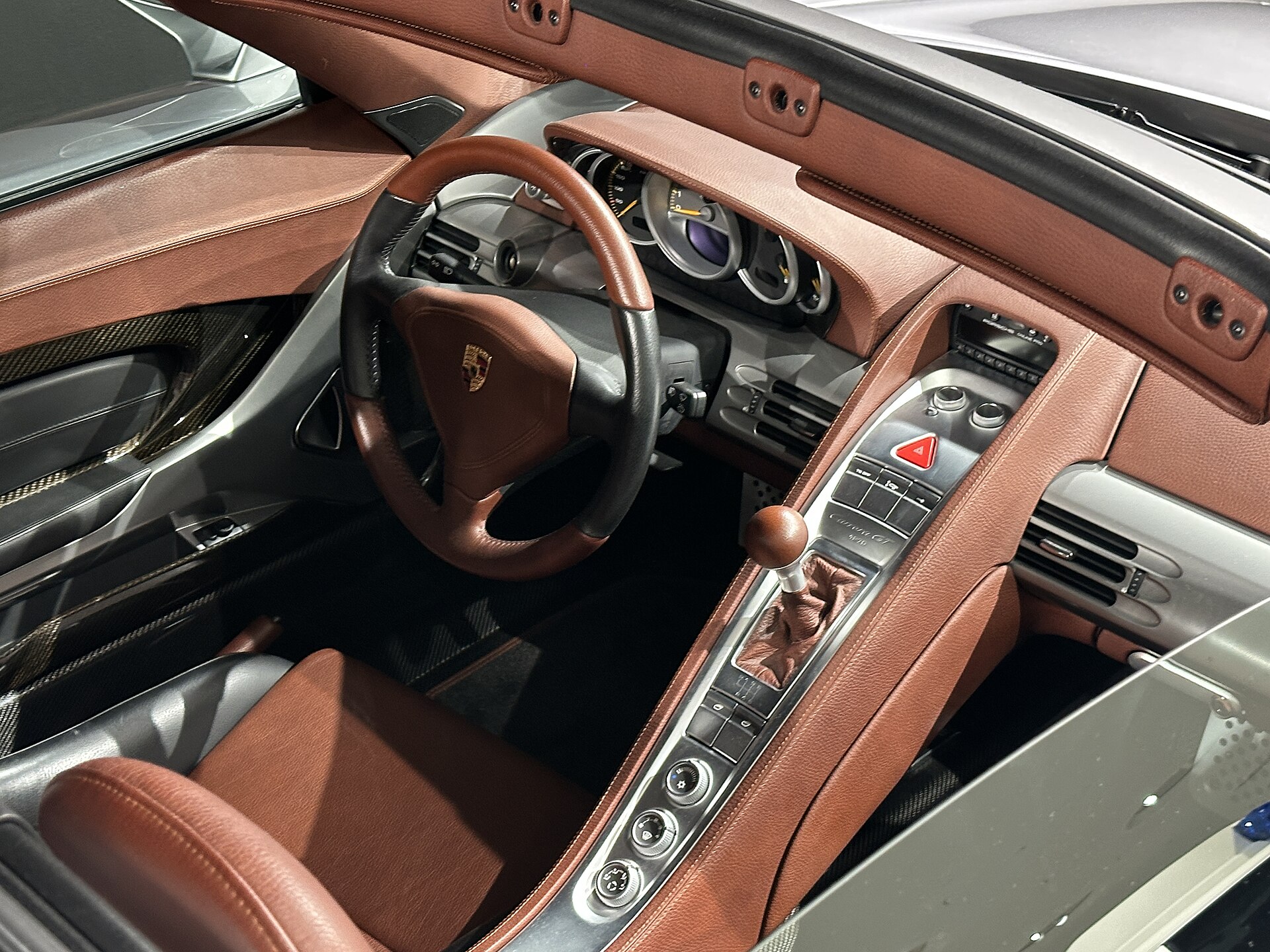
Photo: GerdeeX, Wikimedia Commons, CC BY-SA licence 4.0.
Why the production figure matters to a collector
A production volume primarily serves to indicate the theoretical rarity of a model. It helps to compare the Carrera GT with its contemporaries and with other Porsche supercars. But it is not sufficient to determine the value of a specific example.
Two Carrera GTs can show a significant difference in value depending on their condition, colour, mileage, traceability and the quality of work carried out. For such a technical car, a clear history and thorough appraisal count more than a simple claim of rarity in an advertisement.
The figure of 1 270 should therefore be used as a documentary reference, not as automatic proof of quality. Before buying, it is sensible to compare several cars, document their provenance and have the example checked by an independent specialist who truly knows the Type 980.
Collectors wishing to observe the available supply can consult the classic and prestige cars currently offered on Plethore Cars. To compare with another major supercar of the same period, our article also answers the question: How many Ferrari Enzos were produced?
Key points to remember
The official answer is clear:1 270 Porsche Carrera GTs were produced between autumn 2003 and early May 2006. The V10 engine was assembled in Zuffenhausen and the cars were hand-built in Leipzig.
The differing figures you may encounter generally correspond to forecasts or targets cited before the programme ended. To describe the actual production, the total published by Porsche after the production line stopped remains the reference.
Frequently asked questions
How many Porsche Carrera GTs exist?
Porsche built 1 270 units. However, the brand does not publish an official figure on how many cars still exist today.
When was the Porsche Carrera GT produced?
Series production took place from autumn 2003 to early May 2006. The concept was presented in Paris in September 2000 and the production version in Geneva in March 2003.
Where was the Carrera GT manufactured?
The cars were hand-assembled at Porsche’s Leipzig factory. The V10 engine was assembled in Zuffenhausen.
What engine powers the Porsche Carrera GT?
It is equipped with a naturally aspirated V10 engine of 5,7 litres developing 450 kW, or 612 hp. This engine is derived from the LMP 2000 racing programme.
Is the Carrera GT rarer than the Porsche 959?
No, if we compare only production volumes: Porsche announces 1 270 Carrera GTs against 292 units of the 959 produced in series.
Sources
- Porsche Newsroom — Legendary super sports cars with motorsport genes
- Porsche Newsroom — 25 years since the world premiere of the Porsche Carrera GT
- Porsche France — Carrera GT model, Type 980
- Porsche Newsroom — The super sportscars from Porsche
Information verified on 27 September 2026. An annual review is recommended for market data; historical production figures are stable.