Inheriting a classic car does not automatically grant the right to use it freely. If the family decides to keep the vehicle, a new registration certificate must be issued in the name of the surviving spouse, an heir, or several co-heirs. The procedure is carried out online via France Titres, and the required documents vary depending on the matrimonial regime, the number of heirs, and the agreement reached regarding the allocation of the car.
The practical rule is simple:before requesting the registration certificate, determine in writing who will receive the vehicle. This choice dictates the supporting documents to be provided. A letter of waiver from each co-heir or a certificate of allocation from the notary prevents most obstacles when the car is to be transferred to a single person.
Quick answer: the heir who keeps the car must request a registration certificate marked “vehicle subject to inheritance”, provide the original registration certificate, the Cerfa form no. 13750, their personal identification documents, and proof of heirship. If there are multiple heirs, their written agreement or the notary’s deed assigning the vehicle is necessary to register it in the name of just one of them.
In which cases must the registration certificate be changed after a death?
As soon as the vehicle becomes part of the estate and is to be retained, the registration certificate must be updated. The certificate in the sole name of the deceased does not constitute proof of ownership, but it cannot indefinitely remain the circulation document for a vehicle taken over by an heir.
Three situations should be distinguished:
| Situation | Requested holder | Decisive document |
|---|---|---|
| Surviving spouse married under the community property regime | Surviving spouse | Family record book establishing the death, matrimonial regime, and co-heirs |
| A single heir keeps the car | Single heir | Proof of heirship |
| Several heirs allocate the car to one of them | Single heir | Waiver from all others or notary’s certificate of allocation |
| Several heirs keep the car jointly | Multiple co-holders | Proof of heirship and identity of each co-holder |
The case of the surviving spouse depends on the matrimonial regime. Under the community property regime, the car can be registered in their name with the requested documents. Under the separation of property regime, a car registered solely in the deceased’s name forms part of the estate: the agreement of the co-heirs is then required to allocate it to the spouse.
Which documents should be prepared for the registration certificate of an inherited car?
The foundation of the file is common to most situations. Prepare clear, complete and correctly oriented digital copies:
- the formCerfa No. 13750 for the application for a registration certificate;
- a proof of address dated within the last six months;
- a valid identity document;
- the original vehicle registration certificate;
- proof of heir status;
- where applicable, letters of waiver from other heirs or the allocation certificate issued by the notary;
- a mandate and the identity document of the principal if the application is made on behalf of another person.
The applicant must also declare on their honour that they hold a driving licence corresponding to the vehicle category and have valid insurance. France Titres may request a copy of the licence during processing. When the vehicle is subject to a technical inspection, proof of a valid inspection must also be provided.
For a classic car that has been stationary for a long time, do not confuse two matters: the settlement of the estate and the vehicle’s fitness to return to the road. Obtaining a registration certificate never exempts one from restoring the brakes, tyres, fluids, fuel supply and safety components before any journey.
How to prove heir status?
Depending on the file, the administration accepts one of the following proofs:
- a certificate from the notary handling the estate, mentioning the death and identifying the car by its make and registration number, and if possible its type and chassis number;
- a notoriety deed drawn up by a notary;
- in permitted cases, the death certificate accompanied by a statement signed by the heir or heirs.
This latter statement must certify the elements required by the administration, notably the absence of other heirs or disputes regarding heir status and the composition of the estate. For multiple heirs, it must be signed by all. The exact content depends on the family situation; if there is a will, marriage contract, disagreement or complex estate, have the documents prepared by the notary rather than using an unsuitable simplified declaration.
A coherent file must clearly link three elements: the deceased, the vehicle and the person requesting the new registration certificate. The registration number and, for a classic car, the chassis number must therefore be verified before scanning.
Multiple heirs: how to register the car in the name of just one?
When several people inherit, none should act alone as sole owner until the allocation is settled. To register the car in the name of a single heir, one must attach either:
- a letter of waiver from each of the other heirs in favour of the applicant;
- a notary’s certificate confirming their agreement and the allocation of the car.
These documents must clearly identify the vehicle and the signatories. An imprecise wording such as “I renounce the car” without registration number or reference to the estate may result in a request for additional information.
If the heirs wish to keep the car jointly, they can request a registration certificate with multiple co-owners. The administration specifies that only the first two names physically appear on the certificate, even if other co-owners are registered. This solution should be carefully considered: maintenance, insurance, storage location, expenses and future sale require a separate written agreement. Our guide on the sale of a classic car owned by several heirs details the precautions related to joint ownership.
How to carry out the procedure on France Titres?
The application is made online via the official tele-service “Request a registration certificate for a vehicle subject to inheritance.” Login is done notably with FranceConnect or France Identité.
- Gather the allocation agreement and the inheritance documents before starting.
- Scan the documents in JPG, PNG, BMP, TIFF or PDF format, with sufficient resolution so that the details are legible.
- Log in to the registration tele-service dedicated to inheritance.
- Enter the identity of the future owner and the vehicle’s characteristics.
- Attach the documents that exactly correspond to your situation.
- Pay the requested amount by credit card.
- Download the file number, the registration receipt and, when issued, the provisional registration certificate.
The provisional registration certificate allows you to drive for one month, only in France, while waiting for the definitive title. Once the registration certificate is received, the old certificate must be kept for five years before being destroyed, in accordance with the instructions from Service Public.
How much does the new registration certificate cost?
There is no fixed price valid for all inheritances. The amount displayed by the tele-service depends on the nature of the request and the taxes or fees applicable to the vehicle and the situation. Use the official simulator for the cost of the registration certificate rather than an outdated scale found on a commercial website.
Payment is made online by credit card. Before paying, check the beneficiary’s name, postal address and all technical characteristics: an error on the file may delay processing or require corrective action.
Can you drive the car before having the new registration certificate?
Do not assume that death automatically extends all the rights of the holder. Before any journey, simultaneously verify:
- that the insurance indeed covers the driver and the intended use;
- that the vehicle is technically fit to be driven;
- that the MOT test is valid when required;
- that you have a provisional permit or document allowing the vehicle to be driven.
The insurance contract does not automatically terminate upon death, but the insurer must be informed and the contract adapted to the new situation. The steps are detailed in our articlecar insurance after a death: what must heirs do?.
For a stationary car, it is preferable to transport it on a flatbed to a workshop. Successfully starting it in a garage does not prove the proper functioning of the brakes or the condition of the tyres after several years of inactivity.
What to do if the original registration document is lost?
The original registration document is part of the standard list of required documents. Its loss must therefore be declared in the application, along with the loss or theft certificates required by the authorities. Processing may require additional documents and vehicle identification.
Do not attempt to reconstruct a document from a modified photocopy. Attach the copy if it exists, honestly declare the loss, and provide all elements allowing the vehicle to be identified: registration number, make, model, serial number, previous insurance certificate, and documents from the historical file. For a very old car without a usable title, the case may go beyond a simple modification for inheritance and require special processing.
Should the “historic vehicle” designation be requested at the same time?
Inheritance and adding the “historic vehicle” designation are two separate procedures. Inheriting a car over thirty years old does not automatically convert its standard registration document into one with the historic vehicle designation.
If the designation is already on the document, check that it is carried over in the new file. If it is not present and you wish to request it, separately verify eligibility and the necessary supporting documents, notably the certificate from the manufacturer, its representative in France, or the French Federation of Historic Vehicles, as applicable. Avoid adding a second poorly documented request to an already complex inheritance file.
What if the heirs ultimately decide to sell the car?
The procedure is not the same. Heirs may, under certain conditions, sell the vehicle without first registering it in their name, particularly if the sale occurs within three months of the death or if the vehicle has not been driven on public roads since the death. If the sale takes place later and the car has been driven, registration in the name of one or more heirs becomes necessary before the transfer.
Our guidehow to sell the car of a deceased personexplains this alternative procedure without confusing it with keeping the vehicle.
Before choosing between keeping, buying out shares among heirs, and selling, have the market value documented. An undervalued classic can unbalance the division; an unrealistic estimate can, on the contrary, block an agreement. Plethore Cars allows you torequest a free valuation of your classic car.
The errors that most often block the file
Difficulties do not always stem from a lack of documents, but from contradictions between them. Before sending, particularly check:
- the absence of written agreement from all co-heirs when only one requests the registration document;
- a succession certificate that does not specifically mention the car;
- a discrepancy between the serial number stamped on the vehicle, the records, and the registration document;
- an incomplete address or a proof of residence that is too old;
- an expired technical inspection when the vehicle is subject to one;
- insurance not adapted to the new holder or the actual use;
- scans that are cropped, blurry or illegible;
- confusion between a succession registration document and a request for a classic car designation.
For a valuable car, an appraisal and photographic inventory are useful before the division. They serve to establish the condition at the time of inheritance, to compare identification numbers, and to objectively assess the value. See our feature on appraising a classic car in an inheritance.
Checklist before validating the application
- The identity of the future holder(s) is confirmed.
- All heirs have given their written consent if necessary.
- The vehicle is precisely identified in the succession documents.
- The original registration document is available, or its loss has been declared.
- Form Cerfa No. 13750 is completed without contradictions.
- The address, identity, insurance and driving licence are verified.
- The technical inspection is valid when required.
- Each scan is complete and legible.
- The amount is verified with the official simulator.
- The old document will be kept for five years after receipt of the new one.
Frequently asked questions
Must all heirs appear on the registration document?
No. They can be co-holders, but they can also assign the car to just one of them. In this case, the others provide a letter of waiver or the notary issues a certificate confirming their agreement.
Does the surviving spouse automatically become the holder?
No. The procedure depends notably on the matrimonial regime and the manner in which the vehicle enters the inheritance. Under the community property regime, a transfer into the spouse’s name is provided for. In the case of separation of property, the agreement of the co-heirs is necessary if the car was solely in the deceased’s name.
Can a simple copy of the registration certificate be used?
The original registration certificate is normally one of the documents requested. In case of loss or theft, it must be declared and the instructions of the online service followed; a photocopy alone does not automatically replace the original.
Does the provisional certificate allow travel abroad?
No. The provisional registration certificate issued at the end of the procedure allows driving for one month only within France.
Does a car over thirty years old automatically become a classic vehicle?
No. Age alone is not sufficient and the classic designation is not automatic. It requires a separate application with specific supporting documents.
How long should the old registration certificate be kept?
Service Public indicates that the old registration certificate should be kept for five years after receiving the new one, then destroyed.
Official sources consulted
- Service Public — Registration certificate: inheriting a vehicle registered in France, fact sheet verified by the administration on 13 January 2025 and consulted on 25 September 2026.
- France Titres — Inheritance / death, official registration portal consulted on 25 September 2026.
- Légifrance — Highway Code, articles R322-1 to R322-14, rules relating to the issuance of the registration certificate, consulted on 25 September 2026.
- Légifrance — Order of 9 February 2009 concerning vehicle registration procedures, consulted on 25 September 2026.
Image credits
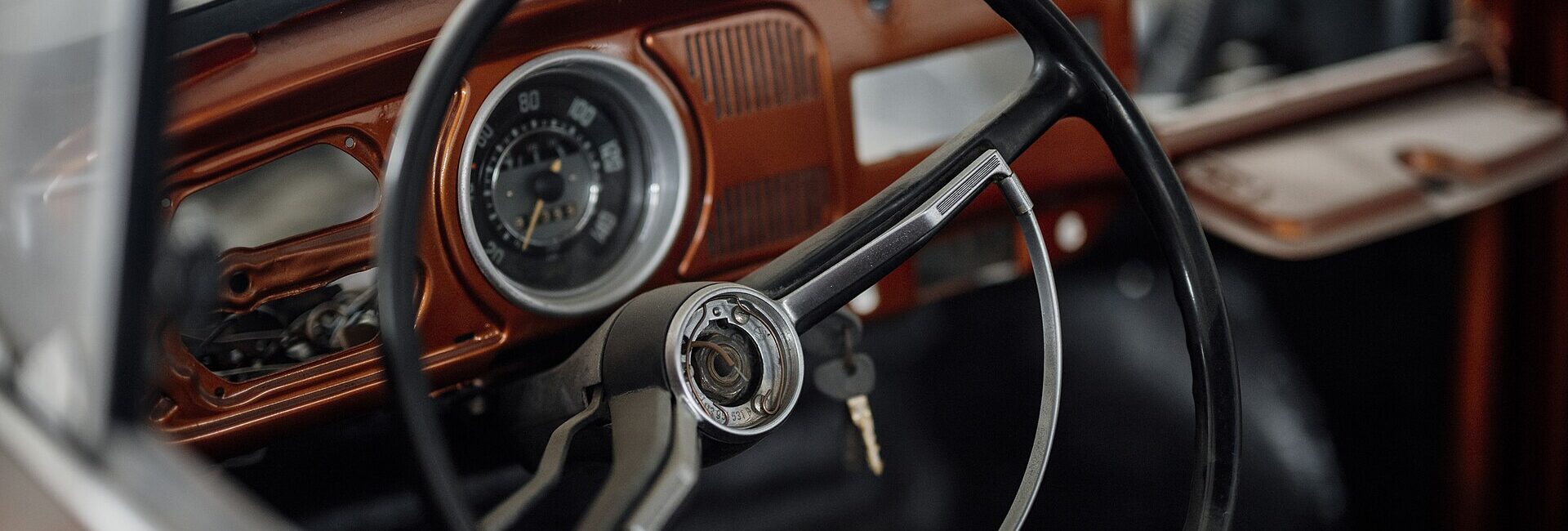
- Featured image, interior of an old car: Shixart1985, via Wikimedia Commons, CC BY 2.0 licence.
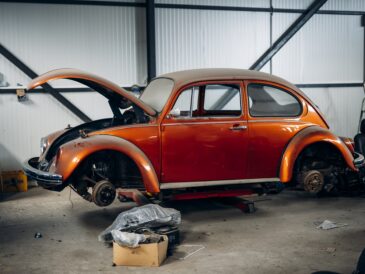
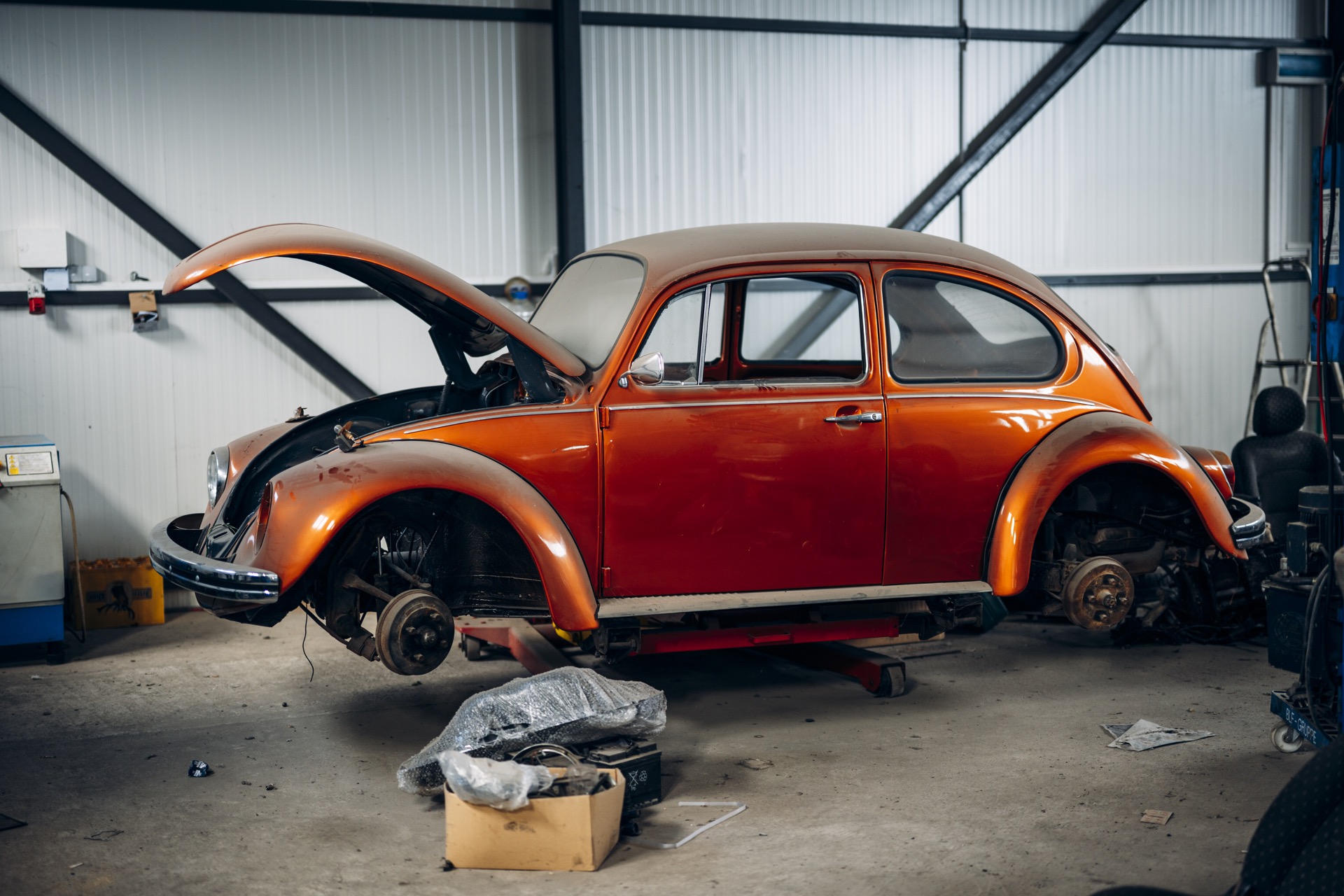
- Beetle under restoration: Shixart1985, via Wikimedia Commons, CC BY 2.0 licence.
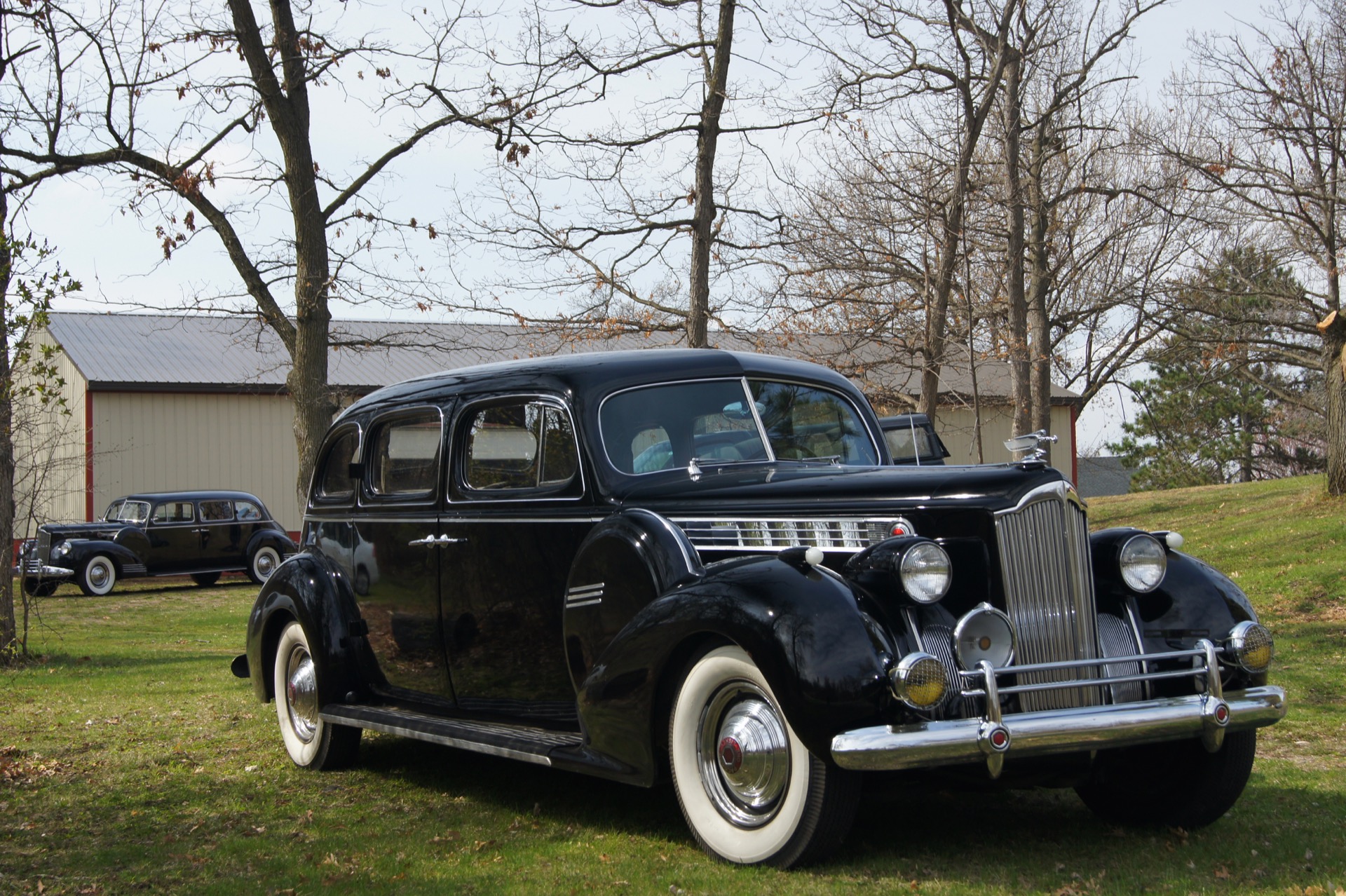
- Classic Packard: Greg Gjerdingen, via Wikimedia Commons, CC BY 2.0 licence.
Administrative rules may evolve and each inheritance presents its own particularities. In the presence of a will, a dispute, a vehicle without title, or an international element, ask the notary and France Titres to confirm the appropriate procedure before incurring any costs.