Short answer:Before restoring a Lamborghini Countach, freeze the evidence. Numbers, assemblies, layers of paint, materials, removed parts and traces of previous work must be photographed, indexed and compared with archives before the first disassembly. A technically brilliant restoration can weaken provenance if it erases what allowed the story of the example to be told.
Lamborghini Polo Storico bases its certification on the examination of the car’s data and their comparison with historical archives. For a buyer consulting the available Lamborghinis, this method provides a simple rule: do not decide on a colour, part or configuration solely based on another Countach.
Write the specifications before ordering parts
First define the objective: preservation, recommissioning, partial restoration, return to a documented configuration or preparation for a specific use. Each objective accepts a different level of intervention. List the untouchable elements, those to be assessed and those that can be replaced for safety or use.
The decision must start from the example. An old non-compliant part may belong to its history; a new part that appears compliant may lack traceability. Rely on our method to arbitrate between origin and transformation to separate historical fidelity, reversibility and usability improvement.
Create a photographic and measured zero state
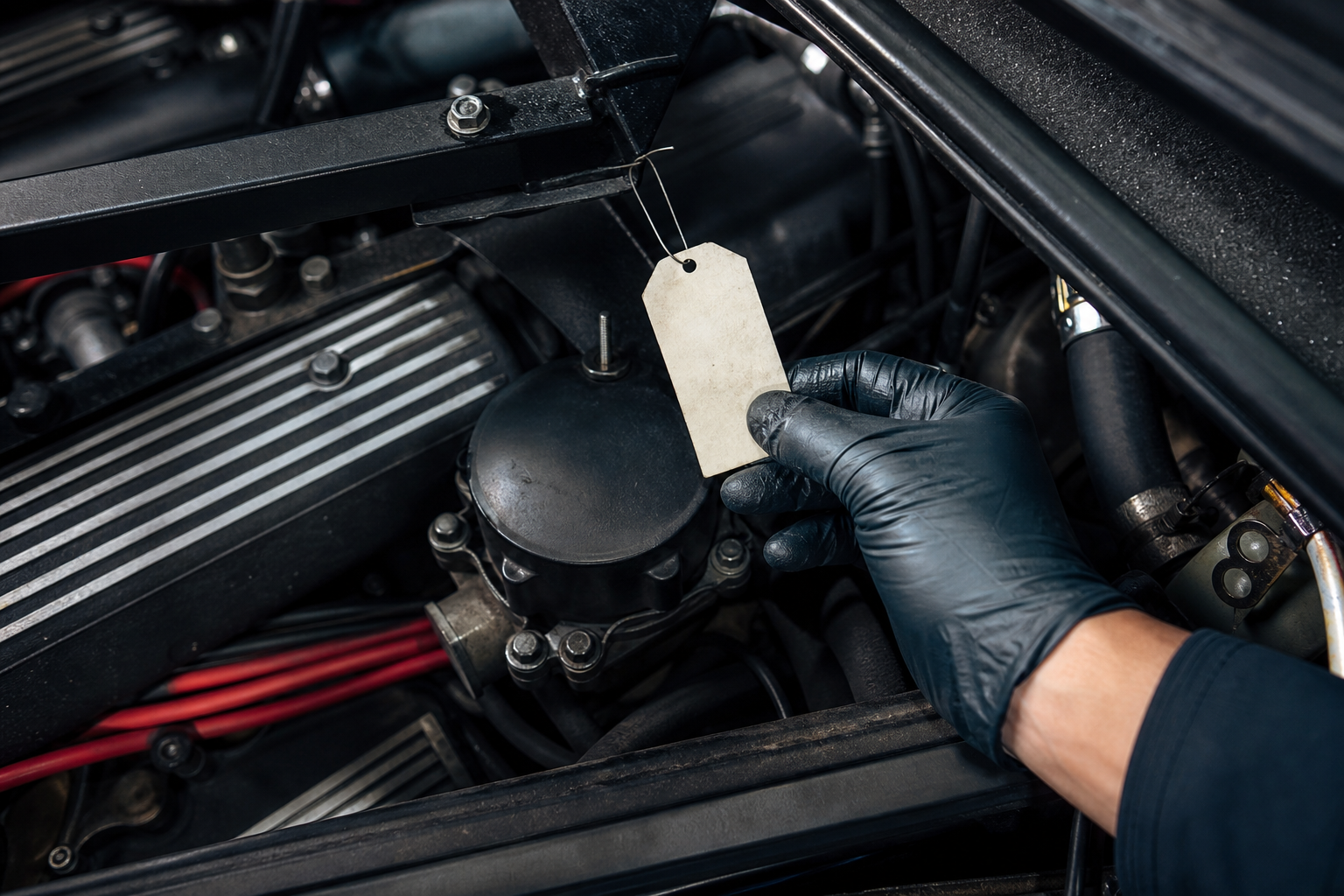
Before disassembly, photograph the complete car then each area in a reproducible order. Record numbers, labels, stamps, references, fixings and defects. Add a contextual view to each macro so that an image remains locatable several months later.
Record bodywork gaps, the condition of openings, interior materials, wiring harness, hoses, wheels and visible mechanical elements. The aim is not to accumulate images, but to be able to link each decision to a dated observation.
Consult archives before choosing the colour
The official case of an LP400 restored by Polo Storico shows why research precedes painting: the vehicle had arrived red, while traces discovered after stripping confirmed an original metallic blue colour. This case proves nothing for another car; it only demonstrates the value of an analysis specific to the example.
Request the available data from the manufacturer and compare it with the observed layers, trims and parts. If sources contradict each other, keep samples and record the uncertainty. A nuanced conclusion is preferable to a manufactured certainty.
Classify each removed part
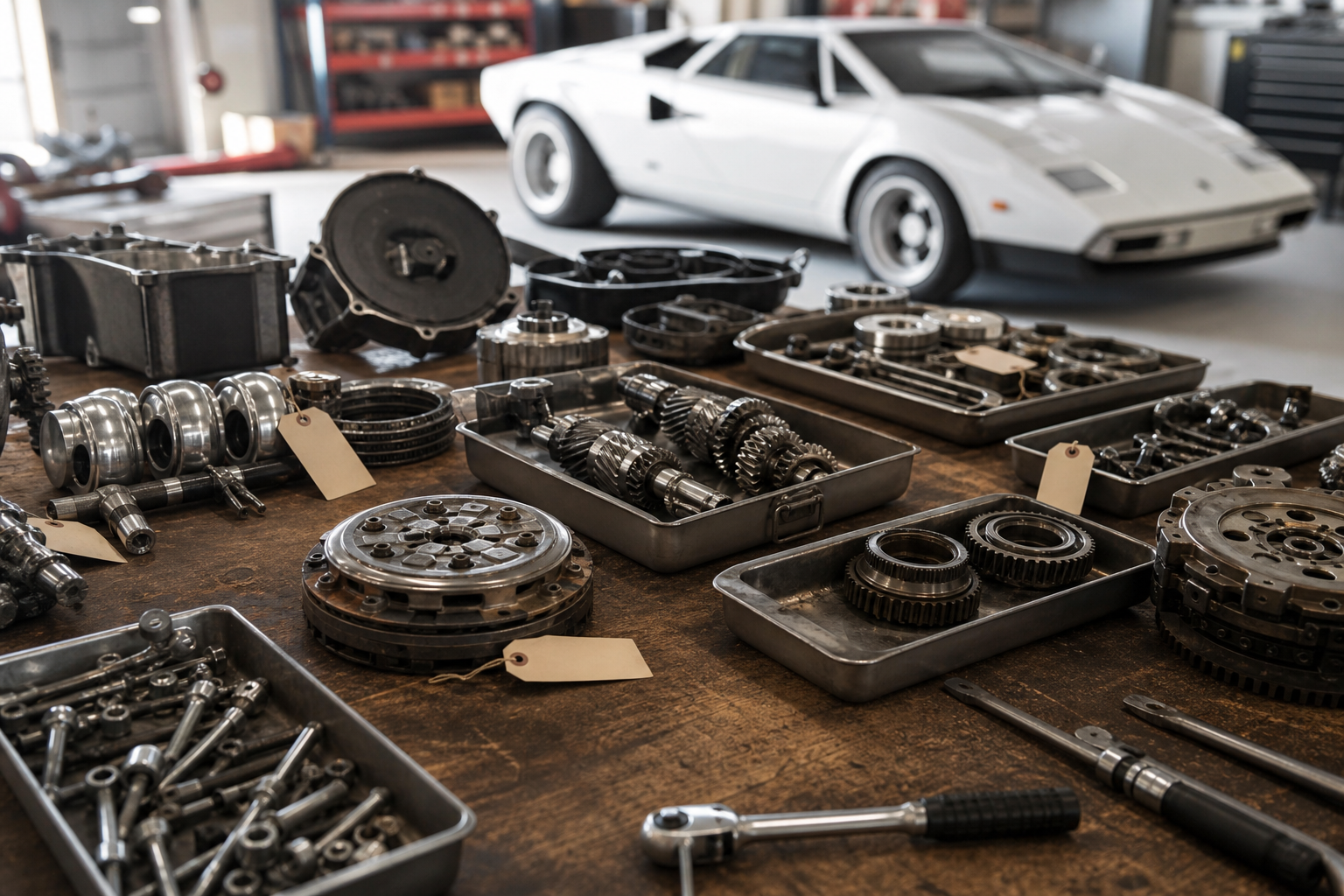
Assign each element an identifier, a photograph, a location, a diagnosis and a decision: keep, restore, replace, assess or store. Note the reference of the new part, its supplier and the reason for replacement. Significant removed parts should remain associated with the car when reasonable.
Polo Storico presents four pillars: archives, certification, restoration and original spare parts. This structure reminds us that a part is not judged solely by its appearance. Its origin, compatibility and place in the car’s history also matter.
Separate certification and quality of work
A certification corresponds to the consistency of the identity and components with the archives. It does not replace a geometry check, a test drive, a mechanical measurement or a detailed invoice. Conversely, a perfectly adjusted car is not automatically compliant with its original specification. This distinction between original conformity and adjustment also arises betweena Bugatti EB110 GT and a Super Sport.
Plan two inspections: a documentary review with historical data and a technical reception with measurements, tests and reservations. Also consultour dossier on certification before restorationto understand how another manufacturer’s programme structures certification prior to restoration.
Preparing for reception and life after the workshop
- Compare the result with the signed specifications.
- Attach all invoices, references and before/after photographs.
- Document any assumed discrepancies and their reversibility.
- Keep useful samples and removed parts.
- Establish a progressive restart programme.
- Have the insurance and necessary documents updated.
- Archive a digital copy and a physical copy of the file.
The final file must be understandable without the restorer. This will later allow the car to be presented, maintained or compared withcollector cars already soldwithout attributing a universal value to an old transaction.
Signals that require a pause
Stop the work if a number becomes illegible, if an unexpected layer appears, if an important part does not correspond to the available data or if an old modification seems to have historical value. Photograph, protect the area and seek advice before continuing.
The cost of a documentary pause is limited compared to the risk of erasing evidence. The best restoration is not the fastest; it is the one whose every choice remains defensible.
Conclusion: restoring the car and its file
On a Countach, provenance is protected before dismantling. Zero condition, archives, parts inventory and written decisions must progress with the work. Organise a closing meeting to reconcile results, reservations, retained parts and deferred work. A summary, a chronology and files named in a stable manner make the file transferable several years after the work. These tips are general: have the identity, documents, history, mechanical condition, administrative requirements and market conditions checked before purchase or restoration.
FAQ on restoring a Lamborghini Countach
Should a Countach be restored in its factory original colour?
Not without research. The original shade, previous repainting and the history of the example must be documented before making a decision.
Does a certification replace the mechanical inspection?
No. The authenticity certification and the condition assessment address two different questions.
What should be photographed before dismantling?
Numbers, markings, fastenings, assemblies, layers of paint, trims, wiring harness, parts and traces of previous interventions.
Should replaced parts be discarded?
Not by default. Label them, photograph them and decide on their retention with the specialist and the owner.