
The Alfa Romeo 8C Competizione is not just a beautiful Italian bodywork. For a collector, it is a car to be read like a complete file: origin, consistency, maintenance, configuration, usage, and ability to remain desirable at the time of resale.
The short answer: a fine example is first judged by the quality of its provenance. The cosmetic condition matters, but it never replaces a clear history, documented interventions, and an honest presentation of usage.
Why the 8C requires a collector’s reading
The 8C belongs to that family of modern GTs that blend brand image, strong design, and noble mechanics. It is precisely this mix that attracts, but also what can cause an overpayment for a poorly documented car. A buyer must therefore avoid confusing perceived rarity with the individual quality of the example.
Even before the test drive, gather the elements that tell the story of the car: origin, invoices, interventions, owners, storage conditions, and consistency of accessories. The same reasoning applies to other icons analysed in our collector analysis on the Bugatti EB110.
Documents to request before travelling
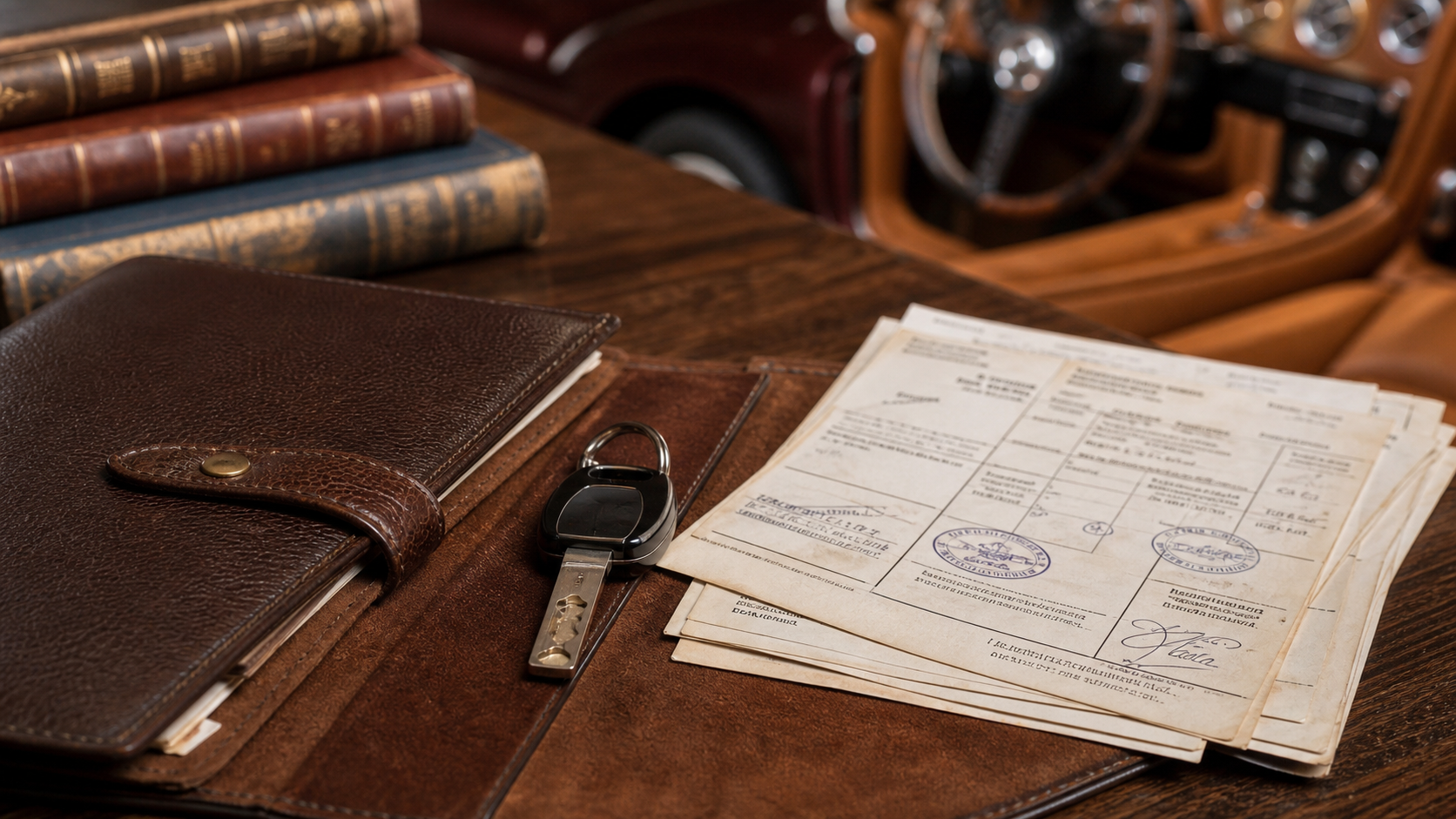
A serious seller should be able to share essential information without turning every question into a negotiation. Ask for copies of useful administrative documents, maintenance invoices, recent inspections, any expert reports, and a clear record of known work. The same documentary requirement applies to a recent Italian car: the checklist for a used Maserati MC20.
You must also verify the consistency between the declared mileage, interior condition, wear of consumables, maintenance dates, and the seller’s account. To structure this step, refer back to our method for checking an imported sports car, even if the car is already registered in France.

Configuration: what aids liquidity
On a 8C, the configuration must be clear and consistent with the character of the car. A spectacular combination may catch the eye at first glance, but liquidity often depends on a balance between colour, interior, originality, and ease of telling the story of the example.
The classic trap is to pay for uniqueness as an automatic premium. A rare configuration is only interesting if it remains desirable and understandable by the next buyer. Compare with models already sold by PlethoreCars to see how presentation and consistency build confidence.
Inspection: points that must be clear
- Alignment of bodywork elements and quality of any repairs.
- Condition of running gear, tyres, brakes and consumables.
- Functionality of electronics, controls and interior equipment.
- Traceability of maintenance and consistency of dates.
- Presence of accessories, duplicate keys and original documents.
An independent inspection is still recommended when the amount involved is significant or the history contains grey areas. The aim is not to seek abstract perfection, but to establish what you are actually buying.
Warning signs that should make you pause
A fragmented history, missing invoices, a car left unused for a long time without explanation, recent undocumented restoration work or pressure to decide should make you slow down. For a car of this calibre, a truly solid opportunity can withstand questions.
If the decision is also linked to a future sale, readthe guide to selling a classic car. It helps to understand what will facilitate the presentation of the car tomorrow.
Verdict for a French buyer
The 8C can be a very appealing acquisition, but it demands collector discipline. Buy the individual car, not just the model. A clear file, a coherent configuration and an inspection without major issues are worth more than a price simply presented as attractive.
General advice: always verify documents, history, condition and current market prices with direct sources or an expert before committing.
Action plan before making an offer
Before making an offer, organise the information into three columns: what is proven, what is plausible and what remains declarative. Proof includes invoices, reports, original documents and recent checks. The plausible can guide discussion but should not alone justify a price premium.
Then request an independent inspection or, at minimum, a check by a specialist familiar with modern Italian GTs. The aim is not to devalue the car, but to turn emotion into a controlled decision. An identified technical reservation can become a negotiation point or a reason to walk away.
Also prepare your preservation plan. A 8C bought for occasional driving, display or long-term keeping is not managed the same way. Storage, preventive maintenance, insurance, transport and documentation must be planned from the outset to preserve the car’s coherence.
FAQ
Is the Alfa Romeo 8C Competizione a good collector’s purchase?
It can be if the individual car is coherent, documented and inspected. Purchase value depends mainly on the individual car’s quality.
Should a lightly used car be preferred?
Not automatically. A lightly used car but poorly maintained may be less reassuring than a regularly driven example with a complete file.
Which documents should be requested as a priority?
Request the ownership history, invoices, inspections, available expert reports, and proof of significant interventions.
Does a rare configuration always command a higher price?
No. It must also remain desirable, coherent, and easy to explain to the next buyer.