The Mercedes-Benz 190 SL captivates with its elegance, but the decision to purchase is made far more beneath the bodywork than in front of the grille. A beautiful paint job can conceal a tired structure, while a mechanically sound example with incomplete documentation can become difficult to value.The essential rule is therefore to first buy a sound shell, a clear identity and a coherent file, then to assess the mechanics.
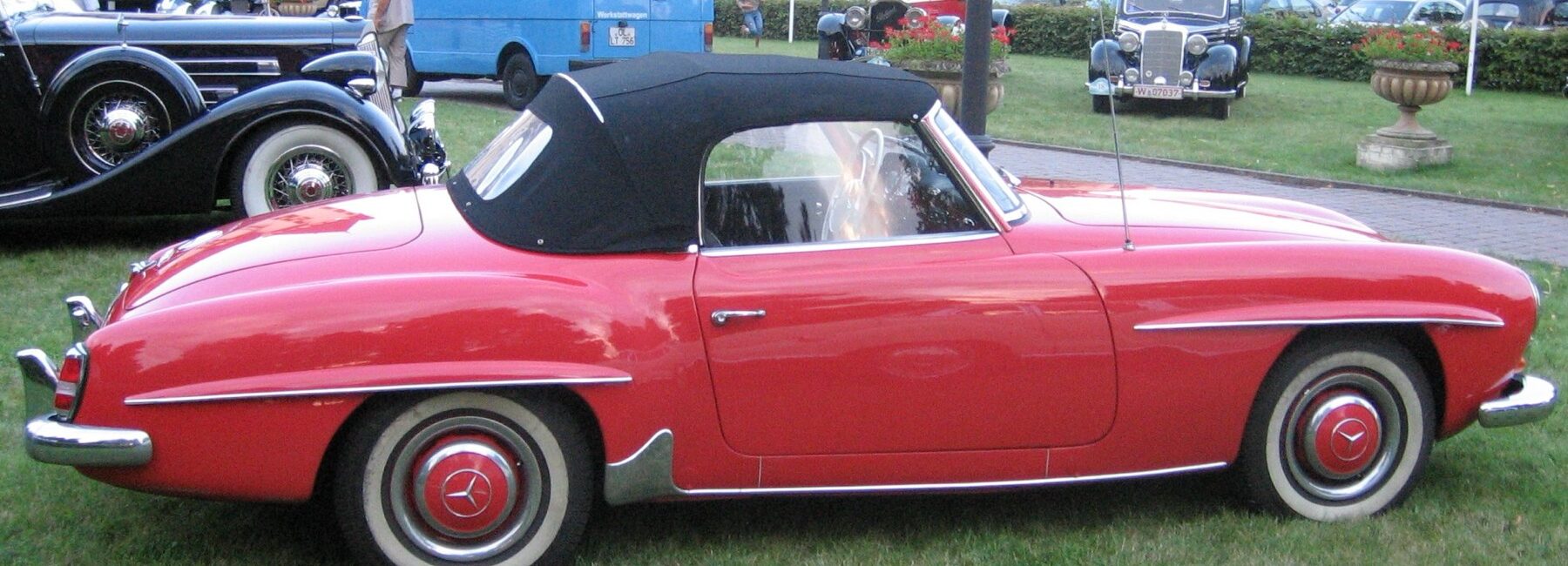
Produced from 1955 to 1963, the 190 SL is not a small 300 SL. It adopts its aesthetic language but is based on a distinct architecture and prioritises grand touring. For a collector, it can be a remarkable touring car provided corrosion, the quality of a restoration, the authenticity of components and the cost of missing parts are properly evaluated.
Mercedes-Benz 190 SL: the essentials at a glance
| Characteristic | Key data |
|---|---|
| Designation | Mercedes-Benz 190 SL, series 121 |
| Production period | 1955 to 1963 |
| Engine | 4 inline cylinders of 1 897 cm³ |
| Declared power output | Approximately 105 hp depending on original configuration |
| Original fuel system | Two Solex carburettors |
| Gearbox | Manual with 4 speeds |
| Braking | Four drums |
| Bodywork | Roadster, with removable hard-top available |
| Priority before purchase | Structural corrosion, restoration quality, identity and history |
Mercedes-Benz presents the 190 SL as the roadster of the 121 series, marketed from 1955 to 1963. Unveiled in 1954, it offered a more accessible and comfortable interpretation of the SL spirit. Its four-cylinder 1 897 cm³ engine and four-speed manual gearbox make it a fast touring car for its time, not a radical sports car in the modern sense.
How much is a Mercedes 190 SL worth in 2026?
There is no single price for a 190 SL. The difference between a merely presentable car, an older restoration, a very authentic example and a benchmark restoration can be considerable. Recent public sales only provide observation points, never an automatic valuation.
In April 2026, Bonhams sold a 190 SL from 1960 in Monaco for 71 300 € including fees. The auction house mentioned an older restoration and significant mechanical work carried out in 2023. At Amelia Island in 2025, Gooding Christie’s sold 131 600 $ a 190 SL from 1962 advertised with its original engine and a restoration documented by the Mercedes-Benz Classic Center. In July 2026, a restored 1963 example was sold 140 000 $ on Bring a Trailer.
These amounts are not directly comparable: country, taxation, commissions, condition, colours, originality and quality of documentation differ. However, they show that the market strongly distinguishes between cars. Before setting a budget, consult the Mercedes-Benz currently offered on Plethore Cars and request a free valuation of your classic car based on its actual condition.
The factors that most influence value are generally:
- the health of the structure and absence of concealed repairs;
- the conformity of numbers, paint colour, upholstery and equipment;
- the presence of an original engine or, failing that, transparency about its replacement;
- the documented quality of the restoration;
- the presence of the hard-top, soft top and specific elements;
- the traceability of owners, invoices, photos of work and expert reports.
Corrosion: the primary financial risk
On a 190 SL, the most dangerous area is not necessarily the engine. Advanced corrosion or poor bodywork restoration can consume a budget far exceeding that of mechanical refurbishment. The car should be inspected on a lift, with a specialist familiar with the construction of the 121 series.
Check the sills and their reinforcements, the floors, suspension mounts, wheel arches, areas behind the wings, lifting points, boot floor and assemblies around the engine compartment. A recent layer of stonechip protection is not proof of good condition. Look for irregular welds, overlapping panels, thick fillers and asymmetries.
The geometry of the openings also provides clues. Doors, bonnet and boot must have even gaps. A sagging door, a misaligned bonnet or a distorted windscreen frame may indicate an old repair or structural weakening. Thepre-purchase inspection of a classic car is a preventative expense, not a mere formality.
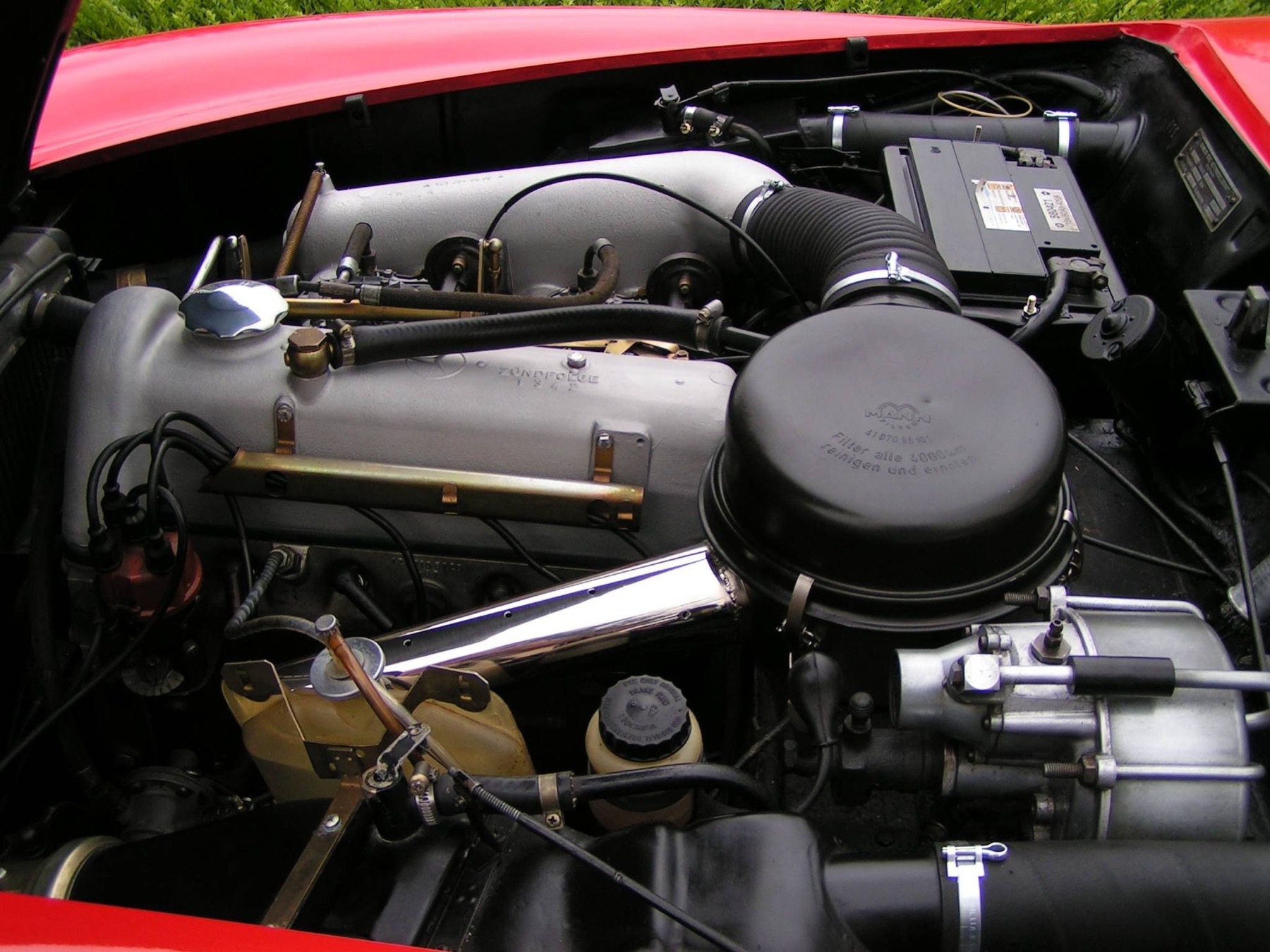
M121 engine and Solex carburettors: what to check?
The four-cylinder M121 can prove durable when properly tuned and cooled. Its main challenge often lies with the two Solex carburettors: worn shafts, air leaks, imperfect synchronisation and approximate settings can make starting difficult or cause unstable idling. Some cars have been fitted with Weber carburettors. This modification may ease use but must be disclosed and can affect authenticity assessment.
Request a cold start. The engine should rev smoothly without persistent smoke or worrying knocking. Once warmed up, monitor idle stability, oil pressure, water temperature and signs of leaks. A compression test, supplemented if necessary by a cylinder leak-down test, provides far more useful information than a freshly detailed engine bay.
Also check the radiator, water pump, hoses, condition of the fuel tank and fuel lines. A car that overheats in slow traffic should not be considered “normal because it is old.” The cause may be simple but must be identified before sale.
Gearbox, axle, steering and brakes
The four-speed manual gearbox should operate without excessive crunching, both cold and hot. Test each gear during acceleration and deceleration. Listen to the rear axle and watch for vibrations appearing at a specific speed. A slipping or juddering clutch is not a deal-breaker but must be factored into the price.
The steering should not have excessive play. On bumpy roads, dry noises and imprecision may reveal worn bushes, ball joints or suspension components. The 190 SL has drum brakes: well maintained and properly adjusted, they should brake straight. Significant pull, a spongy pedal or abnormal heating requires diagnosis.
Do not compare its behaviour to that of a modern roadster. The rear swing axle suspension demands gentle driving, especially on rough or wet roads. Suitable tyres, of consistent size and reasonable age, play an essential role.
Authenticity: numbers, data card and equipment
The identity of a 190 SL is not limited to its registration document. Note the accessible numbers and compare them with manufacturer documents, invoices and old photographs. The Mercedes “data card” can help verify delivery configuration: colour, trim and equipment.
The term “matching numbers” must always be demonstrated. Ask where each number is located, who checked it and on which document the claim is based. A car fitted with a replacement engine can be perfectly enjoyable but its price must reflect this reality. Conversely, a compliant and documented restoration can justify a higher valuation.
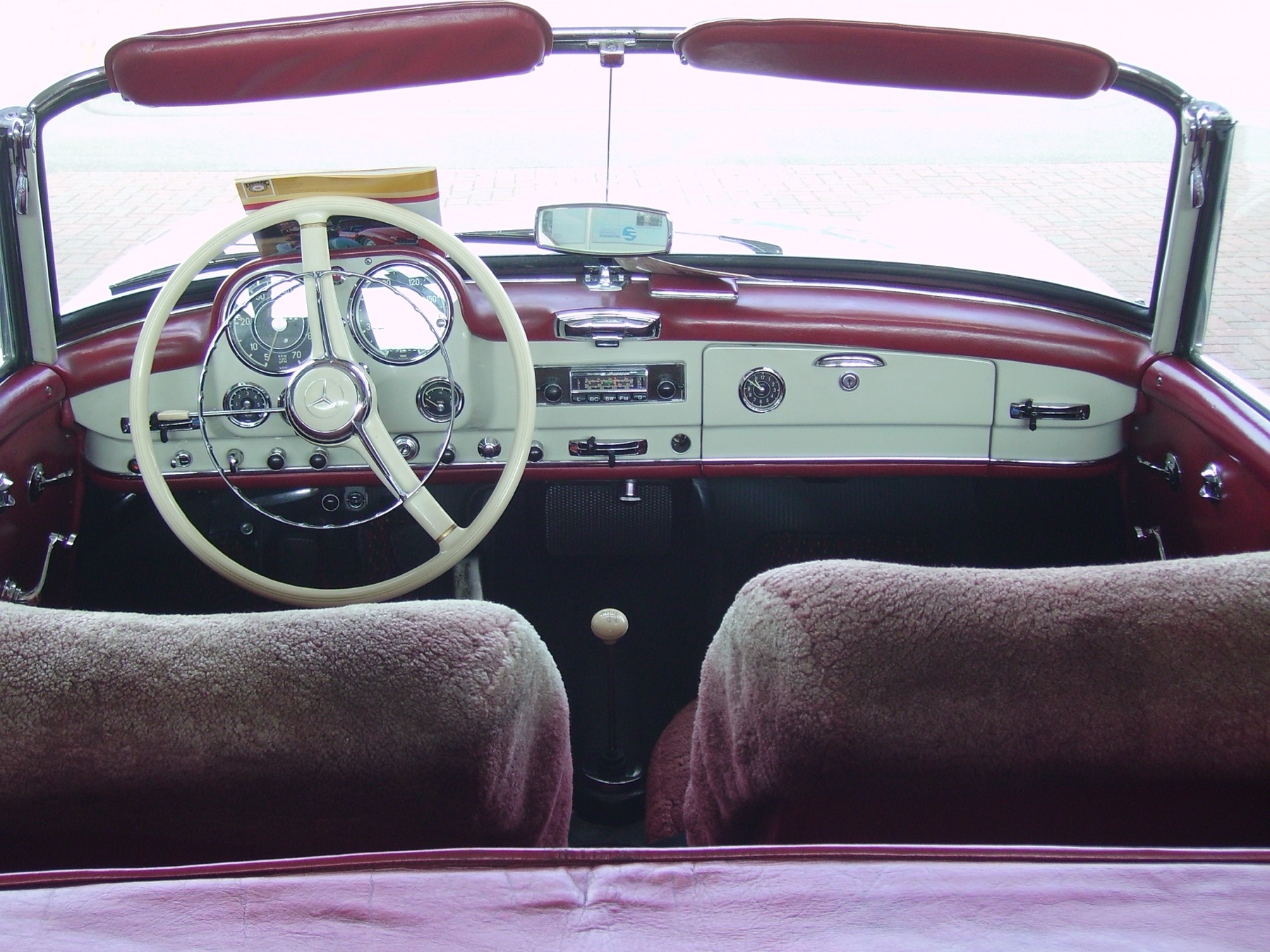
Examine the grille, mouldings, bumpers, hubcaps, instruments, handles, seats and screws. Specific parts can be costly and reproductions vary in quality. A missing hard-top is not replaced simply by buying a roof: fitting, seals, chrome, trim and paint must be accounted for.
To structure your research, consult our method for tracing the history of a classic car and compiling a classic car historical file.
Classic restoration or car to be restored?
An older restoration is not necessarily a flaw. A car restored fifteen or twenty years ago, regularly used and well maintained, can reveal its qualities more clearly than a freshly completed example. Paint defects, leaks and poor fittings have had time to appear.
Conversely, an incomplete project bought for less can become the most expensive option. Before committing, every part must be inventoried and realistic quotes obtained for bodywork, paint, upholstery, chrome and mechanics. Add a margin for discoveries after dismantling. A coherent restoration often requires a specialist, documentation and a lot of time.
Three buying profiles stand out:
- The very authentic car : interesting for preservation, but its original condition must be proven and maintained.
- The nicely restored example for driving : often the best compromise, if the structure and work are documented.
- The project : reserved for the buyer who controls the budget, deadlines and parts availability.
Road test: the method in 20 minutes
Start with a cold engine and note the starting time. Observe smoke, noises and warning lights. Let the temperature rise without unnecessary acceleration, then check for leaks. On the road, test low-rev acceleration, progressive revving, the gearbox through all four gears and braking in a straight line.
Briefly release the steering wheel on a flat, safe road: the car should not pull sharply to one side. Listen for body noises on an uneven surface. After the test, open the bonnet, check the temperature, petrol smells and seepages. Finally, try a hot start again.
A convincing test, however, does not replace an inspection on a lift. It mainly serves to confirm or refute initial observations.
Checklist before buying a Mercedes 190 SL
- Obtain the chassis number before travelling.
- Request registration document, data card, invoices, expert reports and restoration photos.
- Verify the consistency of numbers and the announced configuration.
- Inspect the structure on a lift, not limiting yourself to visible parts.
- Measure paint thickness and check alignments.
- Start the engine completely cold.
- Test compression, oil pressure, cooling and carburation.
- Try gearbox, clutch, differential, steering and braking.
- Inventory hood, hard-top, chrome, tools and accessories.
- Estimate the defects before negotiation with credible quotes.
Our opinion: which Mercedes 190 SL to choose?
To drive and preserve your car, the best purchase is rarely the cheapest or the most dazzling. We would favour a 190 SL with a sound structure, restored a few years ago, accompanied by photos of the work and invoices, even if it has minor aesthetic imperfections. An imperfect engine can be quantified; a poorly reconstructed bodywork can jeopardise the entire project.
The market rewards coherent examples: clear identity, documented configuration, credible colour, complete equipment and regular maintenance. The elegance of the 190 SL explains its lasting appeal, but it is the invisible quality of the car that should determine the purchase.
Frequently asked questions about the Mercedes-Benz 190 SL
Is the Mercedes 190 SL reliable?
Yes, if its engine, cooling system and carburettors are properly maintained. Problems often stem from approximate tuning, prolonged immobilisation or poorly supervised older restorations rather than a fundamental defect of the model.
What is the main defect to look out for?
Corrosion and poor quality structural repairs are priorities. An inspection on a lift by a specialist in the 121 series is essential before purchase.
Should a 190 SL with Weber carburettors be avoided?
Not necessarily for road use, but the conversion must be seamless. For collector value, the presence and proper functioning of the original Solex carburettors can be important.
Does the hard-top increase the value?
A hard-top matching the car, complete and in good condition is an advantage. Its seals, trims, chrome, fixings and fit should be checked, as refurbishment can be costly.
Should you buy a 190 SL to restore?
Only with a thorough inspection, a complete inventory and quotes. The attractive entry price can be exceeded by bodywork, chrome, upholstery and missing parts.
Sources and method
Article verified on 15 October 2026 based on the following sources:
- Mercedes-Benz — 190 SL, official historical milestone: period, positioning and history of the model.
- Mercedes-Benz Media — 70 years of the SL: presentation of 1954 and historical context.
- Gooding Christie’s — Mercedes-Benz 190 SL 1962: characteristics, provenance and sale result 2025.
- Bonhams Cars — Mercedes-Benz 190 SL 1960 : declared condition and sale result 2026.
- Bring a Trailer — Mercedes-Benz 190 SL 1963 : file, restoration and sale result 2026.
- Classic Car Passion — Mercedes 190 SL buying guide : technical and bodywork checkpoints.
The auction results cited are observed transactions, not a universal valuation. They must be interpreted according to condition, history, originality and applicable costs.
Photo credits
- Cover photo: Jed, Wikimedia Commons, CC BY-SA licence 3.0.
- Engine photo: Hardy / Aida200400, Wikimedia Commons, CC BY-SA licence 3.0.
- Interior photo: Pujanak, Wikimedia Commons, public domain.