
The Aston Martin DB11 attracts attention because it promises a modern grand tourer without sacrificing the presence of a true characterful automobile. On the used market, however, this allure can mask a more important question: does the example really suit your usage, your risk tolerance, and your resale strategy?
Short answer:a DB11 is worth considering if its history is clear, if its configuration suits your driving needs, and if the inspection confirms a well-maintained car without makeshift repairs. The mistake is to buy based solely on the styling, colour, or listed price, whereas the paperwork, options, and condition will weigh longer than the emotion of the first test drive.
Why the DB11 remains a grand touring choice
The DB11 holds an interesting position: it retains the image of an elegant travelling coupé, while now being viewed through the lens of its successor and the evolution of the Aston Martin range. For the French buyer, this context creates an opportunity, but not an automatic purchase. One must know whether they seek a weekend car, a GT for long journeys, or a reasonably usable collector’s item.
Before focusing on a listing, compare the offer with the Aston Martins available on PlethoreCars and with the sports cars available. This helps to place the DB11 against other more radical sports cars or more discreet GTs.
Choose the configuration before negotiating the price
A DB11 must first be understood as a complete configuration. Exterior colour, interior, wheels, seats, sound, comfort equipment and personalisation history tell the story of past use and resale target. A spectacular configuration can be seductive, but sometimes limits the audience at resale. A too neutral configuration may be easier to live with daily, but less memorable.
Ask the seller for the original specification sheet, detailed invoices and maintenance records. An advert that emphasises prestige but remains vague on servicing should be treated with caution. For a GT of this calibre, the absence of documents is not a mere administrative detail: it is a signal that undermines trust and complicates negotiation.
Inspection: what must be checked without overreacting
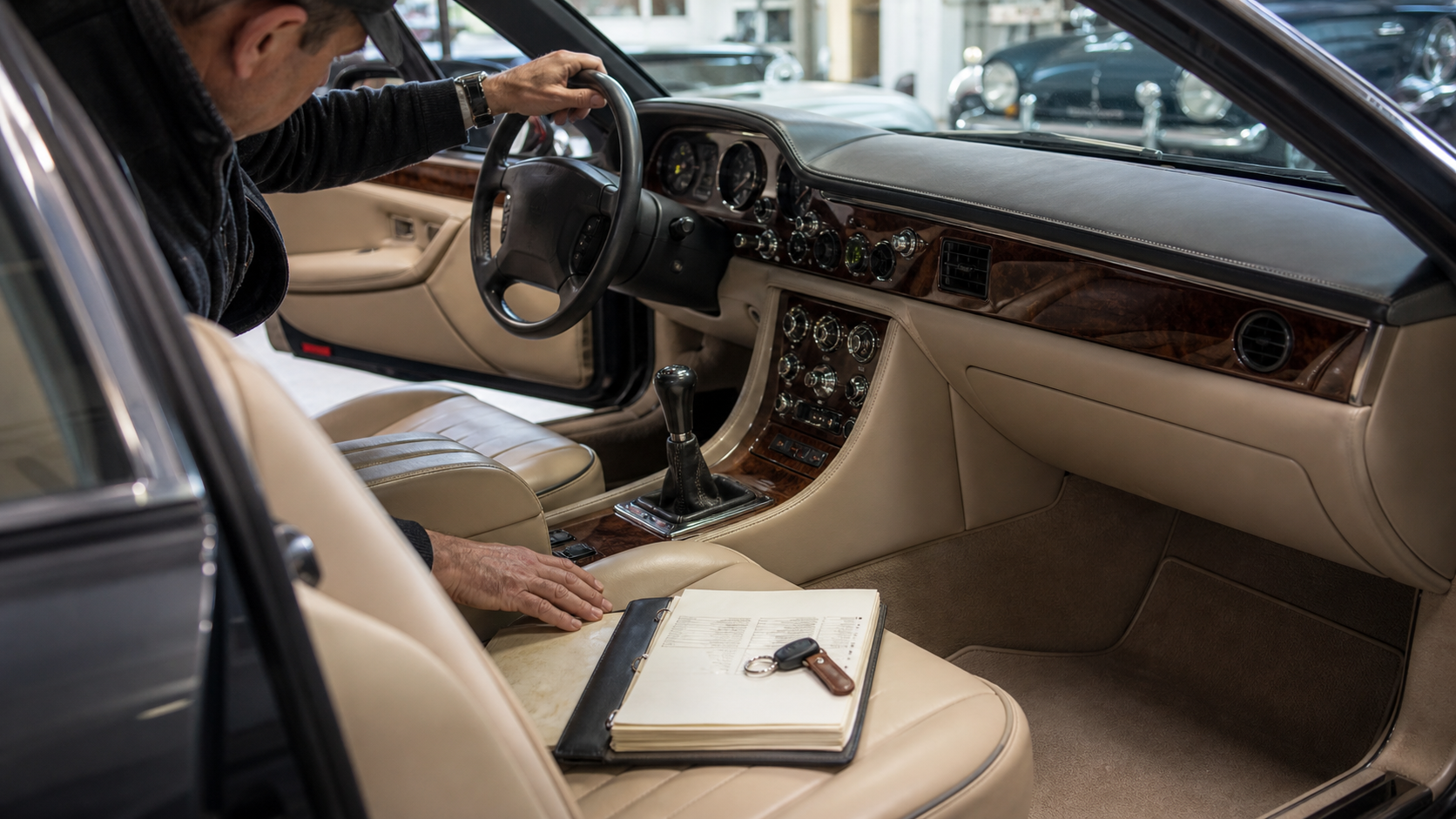
The inspection must distinguish normal wear of a used GT from neglect. Look at the tyres, brakes, condition of the wheels, marks under the bumpers, body panel alignment, interior and operation of controls. The aim is not to find a new car, but to understand if its condition matches the stated mileage, type of use and invoices presented.
Have the car checked by a professional familiar with modern GTs. A test drive alone is not enough: you must read stored faults, check updates, observe consumables and match each intervention to the maintenance schedule. To structure this approach, also compare with the grand tourers to compare.

Actual use: the right DB11 is not always the most perfect
A DB11 intended for driving must remain consistent with your journeys. Comfort, ground clearance, ease of parking, visibility, heat in town and serenity on the motorway count as much as the technical specifications. An example with high mileage for a collector may be excellent for an enthusiast who wants to drive, if the file is clear and the price honestly reflects this use.
Conversely, a very lightly used car must be examined methodically. Prolonged immobilisation can create other issues: old tyres, battery, fluids, seals, electronics or maintenance done by time rather than mileage. Do not confuse low use with absence of risk.
Resale: consider the exit strategy from the moment of purchase
The best negotiation is not just the one that lowers the price. It is the one that protects your future exit. A complete file, a clear configuration, an independent inspection and clean photos will already form the basis of a more credible resale. Consult the cars already sold to understand how the presentation of a premium vehicle influences trust.
If you buy to keep, liquidity remains important: it gives you freedom. If you plan to resell in a few seasons, anticipate how to document your maintenance and preserve the original elements. Support such as preparing a resale under mandate can be relevant when the car deserves a demanding presentation.
Checklist before committing
- Identify the exact configuration and original elements.
- Compare the listing with several consistent premium alternatives.
- Request invoices, history, inspections and proof of ownership.
- Have the mechanics, electronics, brakes, tyres and bodywork inspected.
- Verify that the condition corresponds to the declared usage.
- Plan how the car will be documented until resale.
One last practical point: prepare your own comparison grid before visits. Note for each example the configuration, the evidence received, visible consumables, specialist reservations and short-term costs. This method avoids comparing a well-documented but more expensive car with a cheaper car whose unknowns remain your responsibility. It also allows you to ask the same questions to each seller and keep a clear record of your decision.
Used Aston Martin DB11 FAQ
Is the DB11 a car to buy for speculation?
This is not the main right angle. You must first buy a desirable, maintained and usable configuration. Any potential good liquidity will depend mainly on the file and the coherence of the example.
Should you prioritise a very lightly used car?
Not automatically. Low usage can be attractive, but it must still be accompanied by time-based maintenance, consistent tyres and an inspection confirming the absence of hidden ageing.
What documents should be requested before a visit?
Request the registration document, maintenance history, invoices, recent inspection, list of options and proof of ownership. The documents must be legible and consistent with each other.
When should you give up?
Give up if the history is unclear, if the seller refuses an independent inspection or if the observed condition contradicts the declared usage. For a premium GT, documentary trust is central.
Conclusion: buying a GT, not just a silhouette
The DB11 can be an excellent used grand tourer if chosen with discipline. Start with the intended use, validate the configuration, demand proof, then negotiate the price. These tips remain general: always check the documents, history, independent inspection, and current market conditions before committing.