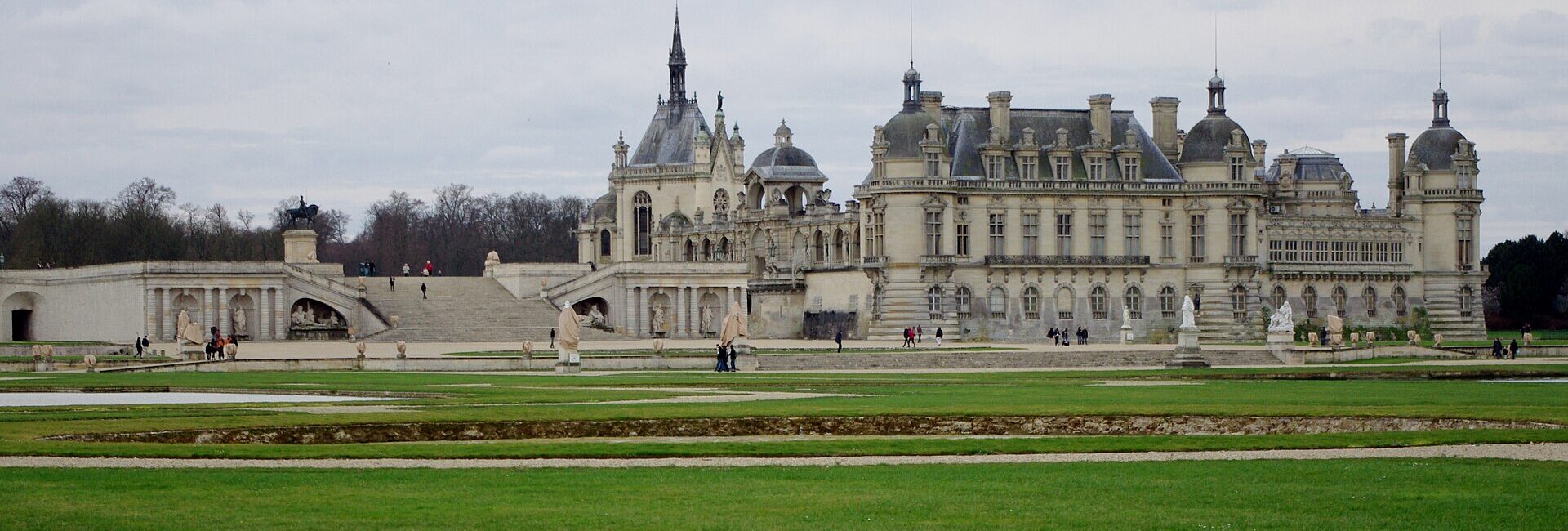
Two days after the event, three cars alone encapsulate the spirit of Chantilly Arts & Elegance Richard Mille 2026 : a Delage D8 SS from 1933, a Ferrari 410 Superamerica from 1956, and the Bugatti Brouillard from 2025. Gathered on Sunday 13 September on the lawns of the Domaine de Chantilly, they won the three Best of Show awards at this eighth edition.
The short answer: the Delage D8 SS from 1933 was crowned pre-war, the Ferrari 410 Superamerica from 1956 post-war, while the Bugatti Brouillard from 2025 triumphed among concept cars, restomods and one-offs. This list of winners, confirmed by the organiser, links nearly a century of exceptional coachbuilding.
The 2026 awards at a glance
| Prize | Awarded car | Year |
|---|---|---|
| Best of Show pre-war | Delage D8 SS | 1933 |
| Best of Show post-war | Ferrari 410 Superamerica | 1956 |
| Best of Show concept cars, restomods & one-offs | Bugatti Brouillard | 2025 |
The concours distinguishes vintage cars by class, before selecting the winners for the Best of Show awards. The organiser explains that rarity, history, condition and quality of maintenance are among the essential criteria examined by the jury. Since 2017, pre-war and post-war cars compete for two separate final awards, so as not to directly compare creations from vastly different eras.
The 2026 edition adds to this system an award explicitly dedicated to concept cars, restomods and one-offs. This third pinnacle of the awards now places contemporary creation on its own ground, without confusing it with historical heritage.
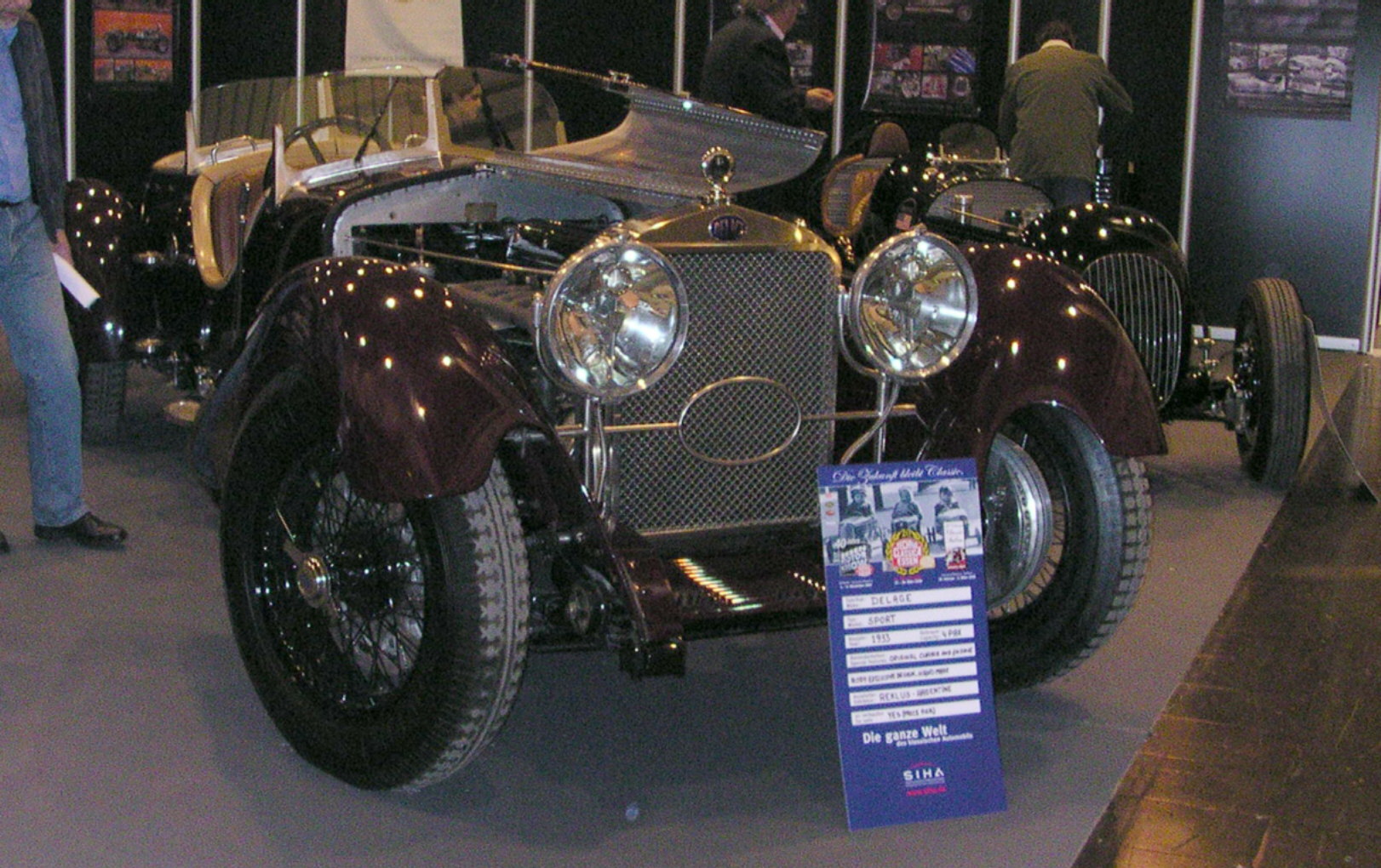
Delage D8 SS 1933: French elegance crowned
The victorious Delage D8 SS featured in the pre-war coupe class, competing notably against a Jaguar SS1 Airline by 1935, a Bugatti Type 57 Coupé Ventoux by 1936, a Talbot-Lago T150-C SS by 1937, and an Atalanta V12 by 1939. Theofficial list of entered carsgives an indication of the level of this category.
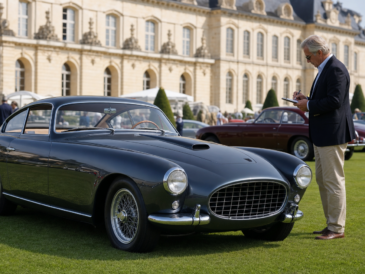
Its success recalls what major concours value in a car from the 1930s: the correctness of proportions, historical coherence, quality of presentation, and the presence of a bodywork that transcends mere mechanical function. A victory at Chantilly does not automatically turn a car into a price benchmark, but it enhances its visibility and documents an important stage in its public journey.
For a collector, the distinction is essential. A concours prize is a valuable provenance element; it does not replace chassis examination, number verification, or analysis of successive restorations. Visible beauty must always align with the documentary file.
Ferrari 410 Superamerica 1956: the great post-war GT
The Ferrari 410 Superamerica embodies another form of exclusivity: that of the great front-engined V12 GTs, powerful, luxurious, and produced for a very privileged clientele. Ferrari specifies for this model a longitudinal V12 of4 962,96 cm³, a maximum power of340 hp at 6 000 rpmand a claimed top speed of262 km/h. These figures, spectacular for 1956, illuminate the technical dimension of a car often first regarded as a sculpture.
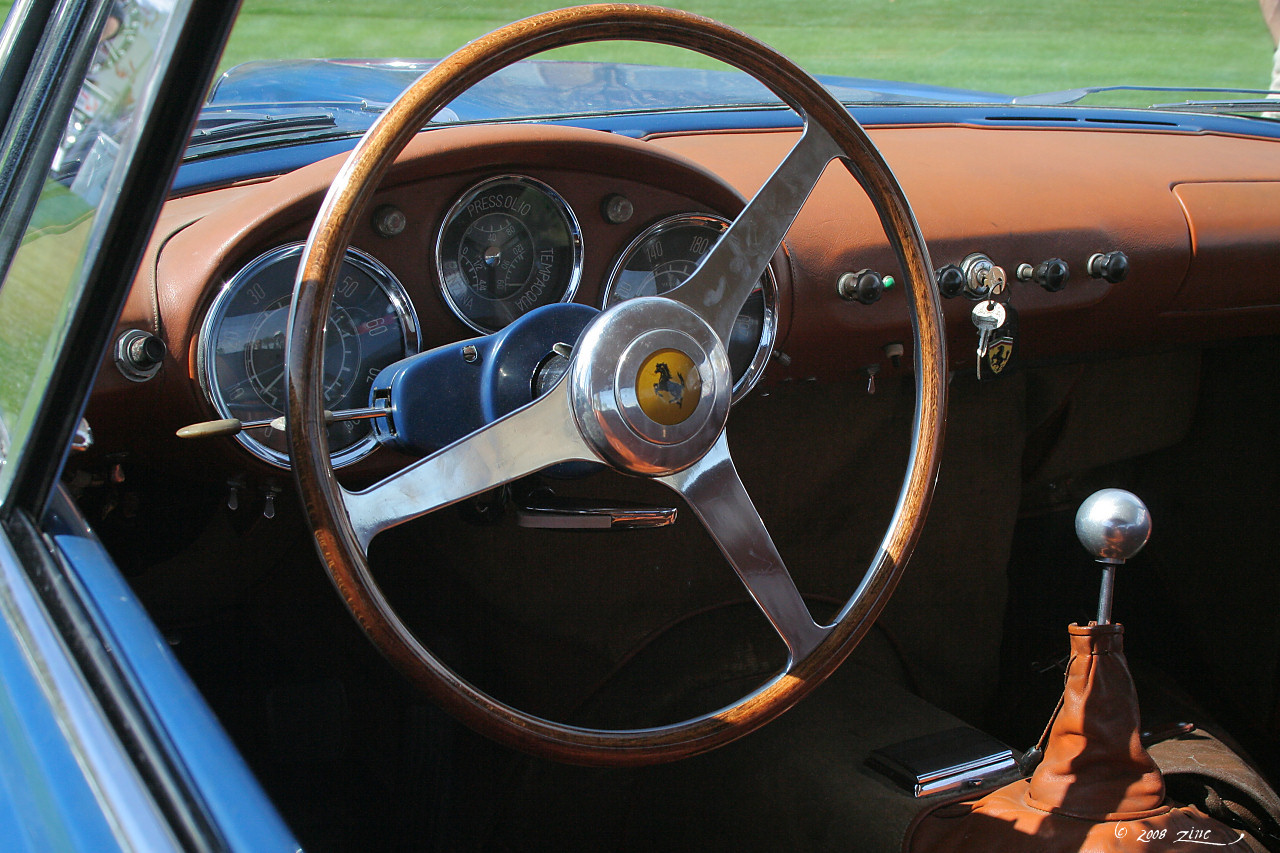
Its post-war Best of Show title aligns with one of the main themes of the 2026 lineup:the automotive art according to Pininfarina. It also highlights the special place occupied by front-engined Ferraris in international collections. They combine aesthetic signature, prestigious mechanical architecture, limited production, and sometimes remarkable owner histories.
However, the 410 Superamerica should not be reduced to its engine or badge. For this type of car, exact bodywork, chassis identity, original configuration, and quality of documentation can create considerable differences between two examples. The prize won at Chantilly rewards a specific car, not all 410 Superamericas indiscriminately.
Contemporary Ferrari barchetta enthusiasts can extend this reflection on exclusivity with our Ferrari Monza SP1 vs SP2 comparison.
Bugatti Brouillard: contemporary bespoke enters the winners’ list
The Bugatti Brouillard won the Best of Show reserved for concept cars, restomods and one-offs. It is neither a mere salon exercise nor a standard Bugatti dressed in a new colour. The brand presents it as the first creation of its Solitaire Programme, dedicated to unique vehicles entirely custom-made.
Brouillard pays tribute to Ettore Bugatti’s favourite horse. This lineage is not a decorative detail: it links a contemporary hypercar to the family history, sculpture and the tradition of special coachwork that have shaped the brand’s identity. The official Bugatti press release precisely emphasises this continuity between heritage and extreme personalisation.
Its victory at Chantilly illustrates an interesting shift in the concours d’élégance. Automotive heritage no longer stops at preserving old models: it can also be built today through unique commissions likely to become tomorrow’s concours pieces.
To understand the brand’s current industrial context, also see our analysis dedicated to the withdrawal of Porsche from the capital of Bugatti Rimac.
More than 1 000 cars and a record in the clubs area
According to the report published the day after the event by Caradisiac, this eighth edition gathered more than 1 000 vehicles and nearly 30 000 visitors. The media mentions about 45 clubs and a lineup ranging from cars of the 1920s to contemporary hypercars. The organiser confirms on their side that a record was set in the clubs area, without yet publishing detailed figures on their homepage as of 15 September 2026.
The choice not to mix these two sources is important: attendance figures remain attributed to the media reporting them, while the clubs record is official information. This caution also avoids confusing the 2026 edition with the 28 000 visitors of 2024, a figure still cited on several institutional pages.
Among the notable cars were several Bugatti Veyrons, four Ferrari F40s, a McLaren F1 GTR, a Porsche 911 GT1, Lamborghini Miuras and Ferraris from various generations. The Concours d’État lineup notably paid tribute to Bugatti racing cars, Delahaye, endurance barchettas, Ford and Shelby, designer Ercole Spada, cars from the Tour de France Automobile and the 60th anniversary of the Lamborghini Miura.
A concours, but also a manifesto of the automotive art of living
Chantilly maintains an identity distinct from Pebble Beach or Villa d’Este. Cars remain central, but they share the stage with fashion, gastronomy, clubs and the heritage of the château. The official programme combined the Concours d’État, the Grand Prix des Clubs, the parade of contemporary creations, an equestrian show and numerous family activities.
The historic principle of the Concours d’Élégance is to present a contemporary automotive creation in dialogue with a fashion outfit. In 2026, the Alpine Lacoste A290 Rallye — a unique example namedBeware of the Crocodile— was among the announced projects. Alpine indicated before the event that this car combined an A290 Rallye base, a red interior, and the small piqué fabric associated with Lacoste. Denza, for its part, took advantage of Chantilly to organise the French debut of its Z family, including the Z Spider entered in the concours.
These presences demonstrate that Chantilly is not limited to looking at the past. The event also serves as a platform for manufacturers who wish to position their new models within a culture of rarity, bespoke orders, and design.
What the 2026 awards list reveals about the collector’s market
Firstly, the bodywork and provenance remain major factors of desire. The Delage and the Ferrari were distinguished not simply as representatives of their brands, but as singular automobiles whose history, presentation, and coherence convinced an international jury.
Secondly, documented originality retains a particular value. In a market where restorations can sometimes erase the traces of time, a high-level concours reminds us that condition, interventions, and historical fidelity must be described precisely.
Secondly, documented originality retains a particular value. In a market where restorations can sometimes erase the traces of time, a high-level concours reminds us that condition, interventions, and historical fidelity must be described with precision.
Thirdly, contemporary unique pieces are gradually joining the same heritage narrative. The Bugatti Brouillard obviously does not yet possess the historical depth of a Delage from 1933, but its method of creation and unique character already place it within a collecting logic.
For a purchase, a concours prize should therefore be considered as one piece of information among others. Before making any decision, it remains necessary to compare the model, the chassis, the history, the condition, the work carried out, and the transactions actually observed. You can browse the to compare the appeal of a model with the available offer.to compare the appeal of a model with the available offer.
Chantilly 2026 : the verdict
The edition of 13 September 2026 succeeds in bringing together three eras of the automobile. The Delage D8 SS represents the pinnacle of the great French coachbuilders of the pre-war period. The Ferrari 410 Superamerica embodies the exceptional GTs of the 1950s. The Bugatti Brouillard projects this tradition into the contemporary world of the one-off.
This trio probably explains Chantilly better than any figure: the event not only celebrates rare automobiles but also the way they are designed, commissioned, preserved, and passed down. To continue the season of major events, also find our practical guide toFAQ on Chantilly Arts & Elegance 2026.
Which cars won the Best of Show at Chantilly in 2026?
Which cars won the Best of Show at Chantilly in 2026?
The Delage D8 SS from 1933 won the Best of Show pre-war, the Ferrari 410 Superamerica from 1956 took the Best of Show post-war, and the Bugatti Brouillard from 2025 claimed the Best of Show for concept cars, restomods and one-offs.
When did the 2026 edition take place?
The public day of Chantilly Arts & Elegance Richard Mille 2026 took place on Sunday 13 September, from 9 am to 18 pm 30, at the Domaine du Château de Chantilly in Oise.
How many visitors and cars were present?
Caradisiac reports nearly 30 000 visitors and more than 1 000 vehicles exhibited. The organiser also confirms a record in the club area, but had not yet released a detailed numerical report as of 15 September 2026.
What is the difference between Concours d’État and Concours d’Élégance?
The State Competition judges classic cars divided into classes based on their rarity, history, preservation, and presentation. The Elegance Competition combines contemporary creations with the world of fashion. The Clubs Grand Prix rewards the quality of the staging, the selection of cars, and the spirit of the garden party.
Does a victory at Chantilly automatically increase a car’s value?
No. It enhances its provenance and visibility, but the value also depends on the specific chassis, its authenticity, history, condition, restoration, and comparable transactions.
Main sources
- Chantilly Arts & Elegance Richard Mille — official results 2026
- Chantilly Arts & Elegance — competition formats and classes 2026
- Sport Auto — report and results of the edition 2026
- Caradisiac — review of notable cars and attendance
- Ferrari — historical sheet of the 410 Superamerica
- Bugatti Newsroom — official presentation of Brouillard
- Alpine — presentation of the Alpine Lacoste A290 Rally at Chantilly
- Denza/BYD — participation and French debut of the Z family
Information verified on 15 September 2026. Attendance figures may be updated if the organiser publishes a detailed official report.