A worn wheel bearing on a classic car often reveals itself through a rumble that rises with road speed, abnormal play or a hot hub. Yet a distorted tyre, dragging brake, CV joint or alignment fault can produce similar symptoms. Confirm the diagnosis before ordering parts, and stop driving if the noise becomes metallic, the wheel develops play or the car’s stability deteriorates.
This practical guide explains the warning signs, common misdiagnoses and the essentials of a sound repair. French roadworthiness-test and safety information was reviewed on 24 November 2026.
What does a wheel bearing do?
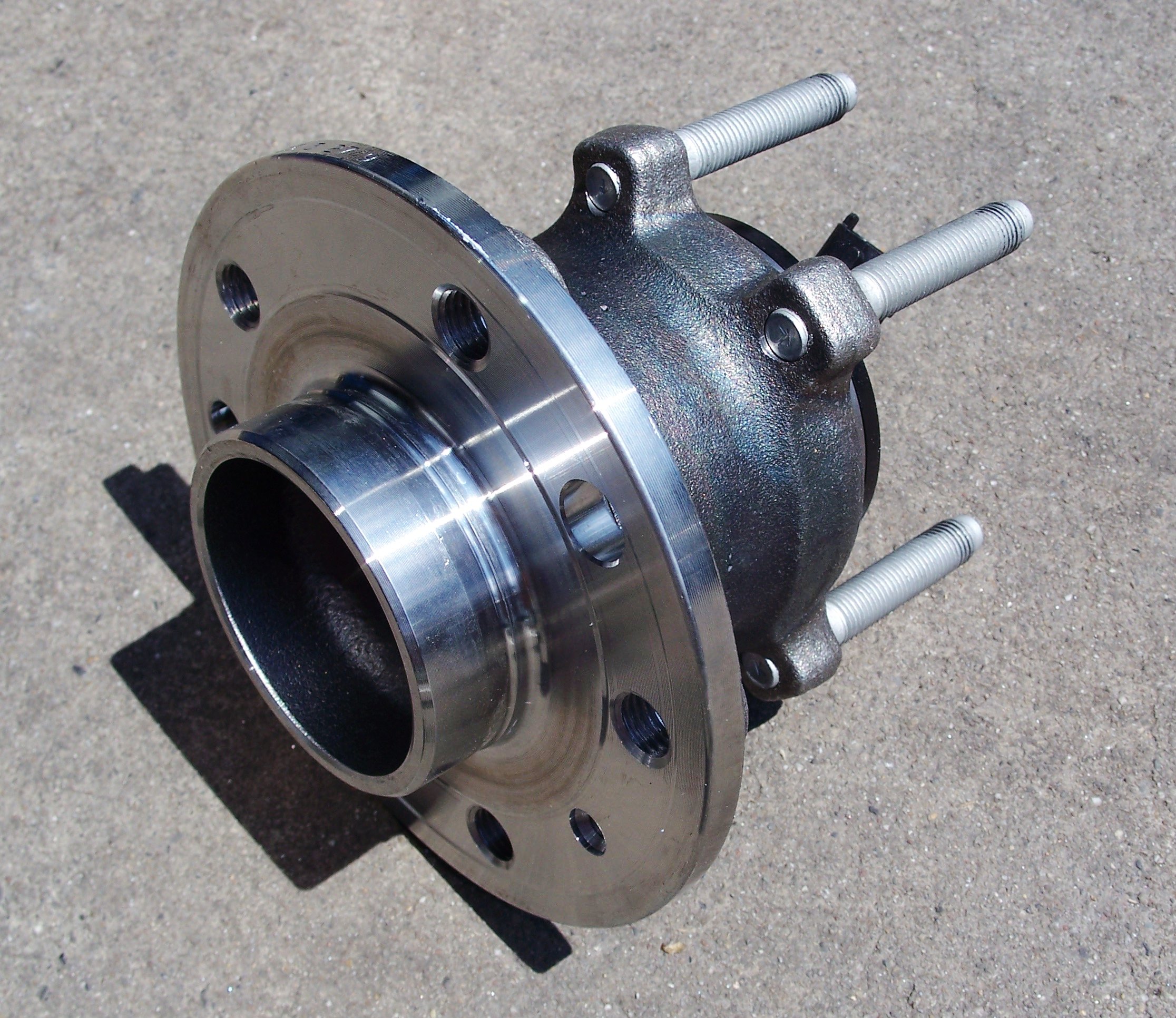
The bearing allows the wheel and hub to rotate with minimal friction while carrying vehicle weight, cornering loads and road impacts. Depending on age and design, a classic may use serviceable tapered bearings, separate press-fit bearings or a later sealed hub-and-bearing unit.
The distinction matters. A tapered assembly may require adjustment to the manufacturer’s procedure, whereas a sealed bearing with play normally requires replacement. There is no universal tightening torque or method for every classic car.
Common symptoms
| Symptom | Possible bearing issue | Other causes to exclude |
|---|---|---|
| Rumble proportional to speed | Marked raceways or rolling elements | Feathered tyre, drivetrain noise |
| Noise changes under cornering load | Load shift across the bearing | Tyre, CV joint, differential |
| Detectable wheel play | Worn, loose or incorrectly adjusted bearing | Ball joint, kingpin or bush |
| Unusually hot hub | Over-tight, seized or poorly lubricated bearing | Dragging brake |
| Vibration or vague steering | Play or advanced deterioration | Balance, tyre or alignment |
NTN-SNR links play, noise, vibration, corrosion and overheating to different failure modes. Its guidance also warns that poor fitting, force transmitted through the rolling elements, incorrect tightening or contamination can rapidly ruin a new bearing.
How do you distinguish bearing noise from tyre noise?
A bearing often produces a low growl related to rotational speed. The sound may change as the car loads one side in a gentle bend, but this is only an indication: body resonance can make the wrong side appear responsible.
A feathered or ageing tyre can create a remarkably similar hum. Inspect the tread, feel the blocks in both directions and, where sizes allow, compare after moving the wheels. A noise that follows the tyre points away from the hub.
Safe preliminary checks
- Short road test: note the speed at which it starts and the influence of bends and braking. Do not continue if the noise is severe.
- Temperature comparison: after a short run, approach the hub cautiously without touching it immediately. A much hotter side also requires a brake check.
- Safe lifting: use the specified lifting points and suitable axle stands on level ground. Never work beneath a car supported only by a jack.
- Hand rotation: listen for scraping, rumbling or a tight spot. Driveline resistance can be normal on a driven wheel.
- Play check: rock the wheel vertically and horizontally while a second person watches the joints, helping to separate bearing play from a ball joint or kingpin.
These checks do not replace professional diagnosis. Some classic designs specify a small amount of play or have layouts that make a manual test misleading. Consult the model’s workshop information before adjustment.
When should you stop driving?
Stop using the car if the wheel has substantial play, the rumble becomes cracking or metallic noise, the hub becomes very hot, steering turns unstable, or grease loss is accompanied by noise. Advanced failure may damage the hub, spindle, disc or drum and compromise wheel guidance.
The French roadworthiness-test rules treat excessive bearing play or noise that affects directional stability or creates a risk of failure as a serious defect. Waiting for the next test is not sensible once clear symptoms are present.
Adjust, lubricate or replace?
Serviceable tapered bearing
Many classics allow removal, cleaning, inspection and repacking. Raceways should be smooth, without pitting, discolouration, flaking or roller marks. Preload or end float must follow the manual: too loose and the assembly knocks; too tight and it overheats.
Sealed or press-fit bearing
This is normally not adjustable. Replacement often requires a press, suitable supports and a method that applies force only through the correct ring. Hammering or pushing through the balls can mark the raceways before the car moves.
Hub-and-bearing unit
This is replaced as a module, sometimes with an ABS encoder or sensor. Even on a youngtimer, observe installation direction, renew single-use nuts where specified and use the exact model-specific torque.
What will it cost?
Cost depends more on architecture than age: part availability, press work, spindle or hub condition, bearings per wheel and dismantling time. Ask for a quote separating parts, consumables and labour. For a rare reference, compare dimensions and markings against the bearing manufacturer’s catalogue rather than relying solely on a sales description.
When buying or selling a classic, running-gear condition belongs in the wider assessment. A classic-car valuation is more credible when supported by invoices and a precise diagnosis. For a related system, see our French guide to classic-car drum brakes.
FAQ
Can a wheel bearing be noisy without play?
Yes. A damaged raceway may rumble before detectable play appears. Conversely, slight movement can result from a specified adjustment or another joint.
Can I drive with a humming bearing?
Have it diagnosed promptly. If the hub heats up, the wheel has play, steering changes or the sound becomes metallic, stop driving.
Should both sides be replaced together?
Not automatically. Inspect both sides and consider age, part type and access. Base the decision on actual condition and vehicle guidance.
Which grease should be used on a classic wheel bearing?
Use a wheel-bearing grease compatible with operating temperature, seals and any remaining lubricant. The workshop manual or bearing maker’s specification takes priority over generic advice.
Main sources
- NTN-SNR — Possible wheel bearing degradation
- UTAC-OTC — French light-vehicle test items
- Légifrance — Annex I to the French roadworthiness-test order
- Schaeffler FAG — Wheel bearing solutions
Editorial review: 24 November 2026. Always use the exact technical information for the vehicle concerned.