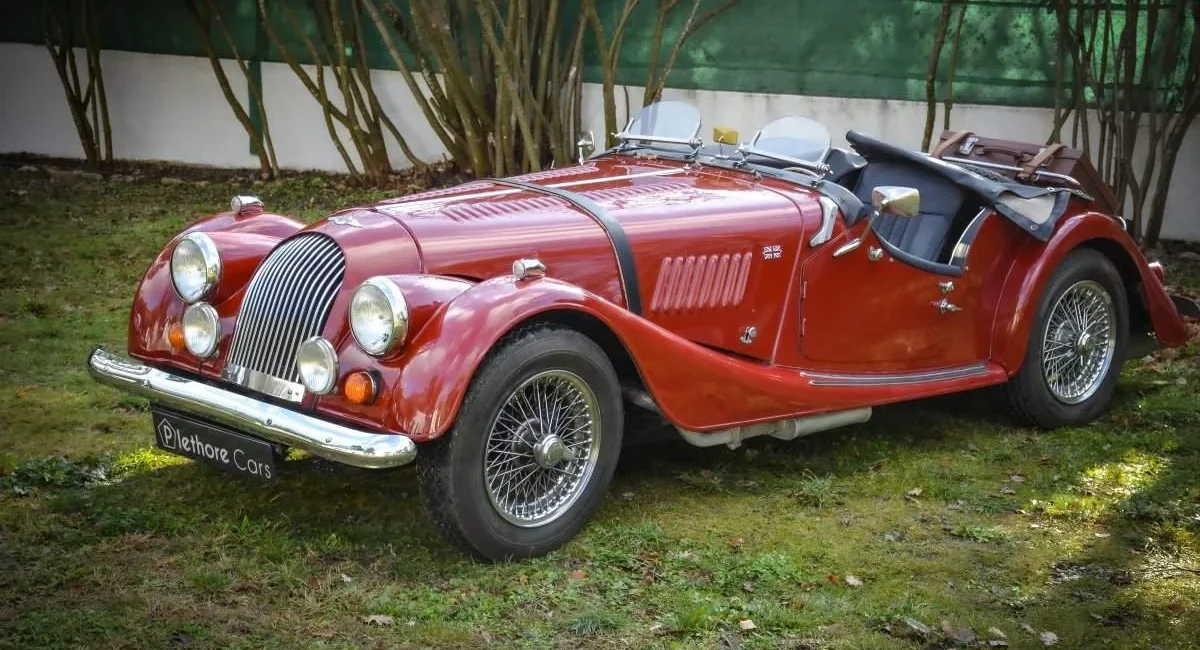
Few marques evoke as much passion as a Morgan car. Built in Malvern for over a century, each example embodies a unique vision: the uninhibited English sports car, crafted for the pure pleasure of open-road driving. From the historic workshops of Morgan Motor Company to the French showrooms of the BPM group and Marcassus, we delve into a brand that stubbornly refuses to be ordinary.
What is a Morgan? The essence of a unique marque
A Morgan is not like any other car. It is a British handcrafted sports car, built to order by a small independent manufacturer based in the English Midlands. Each model emerges from a workshop where welders, cabinetmakers, upholsterers and painters work side by side, all gathered on the same site since 1919.
Where competitors rely on mass production, Morgan proudly claims the opposite. No robotic assembly lines, no giant stamping presses. The aluminium is shaped by hand over wooden forms, the upholstery is hand-stitched to measure, and the vehicles are delivered bearing the names of the 200 craftsmen who built them. This detail says it all: when you buy a sports car, you also buy a human story.
The result? Characterful, lightweight models with a proudly loud exhaust note, built around a single philosophy. No compromise with modern comfort, no concession to industrial efficiency. You take the wheel of a Morgan for the gesture, the look, the raw mechanical emotion. Nothing else.
The history of Morgan Motor Company, from 1910 to today
It all began in 1909, when Henry Frederick Stanley Morgan, a passionate engineer, built his first motorised tricycle in the family garage. The machine was so light and swift that it won the Cyclecar Grand Prix of 1913. The following year, Morgan Motor Company was officially founded in Malvern Link.
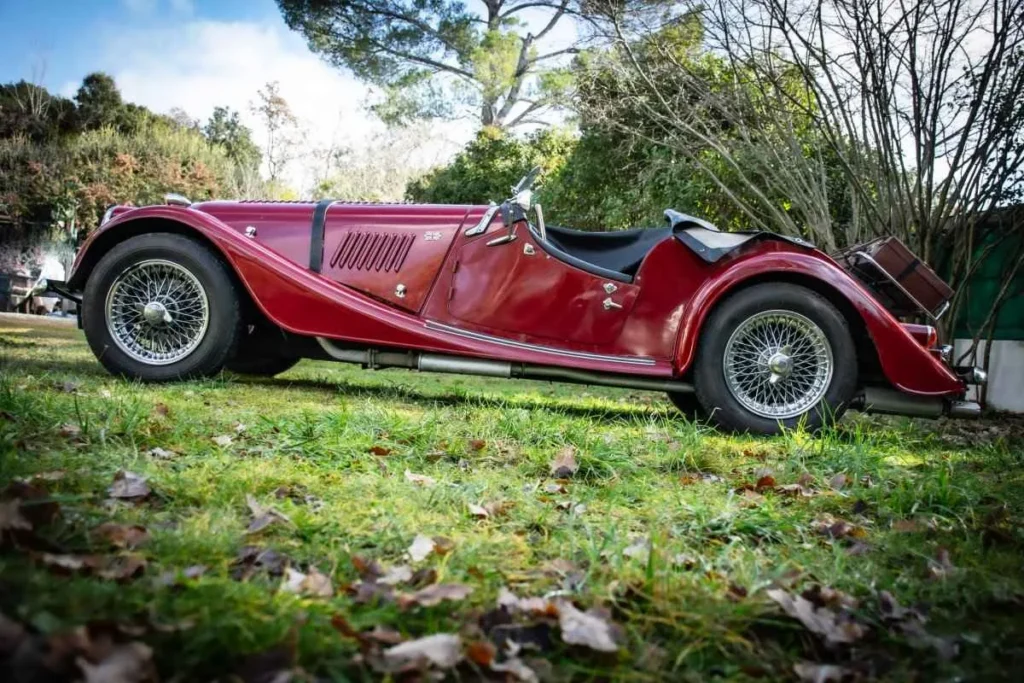
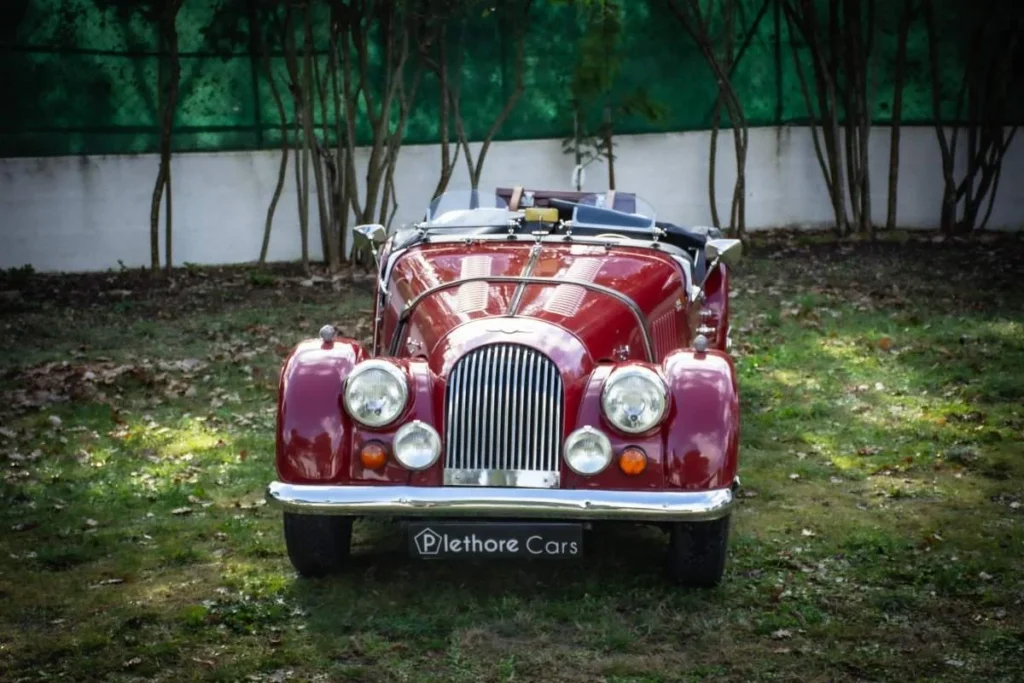
For six decades, the company mainly produced motorised tricycles. These cyclecars, taxed as motorcycles in Britain, appealed to a young clientele seeking speed at a low price. The 4/4 arrived in 1936. It was the first model with two full axles, and it introduced a design that has hardly changed since: separate wings, vertical grille, long bonnet, compact cockpit.
The marque weathered the 20th century’s crises without succumbing to fashions. Peter Morgan, the founder’s son, refused to sell to Rover in the 60s and maintained artisanal production against all odds. This resistance paid off. Whenthe English sports cars of the 70s disappeared one by one, the firm was still there.
In 2000, the Aero 8 marked a technical breakthrough. The first glued aluminium chassis, a BMW V8 engine of 4,4 delivering 325 horsepower, and a thoroughly redesigned body. The company showed it could modernise without betraying its DNA. Subsequent generations, notably the Plus 8, confirmed this ability to evolve.
Acquired in 2020 by the Italian fund Investindustrial, Morgan continued its transformation. The new CX chassis, named CXV in its latest version, served as the basis for the Plus Four launched in 2020, then the Super 3 in 2022, and finally the current flagship unveiled in 2024.
Artisanal production: ash frame, hammered aluminium bodywork
There is a persistent misconception about Morgans: that the chassis is made of wood. This is false. The structural chassis of modern models is glued aluminium, the CX platform. Ash wood is used for something else, and that is precisely what makes the marque unique.
Ash forms the frame of the cockpit and, above all, the mould on which the aluminium panels are hammered into shape. Each body panel is therefore shaped manually, sheet by sheet, on wooden templates carved by cabinetmakers. This technique dates back to the dawn of the motor era and has never been abandoned in the English workshop.
In the workshop, you will still find spinning machines, anvils, and round-peen hammers. Craftsmen spend up to three weeks shaping the wings and bonnet of a single car. The leather used for the upholstery comes from Scotland, chosen because local cattle are less exposed to barbed wire and provide cleaner hides. Nothing is left to chance.
This method is time-consuming. One car requires on average six to eight weeks of production, compared to a few hours for a mass-produced sports car. But it guarantees two things: a visual identity impossible to confuse, and a finish quality that few manufacturers still achieve in 2025.
The Morgan range in 2025: three sports cars for three uses
Three models make up the current range, all built on the same philosophy but catering to different uses. Here is the comparative table summarising the manufacturer’s offering:
| Model | Engine | Power | 0-100 km/h | Weight | Base price (FR) |
|---|---|---|---|---|---|
| Super 3 | Ford 1,5 L naturally aspirated | 118 hp | 7,0 s | 635 kg | ~55 000 € |
| Plus Four | BMW B48 2,0 L turbocharged | 258 hp | 5,2 s | 1 009 kg | ~90 000 € |
| Flagship 2025 | BMW B58 6 inline cylinders | 335 hp | 3,8 s | 1 170 kg | ~125 000 € |
The Super 3 has replaced the legendary three-wheeler since 2022. It has a front-mounted Ford engine, a Mazda gearbox and belt drive to the single rear axle. The machine is lively and surprisingly easy to handle. Morgan positions it as an introduction to the marque, but its ’30s fighter-plane look mainly appeals to collectors who want character without the constraints of a heavy machine.
The mid-range model is the best seller. Its BMW B48 engine produces 258 horsepower, which is more than enough for its 1 009 kg. The optional eight-speed ZF automatic gearbox suits the German engine’s torque better than the manual, according to owner feedback. The Sport pack adds a limited-slip differential and adjustable shock absorbers.
The latest model, launched at the end of 2024, tops the range. It deserves its own chapter.
Morgan 2025: the new flagship
The first model truly developed using digital simulation, the newcomer inaugurates the CXV platform (an evolution of the CX chassis). It features a completely redesigned bodywork, with carefully sculpted volumes behind the supports to control lift and drag. A genuine aerodynamic exercise for a company that had until now relied on styling without wind tunnels.
Under the bonnet, the BMW B58, a three-litre inline six-cylinder, delivers 335 horsepower. Enough to propel the 1 170 kg roadster from 0 to 100 km/h in 3,8 seconds, reaching a top speed of 267 km/h. The power-to-weight ratio climbs to 286 horsepower per tonne, placing it in the supercar territory.
Several long-awaited innovations make their appearance. A genuine integrated boot at the rear, first of all. Removable side windows without tools, via a mechanism hidden in the door handle. An optional carbon hard-top priced at 4 194 £ that transforms the roadster into a coupe for winter. For the most demanding, Aerolite 19 inch wheels (-1,1 kg per piece) and Nitron adjustable dampers at 3 000 £.
In terms of handling, the top-of-the-range model assumes a precise positioning. Linear steering, GT-type composite suspension, full double wishbones. Morgan claims “character” over a Porsche 911, rather than pure performance. It is closer to a sporty saloon with character than a pure blade, and this is fully embraced.
Production remains limited to 180 units per year, at a British price of 102 000 to 105 723 £. In France, expect prices starting from 125 000 € including taxes and common extras. Note: American homologation is refused for legislative reasons; only the Plus Four (since the end of 2024) and the Super 3 are marketed there.
The legendary Morgan models: 3 Wheeler, 4/4, Plus 8, Aero 8
It is impossible to mention the brand without citing the icons that forged its reputation. These historic examples continue to sell for high prices onthe classic British roadster market, and several are now part of the finest European collections.
The 3 Wheeler, first. Born in 1911, this three-wheeler with a V-twin engine (often JAP or Matchless) remained in production until 1952. Morgan revived it in 2011 with an American S&S engine, then in 2022 with the Super 3 powered by Ford. A bestseller that literally saved the company in the 2010s, at a time whensmall British open-top sports carswere experiencing a resurgence of interest among collectors.
The 4/4 is the other historic pillar. Launched in 1936, it remained in production almost continuously until 2018, earning it the longest continuous career in the world. Its engines evolved (Ford, Coventry Climax, Fiat, then Ford again), but its silhouette has hardly changed in 82 years.
The Plus 8 deserves a special place. Introduced in 1968 with the Rover V8 of 3,5 delivering 160 horsepower for a featherweight. Its ultimate version, produced from 2012 to 2018 on the Aero platform, housed a BMW V8 of 367 horsepower. A brutal monster, capable of humiliating much more modern sports cars behind the wheel.
The Aero 8, finally, remains the most controversial in the company’s history, alongside othericonic British convertibles of the 2000s. Unveiled in 2000, it broke with traditional style, with its squinting headlights (model year 2001) and streamlined silhouette. It remains above all the first production model to adopt a bonded aluminium chassis, foreshadowing all current productions. The first examples trade between 60 000 and 90 000 € depending on condition.
How much does a Morgan cost in 2025? New prices and classic values
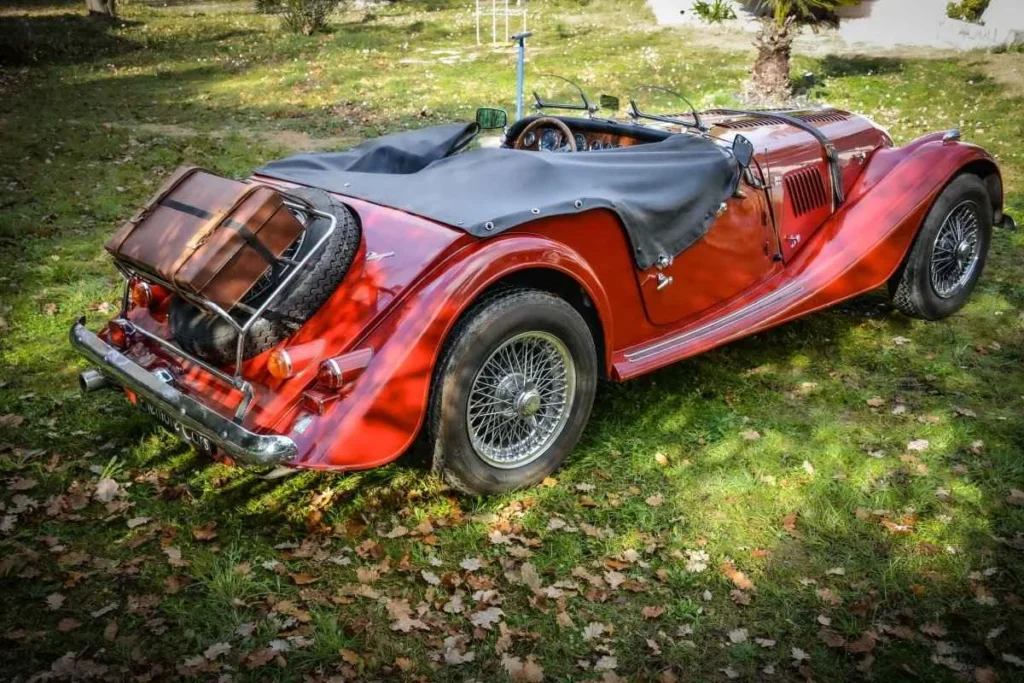
The price of a Morgan varies greatly depending on the model, year and configuration. In 2025, base prices at French dealers are as follows: from 55 000 € for a standard Super 3, around 90 000 € for a Plus Four (96 000 € for a common Sport pack configuration recently observed at Marcassus and BPM Group), and from 125 000 € for the top of the range. These are entry-level prices.
On the classic market, the supply remains limited but well documented, as shown byrecent classic car transactions. A recent Plus Four (2020-2023) trades between 75 000 and 85 000 € depending on mileage. First-generation Aero 8 models fluctuate between 55 000 and 75 000 €. The 4/4 from the 90-2000s, more affordable, start at 28 000 €. The latest generation Plus 8 V8 BMW models easily reach 100 000 € due to their high demand.
Here are some useful ballpark figures to gauge the average prices observed:
- Brand new Super 3: 55 000 to 70 000 € depending on extras
- Brand new Plus Four: 90 000 to 105 000 € depending on configuration
- Brand new flagship: 125 000 to 140 000 € with common extras
- Recent Plus Four (less than 5 years old): 75 000 to 85 000 €
- 4/4 vintage (from the 90s): 28 000 to 40 000 €
- Plus 8 V8 BMW (2012-2018): 85 000 to 110 000 €
- Aero 8 (2001-2009): 55 000 to 75 000 €
To these amounts, maintenance costs must be added. An annual service at an authorised dealer ranges between 800 and 1 500 € depending on the model. Specific tyres, especially for the high-end models, cost around 1 200 € per pair. This is the price to pay for driving differently.
Buying a classic Morgan: what to check
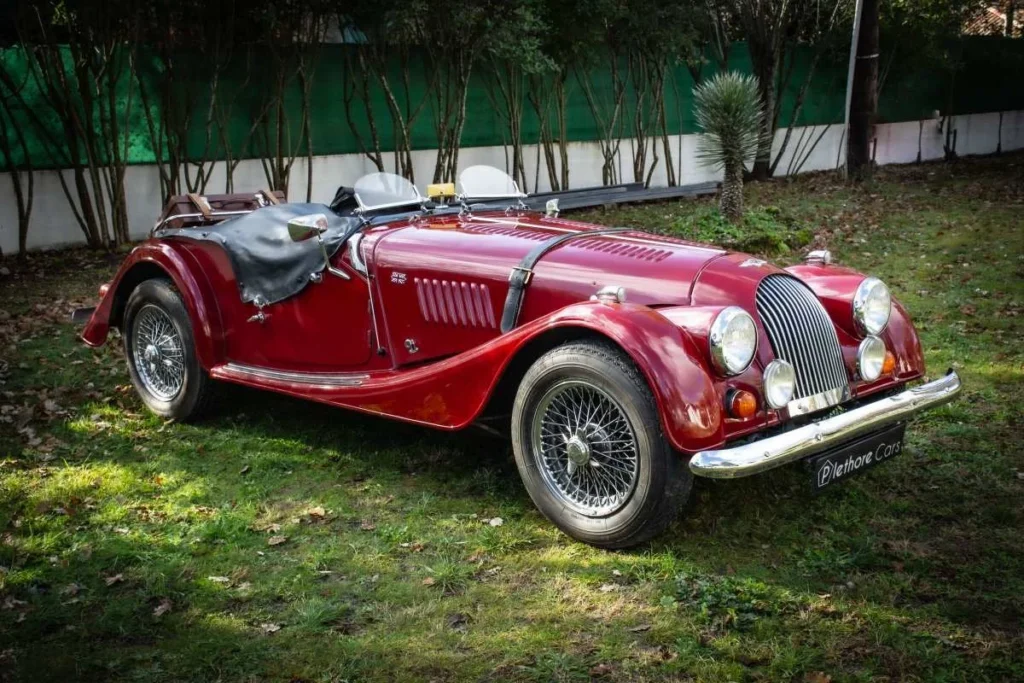
Purchasing through the secondary market requires some specific precautions. Some are common to all classic sports cars. Others are unique to the brand, due to the wood and artisanal construction.
The first thing to inspect: the ash frame of the cabin. On models prior to 2000, prolonged moisture can cause localized warping. A qualified garage will be able to assess the condition of the wood beneath the trim. Healthy ash is clear, uniform, without visible cracks. Rotten ash requires major intervention.
Secondly, the hammered aluminium bodywork. Unlike steel, aluminium does not rust, but it corrodes in the presence of moisture and especially when in contact with steel (galvanic corrosion). Check the joints between panels and screws, the edges of the wings, and the underside of the chassis. Bubbles or whitish stains indicate ongoing corrosion.
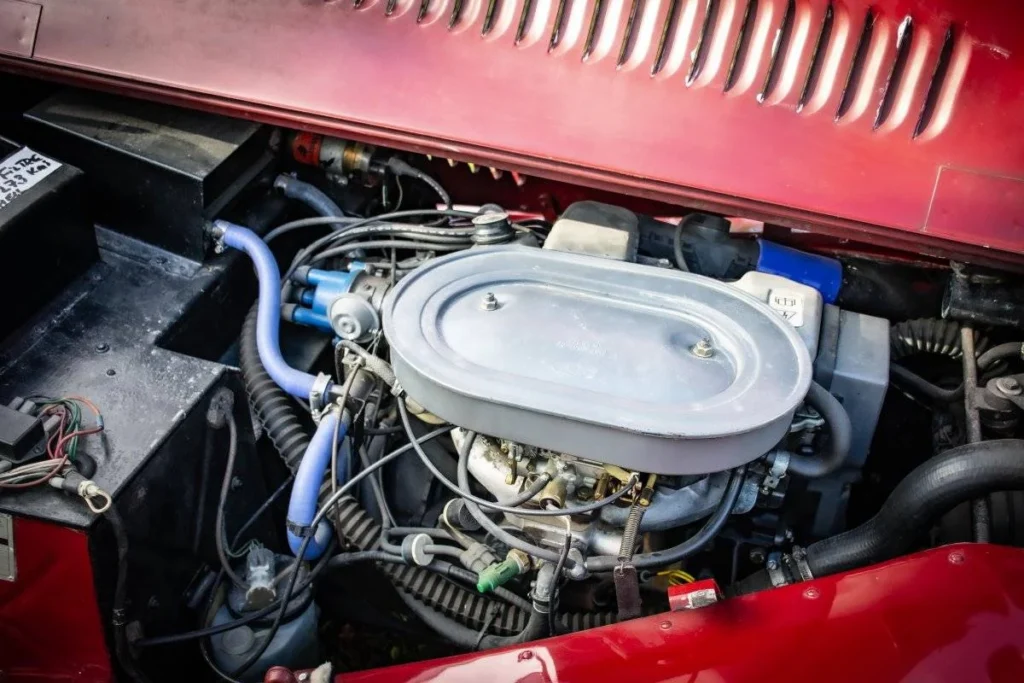
Thirdly, check the mechanics. The BMW engine with cylinders (B48 or B58) from the latest generations remains very reliable with regular maintenance. However, the Rover V8 engines of the historic Plus 8 models require more attention: water pump, timing, head gaskets. The older Ford engines from the 4/4s are robust but may suffer from electrical wear on neglected models.
Finally, verify the traceability. The manufacturer provides, with each delivery, a nominative list of the craftsmen who assembled the vehicle and a certificate of origin. A vehicle without this documentation is suspicious. Prefer purchases supported by the official network, notably BPM Group or Marcassus Sport in France, for peace of mind and resale value.
Where to see and buy a Morgan in France: BPM Group, Marcassus and the official network
In France, Morgan is distributed by two main players, integrated into the manufacturer’s official network. BPM Group, based in Paris and the Paris region, represents the brand in the north of the country. Marcassus, located in the southwest, covers the rest of the territory. Both distributors share the same standards for after-sales service, maintenance, and customisation.
BPM Group regularly holds open days and scheduled test drives in its showrooms. Marcassus, for its part, organises customer events around the Nogaro circuit in Gers, allowing owners and prospects to test our cars in their natural environment: an open, winding road. Our Plethore team was able to try several of these cars during these sessions.
Both distributors also manage order configurations. Each vehicle is customisable on dozens of points: exterior paint (colour charts exceed 40 000 possible combinations), upholstery (choice of Scottish leather, stitching), interior wood, wheels, performance pack. The average lead time between order and delivery is around five months for the Plus Four, seven for the high-end models.
To complete the overview of exceptional car manufacturers, motor shows remain the best way to see a Morgan in person without any commitment. The Rétromobile in Paris in February and the Lyon Motor Show regularly feature the brand or its dealers. Certain British gatherings, such as the Goodwood Revival across the Channel, also remain essential events for enthusiasts.
FAQ: Frequently Asked Questions about Morgans
How much does a new Morgan car cost?
A new Morgan costs between 55 000 € for a basic Super 3 and 140 000 € for a well-equipped top-of-the-range model. The Plus Four, the best-selling model, starts at around 90 000 € and quickly rises to 105 000 € with the Sport pack and some customisation extras.
What is the price of the flagship Morgan 2025?
The flagship 2025 is sold from 102 000 £ in the United Kingdom, which is approximately 125 000 € in France including taxes. Common extras (carbon hard-top, Aerolite wheels, adjustable Nitron shock absorbers) can add between 10 000 and 20 000 € to the base price.
What is a Morgan car?
A Morgan is a handcrafted British sports car, manually built at the Malvern factory in the English Midlands. Each example is assembled by a team of around 200 craftsmen, with an aluminium body hammered over an ash wood frame for the cabin.
Who manufactures Morgan?
The manufacturer is Morgan Motor Company, founded in 1910 by H. F. S. Morgan in Malvern, England. The company remained family-owned until 2020, when it was taken over by the Italian investment fund Investindustrial. Production remains entirely British.
Is a Morgan suitable for daily use?
No, it is not intended for daily use. The real constraints are an almost non-existent boot, a tight two-seat cabin, high ambient noise, and firm seats. It is an object of pleasure, designed for road trips and scenic routes, not for commuting.
In summary: why a Morgan remains unique in 2025
You don’t buy a Morgan for reason. You choose it because it offers what almost no other manufacturer dares: a true personality. Produced in Malvern, designed for pure pleasure, heir to a century of British history. From the playful Super 3 to the sharp flagship, through the versatile Plus Four, the current range honours the brand’s promise.
For those who want to drive differently, without looking like their neighbour, the English sports car remains the best choice on the market. Provided you accept the compromises: tiny boot, noise, chassis rigour. That is the price of character. And at Plethore, it is a price we gladly pay.
Finding a Morgan through Plethore
Plethore regularly lists used Morgans in its classic car catalogue — carefully selected examples, accompanied by their complete history. The entry point for discerning enthusiasts seeking the rare example rather than just any second-hand car.