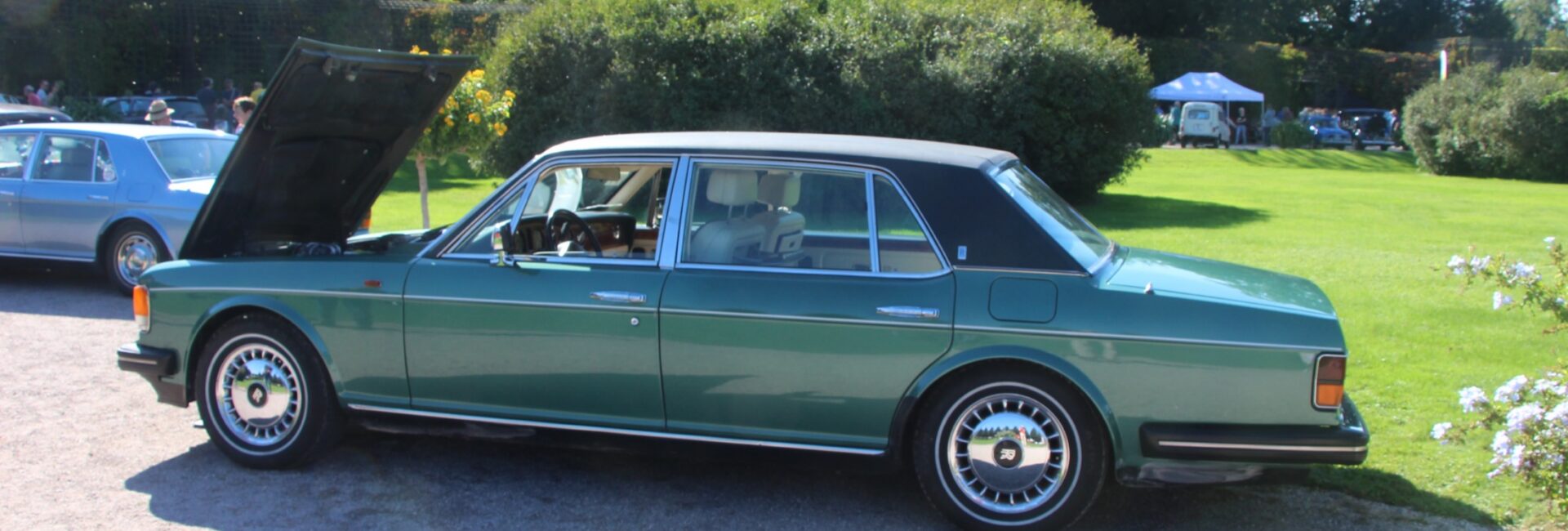
The Rolls-Royce Silver Spirit may seem surprisingly affordable to purchase, but the right example is never simply the cheapest.Before signing, priority should be given to a car regularly maintained by a specialist, with hydraulics, braking, cooling and air conditioning that actually work. The Silver Spur shares the same base with a wheelbase extended by approximately 10 cm: it offers more rear space and generally commands a higher price.
Produced at Crewe from 1980, the Silver Spirit and Silver Spur belong to the technical family often called “SZ.” They retain the Rolls-Royce V8 of 6,75 litres and a monocoque construction, while modernising the style of the Silver Shadow. Their entry price should not mask the level of complexity of a large Rolls-Royce: a significant refurbishment can exceed the value of a neglected car.
Silver Spirit or Silver Spur: what is the difference?
The Silver Spirit is the standard wheelbase saloon. The Silver Spur is its long-wheelbase variant, designed to offer more space for rear passengers. The archives of the SZ register of the Rolls-Royce Enthusiasts’ Club and a BMW Classic publication indicate an extension of about 10 cm. Mechanically, the two models remain very close within the same generation.
| Model | Main characteristic | Usage profile |
|---|---|---|
| Silver Spirit | Standard wheelbase | Personal driving, easier parking, often lower entry price |
| Silver Spur | Wheelbase extended by approximately 10 cm | Priority to rear comfort, chauffeur-driven or ceremonial use |
For an enthusiast who drives themselves, the Silver Spirit is often the most rational choice. The Silver Spur adds genuine rear passenger comfort, but its extra length and positioning explain a generally higher value. However, one should not choose solely based on the body style: condition and history have a greater effect on the total cost.
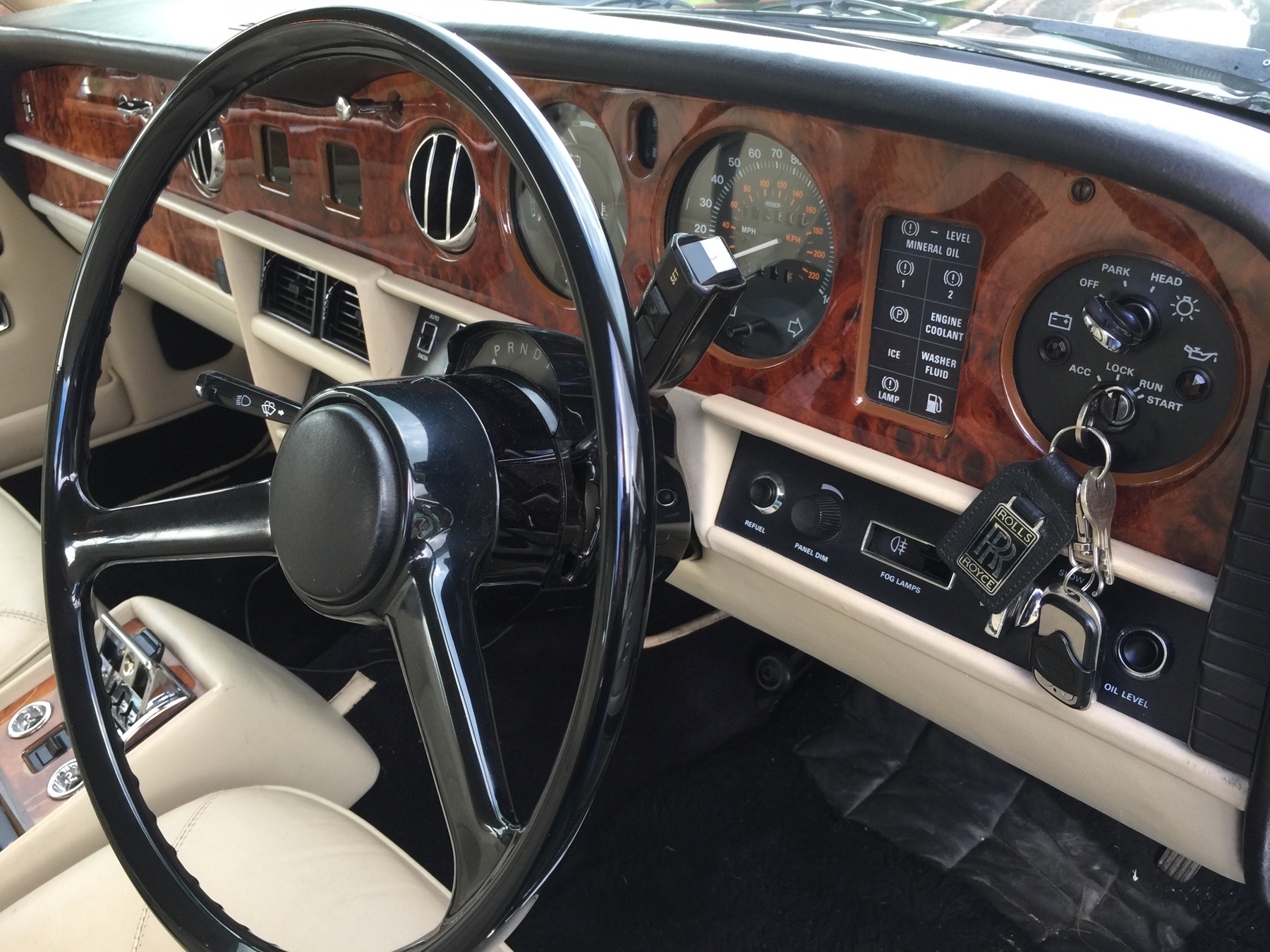
A long career in four major series
The family evolved continuously between 1980 and the late 1990s. Hagerty distinguishes four major iterations: the first series from 1980 to 1989, the second from 1989 to 1993, the third in 1993-1994, and the fourth from 1995. Exact dates may vary depending on the market, production date and registration; the chassis number should therefore take precedence over a simple stated year.
- Spirit/Spur I: the most characteristically 1980s presentation, with many evolutions during production;
- Spirit/Spur II: modernisation of chassis, suspension and presentation from the late 1980s;
- Spirit/Spur III:later evolution, with updated engine management and equipment;
- Spirit/Spur IV:latest versions, rarer and generally more highly valued.
This simplified timeline does not replace the chassis data sheet. Rolls-Royce made numerous intermediate modifications. To order a part or assess a car, it is necessary to note the VIN, market specification, and the references of the relevant components.
Engine, gearbox and hydraulics: what you need to understand
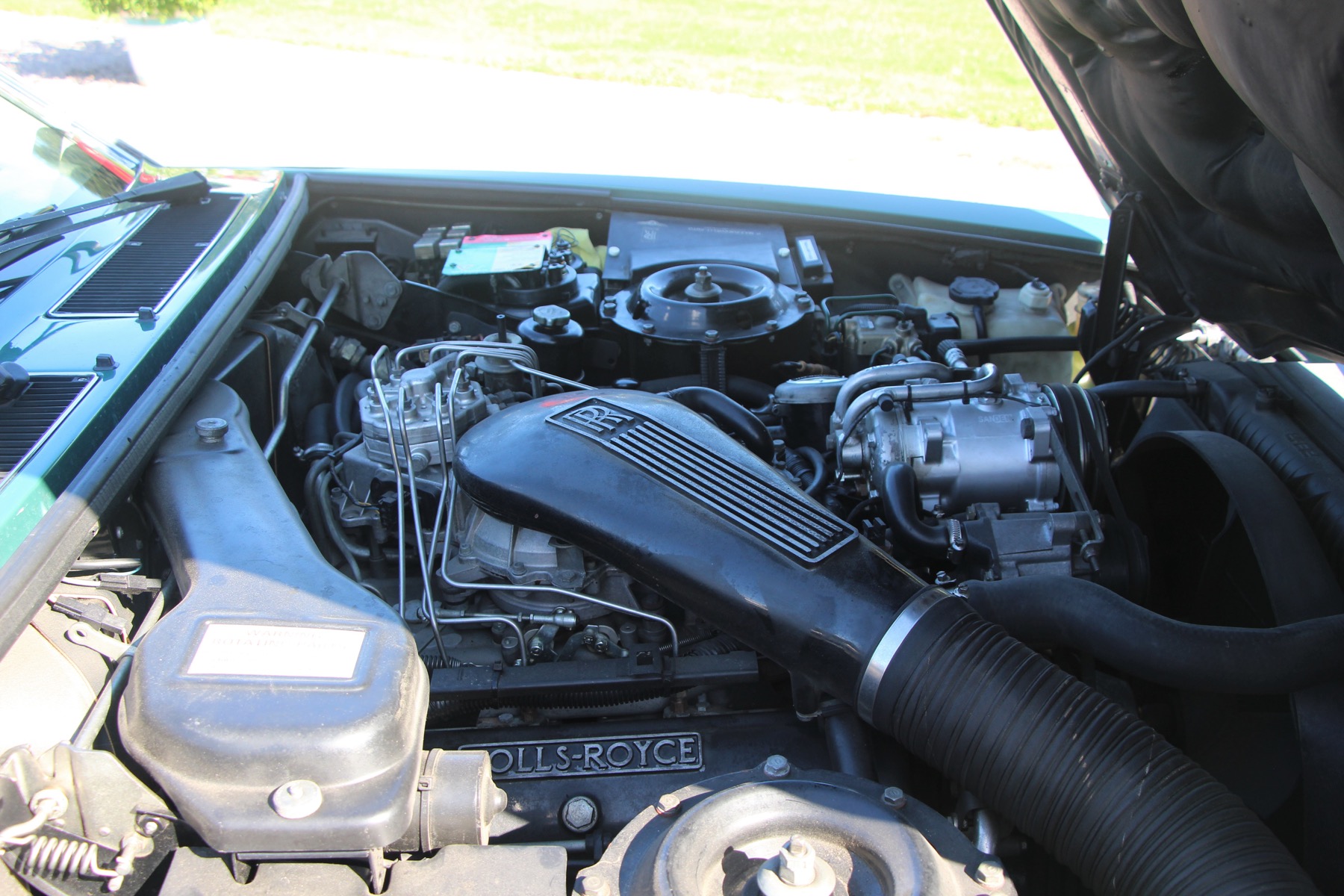
The core of the range is the Rolls-Royce L410 V8 engine of 6,75 litres. Hagerty indicates that the earliest European cars use two SU carburettors, while Bosch injection, already present on some export markets, later becomes the standard. The three-speed automatic gearbox of the early series gives way to a four-speed transmission in the early 1990s.
The most important point for a buyer remains the high-pressure hydraulic system, which is involved notably in braking and rear suspension correction. The Bentley heritage technical library still publishes the manuals and workshop bulletins for this family. This is an advantage for documentation, but also a reminder: diagnosis and bleeding must follow the appropriate procedure. A leak, a pressure warning light, a car that sags or abnormal braking are not minor faults to be deferred after purchase.
Price of a Silver Spirit or Silver Spur in 2026
The market must be read with caution. The prices shown in advertisements are not the prices actually achieved, and a well-maintained left-hand drive car can be distinguished from a British car requiring work. To provide a consistent benchmark, British Classic Cars has studied 570 public auction results up to 10 August 2026. It obtains an overall median of 10 875 £, with a central half of sales ranging approximately between 6 884 and 17 136 £.
| Version | Observed median | Observed central range |
|---|---|---|
| Silver Spirit I | 6 912 £ | 4 827 to 10 920 £ |
| Silver Spirit II | 9 038 £ | 6 381 to 11 109 £ |
| Silver Spirit III | 11 868 £ | 10 729 to 15 000 £ |
| Silver Spur I | 11 344 £ | 7 527 to 17 738 £ |
| Silver Spur II | 14 394 £ | 9 656 to 18 917 £ |
| Silver Spur III | 17 146 £ | 13 433 to 19 672 £ |
| Silver Spur IV | 24 521 £ | 16 375 to 33 324 £ |
These amounts in pounds sterling are historical auction results, not an official valuation in euros nor a promise of value. Provenance, left- or right-hand drive, series, corrosion, colour, documented mileage and recent work can significantly affect the price. A low-priced car without invoices may be more costly than an example sold above the median.
If you are looking to buy, the selection of classic and prestige cars for sale allows you to compare available vehicles and their level of presentation. For an owner, a Rolls-Royce valuation must take into account the series, history and work rather than a generic average.
Reliability: points to check before purchase
1. Maintenance records and storage
Start with the invoices. A stamped service book without detail is not enough to confirm the condition of the hydraulics, cooling or air conditioning. Look for a consistent timeline, part references and workshop names. Low mileage is not automatically favourable: long storage can age seals, hoses, tyres and fluids.
2. Braking and hydraulic suspension
On start-up, the pressure warning lights should behave according to the manual. The pedal, braking and ride height must remain consistent. Inspect for leaks under the car and around hydraulic components. The fluid used depends on the generation: never mix specifications based on general advice found online. Have the car checked by a specialist who knows the SZ models precisely.
3. Cooling and V8 engine
The V8 should start without worrying noises, maintain its temperature and run without abnormal smoke. Check the condition of the radiator, hoses, fluid, fans and evidence of maintenance. Past overheating or neglected fluid warrants a thorough inspection. Also check for oil leaks and the quality of cold and hot starts.
4. Automatic gearbox and transmission
Gear changes should be smooth, without excessive delay on engagement or slipping under acceleration. Test the car long enough to reach normal operating temperature. Vibrations, clunks and differential noises should be identified before sale, not too quickly attributed to the character of an old car.
5. Corrosion and bodywork
Examine sills, wheel arches, floors, jacking points, windscreen and rear window surrounds, undersides of doors and previously repaired areas. A glossy paint finish can conceal an old repair. The alignment of openings, paint thickness and quality of welds help distinguish cosmetic maintenance from structural repair.
6. Air conditioning, electrics and interior
Test every feature: air conditioning, heating, seats, windows, locking, lighting, instruments and antenna. An isolated fault may seem minor, but diagnosing and restoring a complex system takes time. Inspect cracked woodwork, dried leather, damp carpets and the headliner.
How much should you budget after purchase?
There is no universal budget. The best approach is to obtain a written estimate after inspection, then keep a reserve separate from the purchase price. The most costly items are not necessarily the engine: hydraulics, brakes, air conditioning, bodywork and interior refurbishment can quickly add up.
A cheap car is only interesting if its faults are identified and quantified. Conversely, a documented example with recent work is not automatically perfect: the invoices must correspond to the observed symptoms and the chassis number.
Which version to choose?
- For regular driving: a sound Silver Spirit, more compact and often cheaper to buy.
- For rear comfort: a Silver Spur, provided its past use and maintenance are checked.
- For a more modern presentation: a well-documented Series II or III.
- For rarity: a Series IV, without assuming it will be cheaper to maintain.
Comparison with the previous generation helps clarify the choice: our guide to the Rolls-Royce Silver Shadow explains the differences in era and market. For a more exclusive bodywork, also consult the guide to the Rolls-Royce Corniche.
Checklist before signing
- Precisely identify the series, original market and VIN.
- Demand invoices and verify their consistency with the car.
- Conduct a cold test drive then one at normal temperature.
- Check hydraulics, brakes and ride height.
- Inspect for corrosion, repair marks and leaks.
- Test all air conditioning and every electrical component.
- Have an inspection carried out by a Rolls-Royce/Bentley specialist from Crewe.
- Estimate the cost of work before negotiating the price.
To prepare for a future sale, the guide selling a classic Rolls-Royce details the documents and elements that influence the presentation of the vehicle.
FAQ on the Silver Spirit and Silver Spur
What is the difference between the Silver Spirit and Silver Spur?
The Silver Spur is the long-wheelbase version of the Silver Spirit, extended by approximately 10 cm. It offers more rear space and generally sells for a higher price.
Is a Rolls-Royce Silver Spirit reliable?
A well-maintained example can be reliable, but a neglected car becomes costly. The hydraulics, cooling system, air conditioning, corrosion, and service history are crucial factors.
What engine does a Silver Spirit have?
The range uses the Rolls-Royce V8 engine of 6,75 litres. The fuel supply and management systems vary depending on the series and market.
Why are some Silver Spirits so inexpensive?
There remains a significant supply, and refurbishment costs can be high. The market heavily discounts cars without history or with deferred maintenance.
Should I choose left-hand drive?
For use in France, it can be more practical and sought after. However, right-hand drive is not a drawback if the price, condition, and intended use are appropriate.
Which series should I buy?
There is no absolute best series. A very well-maintained Series I Spirit is often better than a neglected later series. Choose based on condition, invoices, and intended use.
Sources consulted
- Rolls-Royce Motor Cars, history of the Silver Spirit replacement: career duration and industrial context.
- Bentley Heritage Technical Library 1980-1998: workshop manuals and bulletins for SZ models built at Crewe.
- Hagerty Vehicle Valuation Report, Silver Spirit/Silver Spur: generations, mechanics and purchase precautions.
- Rolls-Royce Enthusiasts’ Club SZ RegisterHistory, specifications and developments of the 1980 years.
- British Classic Cars, Silver Spirit/Silver Spur sales resultsMedian prices and ranges based on 570 public sales, data verified on 14 November 2026.
Market information and data verified on 14 November 2026. Observed prices should be reviewed in six months; specifications should always be confirmed with the vehicle’s chassis number.