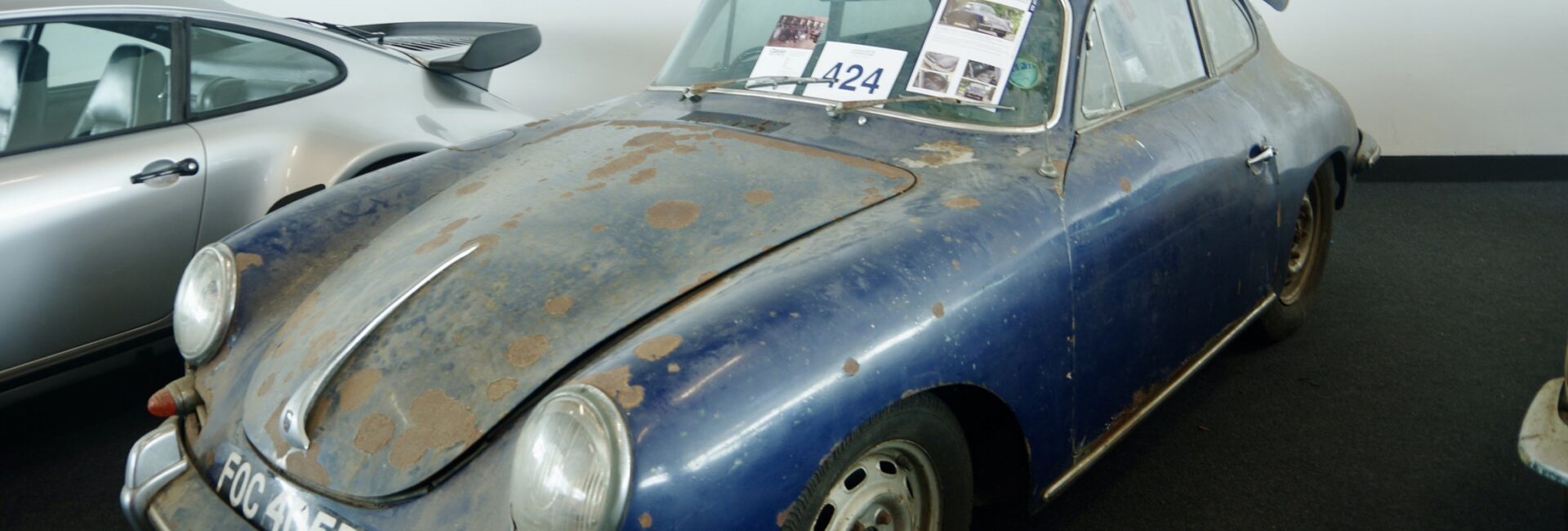
A classic car “barn find” should neither be purchased solely on the promise of a future registration document, nor restarted immediately with a new battery. Before any payment, it is essential to verify the vehicle’s identity, the seller’s ownership, the chain of documents, and the feasibility of registration. Only then should transport, the condition of the structure, braking, the engine, and the restoration budget be considered.
The expression is evocative, but it holds no particular administrative value. A dusty car may be complete and sound, or it may suffer from structural corrosion, a seized engine, unobtainable parts, and an ownership file impossible to regularise. Therefore, the good deal is decided before the first turn of the starter.
What exactly is meant by a barn find?
In collectors’ parlance, a barn find is a vehicle that has been stationary for a long period in a garage, outbuilding, hangar, or simply sheltered. It may be a car stopped after a breakdown, an abandoned restoration, a forgotten inheritance, or a deliberately preserved example.
This term does not describe mechanical condition, authenticity, or legal status. A car presented “as found” may have been repainted, modified, or deprived of its original engine. Conversely, a very tired bodywork may still retain a valuable configuration, accessories, and historical documentation.
The first rule is therefore to separate four subjects:identity, ownership, technical conditionandvalueA compelling discovery on only one of these criteria does not erase the risks on the other three.
Documents to check before buying
Start by asking the seller not to dismantle, clean, or restart anything. Photograph the car as found, its location, its chassis number, its manufacturer’s plate, its engine, any registration, and all documents present.
The minimal file must allow answers to the following questions:
- who is actually selling the car and on what basis;
- is the registration certificate present and in the seller’s name;
- does the chassis number correspond to the documents;
- is there a prior transfer certificate, an invoice, a succession deed, or proof of origin;
- is the car listed in the Vehicle Registration System (SIV);
- is there a lien, opposition, or administrative procedure;
- have all heirs, co-owners, or undivided owners given their consent.
Service-Public reminds that the registration certificate must be in the name of the person transferring the vehicle and that all co-owners must sign. The seller must also be able to provide an administrative status certificate less than fifteen days old. When available, the official HistoVec report complements the file with information from the SIV, but it does not prove mechanical condition nor the completeness of the vehicle’s history.
Beware of interrupted chains of ownership
A registration document in the name of a deceased person, a former owner, or an unregistered intermediary seller cannot be regularised by a simple sworn statement. The procedures depend on the situation: inheritance, successive unregistered transfers, loss of the title, imported vehicle, or absence of known registration.
Do not pay a deposit based solely on the claim “the FFVE will redo the papers.” Request copies of the documents, precisely identify the obstacle, and if necessary, obtain the written opinion of an authorised professional or the competent organisation before the sale. Our guide dedicated to the sale of a classic car without registration document details the main cases of blockage.
Does the FFVE certificate replace a lost registration document?
No. The FFVE certificate is a dating and characteristics certificate. It allows you to submit an application for a registration certificate with the mention “vintage vehicle,” but it is neither a proof of ownership, nor an authorisation to drive, nor an automatic guarantee of acceptance by France Titres.
To be eligible, the vehicle must notably be at least thirty years old, belong to a type no longer produced, and be historically preserved without essential modification of its main components. The FFVE also specifies that the car must be roadworthy and compliant with the Highway Code at the time of the final application. In other words, an incomplete wreck just extracted from a building is not necessarily ready to receive its certificate.
This distinction changes the order of the project: first validate the provenance and eligibility, keep the evidence, restore without altering important characteristics, then assemble the file when the vehicle meets the conditions. Modifying the engine, structure, or bodywork before identifying the original configuration can complicate registration and reduce historical value.
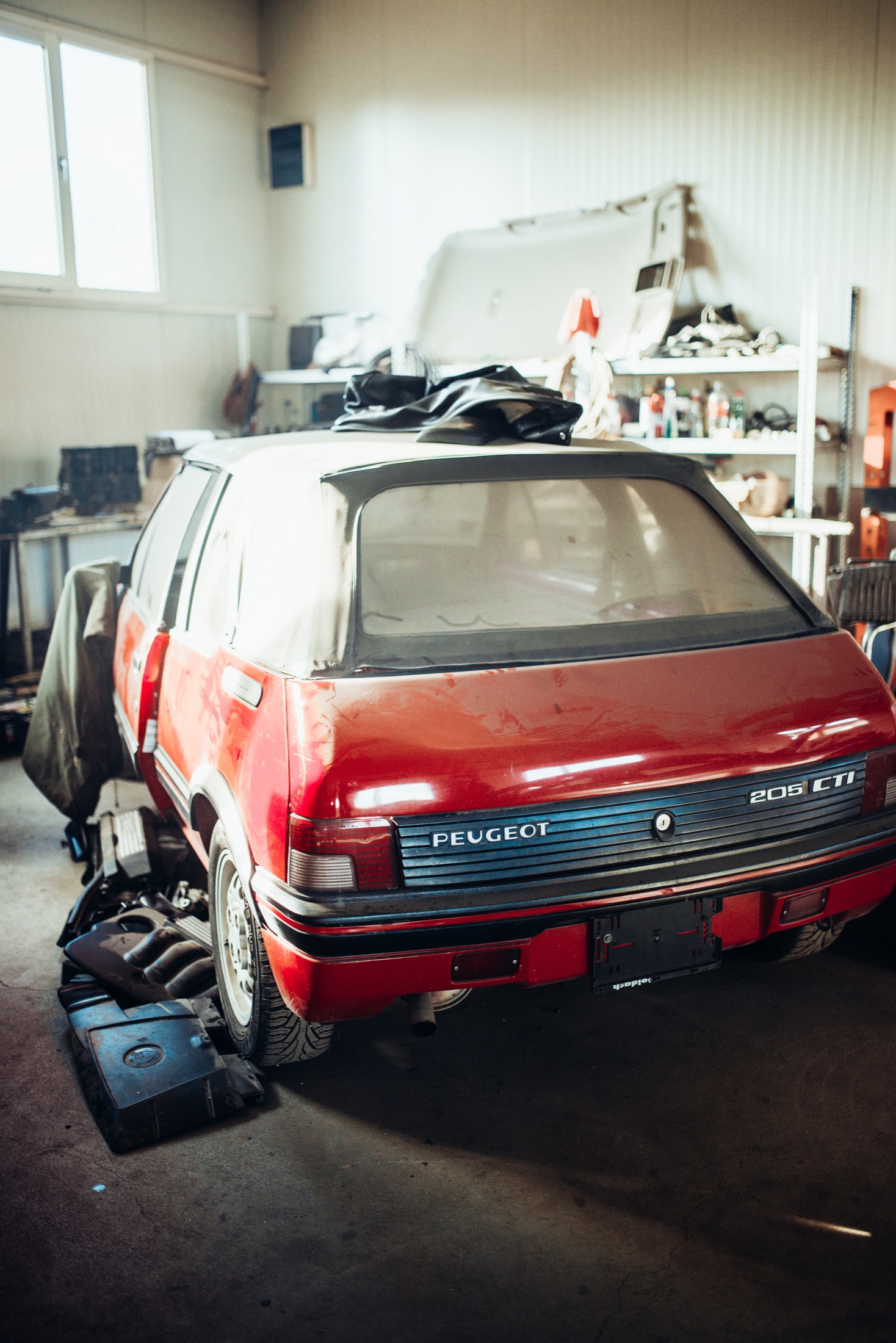
A prolonged immobilisation requires documenting the condition before cleaning and dismantling. Photo: Shixart1985, Wikimedia Commons, CC BY 2.0.
Can you pass the MOT without a registration document?
In certain situations, yes. Service-Public provides a specific procedure when the registration certificate cannot be presented. The centre may request an official document allowing vehicle identification, for example the vehicle identification sheet, a foreign registration certificate, a duplicate of the certificate of conformity, or a dating and characteristics certificate depending on the file.
Therefore, do not arrive at the centre with only an old plate and a handwritten declaration. Contact the authorised centre before the appointment, describe the exact situation, and confirm the document they will accept. The chassis number must be legible and consistent with the document presented.
The MOT does not repair the chain of ownership. It checks the vehicle according to its reference framework, while France Titres processes the registration. These are two distinct steps.
Do not attempt to restart it on site
After several years of inactivity, insisting on the starter can turn a reasonable restart into an engine overhaul. The oil may have degraded, the cylinders oxidised, the fuel formed deposits, and the hoses cracked. Rodents may also have damaged the wiring, intake, or interior.
The car must leave its storage location on a suitable trailer. Do not rely on its tyres, brakes, or steering to cover a few kilometres. Before loading, however, check that the wheels turn, that the structure supports the anchorage points, and that the moving parts are secured.
The prudent order of a restart
- Inspect without aggressive cleaning: corrosion, floors, sills, suspension anchorages, signs of impact, and missing parts.
- Identify the engine and check that it turns freelyby hand, without forcing.
- Drain and inspect the fluids: oil, coolant, fuel, gearbox, axle and braking fluid depending on the design.
- Clean the fuel system: tank, lines, pump and carburettor or injection system.
- Check the electrical system before connecting a battery: earth, cables, starter, alternator or dynamo, fuses and damaged wiring loom.
- Restore lubrication before the first start-up according to the procedure suited to the engine.
- Completely overhaul the braking system: master cylinder, wheel cylinders or calipers, hoses, pipes and fluid.
- Replace dangerous tyres, even if their tread still appears deep.
- Carry out initial tests on private land, then check for leaks, temperature, oil pressure and braking before any road use.
The procedure varies greatly between a side-valve engine from the 1930 era, a sports car with a dry sump and an injection system from the 1980 era. The Plethore Cars guide on the recommissioning of a long-stored classic car details the mechanical checks and mistakes to avoid.
How to assess corrosion and missing parts?
Dust can be cleaned; a structurally corroded shell can swallow the budget. Inspect the car on a lift or with a specialist who knows the model precisely. Critical areas are often found under the carpets, around the sills, lifting points, suspension mounting points, bulkhead, boot and window frames.
Do not rely solely on a magnet on the bodywork. It sometimes detects filler, but not the remaining thickness of a hollow panel nor the quality of a previous repair. Photograph welds, perforations and deformations. Our feature on rust detection before purchase provides a more comprehensive inspection method.
Then make an inventory of specific elements: grille, trim strips, lights, glass, seats, instruments, hubcaps, tools, engine parts and documentation. A small bodywork part unique to a rare version can cost more and take longer to source than a routine mechanical overhaul.
Should the patina be preserved or should it be fully restored?
The answer depends on the condition, rarity and intended use. A consistent old paintwork, a recoverable original interior and documented signs of use can form part of the history. Conversely, active corrosion, contaminated upholstery or faulty safety components must be addressed.
A reasonable approach is to distinguish between:
| Level of intervention | When to consider it | Main limitation |
|---|---|---|
| Conservation and securing | Complete, sound car with historically coherent condition | Accept cosmetic defects |
| Mechanical recommissioning | Sound structure, usable presentation | Dismantling may reveal additional work |
| Partial restoration | Localised corrosion or mechanical issues, complete base | Risk of difference between old and refurbished areas |
| Complete restoration | Severely affected structure or major heritage project | Cost, duration and possible loss of original material |
Before stripping or replacing, document thoroughly. Photographs before, during and after work, invoices, part references and preserved elements will help understand what remains original. The FFVE also distinguishes the specialised restorer, capable of respecting historical techniques, from the repairer responsible for more routine operations.
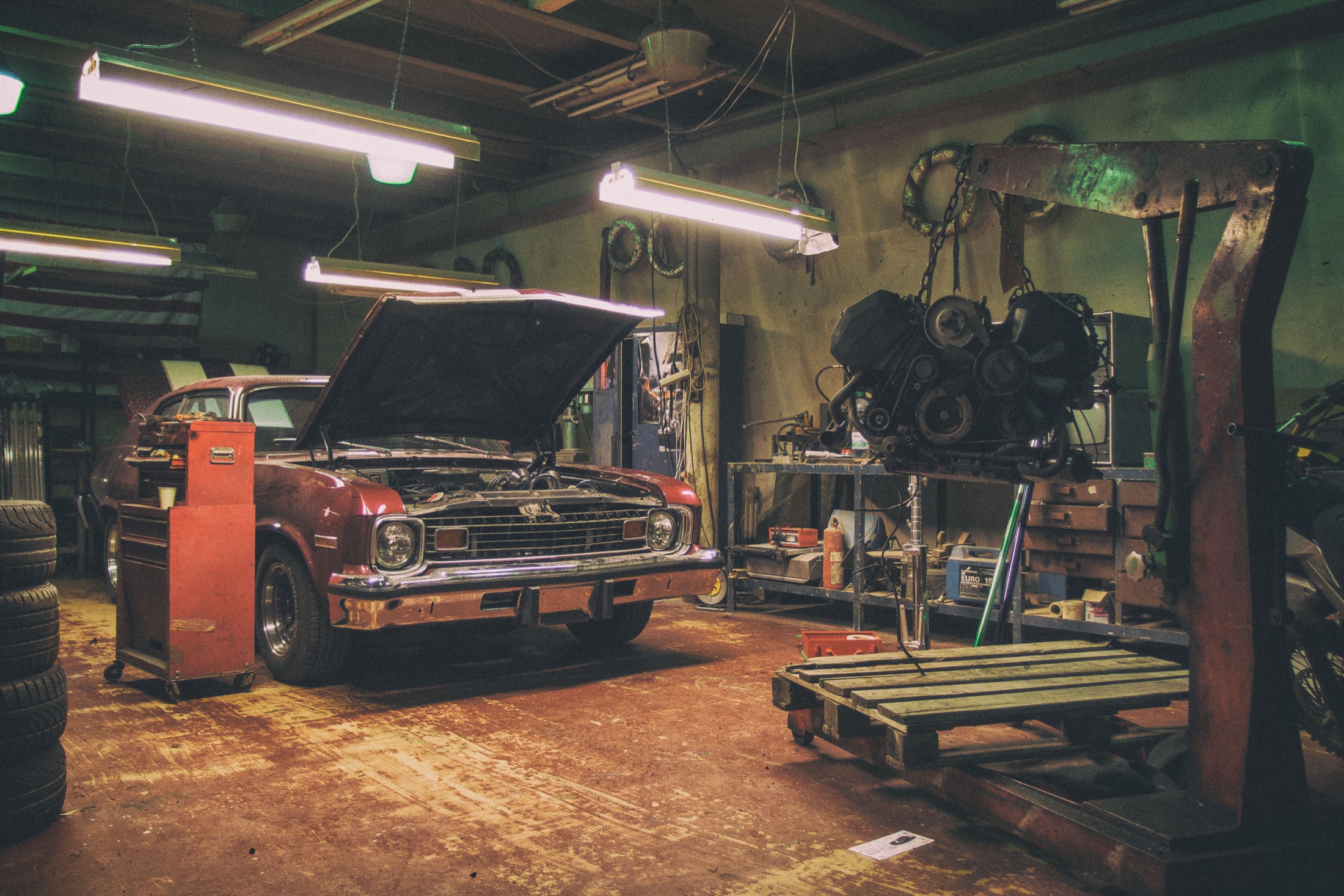
A serious restoration begins with a diagnosis, an inventory and a budget, not with the paint. Photo: Martin Vorel, Wikimedia Commons,CC BY-SA 4.0.
How much does a barn find cost?
The purchase price is only the first line. You must add transport, storage, diagnosis, administrative procedures, brakes, tyres, fuel system, cooling, electrics, bodywork, upholstery and missing parts. A complete restoration can exceed the final value of a common model, even when the car was bought very cheaply.
Request three separate estimates:making the car drivable and safe, achieving a proper presentation, thenreaching a high level of restoration. Add a margin for discoveries after dismantling. The more incomplete or corroded the vehicle, the less realistic a fixed quote is before opening it up.
Then compare the total expected cost to actual completed sales for the same version and comparable condition. Do not take the most expensive listing as a reference. Rarity does not automatically justify an economically incoherent restoration.
How to estimate the value before restoration?
The value of a barn find primarily depends on its identity and completeness. A rare chassis, a matching engine, a special bodywork, an original colour and a continuous history can justify a premium. Conversely, lack of title, perforated structure, inconsistent numbers or missing specific parts cause a significant depreciation.
To establish a defensible price:
- precisely identify model, version, year and numbers;
- determine what is original, replaced or missing;
- estimate urgent work and desired restoration;
- compare results of close sales, not just listed prices;
- assign a separate value to provenance and archives;
- involve an expert when authenticity or value is significant.
Plethore Cars offers afree appraisal of your classic car. For a barn find, include unedited photos, numbers, documents, parts list and storage conditions: an exterior image alone does not allow a serious evaluation.
Can a barn find car be sold as is?
The answer depends on the buyer and administrative status. Service-Public states that a non-running vehicle cannot be sold to a private individual for restoration; it may be transferred to an authorised automotive professional, who can purchase it without a technical inspection. A car still drivable but subject to technical inspection must comply with the documents and deadlines applicable to the transfer.
In all cases, honestly describe known defects, immobilisation, missing parts, modifications and uncertainties. Keep the advertisement, photographs, transfer certificate, correspondence and proof of payment. Do not promise that a vehicle is “matching numbers” or easily registerable without documentation to prove it.
If restoration is not reasonable,entrust the sale of a classic carallows for studying the appropriate channel according to its condition, its documentation, and its value, without undertaking cosmetic work that will not be recovered.
Checklist before signing
- Photograph the car and all its numbers before cleaning.
- Verify the identity and the seller’s capacity to transfer the vehicle.
- Reconstruct the chain of ownership and the status of the registration document.
- Request the administrative status certificate and HistoVec when available.
- Confirm FFVE eligibility without confusing the certificate with the title of ownership.
- Inspect structure, corrosion, engine, braking, and completeness.
- Establish a budget in stages with a margin for unforeseen expenses.
- Plan for transportation on a flatbed and a dry storage location.
- Write down reservations, delivered parts, and payment conditions in the contract.
- Only restart after an appropriate mechanical check.
FAQ on barn-find cars
Does a car over 30 years old automatically obtain a classic registration document?
No. Age is only one of the criteria. The model must no longer be in production, the vehicle must be historically preserved, and no essential modifications should affect its main components. France Titres remains the decision-maker on registration.
Can the FFVE issue a registration document?
No. The FFVE issues a dating and characteristics certificate. The application for a classic registration certificate is then submitted to France Titres.
Can you start an old car after twenty years of inactivity?
It is not recommended to operate the starter directly. You must first check that the engine turns over, examine the lubrication, fuel, cooling, wiring, and risks of leaks or fire.
Is a barn find worth more than a restored car?
Not automatically. An original, complete, and documented preservation can be sought. But corrosion, missing parts, and lack of paperwork often reduce the value more than patina increases it.
Can you pass a technical inspection without a registration document?
Yes, in certain cases, with an official identification document accepted by regulations. You must confirm beforehand with the centre the document corresponding to the vehicle’s situation.
Should the car be washed before an appraisal?
A careful dusting can facilitate inspection, but first photograph the condition as found. Avoid aggressive cleaning, polishing or stripping that could erase markings, paint clues and historical traces.
Main sources
- Service-Public — Selling or giving away your vehicle
- Service-Public — How to carry out the technical inspection without the registration document?
- HistoVec — official vehicle history service
- FFVE — Obtaining a certificate of dating and characteristics
- FFVE — Precautions before purchasing or restoring a vehicle
- FFVE — Study on the trades involved in restoring vintage vehicles
Information verified on 3 November 2026 for France. Administrative rules and procedures of organisations may change; check official pages before proceeding with purchase or work.