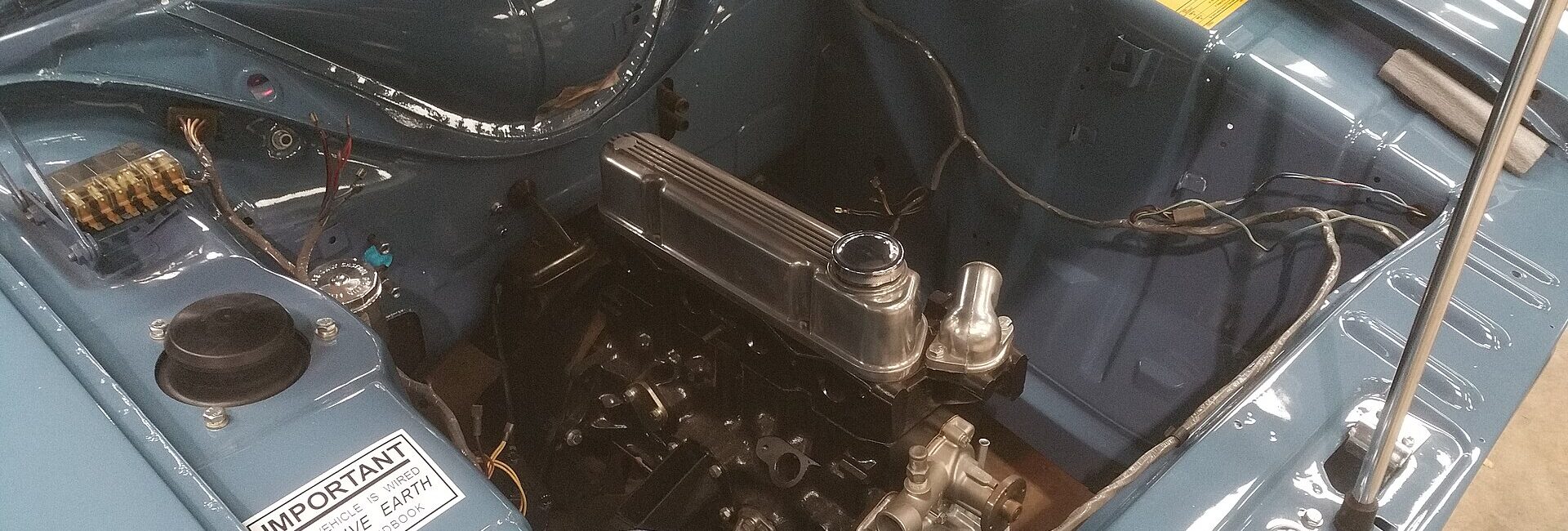
A classic car that has been stationary for several years should not be awakened with just a new battery and a simple turn of the key. Begin by understanding why it was stopped, check the identity and structure, look for leaks and rodent damage, then address the engine, fuel, cooling, brakes and tyres in that order.The first start-up is only one step: an engine running does not mean the car is ready to drive.
This guide offers a cautious method for restarting. It does not replace the technical manual for the model nor the intervention of a specialist when the engine is seized, the braking system is unknown, or the vehicle shows structural corrosion.
First of all: why was the car immobilised?
The length of time it has been stopped does not tell the whole story. A car stored in working order in a dry garage does not pose the same risks as a barn find stopped after overheating or loss of oil pressure. Before touching the starter, investigate:
- the approximate date of last operation;
- the reason for immobilisation;
- any work carried out before or during storage;
- any dismantled parts and any blocked openings;
- old invoices, workshop notes and fluid specifications;
- the existence of a key, registration documents and a matching chassis number.
Question the previous owner without leading their answers. “Why was it stopped?” often provides more information than “Was the engine running?” If no one knows the history, consider every system unchecked.
The checklist before turning the key
| Area | Priority check | Prudent decision |
|---|---|---|
| Environment | Smell of petrol, ventilation, stains on the floor | Do not create any sparks in the presence of fuel |
| Engine | Oil level and appearance, manual rotation | Do not use the starter if the engine resists |
| Fuel | Age, smell, rust in the tank, hoses | Drain and clean if the condition is uncertain |
| Cooling system | Level, corrosion, hoses, belt | Replace cracked components before heating up |
| Electrical system | Battery, polarity, cables, rodent damage | Repair before re-energising the circuit |
| Brakes | Pedal, leaks, hoses, cylinders and calipers | Service before any independent movement |
| Tyres | Date, cracks, flat spots and pressure | Replace tyres that are too old or degraded |
Photograph the initial condition and note every operation. This traceability prevents reassembly errors and contributes to the vehicle’s history.
1. Secure the garage and inspect without power
Work in a well-ventilated space, without flames, cigarettes, combustion heaters or lamps that could produce a spark. Keep a suitable fire extinguisher nearby. Old petrol remains flammable, and a cracked hose can leak as soon as the pump is reactivated.
Before connecting a battery, look for signs of rodents in the air filter, heater, exhaust and around the wiring harness. Do not put your hands into an uninspected area. If droppings are present, avoid dispersing them dry and apply an appropriate cleaning protocol with personal protective equipment.
Then examine underneath the car: corrosion of the chassis rails and mounting points, brake lines, leaks, suspension mounts and condition of lifting points. Never place a vehicle on stands under weakened sheet metal without knowing the points specified by the manufacturer.
2. Check that the engine turns freely without forcing it
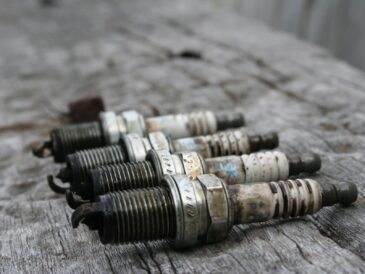
The first mechanical question is not “will it start?”, but “can it turn freely?” Remove the spark plugs if the model’s procedure allows, observe their condition and check the cylinders. An abnormally rusty, oily or wet plug may reveal a problem to investigate before proceeding further.
Using the tool and method prescribed for the engine, turn the crankshaft slowly by hand. Compression resistance decreases when the plugs are removed. A hard spot, metallic noise or seizure requires immediate stop: a longer lever is not a fix.
On some engines left stationary for a long time, a small amount of appropriate lubricant in the cylinders and a resting period can help restore an oil film. But the quantity, product and procedure depend on the architecture. Excessive amounts can cause hydraulic lock. When in doubt, entrust this step to a specialist.
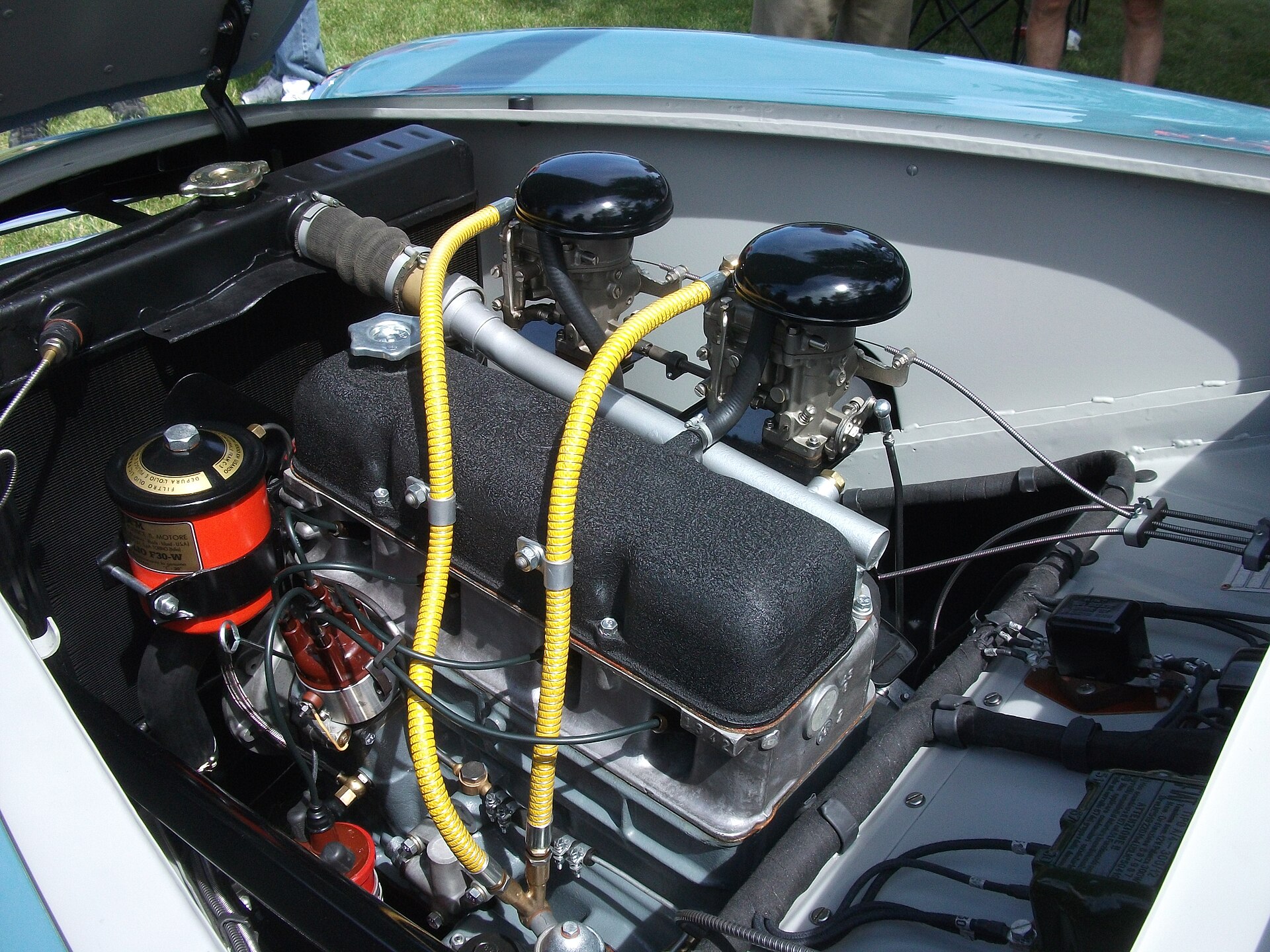
An old engine must be identified before any intervention: lubrication, ignition order and settings vary according to the model. Photo: dave_7, Wikimedia Commons, CC BY 2.0 licence.
3. Replace essential fluids before starting up
After several years, the presence of a fluid level does not prove that the fluid is still suitable. Check the engine oil and its filter, the coolant, brake fluid, gearbox and axle oil, as well as any hydraulic circuits.
An engine oil change with filter is generally a prudent step before a long-term restart. Examine the recovered oil and the cap: water, abundant metal filings or a strong fuel smell justify a diagnosis. Use the viscosity and specification compatible with the engine, clearances and materials of the model, not simply the modern oil available off the shelf.
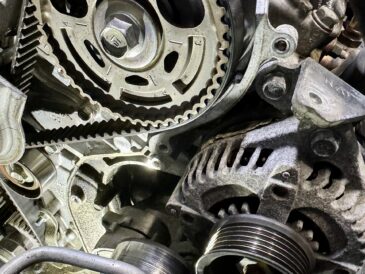
The cooling circuit deserves the same attention. A hose that feels supple on the surface may be weakened, a radiator may be clogged and a thermostat stuck. Also check the belt driving the water pump or fan. For engines equipped with a timing belt, age may require its replacement before any attempt; our guide explains when to change the timing belt of a classic car.
4. Never fuel an engine with unknown fuel
Very old petrol can oxidise, leave gums and carry corrosion from the tank to the pump and carburettor. Before putting the circuit back into service:
- observe and smell the fuel without exposing yourself to vapours;
- inspect the inside of the tank when possible;
- check hoses, fittings, pump and filter;
- drain suspicious fuel into an approved container;
- hand over the used product to an appropriate collection channel;
- clean or renovate the tank and contaminated components before adding fresh fuel.
Never pour petrol down the sink, onto the ground or into rainwater drains. On a carburettor engine, a stuck needle valve can cause the float chamber to overflow as soon as primed. Monitor the entire circuit during pressurisation. If refurbishment is necessary, consult our feature on cleaning and adjusting a classic car carburettor.
5. Battery and electrical system: check polarity before connecting
A battery left deeply discharged for years is rarely a reliable starting point. Before installing another, look for chewed wires, brittle insulation, oxidised earths and accessories added without protection.
Some classics operate on 6 volts; others on 12 volts. Some use positive earth. Connect a battery only after identifying the vehicle’s voltage, polarity, capacity and wiring diagram. A mistake can damage the dynamo, regulator, instruments or accessories. Our article dedicated to the 6 V or 12 V battery of a classic car details these choices.
Before engaging the starter, progressively test the protected circuits: lights, horn, wipers and instruments. A hot smell, smoke or a heating cable requires immediate power cut-off.
6. Prime the lubrication before the first combustion
When the manufacturer’s method allows, deactivate the ignition or fuel supply and crank the engine with the starter in short bursts to build up oil pressure. Allow the starter to cool between attempts. On some engines, direct priming of the circuit is preferable; follow the technical documentation.
Do not persist if the pressure warning light does not go out or if the gauge remains at zero. Check the sensor, but assume that pressure may actually be lacking. A few seconds of stubbornness is enough to damage dry bearings.
The Hagerty guide dedicated to restarting also recommends a step-by-step approach: fluids, oil priming, then starting under supervision. This logic is more important than seeking a spectacular “first turn of the key.”
7. First start-up: what to watch for?
Once the engine is free, fluids checked, fuel secure and lubrication primed, prepare for the first start-up with a second person if possible. Open the compartment, move tools away and ensure the gearbox is in neutral with the wheels chocked.
At start-up, immediately monitor:
- oil pressure;
- coolant temperature;
- fuel, oil and fluid leaks;
- knocking, loud clattering or rubbing noises;
- electrical load;
- smoke and its development.
Stop immediately if there is knocking, no pressure, fuel leakage or rapid temperature rise. Do not lean over a carburettor during an attempt: a backfire is possible. Slight initial smoke may come from lubricant introduced into the cylinders, but this should not be used to normalise persistent smoke or abnormal noise.
Allow the engine to gradually reach its operating temperature only if all parameters remain normal. After stopping, inspect levels, hoses and the underside of the vehicle again.
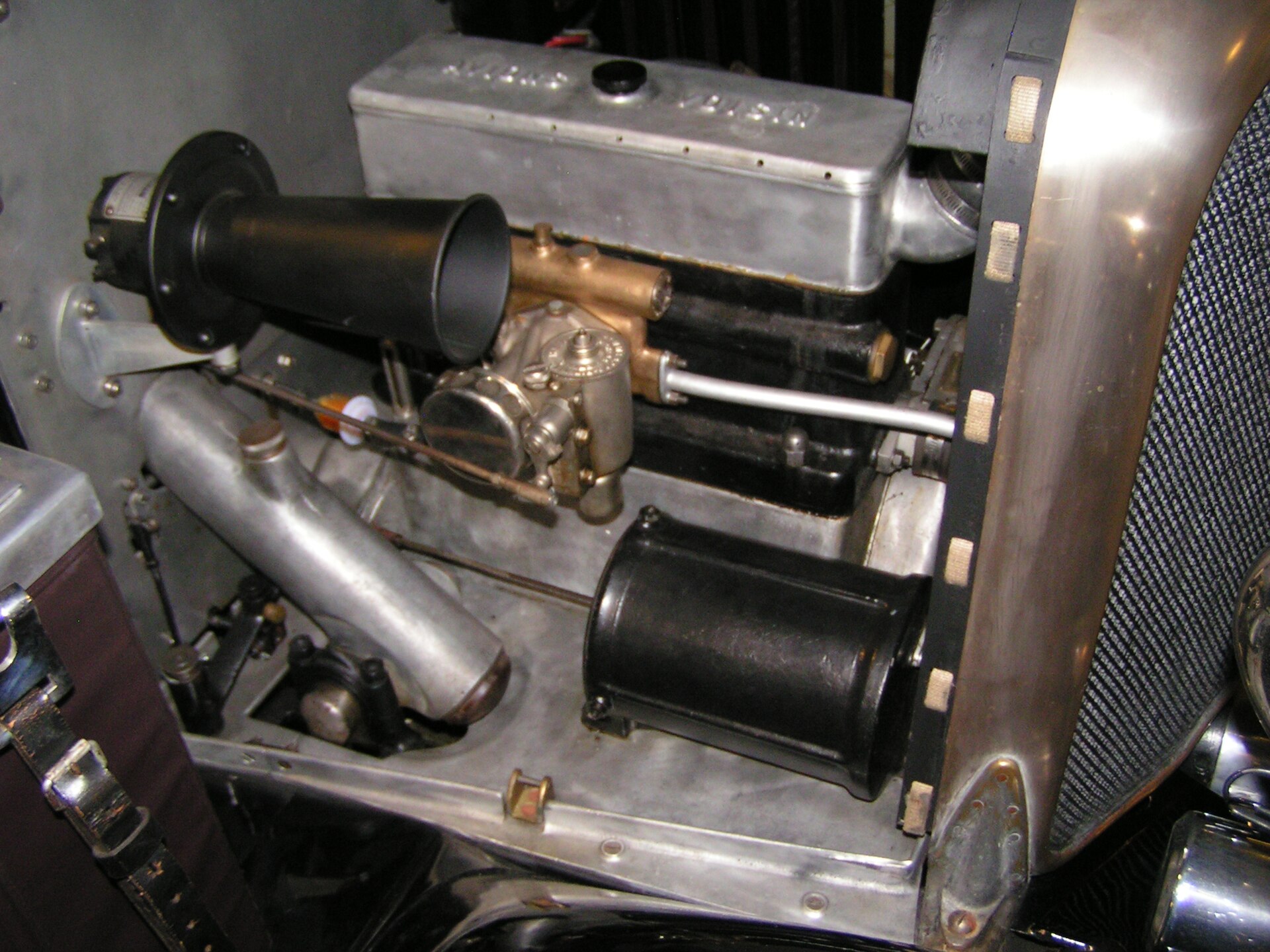
Each architecture requires its own procedure: here, the engine of a Voisin C7 from 1927. Photo: dave_7,Wikimedia Commons, CC BY-SA 2.0 licence.
8. Brakes: the engine can wait, safety cannot
Do not move the car under its own power before checking the brakes. Old fluid absorbs moisture, cylinders may leak or seize, hoses degrade internally and linings become contaminated. A firm pedal at rest does not validate the entire circuit.
After several years of immobilisation, plan at least a complete inspection of pipes, hoses, master cylinder, calipers or wheel cylinders, linings, discs or drums and handbrake. Bleed with the fluid exactly specified for the system. Do not mix fluid types and beware of older vehicles using a specific mineral fluid.
If the wheels do not turn freely, do not “break free” the brakes by accelerating. Remove and diagnose. The first dynamic check must be done at very low speed, in a private and clear space, after mechanical validation.
9. Tyres: tread depth is not enough
A tyre may appear new because the car has not been driven, yet have hardened or cracked with age. Read the date code, examine the sidewalls, tread, beads and flat spots. Also check the spare wheel.
Michelin recommends a professional inspection annually from five years of use and, as a precaution, the replacement of tyres ten years after their manufacturing date, even if their appearance and wear seem acceptable. These guidelines do not exempt from earlier replacement in the presence of cracks, deformations or unsuitable specifications.
Also check the wheels, nuts, bearings and approved dimensions. Restarting an old vehicle with tyres that are too old should not involve a “short test” on the road: heating and speed sometimes suddenly reveal what the stationary inspection did not show.
10. First outing: short, local and methodical
Before going on public roads, ensure the vehicle is insured, registered, technically compliant and subject to the required technical inspection. In France, a classic vehicle under 3,5 tonnes put into circulation from 1960 is generally inspected every five years; a classic vehicle prior to 1960 is exempt from periodic inspection. This exemption never authorises driving a dangerous vehicle.
The first outing should remain short, close to the workshop and without motorway use. Test the brakes at low speed, listen to the bearings and transmissions, monitor oil pressure, temperature and load. Use the gears progressively and avoid high load and sustained revs.
On return, check for leaks, abnormal temperatures, smells, levels, tyre pressure and wheel tightening if they have been removed. A second cold inspection may reveal a leak absent when hot.
What budget should be planned for a restart?
It is impossible to give a universal flat rate. A car stopped for two years with a complete maintenance record may require a service, whereas a vehicle immobilised for twenty years may need the tank, brakes, tyres, cooling, wiring and engine overhaul.
Divide the budget into four blocks: safety, starting, reliability and aesthetics. Brakes, tyres, structure and fuel leaks come before paintwork. Request quotes by scenarios rather than an overly optimistic overall estimate.
If the decision is to restore, sell as is or replace the vehicle, a free car valuation provides an initial value reference. Present honestly the immobilisation, mechanical condition and available documents: a valuation only makes sense if these elements are known.
For unobtainable parts, our guide gathers the best tips for finding classic car parts.
When should you stop and call a specialist?
Call in a professional if the engine does not turn freely, if the oil pressure does not rise, if fuel leaks, if the wiring is extensively damaged, if the braking requires rebuilding or if corrosion affects the structure. The same caution applies to a rare car where mishandling would destroy a hard-to-replace part.
Transport on a flatbed costs less than an accident or a broken engine. The goal is not to start the car the same day, but to make it reliable, safe and documented.
FAQ
Can you fit a new battery and try to start it?
Not after several years of inactivity without prior checks. First check for leaks, wiring, fuel, fluids and manual engine rotation. Also identify the vehicle’s voltage and polarity.
Should you drain the oil before or after the first start?
After a long or unknown immobilisation, new oil and filter before starting generally constitute the cautious option. The old oil should be examined for water, fuel or metal particles.
How to know if the engine is seized?
With the spark plugs removed and according to the manufacturer’s method, the crankshaft should be able to turn gradually by hand. If it jams or shows a marked stiff spot, do not force it and have the engine diagnosed.
Can the petrol in the tank be kept?
Do not use it if its age or condition is unknown. Inspect the tank and the system, then have any questionable fuel disposed of through an appropriate channel.
Are tyres with good tread still safe?
Not necessarily. Age, cracks, deformations and storage conditions matter as much as tread depth. Michelin recommends, as a precaution, replacing tyres ten years after their manufacture, even if they appear usable.
Can a car exempt from the MOT test be driven straight away?
No. The periodic exemption does not replace maintenance or safety obligations. Brakes, tyres, steering, lighting and structure must be fit for road use.
Sources consulted
- Hagerty UK — Bringing a classic back to life safely : sequence for restarting, lubrication, monitoring and first outing.
- FIVA — Guide for responsible use of historic vehicles : principles of storage, battery care and prevention of flat spots.
- FFVE — Properly storing your vehicle ahead of winter : fluids, handbrake, battery, tyres and humidity.
- Michelin — How long does a tyre last? : checks from five years and replacement recommendation at ten years.
- Service-Public — Registration certificate for classic vehicles : frequency and exemptions from the MOT test.
Information verified on 25 October 2026. Mechanics and regulations may vary depending on the model, its date, administrative status and work already carried out.