
A greyed-out registration certificate for several years does not automatically prevent the registration of a classic car.However, the legal one-month period to put the registration certificate in your name has expired: the vehicle must no longer be driven using the detachable part of the old registration certificate, and the file must clearly reconstruct the transfer. Regularisation becomes difficult when the seller is not the registered holder, an intermediate transfer is missing, or the vehicle is subject to an objection.
The correct method is to not alter any dates, verify the chain of ownership, then submit the appropriate application on France Titres. Here are the documents to gather and the solutions according to the main obstacles.
What exactly does a greyed-out registration certificate mean?
When selling or gifting a vehicle, the former owner must cross out the registration certificate, legibly write “sold on” or “transferred on” with the date, then sign it. This formality formalises the handing over of the title to the buyer. It must correspond to the transfer certificate and the declaration recorded in the Vehicle Registration System.
A greyed-out registration certificate is not a permanent circulation document. Article R. 322-5 of the Highway Code grants the new owner a one-month period from the date of transfer to have the certificate issued in their name if they wish to keep the vehicle on the road. Only during this period may they drive using the correctly completed detachable coupon or a provisional registration certificate.
After one month, exceeding the deadline does not nullify the sale. But driving without having regularised the registration exposes one to a fourth-class fine and vehicle immobilisation. The car must remain stored or be transported on a flatbed until the matter is resolved.
Diagnostic table before any procedure
| Situation | Likely regularisation | Critical point |
|---|---|---|
| Seller registered on the registration certificate, complete transfer | Request for change of holder, even if late | Consistent documents and valid technical inspection |
| Transfer code lost | Request possible under conditions | The transfer must have been recorded by the seller |
| Seller not registered on the registration certificate | Chain of ownership to regularise | An intermediate transfer cannot be ignored |
| Greyed-out registration certificate but sale cancelled | Duplicate requested by the holder | The buyer must not reuse the crossed-out title |
| Deceased holder | Inheritance file | Document establishing the heirs’ rights |
| Opposition to transfer | Prior lifting of the opposition | Fine, seizure, stolen vehicle or expert assessment depending on the case |
| Missing registration certificate | Specific file and proof of origin | An FFVE certificate does not replace proof of ownership |
Simple case: the seller is indeed the holder of the registration certificate
Start by comparing the identity shown on the registration certificate with that of the seller on the Cerfa transfer form. Service-Public reminds that the certificate must be in the name of the person selling the vehicle and that all co-holders must sign when there are several.
If the information matches, gather the documents required for the change of ownership:
- the old complete registration certificate, crossed out, dated and signed;
- the transfer certificate signed by both parties;
- proof of identity and address;
- the technical inspection certificate when required;
- proof of insurance and the driving licence corresponding to the category;
- the transfer code, if available;
- a recent administrative status certificate.
Submit the application with the actual date of sale.Never recreate a transfer certificate with a fictitious dateto artificially bring the transaction date to less than one month ago. Any inconsistency between the registration certificate, the Cerfa form, the technical inspection and the computer record may lead to manual processing or refusal.

The keys, the crossed-out registration certificate and the transfer certificate must correspond to the same transaction. Photo: Shixart1985, CC BY 2.0, via Wikimedia Commons.
Is it possible to proceed without a transfer code?
Yes, in certain situations. France Titres indicates that the buyer can register the vehicle without the transfer code if the seller has properly recorded the transfer procedure. The online process then requires the form number and the date of the registration certificate. For an older registration in the FNI format, the holder’s date of birth may be requested instead of the form number.
The lost transfer code is therefore not always a blocking issue. However, the absence of registration by the seller may prevent the standard online procedure from correctly identifying the buyer. In that case, contact the seller again so they can finalise their declaration. If they cooperate but encounter a blockage, they can use the “Make another request” section of France Titres or go through an authorised professional.
Late registration document: is it necessary to pay a fine before applying?
The Highway Code penalises the act of keeping the vehicle on the road without a certificate issued in the name of the new owner. It does not stipulate that a late submission of an application is automatically subject to a fine. Therefore, the file must be submitted as soon as possible and the car must not be driven until the title or a valid provisional document has been obtained.
The administration may request additional supporting documents when the sale is old. Keep everything that can date and prove the transaction: advertisement, payment receipt, invoice, exchanges with the seller, previous insurance, photographs and invoices for storage or restoration.
For a car with a complex history, our guide also explains how to trace the history of an old car before purchase.
The seller is not the name on the registration document
This is the most serious blockage. An individual buying a car must normally obtain the certificate in their name before reselling it. Service-Public specifies that the registration document must be in the seller’s name. The usual exception concerns the motor trade professional who resells under a purchase declaration and provides the corresponding receipt.
If the car has undergone two or three sales without a change of holder, one must not try to “skip” the intermediate owners. Each transfer must be established and the administrative chain regularised in its actual order. Depending on the file, this may require the intermediate seller to first obtain their own registration document before legally transferring the vehicle.
The operations offered under the names “registration document overwrite” or “deletion of a transfer” do not constitute a generally authorised solution. An erroneous declaration can be corrected, but a real sale must not be erased to circumvent the succession of owners.
Before buying a car in this situation, suspend payment or provide for a written condition of regularisation. Our file on buying an old car without a registration document details the risks to check beforehand.
What to do if the seller is untraceable or refuses to act?
First, compile a chronological file: registration document, transfer certificate, proof of payment, messages, advertisement and a copy of the identity document possibly handed over during the sale. Submit an explanatory request in the appropriate section of France Titres and attach clear scans.
The administration can investigate the situation, but it does not reconstruct a non-existent sale and does not settle a civil ownership dispute. If the seller has failed in their obligation to provide the documents allowing registration, a written formal notice may be necessary before legal action. For a significant value, the advice of a lawyer or legal professional is preferable.
If the holder is deceased, the procedure is different: their heirs must establish their rights and carry out the succession formalities. One must neither imitate their signature nor backdate a document. In this case, consult our guide on the registration document of a car inherited after a death.
Does the FFVE certificate resolve a blocked registration document?
Not by itself. The FFVE certificate is used to establish the characteristics of an old vehicle and to support an application for a registration certificate bearing the mention “collector vehicle”. It does not turn an irregular transfer into a valid one and does not replace proof of ownership.
The FFVE recommends documenting the origin and history of the vehicle: old insurance documents, invoices, period photographs, storage receipts and certificates can complement the file. However, if a registration certificate exists and it was cancelled during an identifiable sale, this transfer must be processed and not circumvented.
The choice between a manufacturer’s certificate and the FFVE certificate is explained in our featureclassic car registration: FFVE or manufacturer certificate.
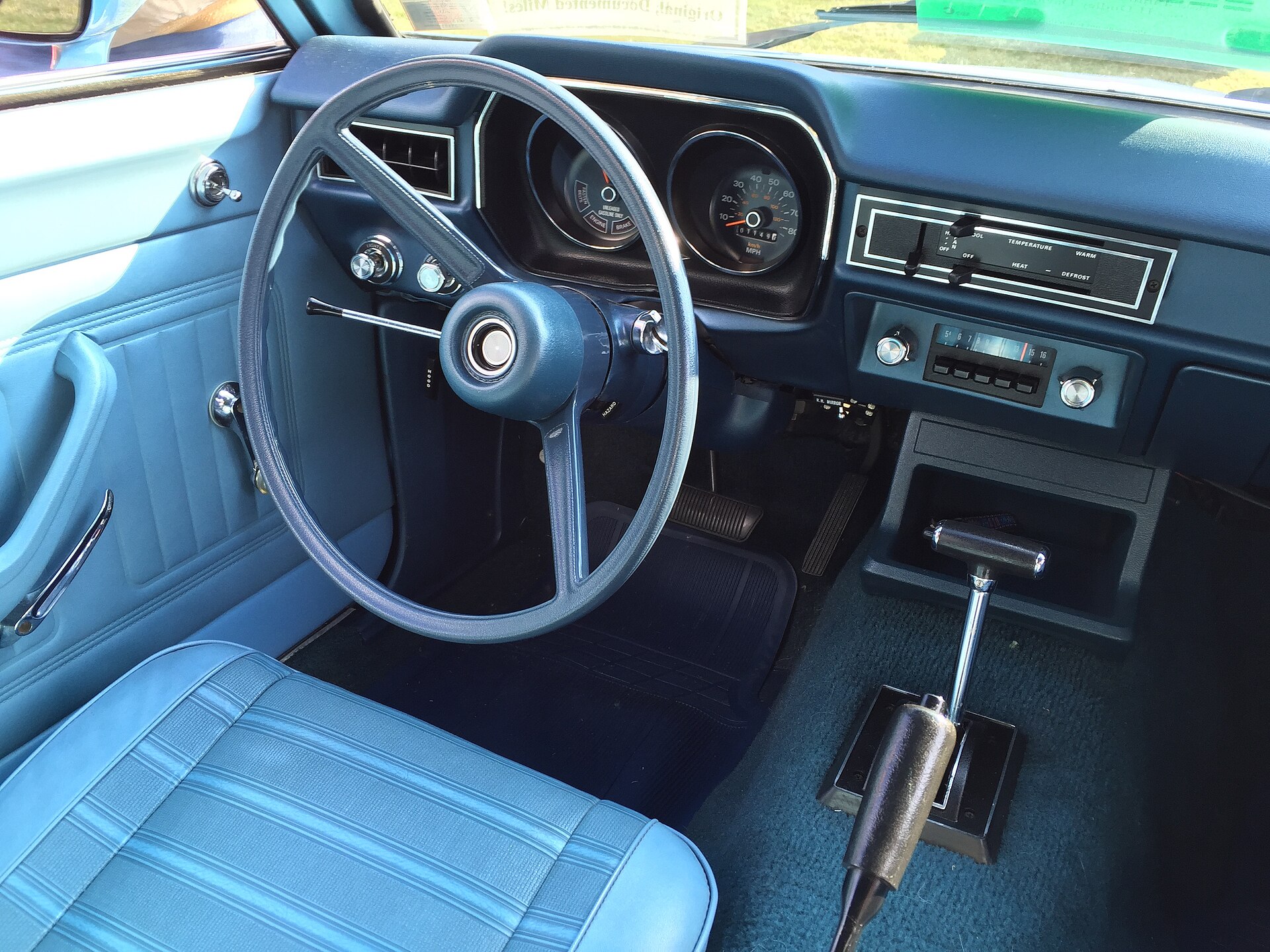
The aesthetic condition of a classic car does not allow conclusions about its administrative status: the numbers and documents must be cross-checked. Photo: Christopher Ziemnowicz, CC BY-SA 4.0, via Wikimedia Commons.
Expired MOT or non-running vehicle
For a private car over four years old subject to MOT, Service-Public generally requires a test certificate dated less than six months old at the time of the registration application. The rules differ for certain vehicles bearing the “collection” designation, notably depending on their first registration date; check the exact regime before moving the car.
If the car cannot legally or safely be driven, transport it to the centre or workshop on a trailer. A non-running classic car must not be put back on the road solely to obtain an administrative document. Find the periodicities and exemptions in our guide to theMOT for classic cars.
Check for any opposition before restoring the car
An administrative status certificate may reveal an opposition to transfer: vehicle declared stolen, seizure, fines preventing change of ownership, or opposition related to the vehicle’s condition. The cause must be lifted by the competent authority or person before the registration certificate can be issued.
This check must precede costly restoration. A beautiful bodywork does not fix a blocked file. Our article on thecertificate of non-encumbrance for a classic car explains how to read the document and identify the origin of an opposition.
If you prefer to start with a clear administrative file, you can consult theclassic and prestige cars for sale selected on Plethore Cars.
Regularisation procedure in seven steps
- Immobilise the vehicle if the one-month deadline has passed and no valid provisional document has been issued.
- Photograph all documents front and back and note the VIN stamped on the car.
- Compare the identities and dates on the registration certificate, the transfer certificate and proof of payment.
- Request an administrative status certificate to identify any opposition.
- Have the declaration of transfer regularised by the seller if it has not been registered.
- Obtain the required technical inspection without driving the car illegally.
- Submit the France Titres application with a chronological note when the file falls outside the standard case.
Download and keep the registration receipt as well as the provisional certificate when issued. If the application is refused, read the reason carefully before submitting a new file: submitting multiple different applications can create simultaneous procedures and slow down processing.
FAQ
Is a grey card crossed out for ten years still usable?
It can remain part of the file if it is authentic, complete and consistent with the transfer. It no longer authorises driving. France Titres may request additional supporting documents due to the age of the sale.
Can I redo the sale date with the seller?
No, not if the sale actually took place several years ago. The documents must indicate the real date. A new fictitious transfer would create inconsistencies and could constitute a false declaration.
Can the grey card be obtained without a transfer code?
Yes, if the seller has properly registered the transfer. France Titres then provides for the use of the form number and certificate date, or information adapted to older registrations.
Can I drive to the technical inspection?
After the provisional period expires, do not drive with only the crossed-out grey card. Use appropriate transport and check with France Titres or an authorised professional if a provisional document can be issued in your situation.
Is an FFVE certificate sufficient to put the car in my name?
No. It documents the identity and characteristics of the vehicle for the collection mention. It does not replace proof of ownership or a regular chain of transfers.
What if the intermediary seller never registered their grey card?
They must in principle regularise their own change of holder before reselling to a private individual. Request written instructions from France Titres or an authorised professional for the specific case; do not erase a real transfer.
Conclusion
A grey card crossed out for a long time is not necessarily a dead end. The elapsed time is less decisive than the coherence of the file: seller holder, transfer certificate, registered declaration, absence of opposition and appropriate technical inspection. When these elements align, a late application can be processed without inventing a new sale.
However, a seller who does not appear anywhere in the chain, a deceased holder, or an objection requires specific regularisation. In all cases, leave the car immobilised and handle the administrative matters before undertaking restoration or resale.
Information verified on 30 October 2026. France Titres procedures may change: check the forms and documents required at the time of submission.
Sources
- Service-Public — Registering a second-hand vehicle
- Service-Public — Selling or giving away your vehicle
- France Titres — Buying or receiving a second-hand vehicle
- Légifrance — Highway Code, article R. 322-5
- Légifrance — Highway Code, article R. 322-4
- FFVE — Administrative precautions before purchase or restoration