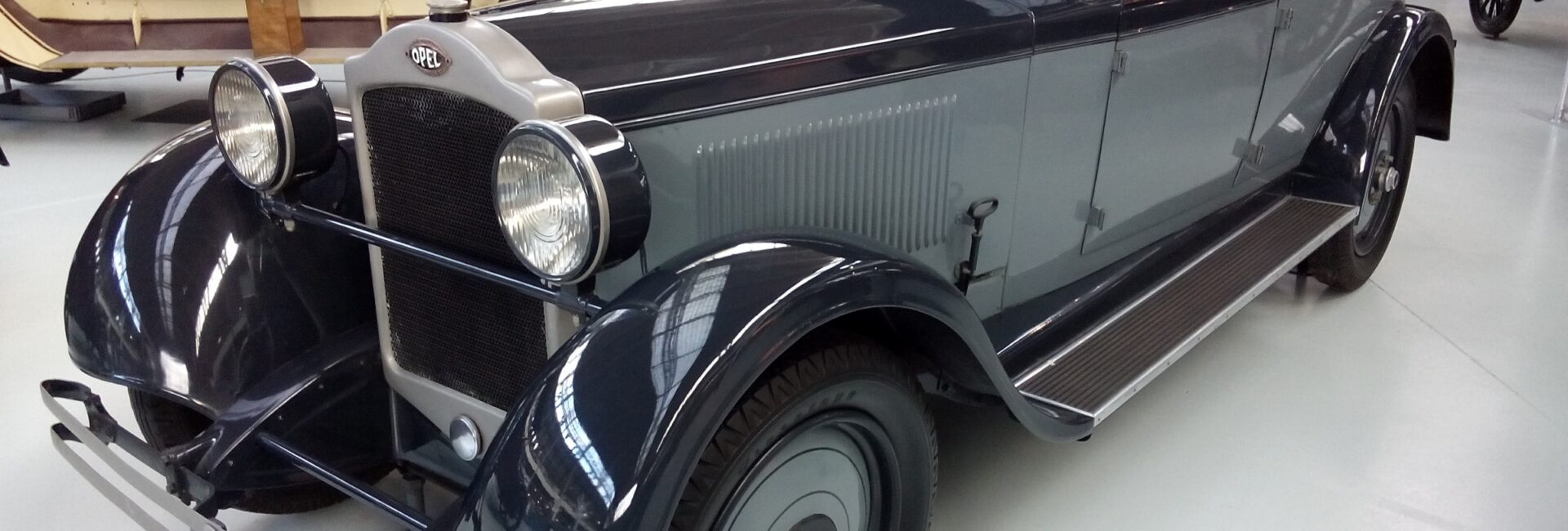
Buying a classic car in Belgium may seem almost as straightforward as purchasing one in France: no customs border, a plentiful supply, and sometimes a vehicle located just a few hours’ drive away. However, French registration only becomes smooth if the correct documents have been obtained before payment and if the transport has been organised legally.
This guide details the procedure applicable to a private individual purchasing a car already registered in Belgium for import into France. It distinguishes the fiscal obligations, technical compliance, and the possible classification as a “classic vehicle”, which remains a choice and not an automatic consequence of the vehicle’s age.
In brief: Belgium is part of the European Union. Therefore, there are no customs duties for a used car purchased in Belgium, but a fiscal clearance certificate (quitus fiscal) is still required. For the French registration certificate, you will notably need the Belgian registration certificate, proof of sale, a certificate of conformity, and, when applicable, a technical inspection less than six months old.
Before buying: checks to avoid a stalled application
Before any deposit, ask the seller for a clear copy of the entire file. The chassis number stamped on the vehicle must correspond to that on the Belgian registration certificate and on the invoice or sales contract. For a classic car, also compare the type, engine capacity, date of first registration, and any modifications.
At minimum, verify:
- the identity of the seller and their status as owner or authorised professional to sell the vehicle;
- the chassis number, both on the documents and on the car;
- the two parts of the Belgian registration certificate when the document has been issued since 2013;
- the existence of a detailed invoice or signed sales contract;
- the latest technical inspection and available conformity documents;
- the real possibility of insuring and transporting the vehicle to France.
The Belgian SPF Mobility specifies that the registration certificate follows the vehicle and has consisted of two parts since 2013: one kept in the car, the other at the owner’s home. At the point of sale, an incomplete file can therefore become a major obstacle. A simple photocopy does not replace a missing original.
To compare the asking price with the market, consult the classic cars currently offered by Plethore Cars and use the classic car valuation tool before calculating your total budget.
Which documents should be obtained from the Belgian seller?
Prepare the file before the vehicle’s departure. The titles may vary depending on the car’s age and the seller’s status, but the essential documents are as follows.
| Document | Why it is important |
|---|---|
| Original Belgian registration certificate | It identifies the vehicle and will be required for French registration. Retrieve both parts if the certificate is in two sections. |
| Invoice or sales contract | It proves the transfer of ownership. Include the seller, buyer, date, price, mileage and chassis number. |
| European Certificate of Conformity or equivalent document | It establishes compliance with the community type approval. For an older model without a COC, an identification certificate or individual approval may be necessary. |
| Belgian technical inspection | It may be accepted in France if it meets the required conditions and is less than six months old at the time of the file submission. |
| Available history | Invoices, logbook, previous inspections, heritage certificate or restoration file serve to verify authenticity and value. |
If the car has been modified — different engine, altered bodywork, non-compliant power or dimensions — do not assume that Belgian registration automatically guarantees acceptance in France. The conformity issue must be resolved before purchase, ideally with the manufacturer, their French representative or the competent Dreal.
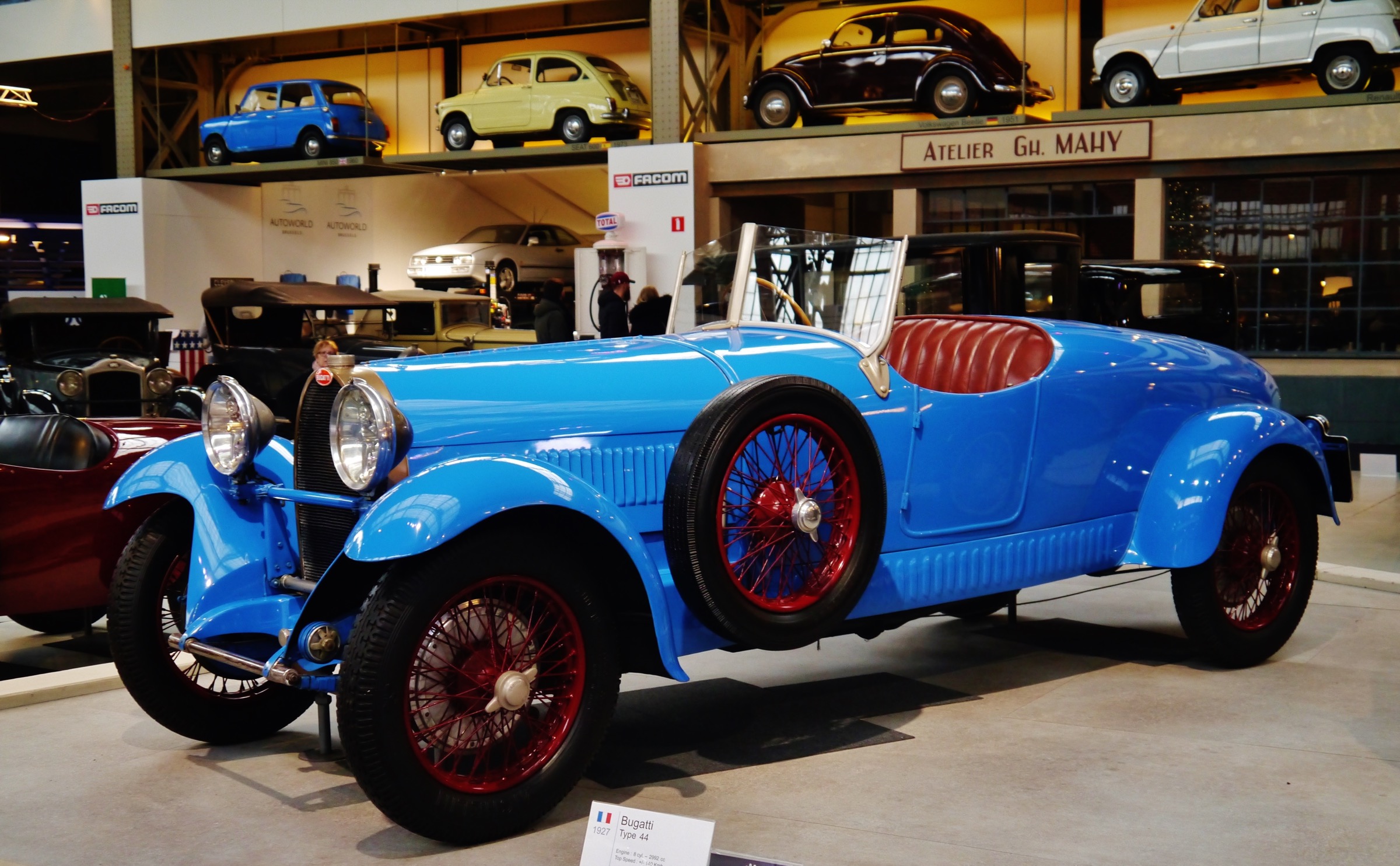
A prestigious classic may require more than a simple European certificate: the exact identification of the model and its characteristics remains decisive. Photo: Zairon, Wikimedia Commons, CC BY-SA 4.0, cropping and compression.
How to bring the car from Belgium to France?
The ordinary Belgian plate belongs to its holder. Therefore, you should not plan to enter France with the seller’s plate without legal framework and appropriate insurance. Three common solutions are: transport on a flatbed, using a professional transporter or a Belgian export plate.
The Belgian “X” plateis intended for export. The SPF Mobility states that it is normally valid for 30 calendar days and is automatically deregistered upon expiry. Obtaining it requires original documents and temporary insurance; not all companies offer this coverage. For a used vehicle over four years old, the validity of the technical inspection may also condition the file.
In practice, the flatbed is often the safest solution for a rare car, one that is not reliable or lacks a valid inspection. It avoids confusing ownership rights, right to drive and insurance coverage. Ask the transporter for a contract mentioning the vehicle, its declared value, the place of collection, destination and applicable guarantees.
Tax clearance certificate: why is it mandatory without customs duties?
The tax clearance certificate certifies the vehicle’s VAT status. It is required for registration in France of a vehicle purchased in another European Union state, even when no additional VAT is due.
For European automotive taxation, a car is considered used only if it has been registered for more than six months and if it has travelled more than 6 000 km. If either of these two conditions is not met, it is treated as a new means of transport for VAT purposes: the tax is then payable in France according to the applicable rules.
For a used vehicle purchased by a private individual, there are no customs duties between Belgium and France. However, the VAT treatment depends on the seller and the invoice: private individual, professional applying the margin scheme, or professional charging VAT. Do not validate an ambiguous tax arrangement based solely on the seller’s promise.
The main documents required for the tax clearance certificate are:
- the current tax form, notably form 1993-PART-D-SD for a private individual when the separate procedure applies;
- the invoice or sales contract;
- the Belgian registration certificate;
- an identity document;
- proof of residence in France;
- possibly a mandate if another person is carrying out the procedure.
Since 2026, the procedure depends on the department of residence. France Titres offers a combined registration and tax clearance application in the following pilot departments: Alpes-Maritimes, Loire-Atlantique, Moselle, Nord, Pas-de-Calais, Bas-Rhin, Rhône and Paris. In other departments, the tax clearance certificate is requested according to the modalities of the competent tax service. Always check the procedure corresponding to your domicile before submitting the file.
Technical inspection: is a Belgian inspection accepted?
For a passenger car over four years old subject to technical inspection, France Titres requires a French or foreign certificate dated less than six months old. A still valid Belgian inspection can therefore be used if it meets the conditions of the French file.
Two precautions remain useful. First, the inspection must be valid at the time the application is examined, not only on the day of purchase. Secondly, a foreign inspection report does not resolve a lack of compliance or an unapproved modification. If the deadline is short, carrying out an inspection in France after transport on a flatbed can avoid a document expiring during the procedure.
For a registration certificate bearing the use “vintage vehicle”, the technical inspection rules depend notably on the date of first registration, the weight and the type of vehicle. One must not confuse the age of 30 years, which potentially opens access to this use, with a general exemption from inspection.
Compliance: COC, identification certificate or individual approval?
France Titres requires a certificate of conformity issued by the manufacturer or an equivalent document. For a relatively recent car benefiting from European approval, the COC generally constitutes the simplest route.
For an older car, the European COC may never have existed. The file can then rely, depending on the case, on a harmonised registration certificate accompanied by a technical data verification certificate, a community type identification certificate, or an individual approval report issued after assessment by the Dreal or Drieat in Île-de-France.
Do not automatically order a COC from an unofficial website. Start by contacting the manufacturer or its French representative with the chassis number. For a car over 30 years old preserved in its historic condition and whose type is no longer produced, a certificate from the FFVE may be relevant to request the “vintage vehicle” use. However, this certificate does not replace proof of ownership, the tax clearance certificate, or the examination of the entire file.
Requesting the French registration certificate step by step
When the car is in France and the file is complete, the application is made online with France Titres.
- Gather the identity document, proof of address, the invoice or sales contract, and the original Belgian registration certificate.
- Obtain the tax clearance certificate according to the procedure of your department, unless your combined application handles it simultaneously.
- Attach the certificate of conformity or the equivalent technical document appropriate for the vehicle.
- Include a technical inspection certificate less than six months old when the car is subject to one.
- Log in via FranceConnect, select the registration of a used vehicle acquired abroad, and upload complete and legible scans.
- Pay the registration taxes displayed after processing and keep the original file.
The final cost is not limited to the purchase price. It may include transport, the temporary X plate and its possible insurance, the certificate of conformity, the technical inspection, an individual approval, registration taxes, and any necessary work. A prior valuation of the vehiclehelps verify that the price difference with France genuinely covers these expenses.

For a classic sports car, the history, conformity, and consistency of numbers matter as much as the visible condition. Photo: Sandra Fauconnier, Wikimedia Commons, CC BY-SA 3.0, compression.
Standard registration or ‘vintage vehicle’ use?
A car over 30 years old does not automatically receive a vintage vehicle registration. The ‘vintage vehicle’ status must be requested and notably requires that the model is no longer produced and that its essential characteristics have been preserved.
Standard registration remains possible if the technical file allows registration. The right choice depends on the vehicle, its documents, and its intended use. A modified or incompletely identified car is not made compliant by a simple request for a heritage certificate.
For a well-documented Belgian car, the shortest route often involves using existing European documents. For a very old model without European approval, prepare a solid historical file from the purchase: photos of the numbers, manufacturer’s sheet, old invoices, period documents, and proof of traceability.
The most common mistakes
- Paying before having seen both parts of the Belgian certificate. A missing document can delay or prevent registration.
- Driving with the seller’s plate. Ownership of the vehicle, registration, and insurance are three distinct matters.
- Believing that the absence of customs duty removes the tax clearance certificate. The tax clearance certificate remains a central document for an intra-community acquisition.
- Confusing age with vintage vehicle status. More than 30 years does not mean automatic classification nor general exemption.
- Underestimating compliance.A modified car or one without the appropriate technical documentation may require individual approval.
- Allowing the MOT to expire.A validity period that is too short may require a new inspection before the process is completed.
If you are undecided between several countries of purchase, also consult our guide dedicated toimporting a classic car from GermanyBoth countries fall under the European framework, but their national documents and temporary plates do not operate in the same way.
Checklist before payment
- Chassis number checked on the car and on every document.
- Seller’s identity and status verified.
- Two parts of the Belgian registration certificate retrieved if applicable.
- Complete invoice or sales contract, dated and signed.
- Technical compliance identified before purchase.
- MOT checked with its expiry date.
- Transport or X plate and insurance arranged in writing.
- VAT treatment clarified according to age, mileage and seller.
- Overall budget calculated up to obtaining the French registration certificate.
FAQ
Do you have to pay customs duties to import a car from Belgium?
No, for a used car purchased in Belgium and transferred to France, since both countries belong to the European Union. However, the tax clearance certificate remains mandatory to establish the vehicle’s VAT status.
Is the tax clearance certificate necessary for a classic car?
Yes. The vehicle’s age or its intended use as a “classic vehicle” does not exempt it from the tax clearance certificate when purchased in another EU member state.
Can you return to France with the seller’s Belgian plates?
You cannot rely on the seller’s ordinary plates. Arrange transport on a flatbed, a haulier, or an export X plate with valid insurance for the journey.
How long is a Belgian X plate valid for?
The SPF Mobility indicates a usual validity of 30 calendar days for the X plate intended for export. It is automatically deregistered upon expiry. Specific rules may apply in certain fiscal cases.
Is a Belgian technical inspection sufficient for the French registration certificate?
France Titres accepts a French or foreign technical inspection less than six months old when the vehicle is subject to it. It must remain valid and does not replace conformity documents.
Does a Belgian car over 30 years automatically receive a classic car registration?
No. The “classic vehicle” status must be requested and meet specific criteria. A certificate may be required, but it does not replace other import and registration documents.
Official sources and date of verification
Information verified on10 October 2026 :
- Service Public — Obtaining a tax clearance certificate
- Service Public — Purchasing a vehicle in a European country: VAT and formalities
- France Titres — Registering a vehicle purchased abroad
- France Titres — Registering a vehicle and requesting a tax clearance certificate
- Service Public — Conformity of a vehicle purchased abroad
- Belgian SPF Mobility — Registration certificate
- Belgian SPF Mobility — Exporting a vehicle with an X plate
This article presents the general rules known at the date of verification. An atypical file, a modified vehicle or a particular fiscal situation must be confirmed with France Titres, the tax office or the competent Dreal.