The Ferrari Classiche certification is the authenticity verification issued by Ferrari at Maranello. It concerns road-going Ferraris over 20 years old as well as competition, Formula and Sport Ferraris with no age limit. The car must operate correctly and its configuration must conform to the original specifications preserved in the manufacturer’s archives.
For an owner or buyer, this certification provides a documented answer to a crucial question: do the car, its main components and its configuration correspond to what Ferrari produced for that chassis number? However, it does not replace a valuation appraisal, an independent mechanical inspection, or provenance research.
What is Ferrari Classiche?
Ferrari created its Classiche department in 2006 to preserve, maintain, restore and authenticate the brand’s historic models. The service relies notably on assembly sheets and technical archives kept since 1947.
The mission is not limited to issuing a certificate. Ferrari Classiche also intervenes in complex restorations, extraordinary maintenance and the supply or reproduction of certain parts necessary to return a car to a compliant configuration.
The certification decision belongs to Ferrari. The technical inspection can be carried out at Maranello or by an authorised Ferrari Classiche workshop, but the certificate of authenticity is issued by the marque after reviewing the dossier.
Which Ferraris can be certified?
According to the official Ferrari Classiche page of Charles Pozzi Paris, three main categories are eligible:
| Category | Announced age condition |
|---|---|
| Road Ferrari | Over 20 years old |
| Competition Ferrari | No age limit |
| Formula or Sport Ferrari | No age limit |
For a road car, age alone is not sufficient. A Ferrari over 20 years old does not automatically obtain certification: its operation, components, bodywork and interior must be examined against the original specifications.
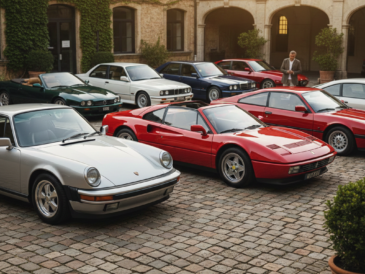
In 2026, models such as the 308, 328, Testarossa, F40, 348, F355, 456 GT, 550 Maranello, 360 Modena and the first F430 have reached or are approaching the eligibility threshold according to their manufacturing date. One must reason from the exact date and chassis, not just the commercial name or the model year indicated in an advertisement.
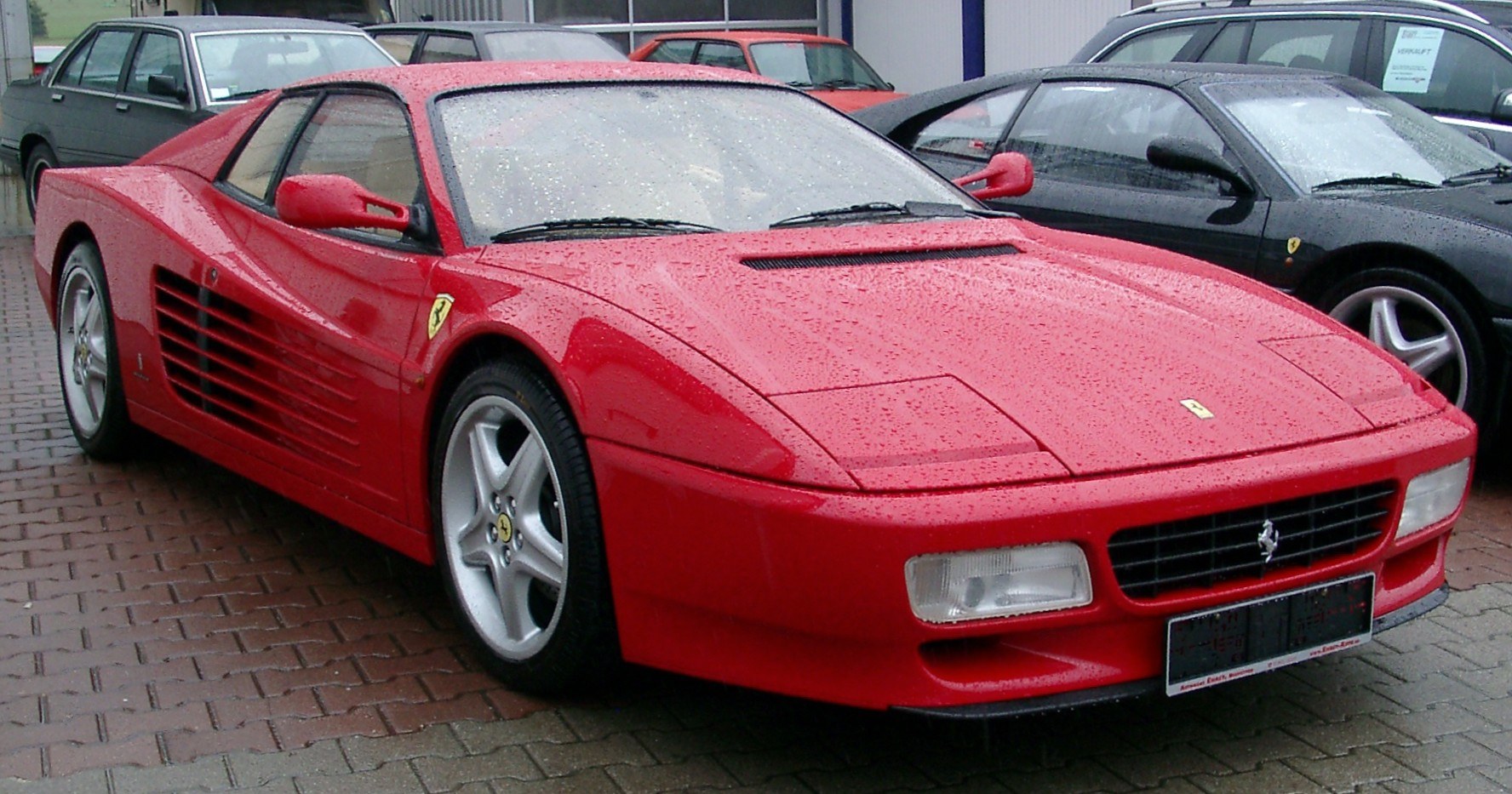
A 512 TR Ferrari, a model now eligible by age for the Classiche procedure. Photo: Rudolf Stricker, Wikimedia Commons, licence CC BY-SA 3.0. Resized image.
What does the Ferrari Classiche certification verify?
Ferrari announces a detailed examination of the car and its main assemblies. The inspection notably covers:
- the chassis and its references;
- the engine;
- the gearbox and transmission;
- the suspension;
- the brakes and wheels;
- the bodywork;
- the interior;
- the conformity of mechanical components to the production configuration.
The aim is therefore not merely to verify that a Ferrari has the correct type of engine. The numbers, the exact variant, the parts, the materials and any modifications made during the car’s life must be compared with the factory records.
Certification does not necessarily mean “never restored”
A restored Ferrari can be certified if the work and components meet the manufacturer’s criteria. Conversely, a very well presented car may require corrections if it has an engine, bodywork or equipment that does not conform to its original configuration.
This distinction is important: Ferrari Classiche certifies the authenticity and conformity observed according to its procedure. The service does not necessarily claim that every physical element was fitted during the initial assembly and has never been replaced.
How does the procedure take place?
The precise arrangements and timetable depend on the car, its condition and the workshop handling the file. However, the process can be summarised in six steps.
1. Submit the application through the Ferrari network
The owner begins by contacting Ferrari Classiche or an official representative. In France, the pageFerrari Classiche of Charles Pozzi Parispresents the service, restoration possibilities and the information request form.
Before opening the file, it is useful to gather the chassis number, registration certificate, invoices, previous ownership documents, maintenance records, old photographs and any elements relating to restoration.
2. Compile the historical and technical dossier
Available archives are compared with the known information about the car. A continuous chronology facilitates analysis, but a documentary gap does not automatically lead to refusal: it must be identified and, if possible, clarified by other evidence.
The owner must report any known significant changes: engine or gearbox replacement, colour change, body conversion, modification for competition, modernisation of brakes, ignition or interior.
3. Physically inspect the car
The car undergoes a technical examination. The references and characteristics of the main components are recorded, while the operational condition and overall conformity are checked.
For Ferrari, the originality of mechanical components remains decisive. The inspection can therefore be more demanding than a simple visual appraisal intended to establish an insurance value.
4. Compare observations with Maranello archives
Ferrari has assembly sheets, chassis drawings, and information on historical components. The observations made on the car are compared with this data to identify compliant, replaced, or modified elements.
5. Correct any non-conformities
If certain parts do not correspond to production specifications, Ferrari states that they must be replaced with compliant components offered by the brand or its official partners. The Classiche department can, when necessary, have certain parts reproduced or provide structural elements.
This phase explains why cost and duration vary greatly: a clear documentary file and a compliant car do not present the same scope of work as an example that has been modified or restored according to an approximate specification.
6. Submit the file for decision
After inspection and any corrections, the elements are submitted to Ferrari’s competent committee. The manufacturer’s annual report specifies that this expert committee is chaired by Piero Ferrari.
Certification is therefore not a sticker issued after a service. It constitutes the culmination of a technical file examined against the brand’s archives.
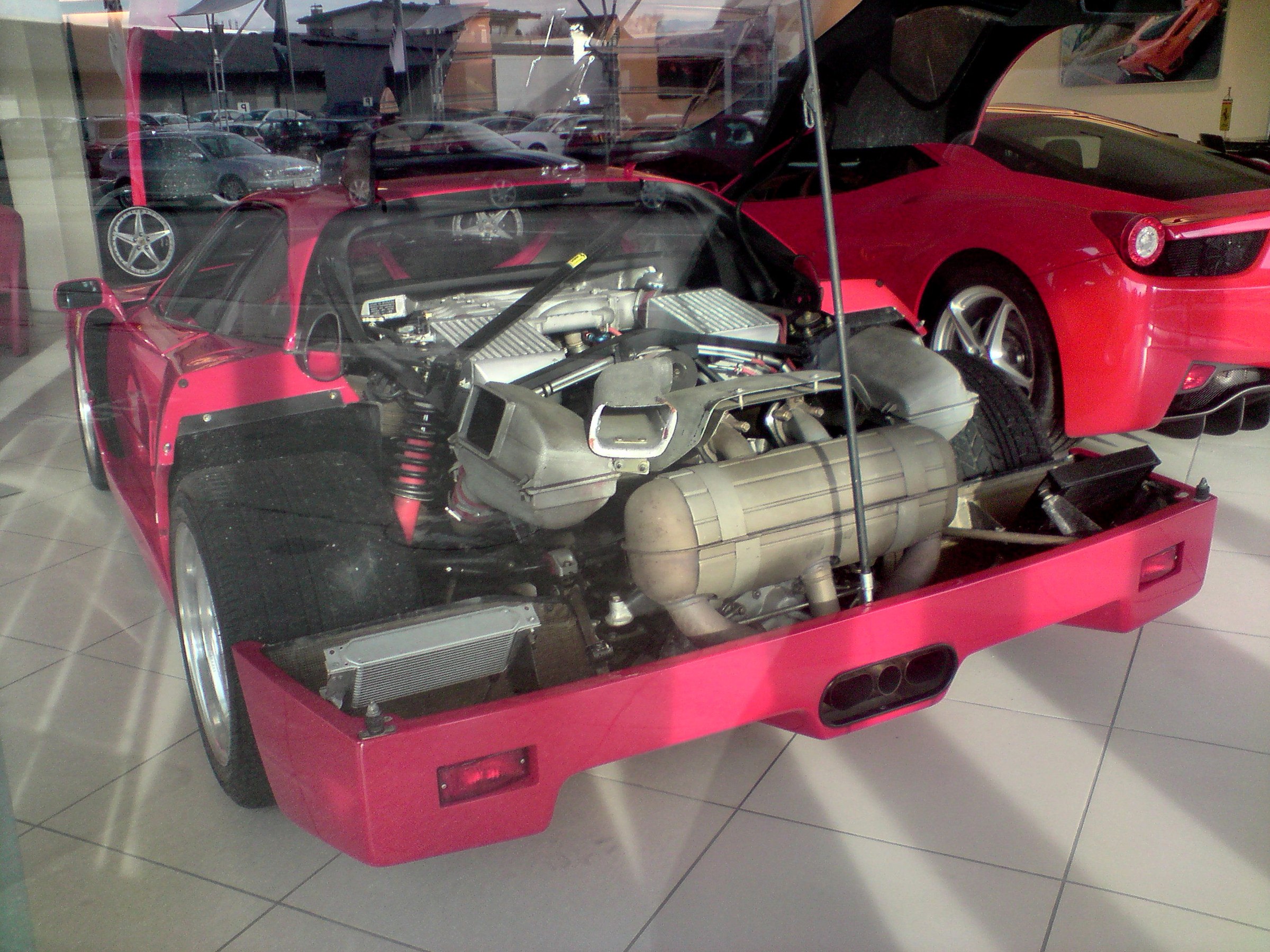
The engine compartment of a Ferrari F40 illustrates the level of mechanical detail examined during an authentication procedure. Photo: Pitak, Wikimedia Commons, licence CC BY-SA 3.0. Image resized.
How much does a Ferrari Classiche certification cost?
There is no universal public price applicable to all Ferraris. The amount depends on the model, the complexity of the file, the place of inspection, the necessary research, and especially the work required before validation.
At minimum, one must distinguish:
- the examination and file compilation fees;
- the possible transportation of the car;
- the dismantling necessary for inspection;
- the search for or reproduction of parts;
- mechanical, bodywork, or upholstery work;
- the operations to restore conformity.
The sensible approach is to request a written estimate from the official network after an initial analysis of the car. A price quoted without inspection or study of the chassis should be regarded as a rough indication, not a definitive quote.
Does Ferrari Classiche increase the car’s value?
Certification can enhance a buyer’s confidence and facilitate comparison between well-documented cars. Auction houses regularly mention Ferrari Classiche in their catalogues, as the document reduces some of the uncertainty regarding the vehicle’s identity and compliance.
However, it does not create any automatic premium. The price always depends on the model, version, condition, history, quality of restorations, provenance, colour, mileage when relevant, and the sales context.
A certified car that has undergone extensive restoration will not necessarily be preferred over an exceptionally well-preserved example. Conversely, the absence of certification does not prove that a Ferrari is non-compliant: the owner may simply not have initiated the procedure.
Best practice is to compare genuinely similar cars and to read any reservations noted in the file, without turning the word “Classiche” into a shorthand for added value.
Ferrari Classiche, expertise and matching numbers: what are the differences?
| Document or concept | What it provides | What it does not replace |
|---|---|---|
| Ferrari Classiche | Manufacturer’s verification of authenticity and compliance | Valuation expertise, road test, legal audit |
| Automotive expertise | Observed condition and, depending on the assignment, estimated value | Official validation by Ferrari archives |
| Matching numbers | Alleged or verified concordance of certain numbers | Complete conformity of the car |
| Maintenance history | Traceability of operations and mileage | Sufficient proof of the identity of all components |
| Classic vehicle registration document | French administrative status when applicable | Authenticity certification by Ferrari |
Our guide on matching numbers of a classic car details the limits of this term and the checks to require before a purchase.
What to check before buying a Ferrari presented as “Classiche”?
The advertisement alone is not enough. Before signing, ask to see the complete document and verify that it corresponds exactly to the car’s chassis number. Also check the issue date and any remarks.
The certification describes a condition examined at a specific point in time. Parts may have been replaced or the car modified after its issuance. A current inspection is therefore essential, particularly for brakes, running gear, fuel supply, electrical circuits, corrosion and structural repairs.
Here are the documents to gather before purchase:
- Ferrari Classiche certificate and associated file;
- registration certificate and ownership history;
- maintenance and restoration invoices;
- record of chassis, engine and gearbox numbers;
- photographs of the work carried out;
- recent expert report;
- check for absence of liens, disputes or administrative inconsistencies.
Where to find a Ferrari for sale?
To follow the public offering, consult the page of used and classic Ferraris offered on Plethore Cars. The stock changes: the absence of a model today does not prevent the arrival of a new car later.
At the date of verification of this article, Plethore Cars notably presents a Ferrari 348 TS from 1991 for sale. Its age potentially makes it eligible for Ferrari Classiche, but the advertisement should not be interpreted as proof that it is certified: only the study of its file can establish this.
The rarest Ferraris sometimes change hands without any public announcement. Collectors can also request access to the private off-market circle of Plethore Cars, where files are presented confidentially after the request has been approved.
In both cases, the Classiche certification should be considered as part of the dossier. It never replaces the need to examine the title of ownership, the current condition, the work carried out, and the contractual terms of the sale.
Frequently Asked Questions
From what age is a road Ferrari eligible?
Ferrari announces eligibility for road cars over 20 years old. Competition, Formula, and Sport cars can be submitted regardless of age.
Can a modified Ferrari obtain Classiche certification?
A non-compliant modification may prevent validation as is. Ferrari may require the replacement of parts or a return to a compliant configuration before the final submission of the dossier.
Can a restored Ferrari be certified?
Yes, if the restoration complies with the specifications recognised by Ferrari Classiche. However, the restored nature of the car should not be confused with being entirely original.
Does the certification guarantee the future mechanical condition?
No. It is based on the examination of the car at a given date. A recent and independent mechanical inspection remains necessary before purchase or a long journey.
Does Ferrari Classiche guarantee the resale price?
No. It can reassure the market about identity and conformity, but no percentage of added value is guaranteed. The value results from the entire dossier and supply and demand at the time of sale.
Where to request certification in France?
The owner can contact the official Ferrari network and authorised workshops to assist with the procedure. The Ferrari Classiche page of Charles Pozzi Paris notably allows requests for information about the service.
Sources
- Ferrari Classiche — Charles Pozzi Paris : creation of the department, restoration, maintenance and issuance of the certificate by Ferrari.
- Ferrari Classiche Certification — Charles Pozzi Paris : eligibility, criteria, components examined and restoration to conformity.
- Ferrari — Ferrari Classiche : institutional presentation of the programme.
- Ferrari Annual Report 2025 : inspection, historical archives and the role of the expert committee.
- Plethore Cars — Ferrari 348 TS 1991 : active verified listing for the sales link, without any claim of Classiche certification.
Information verified on 7 October 2026. The criteria, procedures, authorised workshops and costs must be confirmed with Ferrari for the chassis concerned.