The SP95-E10 should not be used by default in a classic car. It is only suitable if the manufacturer has declared the model, engine and fuel system concerned to be compatible. In the absence of confirmation, the prudent choice is a petrol E5 respecting the octane rating prescribed by the manufacturer, often marketed in France in the form of SP98.
The “10” in E10 does not designate the octane rating: it indicates that the petrol may contain up to 10% ethanol by volume. The SP98 sold with the E5 marking may contain up to 5%. Compatibility therefore depends both on the octane rating required by the engine and on the ethanol resistance of hoses, seals, membranes, floats, tanks, pumps and injection components.
Quick answer: first check the manual, the official compatibility list and, if necessary, the manufacturer or a specialist for the model. If the car is not explicitly compatible with E10, use an E5 petrol with the appropriate octane rating. An accidental fill with E10 is generally not comparable to a petrol-diesel mix-up: then top up with the appropriate E5 and monitor for any leaks or anomalies, without prolonging the use of E10.
Information verified on 24 September 2026. Commercial formulations evolve: rely on the labelling, and not only on the name SP5 or SP10., and not solely on the name SP95 or SP98.
E5, E10, SP95 and SP98: what do the labels really mean?
Two different pieces of information appear at the pump:
- SP95 or SP98 indicates the research octane number, that is to say the fuel’s resistance to auto-ignition;
- E5 or E10 indicates the maximum ethanol content: 5% or 10% by volume.
The Ministry for Ecological Transition reminds us that fuels with a high ethanol content, such as E85, require specific adaptations of the engine and fuel system. SP95-E10 is a different product: its characteristics are regulated in France by the decree of 26 January 2009..
| Marking | Meaning | Decision for a classic car |
|---|---|---|
| SP95-E10 | Index 95, up to 10% ethanol content | Only if the vehicle is officially compatible |
| SP95-E5 | Index 95, up to 5% ethanol content | Possible if index 95 is authorised and the system is compatible with E5 |
| SP98-E5 | Index 98, up to 5% ethanol content | A common cautious choice, without replacing the manufacturer’s recommendation |
| E85 | 65 to 85% ethanol depending on the season | Never without a FlexFuel vehicle or an approved and suitable conversion |
The figure 98 therefore does not guarantee a “no ethanol” petrol. One must read the circular symbol E5 or E10 on the pump. Conversely, a car compatible with E10 must always respect the minimum octane rating specified by its manufacturer.
Can an old car run on SP95-E10?
Yes in some cases, but age alone does not provide an answer. The French list of compatible vehicles, updated in June 2026, distinguishes makes, models, years and sometimes engine types or serial numbers. The ACEA also publishes a European list compiled from manufacturers’ information.
Some brands widely permit E10, while others exclude specific generations. For example, the ACEA list indicates that Mercedes-Benz excludes notably older carburettor models or those without a three-way catalytic converter, as well as certain early direct injection engines. At Morgan, compatibility depends both on the engine’s origin and the materials used in the vehicle’s specific fuel system.
The reliable method is to check, in this order:
- the owner’s manual and any technical bulletins from the manufacturer;
- the official French list of E10 compatibility;
- the brand, model, year, engine and, if the list requires, the serial number;
- modifications made to the system since it left the factory;
- a written opinion from a brand club or specialist workshop if the manufacturer no longer exists.
A restored car may have received modern hoses and seals compatible with ethanol, but this is not sufficient to automatically homologate the entire system. Conversely, a theoretically compatible car may have been repaired with an unsuitable diaphragm, hose or tank.
What are the risks of E10 for a non-compatible classic car?
Ethanol does not affect all cars uniformly. The risks mainly concern materials and settings that were not designed for a blend containing a higher alcohol content.
Hoses, seals and diaphragms
Some older elastomers can harden, swell, soften or crack when in prolonged contact with an alcohol-based fuel. Symptoms range from the smell of petrol to obvious leaks, including an ineffective mechanical pump or an overflowing carburettor. An apparently clean external hose may be degraded internally.
The most serious risk is not just a breakdown: it is a fuel leak near the ignition, exhaust or a hot engine. Any persistent smell, wet spot or seepage requires switching off the ignition and having the car inspected before restarting.
Alloys, deposits and corrosion
Official British consultations on the introduction of E10 noted that some rubbers and alloys used in older systems were not approved for prolonged use with this fuel. Ethanol can also dislodge deposits present in a tank or pipework, which then clog the filter, pump or jets.
A classic car that is driven infrequently sometimes accumulates ageing fuel, moisture, a partially oxidised tank and long periods of inactivity. It is then difficult to attribute a fault to a single cause. Before changing fuel, the actual condition of the system must be documented.
Air-fuel mixture and operation
Ethanol does not have the same energy content nor the same richness requirements as pure petrol. On a compatible modern engine, electronic management corrects these differences. A carburettor or mechanical injection set up for another formulation has less capacity to adapt.
Possible consequences include less crisp starts, hesitation, a different idle or slightly higher consumption. These symptoms alone do not prove that E10 is responsible: ignition, air intake, pump, jets, filter and settings must be methodically checked.
Which fuel to choose for a carburettor car?
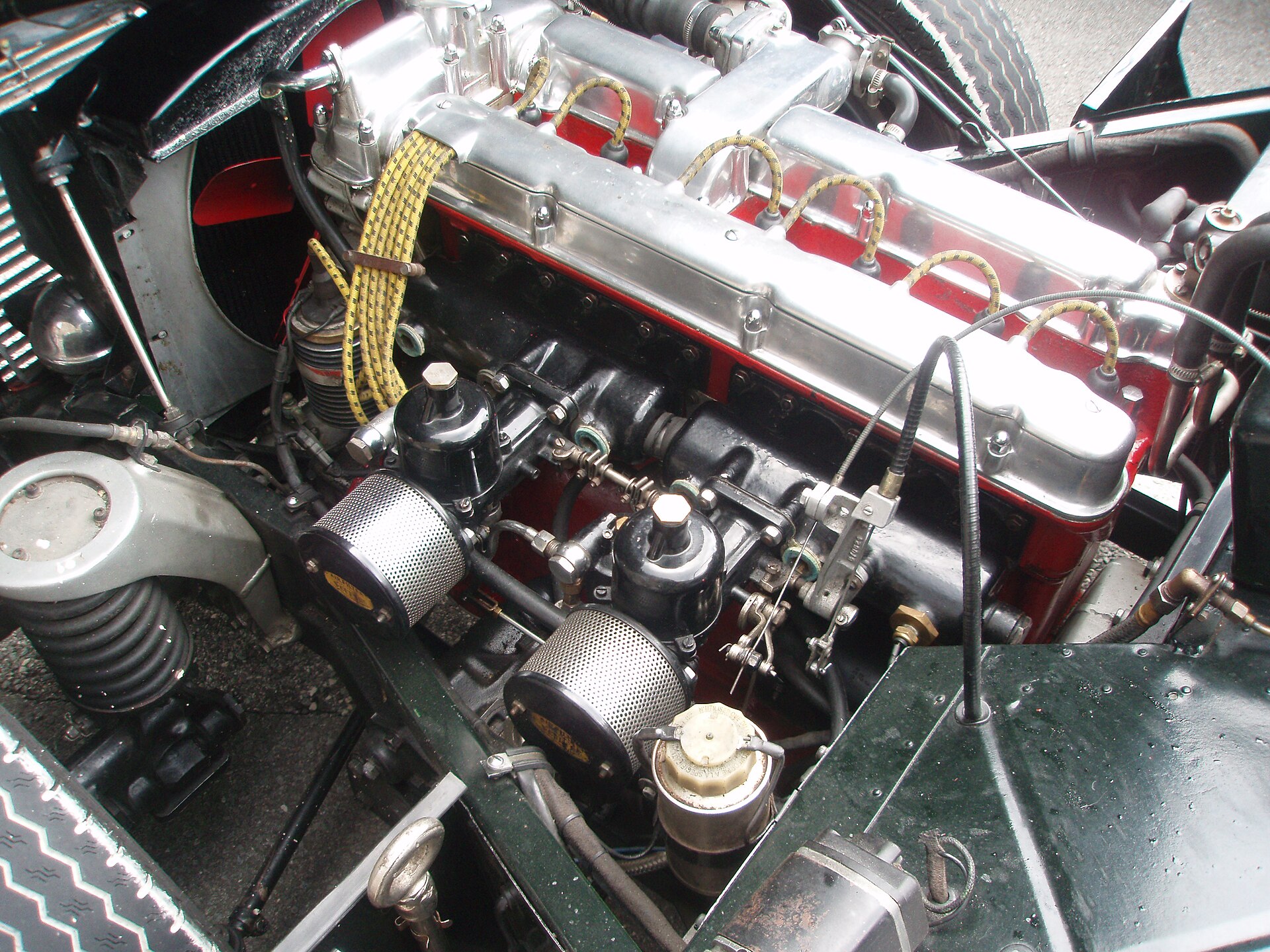
For a classic carburettor car not declared compatible with E10, the reasonable choice is generally a fuelE5with an octane rating that complies with the manual. In France, this often leads to SP98-E5, but the pump label must be checked: the commercial designation does not replace the regulatory marking.
SP98 does not mechanically improve all engines. An octane rating higher than required does not automatically provide more power or better cleaning. Its interest, in this context, lies mainly in the common availability of an E5 formulation and its resistance to knocking when an engine demands a high rating.
On a modified engine — increased compression ratio, different ignition timing, reworked cylinder head, replaced injection — the original specification may no longer suffice. The tuner or engine builder must define the appropriate rating, richness and settings.
SP98, additives and lead substitutes: three different topics
The choice between E5 and E10 mainly concerns the ethanol content and the compatibility of the fuel system. The 95 or 98 rating relates to knock resistance. The lead substitute addresses a different issue: the potential protection of valve seats in an engine designed for the old leaded petrol.
Therefore, do not automatically add an additive just because the car is old. Check the design of the cylinder head, any work already carried out, the recommendations of the brand club, and the actual usage. An engine fitted with adapted valve seats does not have the same needs as an original engine that has been subjected to prolonged heavy load.
Fuel stabilisers form yet another distinct category. They do not make E10 compatible with materials that are not, do not repair a porous hose, and do not convert a 95 rating into a 98. Use only a product intended for the chosen petrol, at the manufacturer’s recommended dosage, after consulting the specialist who services the car.
What should you do after mistakenly filling with SP95-E10?
The British Department for Transport states that a single tank of E10 in a non-compatible vehicle should not pose a major problem: it recommends refilling with E5 at the next fill-up and avoiding regular use of E10. This advice does not exempt you from monitoring the car, especially if its fuel system is already old or questionable.
Proceed as follows:
- do not panic and do not confuse this situation with a petrol-diesel mix-up;
- recheck the exact compatibility of the vehicle;
- if the car runs normally and does not leak, top up as soon as possible with the E5 authorised by the manufacturer;
- inspect hoses, pump, connectors, carburettor and underside of the tank;
- if there is a strong smell, leak, significant misfires or a modified engine, switch off and seek advice from a specialist;
- record the fuel added and the date in the maintenance log.
An immediate draining of the tank is not a universal rule after a one-off mistake. However, it may be justified for a very rare vehicle, a known incompatible system, planned immobilisation, or the appearance of symptoms. Do not siphon the petrol yourself with a hose or store it in an improvised container.
How to prepare the fuel system for current petrol?
A well-documented upgrade reduces risk, without promising compatibility that the manufacturer never validated.
- identify the material and date of the hoses;
- replace cracked, hardened or unknown hoses with references intended for the fuel used;
- check pump diaphragms, carburettor seals, needles and floats;
- examine the tank, its venting, rigid pipes and filter;
- check for leaks when cold then with the engine warm, in a ventilated space;
- keep invoices and part references in the historical file.
If the car is coming out of a long period of inactivity, start with our Checklist for restarting a classic car. Old fuel, water or rust present in the tank can be more urgent issues than the choice between E5 and E10.
When purchasing, examine the invoices for the fuel system with as much care as the chrome details. Theclassic car listings on Plethore Cars allow you to compare models and their configurations; an independent inspection should then confirm the condition of the desired example. To gauge a refurbishment budget within the overall value, you can also request afree valuation of your car.
Winter storage: should you prefer E5?
For a car not compatible with E10, the answer is obviously yes. For a compatible car that is rarely used, E5 reduces the maximum ethanol content, without making the fuel last indefinitely. The storage life depends on the formulation, temperature, humidity, circuit tightness and the condition of the tank.
There is no universal rule of “full tank” or “empty tank” that applies to all classics. A metal tank, a flexible bladder, a composite reservoir and a ventilated carburettor all require different handling. Follow the vehicle manual, the restorer’s recommendations and the safety instructions of the storage location.
Before storage:
- choose compatible fuel and avoid leaving an unknown mixture;
- check for any leaks and replace suspect components;
- note the date and formulation of the last fill-up;
- do not store non-approved containers in the garage;
- before restarting, inspect the circuit and the appearance of the fuel.
Checklist to keep in the glovebox
- Precisely identify model, year, engine and serial number.
- Read the manual and the official E10 list of June 2026.
- Check the E5/E10 symbols at the pump.
- Respect the manufacturer’s minimum octane rating.
- Check the age and compatibility of hoses and seals.
- Do not confuse ethanol, octane rating and lead substitute.
- Monitor smell, seepage, clogged filter and irregular running.
- Document the fuel and replaced parts.
- Request a written opinion for a rare, modified, or poorly documented model.
- Turn off the ignition at the first sign of a leak.
Frequently Asked Questions
Is SP98 still E5 in France?
It is commonly sold with the E5 label, but only the sticker displayed on the pump is authoritative. Check it at every station, as formulations and commercial names may change.
Does a 1995 car automatically accept SP95-E10?
No. The year is an indicator, not proof. Consult the official list including make, model, engine, and any serial number restrictions.
Can E5 and E10 be mixed?
For a vehicle compatible with E10, British authorities state that the two grades can be mixed. For a non-compatible classic, mixing does not make regular use of E10 acceptable; after a one-off mistake, revert to the appropriate E5.
Should you drain the tank after a single fill of E10?
Not systematically. The official British recommendation is to refill with E5 at the next fill-up. However, draining may be prudent for a very rare car, a fragile system, prolonged storage, or if symptoms appear.
Does an additive make SP95-E10 compatible with a classic car?
No. An additive does not change the compatibility of hoses, membranes, alloys, and settings. It serves a specific function and should only be used when that function is genuinely needed.
Can E85 replace SP95-E10 in a classic car?
No. Its ethanol content is much higher. It requires a FlexFuel vehicle or an approved and technically suitable conversion; simply changing hoses is not enough.
The right fuel is the one the car actually accepts
For a classic car, caution does not mean blindly using the most expensive fuel. It means cross-referencing the octane recommendation, E5/E10 compatibility, and the actual condition of the fuel system.
If the vehicle is not explicitly approved for E10, an E5 petrol compliant with the manual remains the safest choice. After a one-off mistake, monitor for leaks and return to the appropriate E5. Finally, take every opportunity to replace ageing components with documented references: the reliability of a classic depends more on a healthy system than on repeated beliefs at the pump.
Main sources
- Ministry of Ecological Transition — Fuels and combustibles authorised in France: definitions and necessary adaptations according to fuels.
- Ministry of Ecological Transition — List of vehicles compatible with SP95-E10, June 2026: compatibility by manufacturer, model and period.
- Légifrance — Decree of 26 January 2009 relating to SP95-E10French regulatory framework for fuel.
- ACEA — E10 petrol fuel vehicle compatibility listCompatibility information provided by European and Japanese manufacturers.
- GOV.UK — E10 petrol explainedClassic vehicles, occasional error, E5/E10 blend and labelling.
- TotalEnergies — Which fuel for a classic car in the absence of SP95?Choice conditioned by the vehicle’s E10 compatibility.
Photo credits
- Featured image: Nenad Stojkovic,fuel filler flap of a classic car, CC BY 2.0 licence.
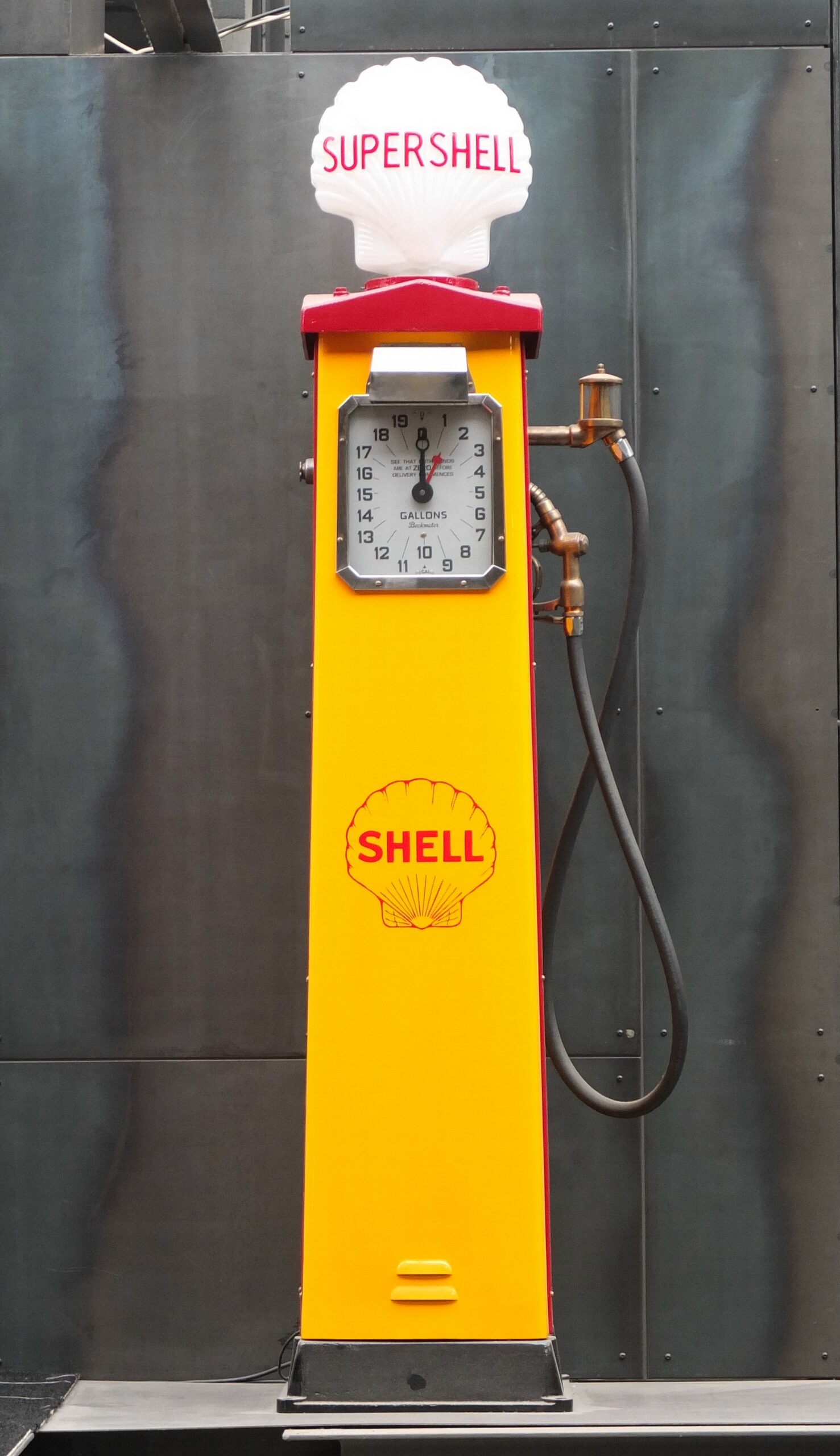
- 1930 petrol pump: Palauenc05,Shell petrol pump 1930, CC BY-SA 4.0 licence.
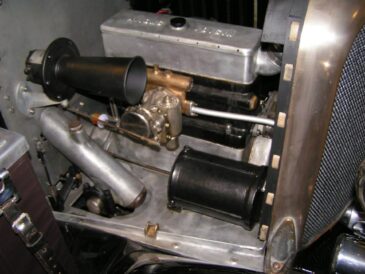
- Aston Martin DB2 engine: Akela NDE,engine with two SU carburettors, CC BY-SA 2.0 fr licence.