Yes, it is possible to replace the engine of a classic car. However, the procedure depends less on the age of the vehicle than on the compliance of the installed engine. A truly equivalent exchange, which does not alter the technical characteristics of the vehicle, is generally considered a repair. An engine of a different type, more powerful, with a different displacement, or requiring modifications to the chassis, braking, fuel system, noise or emissions may constitute a significant modification: in such cases, an individual approval (RTI) must be considered before putting the car back on the road.
The correct approach is to identify the original engine, document the replacement unit, request a written position from the manufacturer or their representative, and, at the slightest change in characteristics, contact the DREAL, DRIEAT or DEAL before commencing work. It is also necessary to inform the insurer in writing if the modification increases the risk or creates a new one.
Information verified on 14 September 2026 for a vehicle registered in France. Each modification is assessed according to the vehicle, the engine, associated parts and the submitted dossier. A classic or historic vehicle registration document does not benefit from a general exemption from approval.
The answer depends on three scenarios
| Project | Likely consequence | Prudent action |
|---|---|---|
| Rebuilding the original engine | Maintenance or restoration without changing the engine | Keep invoices, measurements and photos |
| Replacement with a strictly equivalent engine | Repair possible if no regulatory characteristic changes | Have equivalence confirmed and record the engine block number |
| Engine of a different type, power or fuel type | Potentially significant modification | Consult the DREAL before purchase and work; prepare an RTI if required |
The term “identical engine” must be taken seriously. A similar appearance or installation without cutting does not prove regulatory equivalence. Engine type, displacement, power, fuel supply, emissions, noise level, mass, mounts, transmission and braking may be examined.
Replacing with an identical engine: what to check
When a broken engine block is replaced by an engine of the same type and characteristics, without modifying the vehicle’s technical data, the operation may be considered maintenance. The official pageModified vehicle and registration certificaterequires an update when the modification changes the technical characteristics recorded or those in the descriptive notice. The FAQ of the DREAL Pays de la Loire specifies that an engine change accompanied by a power modification is subject to an RTI.
This does not mean that any replacement with the same displacement is automatically neutral. Before installation, compare:
- the engine code or type and, where applicable, its individual number;
- the displacement, power and torque in the intended configuration;
- fuel, supply and anti-pollution equipment;
- mounts, the sump, exhaust and cooling system;
- the gearbox, transmission and associated ratios;
- the weight of the powertrain assembly;
- correspondence with the descriptive manual or the type approved.
Request from the engine seller an invoice including its designation, origin and number when legible. Have the workshop issue an invoice detailing the removal, the installed engine and the checks carried out. These documents serve to demonstrate technical consistency, reassure a future buyer and respond to the insurer or expert.
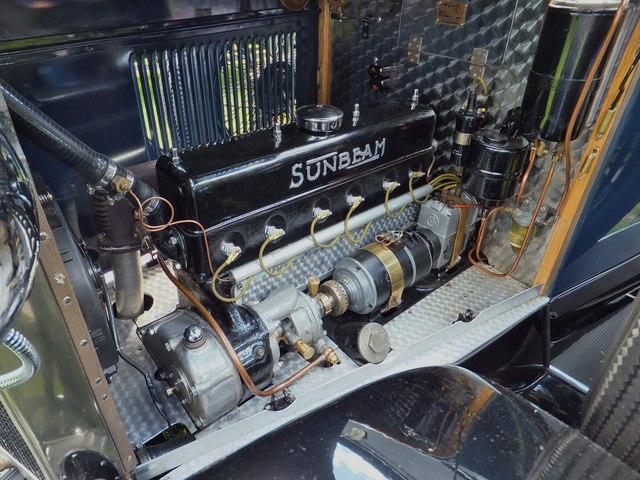
On a classic car, conformity is not judged solely by appearance: type, power, fuel supply and peripheral equipment must correspond to the vehicle’s file. Photo: Richard Hoare,Wikimedia Commons, licenceCC BY-SA 2.0.
When does an engine change become a significant modification?
Thearticle 13 of the decree dated 19 July 1954specifically qualifies as a significant modification any change to the technical details appearing on the registration certificate. Service-Public cites changes affecting power, weight, dimensions, axles, braking, steering, energy, pollutant emissions or noise nuisance.
An “engine swap” — fitting an engine different from that originally intended for the vehicle type — can affect several of these areas simultaneously. Higher power stresses the transmission, tyres and brakes. A heavier block alters the loads. Modern injection, a turbo, a different exhaust or a fuel conversion can change noise and emissions. The Ministry for Ecological Transition reminds that modifying engine performance can transform the vehicle into a special model subject to a technical inspection (RTI).
The following cases should trigger a prior consultation:
- different displacement or power;
- switching from a naturally aspirated engine to a forced induction engine;
- changing from petrol to diesel, LPG, electric or other energy source;
- engine originating from another model or generation;
- reprogramming modifying performance;
- modified mounts, subframe, body shell or bulkhead;
- adapted braking, axles, suspension or transmission;
- modified noise level or anti-pollution devices.
Do not purchase parts assuming that approval will be a mere formality. The DREAL may request manufacturer certificates, a descriptive notice, proof of conformity, and tests. A high-performance or separately approved part does not automatically make the entire vehicle compliant after installation.
What is the procedure for an RTI?
The reception in isolation is used to verify that a particular modified vehicle meets the applicable requirements. In Île-de-France, the contact is the DRIEAT; overseas, the DEAL; in other regions, the DREAL. The file and tests vary depending on the project, which prevents promising a universal list or cost.
- Describe the project before starting work.Gather the registration certificate, VIN, descriptive notice, donor engine data, and a complete list of modifications.
- Contact the manufacturer or their representative.Request a certificate, agreement, or failing that, a written response specifying what they can certify.
- Consult the reception service.Present the project to the competent DREAL before incurring irreversible expenses.
- Compile the technical evidence.Invoices, plans, weights, engine characteristics, braking, tyres, noise and emissions may be requested.
- Carry out compliance adjustments and tests.The service may impose additional inspections or tests carried out by a recognised body.
- Present the vehicle.Reception is only granted after a favourable examination; an application may also be refused.
- Update the registration certificate.If the characteristics change, the application must be submitted within one month according to Service-Public, with the RTI report and the required supporting documents.
France Titres offers the procedure “report a change in your vehicle’s status.” Use this service only once the technical documents have been obtained: an application for a registration certificate does not replace the authorisation for modification.
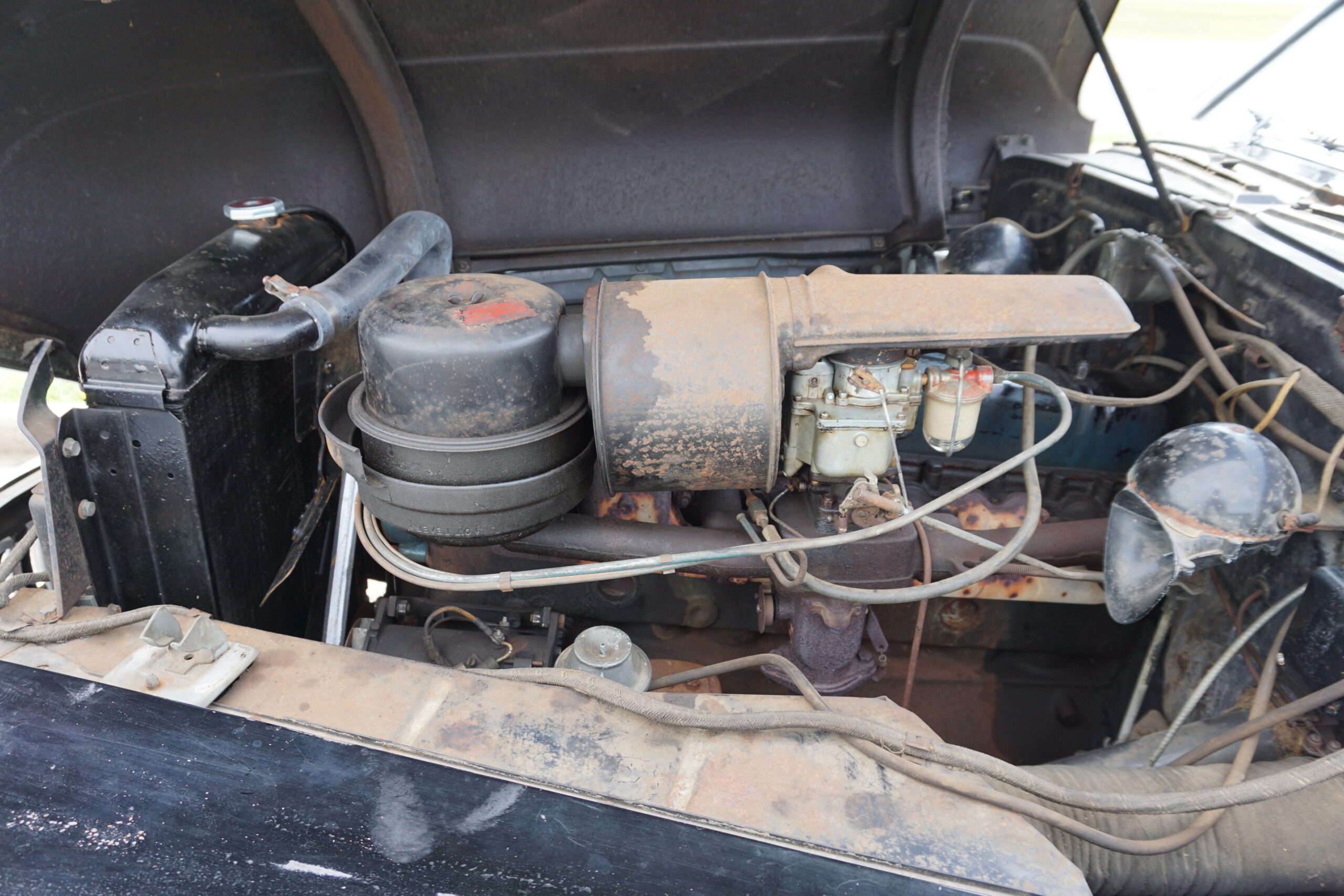
Changing engine family can alter power, weight, cooling, transmission and braking: the entire vehicle, not just the block, must remain compliant. Photo: Michael Barera,Wikimedia Commons, licenceCC BY-SA 4.0.
Classic car registration document: an exemption for changing the engine?
No. The designation “classic vehicle” does not turn a significant modification into a simple repair. It pertains to the classic use on the registration certificate; it does not grant carte blanche to install a different engine.
The FFVE states that its certificate serves to establish the dating and characteristics of the vehicle to request classic use from France Titres. Its file requires documenting the vehicle presented. A mechanical setup not conforming to the historical configuration can therefore complicate the certificate, the appraisal, the value, and the resale, even when it functions perfectly.
If your classic car does not yet have a classic registration document, do not rely on this procedure to regularise a swap retrospectively. The technical conformity of the modification and the possible request for classic use must be handled separately. Our guide on the classic registration document details the criteria and formalities without confusing them with the approval of a modified vehicle.
Should you inform the insurance company?
Yes, as soon as the change creates a new risk or increases the declared risk. The article L113-2 of the Insurance Code requires the insured to declare during the contract any new circumstances that render their initial answers inaccurate or obsolete. Service-Public also requests a written declaration to the insurer for modifications likely to increase covered risks or create new ones.
Provide a precise description before returning to the road: engine type, power, ancillary work, conformity documents, and date of re-commissioning. Request a written response and an endorsement when the insurer accepts the risk. Approval and insurance are two different controls: a favourable RTI does not automatically mean acceptance of the contract, and an informed insurer does not alone regularise an unapproved modification.
What impact does it have on the value of a classic car?
The engine is a major element of a classic car’s identity, but not all situations have the same effect. An original block preserved and repairable can support the heritage value. A correct replacement engine, of the same type and documented, can remain acceptable for a buyer prioritising use. A different or undocumented engine often reduces the number of buyers, makes appraisal more delicate, and can shift the car towards the restomod or leisure vehicle market.
The term matching numbers must not be used without proof. Depending on the brand and era, the manufacturer may link the chassis to a type, a range, or an individual engine number. Fresh paint or visible stamping does not constitute authentication.
Before choosing between refurbishment and replacement, compare four budgets: block restoration, equivalent engine, technical adaptation, and potential loss of value. For a rare car, an valuation of its worth before work helps avoid a mechanical saving that would cost more at resale.
Documents to keep
- photographs of the engine in place before dismantling;
- records of chassis, engine, and gearbox numbers;
- purchase invoice and origin of the replacement engine;
- technical references comparing old and new block;
- detailed invoices from the workshop and parts;
- power, noise, emissions or weight measurements if conducted;
- correspondence with the manufacturer, the DREAL and the insurer;
- RTI report and new registration certificate, if applicable;
- original engine and its identifying components when they can be retained.
This file must accompany the car. It facilitates technical inspections, expert assessments, insurance and sale. For valuable vehicles, clearly inform the prospective buyer that the engine has been replaced and provide the supporting documents rather than leaving the expert to discover the modification.
The checklist before dismantling
- Is the exact type of the original engine identified?
- Does the replacement block have a clear origin and readable number?
- Do the power, displacement, fuel type and peripherals remain identical?
- Does the descriptive manual or manufacturer confirm the equivalence?
- Has the DREAL been consulted if any characteristic changes?
- Are adaptations to brakes, tyres, transmission and cooling described?
- Has the insurer responded in writing?
- Has the impact on authenticity and value been assessed?
- Can the original engine be restored or preserved?
If any of these answers are missing, suspend the installation. Compliance must be prepared before the work; it is much more difficult to reconstruct once the original engine has been sold and the vehicle modified.
Frequently asked questions
Is it possible to fit a more powerful engine in a classic car?
Technically sometimes, but an increase in power is a strong signal of a significant modification. Consult the DREAL before the work; an RTI, manufacturer documentation and tests may be required.
Is an engine of the same displacement necessarily identical?
No. Two engines of the same displacement can differ in type, power, fuel system, emissions, weight or peripherals. References and the approved configuration must be compared.
Is it necessary to change the registration certificate after an identical replacement?
Updating is required if the declared technical characteristics change. For a truly equivalent exchange without changes to these characteristics, request written confirmation from the manufacturer or the reception service and keep the invoices.
Does the classic vehicle registration certificate allow an engine swap?
No. The classic use exemption does not waive the rules applicable to significant modifications and does not guarantee acceptance of an engine that does not conform to the documented configuration.
Can you insure a classic car with a different engine?
You must declare the modification to the insurer and obtain their written consent. This acceptance does not replace any possible RTI (Technical Inspection Report) nor the update of the registration certificate.
Is it necessary to keep the original engine?
Where possible, yes: even if non-functional, it can preserve part of the vehicle’s traceability and allow for future restoration. Store it with its references and proof of its connection to the car.
Main sources
- Service-Public.fr — Modified vehicle and registration certificate: modifications to declare, deadlines, RTI and insurer notification.
- Légifrance — decree of 19 July 1954, article 13: regulatory definition of significant modifications.
- Ministry of Ecological Transition — Vehicle homologation: effects of technical modifications and role of the RTI.
- DREAL Pays de la Loire — Vehicle reception FAQ: engine change and power modification.
- France Titres — Reporting a change in the vehicle’s status: access to the registration procedure.
- Légifrance — Insurance Code, article L113-2: declaration of new circumstances affecting the risk.
- FFVE — Obtaining a certificate: dating and characteristics for classic use.
Image credits
Featured image: Robert Lamb, Wikimedia Commons, CC BY-SA 2.0. Sunbeam engine: Richard Hoare, Wikimedia Commons, CC BY-SA 2.0. Buick engine: Michael Barera, Wikimedia Commons, CC BY-SA 4.0. Source and licence links appear in captions or WordPress metadata. Privacy control was performed and visually verified: faces and the visible plate in the featured image were blurred; detections on the Buick engine were false positives and have been cancelled.
Last check: 14 September 2026. Recommended review every six months or after changes to France Titres procedures, reception rules, or FFVE conditions.