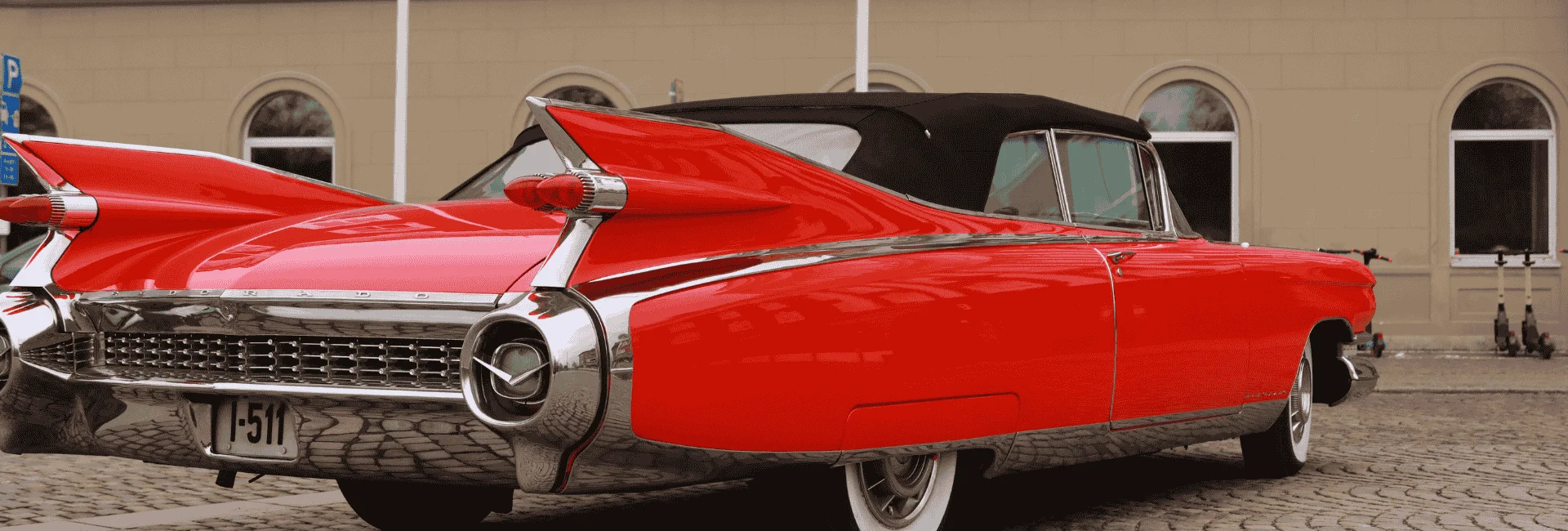
In brief:The most beautiful classic convertibles are led by the Ferrari 250 GT California Spyder, the Mercedes-Benz 300 SL Roadster and the Jaguar E-Type Series 1 convertible. Ten convertibles whose status owes as much to their design as to their rarity.
When design meets freedom. Ten exceptional convertibles that have crossed decades without aging — and continue to make collectors’ hearts beat faster.
Introduction
There is something irreducibly romantic about a classic convertible. It is not just a car with the roof removed: it is a promise. The promise of wind in your hair on a coastal road, of sunlight caressing leather aged by time, of the sound of an engine resonating unfiltered among the trees. Classic convertibles embody a way of life where mechanics become poetry, where every body line tells a story of an era and craftsmanship.
From the roaring Ferrari V12 under the bonnet of a California Spyder to the six-cylinder Mercedes whispering in a 300 SL Roadster, these open-air machines have shaped automotive history. Companions of movie stars, heroines of legendary rallies, they rank among the most coveted collector’s items worldwide.
Plethore invites you on a journey through ten exceptional convertibles — ten masterpieces whose beauty and rarity continue to fascinate. Fasten your seatbelt, the hood is already down.
1. Ferrari 250 GT California Spyder — The ultimate icon (1958–1962)
Enzo Ferrari did not want it. It took the insistence of Luigi Chinetti and Jon von Neumann, American importers, to convince the Commendatore to produce a convertible version of the 250 GT berlinetta. The result? One of the most beautiful convertibles ever created.
Designed by Pinin Farina and bodied by Scaglietti, the 250 GT California Spyder combines a low, curvaceous line with racing performance. Under the long bonnet beats the famous V12 Colombo engine of 2 953 cm³, developing 260 hp in the long-wheelbase (LWB) version and 280 hp in the short-wheelbase (SWB) version according to Ferrari.com.
Produced in approximately 106 units, this classic convertible is one of the most expensive in the world. The example from the Baillon collection was sold for 16 288 000 € at Artcurial in 2015.
Technical data (SWB version):
- Engine: V12 Colombo, 2 953 cm³
- Power: 280 hp
- Fuel system: 3 twin-choke Weber carburettors
- Transmission: rear-wheel drive, 4-speed manual gearbox
- Production: ~106 units
2. Mercedes-Benz 300 SL Roadster (W198) — The pioneer (1957–1963)
Following the “Gullwing” coupe with its distinctive doors, Mercedes unveiled the Roadster version of the 300 SL at the 1957 Geneva Motor Show. The inline six-cylinder M198 engine of 2 996 cm³, tilted by 45° to lower the bonnet line, develops 215 hp DIN thanks to Bosch direct injection — a first on a production car according to Wikipedia. The star brand lines up other legendary components, gathered in our ranking of the most beautiful Mercedes.
At the time, it was the fastest open-top sports car in the world, reaching up to 250 km/h according to the final drive ratio. Approximately 80 % of production was exported to the United States. Tubular chassis, aluminium bonnet and direct injection inherited from racing: this classic convertible embodies German mechanical excellence.
Technical data:
- Engine: 6 inline cylinders M198, 2 996 cm³
- Power: 215 hp DIN / 243 hp SAE
- Torque: 274 Nm
- Top speed: up to 250 km/h
- Transmission: rear-wheel drive, 4-speed manual gearbox
3. Jaguar E-Type Convertible (Series 1) — The most beautiful in the world (1961–1968)
Enzo Ferrari himself reportedly called it “the most beautiful car ever designed.” Presented at the Geneva Motor Show in 1961, the Jaguar E-Type revolutionised the genre with its endless bonnet, covered headlights and silhouette sculpted by aerodynamicist Malcolm Sayer.
In the Series 1 convertible version, it carries the XK six-cylinder engine of 3,8 litres then 4,2 litres, developing 265 hp at 5 000 rpm. It reaches 240 km/h for half the price of a Ferrari — a legendary argument. The first Jaguar to benefit from four independent wheels and disc brakes on all corners, the E-Type combines innovation and timeless beauty.
Technical data (Series 1 — 4.2L):
- Engine: 6 inline XK cylinders, 4 235 cm³
- Power: 265 hp at 5 000 rpm
- Torque: 385 Nm at 4 000 rpm
- Weight: ~1 317 kg
- Top speed: ~240 km/h
4. Porsche 356 Speedster — The essence of pleasure (1954–1958)
The creation of the Speedster was the work of Max Hoffman, Porsche’s importer in the United States, who wanted a more stripped-down and affordable version of the 356. The result is a minimalist roadster: lowered windscreen, simplified hood, stripped interior. The antithesis of luxury, but the very essence of driving pleasure.
The flat-four of 1,6 litre develops 60 hp in standard version or up to 110 hp in the Carrera GT. With a weight barely exceeding 800 kg, the 356 Speedster offers sensations that many modern cars struggle to reproduce. James Dean owned one before turning to the Porsche 550 (source: Wikipedia FR).
Technical data (356 A 1600 Speedster):
- Engine: 4 flat cylinders, 1 582 cm³
- Power: 60 hp (standard version) to 110 hp (Carrera GT)
- Transmission: rear-wheel drive, 4-speed manual gearbox
- Weight: ~800 kg
5. Austin-Healey 3000 MkIII — The “Big Healey” (1959–1967)
Nicknamed “Big Healey” in reference to its 2 912 cm³ six-cylinder engine, the Austin-Healey 3000 is a British sports car that shone in competition under the hands of Pat Moss, Carroll Shelby and Timo Mäkinen.
The MkIII version (BJ8), launched in 1963, represents the culmination of the line: engine boosted to 148 hp, wooden dashboard, servo-assisted brakes as standard. Produced in approximately 17 700 units, with over 90 % exported to the United States, it combines sporting character and refinement.
Technical data (MkIII BJ8):
- Engine: 6 inline cylinders, 2 912 cm³
- Power: 148 hp
- Weight: 1 180 kg
- Brakes: discs front, drums rear
- MkIII production: ~17 700 units
6. BMW 507 — Rarity incarnate (1956–1959)
With only 252 units produced, the BMW 507 is one of the rarest classic convertibles in the world. Designed by Count Albrecht von Goertz, it was intended to rival the Mercedes 300 SL. Its V8 of 3,2 litres develops 150 hp, but it is especially its line of rare purity that earns it a place in the automotive pantheon. Elvis Presley owned two examples during his military service in Germany.
The low production paradoxically resulted from manufacturing costs exceeding the sale price, threatening BMW with bankruptcy. This rarity makes it today an invaluable treasure.
Technical data:
- Engine: V8, 3 168 cm³
- Power: 150 hp
- Transmission: rear-wheel drive, 4-speed manual gearbox
- Production: 252 units
7. Alfa Romeo Spider (Duetto) — La dolce vita on four wheels (1966–1993)
Made famous by the film The Graduate with Dustin Hoffman, the Alfa Romeo Spider is a permanent invitation to romantic drives. Its line signed by Pininfarina has spanned 27 years of production without losing its elegance. The “2000” series (1972–1982) offers the best performance-price ratio according to Autocollec. The twin-cam engine embodies Italian temperament: lively, expressive, melodious.
Technical data (Spider 2000 — Series 2):
- Engine: 4 inline cylinders, 1 962 cm³
- Power: approximately 130 hp
- Transmission: rear-wheel drive, 5-speed manual gearbox
- Total Spider production: over 100 000 units
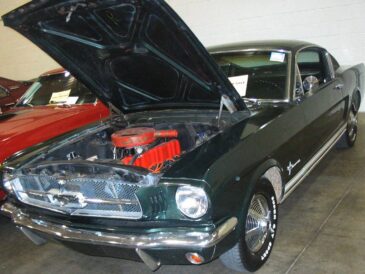
8. Ford Mustang Convertible (1th generation) — The American dream (1964–1966)
The very first Mustang ever made was a convertible. Launched on 17 April 1964, it became in less than two years the best-selling car in American history. Available with engines ranging from the 6-cylinder 101 hp to the V8 289ci High Performance 271 hp, the Mustang convertible offered everyone access to the muscle car dream.
The V8 289ci of 200 hp remains the most widespread, with a generous torque of 409 Nm from 2 400 rpm according to motorsdb.com. The 1965 model years remain the most sought after, representing the Mustang in its purest form.
Technical data (Convertible V8 289ci — 1965):
- Engine: V8 Windsor, 4 736 cm³ (289ci)
- Power: 200 to 271 hp depending on version
- Torque: 409 Nm at 2 400 rpm (version 200 hp)
- Transmission: rear-wheel drive, 3 or 4-speed manual / 3-speed automatic gearbox
9. Fiat 124 Spider — Accessible elegance (1966–1985)
Often compared to the Ferrari 250 GT for the purity of its lines, the Fiat 124 Spider is the ideal classic convertible to combine pleasure and accessibility. From 1966, its 1 438 cm³ twin-cam engine delivers 90 hp and allows 180 km/h.
Its twenty-year career is a longevity record for a sports convertible. Still affordable today — under 10 000 euros for good examples — it represents an ideal entry point into the world of classic convertibles.
Technical data:
- Engine: 4 inline cylinders, 1 438 cm³ (then 1 608 and 1 756 cm³)
- Power: 90 hp
- Top speed: 180 km/h
- Production period: 1966–1985
10. Mercedes-Benz 190 SL — Discreet elegance (1955–1963)
Born in the shadow of the 300 SL, the Mercedes 190 SL is a remarkable convertible in its own right. Designed as a more accessible version — at a price well below the 11 000 $ of its big sister — it shares a very similar silhouette while resting on a different technical base.
Its four-cylinder 1 897 cm³ engine develops 105 hp. Produced in approximately 25 881 units, the 190 SL is now seeing a sharp rise in value, collectors having rediscovered its discreet charm and exemplary build quality.
Technical data:
- Engine: 4 inline cylinders, 1 897 cm³
- Power: 105 hp
- Transmission: rear-wheel drive, 4-speed manual gearbox
- Production: ~25 881 units
Comparison table of the 10 most beautiful classic convertibles
| Model | Years | Engine | Power | Units produced | Estimated value |
| Ferrari 250 GT California | 1958–1962 | V12 – 2 953 cm³ | 260–280 hp | ~106 | > 10 000 000 € |
| Mercedes 300 SL Roadster | 1957–1963 | 6 cyl. – 2 996 cm³ | 215 hp (DIN) | ~1 858 | > 1 000 000 € |
| Jaguar E-Type Cab. S1 | 1961–1968 | 6 cyl. – 3 781/4 235 cm³ | 265 hp | ~15 000+ | 100 000–300 000 € |
| Porsche 356 Speedster | 1954–1958 | Flat-4 – 1 582 cm³ | 60–110 hp | ~4 800 | 200 000–500 000 € |
| Austin-Healey 3000 MkIII | 1959–1967 | 6 cyl. – 2 912 cm³ | 148 hp | ~17 700 | 50 000–100 000 € |
| BMW 507 | 1956–1959 | V8 – 3 168 cm³ | 150 hp | 252 | > 2 000 000 € |
| Alfa Romeo Spider | 1966–1993 | 4 cyl. – 1 290 to 1 962 cm³ | 80–130 hp | > 100 000 | 15 000–50 000 € |
| Ford Mustang Conv. (1th gen.) | 1964–1966 | V8 – 4 736 cm³ | 200–271 hp | > 100 000 | 30 000–80 000 € |
| Fiat 124 Spider | 1966–1985 | 4 cyl. – 1 438 cm³ | 90 hp | — | 8 000–25 000 € |
| Mercedes 190 SL | 1955–1963 | 4 cyl. – 1 897 cm³ | 105 hp | ~25 881 | 80 000–180 000 € |
Values are indicative and vary according to condition, history and provenance of the vehicle.
Conclusion
These ten classic convertibles are not mere machines: they are fragments of history, witnesses of a golden age when cars were hand-designed and driven with the heart. From the dizzying rarity of the Ferrari 250 GT California to the warm accessibility of the Fiat 124 Spider, each model carries a unique emotion.
Investing in a classic convertible is to acquire a passport to sensations that neither electronics nor screens will ever reproduce.
Discover the Plethore universe — your reference for exceptional automotive culture. Explore our files and analyses to feed your passion.
👉 Find all our articles on Plethore.fr
And you, which classic convertible makes your heart beat? The Italian grace of a Spider, the raw power of a Mustang or the timeless elegance of a Mercedes? Share your favourite in the comments.