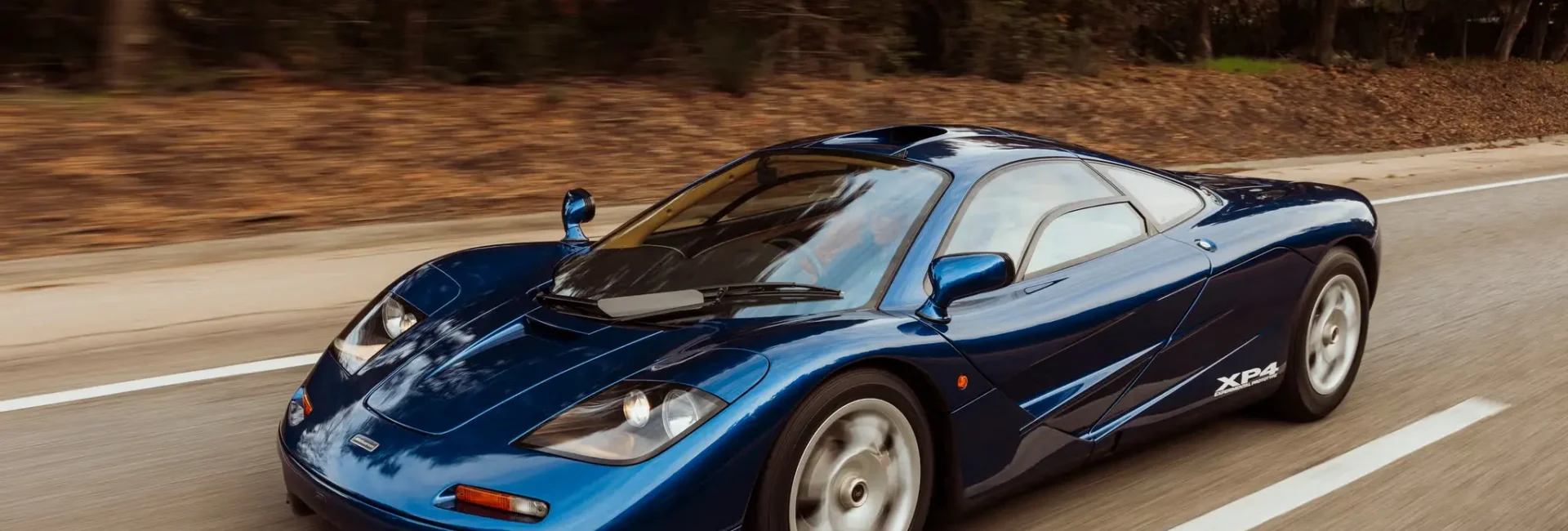
In brief:The ten best supercars in history open with the Ferrari F40 (1987), the McLaren F1 (1992), and the Porsche 959 (1986) — three cars that each redefined what a supercar could be, before the Miura SV and the Veyron.
The history of the automobile is marked by extraordinary creations that pushed the boundaries of what was possible. From the laboratories of Maranello to the workshops of Molsheim, certain supercars have transcended their era to become timeless icons. These mechanical masterpieces embody the pinnacle of engineering, where raw power meets design excellence. Each model in our selection marked its era with decisive technical innovation, unmatched performance, or a design that redefined aesthetic standards. This hierarchy is not limited to power figures or top speeds: it celebrates cars that have shaped the automotive imagination and remain, decades later, absolute references for enthusiasts worldwide.
Ferrari F40 (1987): The Commendatore’s Testament
The Ferrari F40 remains one of the purest creations in automotive history. Unveiled for the 40th anniversary of the brand with the Prancing Horse, this supercar embodies Enzo Ferrari’s ultimate vision: a race car for the road, stripped of all superfluous elements. Its twin-turbo V8 engine of 2,85 litres develops 478 horsepower according to Ferrari.com, propelling this thoroughbred to 324 km/h. The 0 to 100 km/h sprint is dispatched in 4,1 seconds according to Ferrari.com, while the 0 to 400 metres is completed in 11,9 seconds.
Designed by Nicola Materazzi, the F40 stands out with its kevlar-carbon composite bodywork, a first for the Italian manufacturer. Wikipedia states that the maximum torque reaches 577 Nm at 4000 rpm. Produced in 1315 units between 1987 and 1992, it was the last Ferrari overseen by the Commendatore himself, who passed away in August 1988. Its price has soared dramatically: a 1990 example sold for 3,965 million dollars at Gooding & Company in August 2022. The massive rear wing, absence of ostentatious luxury, and absolute pursuit of the power-to-weight ratio define a philosophy that modern supercars still struggle to match.
To delve deeper into this subject, consult our article dedicated to top 10 most expensive cars in the world.
McLaren F1 (1992): British Technical Perfection
Gordon Murray designed the McLaren F1 with an immense ambition: to create the best driving car ever built. The result surpasses imagination. Powered by a naturally aspirated BMW V12 of 6,1 litres developing 627 horsepower, this British hypercar set the world speed record for a production car on 31 March 1998 with an official 391 km/h on the Ehra-Lessien circuit. British driver Andy Wallace was at the wheel during this historic feat.
The F1 is distinguished by a revolutionary architecture: three seats with the driver in the centre, carbon fibre monocoque chassis, and an engine compartment covered with 24 carat gold leaf to optimise heat dissipation according to Motorsdb.com. Only 106 units were produced between 1993 and 1998, including 64 standard road versions. The weight of 1140 kg DIN gives this marvel an exceptional power-to-weight ratio of 2 kg per horsepower. The LM version celebrating victory at the 24 Hours of Le Mans 1995 developed 680 horsepower and reached 354 km/h. The initial price of 634 500 pounds sterling in the UK now seems trivial compared to the current value, which easily exceeds 20 million euros for the best-preserved examples.
Porsche 959 (1986): Stuttgart’s Technological Showcase
The Porsche 959 represents the pinnacle of German engineering in the 1980s. Originally designed for Group B rallying, this all-wheel-drive supercar introduced technologies still found in today’s Porsches. Its flat-6 twin-turbo engine of 2,85 litres develops 450 horsepower at 6500 rpm, allowing it to reach 317 km/h. The 0 to 100 km/h is achieved in 3,9 seconds according to Rsiauto.fr, a remarkable performance for the time.
The 959 innovates with electronically managed all-wheel drive, capable of distributing 20/80 torque during acceleration at 50/50 on slippery terrain. Wikipedia reports it easily won the Paris-Dakar 1986, confirming its exceptional versatility. The bodywork combines aluminium and Kevlar, while adjustable height and firmness suspension offer unprecedented adaptability. Produced in 283 road units, plus 29 Sport versions developing 515 horsepower, the 959 reached 339 km/h in its most radical configuration. The weight of 1450 kg DIN testifies to an unprecedented technological density: four radiators, sophisticated transmission, and tyres specially developed by Michelin. The initial price of 260 000 euros represented nearly twice that of a contemporary Ferrari Testarossa.
Lamborghini Miura P400 SV (1971): The Birth of the Italian Myth
The Lamborghini Miura inaugurated the very concept of the modern supercar. Unveiled in 1966, it astonished with its transverse mid-mounted V12 engine, an unprecedented configuration for a road car. The ultimate SV version, produced between 1971 and 1973, develops 385 horsepower at 7850 rpm thanks to its V12 of 3,9 litres. Maximum torque reaches 400 Nm at 5750 rpm, allowing this Italian to claim race car-worthy performance.
The design by Bertone, more precisely Marcello Gandini, defined the aesthetics of supercars for decades to come: plunging bonnet, sensual lines, and characteristic headlights that wink. Produced in only 150 units, the SV corrected the flaws of its predecessors with separate lubrication for the engine and gearbox, allowing the installation of a limited-slip differential. The weight of 1200 kg DIN ensures an exceptional power-to-weight ratio of 3,6 kg per horsepower. The widened rear wings accommodate wider tyres, improving traction on this chassis which directly inspired the Ford GT40 according to Motorsdb.com. The Miura embodies the mechanical dolce vita, that blessed period when Italy reinvented the sports car with flair and audacity.
Bugatti Veyron 16.4 (2005): Excess Made Supercar
The Bugatti Veyron 16.4 transcends the limits of reason. Ferdinand Piëch, then chairman of the Volkswagen group, set outrageous goals according to Wikipedia: 1001 horsepower and over 400 km/h top speed. Mission accomplished. The W16 block of 7,993 litres, composed of four turbochargers, develops 1001 horsepower at 6000 rpm and a colossal torque of 1250 Nm available from 2200 rpm. The top speed reaches 407 km/h, achieved after activating a special key positioned to the left of the driver’s seat.
The 0 to 100 km/h is dispatched in 2,5 seconds according to Motorsdb.com, the 0 to 200 km/h in 7,3 seconds, and the 0 to 300 km/h in 16,7 seconds. These staggering performances require extraordinary engineering: four radiators containing 55 litres of coolant, seven-speed DSG all-wheel-drive transmission, and Michelin tyres specially developed to withstand 440 km/h. The weight of 1888 kg DIN testifies to the mechanical complexity. At top speed, the Veyron consumes its 100 litres of fuel in twelve minutes. The price of 1 186 000 euros according to Zeperfs.com was justified by the three weeks of assembly required. The Super Sport version pushed excess to 1200 horsepower and 431 km/h homologated, a record set by Pierre Henri Raphanel in July 2010.
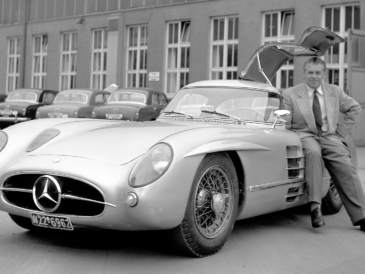
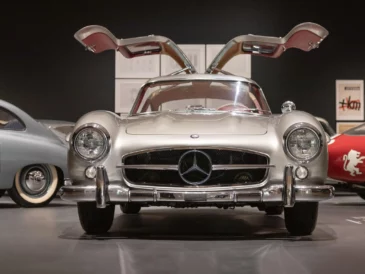
Mercedes-Benz 300 SL Gullwing (1954): German Sporting Elegance
The Mercedes-Benz 300 SL inaugurated the post-war supercar era with unmatched sophistication. Its iconic gullwing doors, necessitated by the spaceframe tubular chassis, define an immediately recognisable aesthetic. The inline six-cylinder engine of 3 litres, the first gasoline direct injection engine for a production car, initially developed 215 horsepower, allowing it to reach 260 km/h, an absolute record for the time.
Developed directly from the race car victorious at the 24 Hours of Le Mans 1952, the 300 SL transposes sporting excellence to the road. Its innovative tubular chassis offered exceptional rigidity while maintaining a contained weight. The rear swing axle suspension, although delicate at the limit, demonstrated a pursuit of aerodynamic efficiency. Produced in 1400 coupe units between 1954 and 1957, the 300 SL “Gullwing” remains one of the most desirable Mercedes ever created, embodying the renaissance of the German automotive industry after the world conflict.
Also read our feature on absolute performance from Italy.
Jaguar XJ220 (1992): The Misunderstood British Beast
The Jaguar XJ220 held the title of the world’s fastest production car at its launch. Its twin-turbo V6 of 3,5 litres, derived from the Metro 6R4 racing engine, developed 542 horsepower allowing it to reach 349 km/h top speed. The 0 to 100 km/h sprint was achieved in 3,6 seconds, performances that still impress today.
Initially presented as a concept with a naturally aspirated V12 and all-wheel drive, the production version finally adopted the twin-turbo V6 and pure rear-wheel drive, provoking the ire of some customers who had paid deposits. Yet, the XJ220 displayed superior performance to the initial concept, with reduced weight and increased efficiency. Its spectacular design by Keith Helfet and length of 4,93 metres made it an imposing vessel. Only 275 units were assembled between 1992 and 1994 in the TWR workshops in Banbury. Initially offered at over 400 000 pounds sterling, the XJ220 long suffered from its controversial image before finally being recognised as the exceptional supercar it always was.
Lamborghini Countach LP400 (1974): Geometric Extravagance
The Lamborghini Countach radically reinvents automotive aesthetics. The sharp lines by Marcello Gandini at Bertone violently break with the organic shapes of the Miura. The longitudinally mounted mid-rear V12 engine of 4 litres developed 375 horsepower in its initial LP400 version, allowing it to reach 290 km/h.
The doors opening upwards, the spartan cockpit, and precarious visibility contribute to the extreme character of this creation. The Countach defines the very archetype of the supercar of the 1970s and 1980s, adorning the walls of teenagers’ bedrooms worldwide. Its successive evolutions culminated with the Countach 25th Anniversary of 1988, developing 455 horsepower. Produced in approximately 2000 units across all versions between 1974 and 1990, it embodies unapologetic excess, that Latin madness where function follows fantasy rather than form. Driving a Countach remains a unique, violent, and unforgettable experience, recalling an era when sports cars cared little for reason.
Ford GT40 (1964): The Victorious American Dream
The Ford GT40 was born from an obsession: to beat Ferrari at the 24 Hours of Le Mans. After failed negotiations to buy the Italian manufacturer, Henry Ford II launched a colossal development programme with a single goal: to humiliate the Prancing Horse on its own turf. Mission accomplished with four consecutive victories from 1966 to 1969.
Standing only 40 inches tall (hence its name GT40), this American adopted a monocoque chassis, a mid-rear configuration, and various V8 engines depending on the versions. The GT40 Mk II victorious in 1966 with Ken Miles and Denny Hulme developed over 485 horsepower thanks to its V8 of 7 litres. Its top speed exceeded 330 km/h on the Hunaudières straight. Only 105 units were produced between 1964 and 1969, most destined for competition. The rare Mark III road versions, more civilised, remain today among the most sought-after American cars, testifying to that heroic era when Detroit dared to challenge the European aristocracy of racing circuits.
Aston Martin DB5 (1963): British Sporting Elegance
The Aston Martin DB5 transcends its supercar status to become a cultural icon, immortalised by James Bond in Goldfinger in 1964. Beyond cinema, this British Gran Turismo embodies absolute refinement. Its inline six-cylinder engine of 4 litres developed 286 horsepower, allowing it to reach 240 km/h, a remarkable performance for such a luxurious car.
The design by Carrozzeria Touring Superleggera defines timeless elegance. Aluminium body on tubular frame, Connolly leather interior, California walnut instruments: every detail breathes artisanal luxury. The DB5 stands out with its ZF five-speed manual transmission, limited-slip differential, and Girling disc brakes. Produced in 1021 units between 1963 and 1965, it remains the most desirable of classic Aston Martins. Its perfect balance between performance, comfort, and refinement makes it a supercar apart, favouring travel over brutality, elegance over ostentation. Driving a DB5 today is to touch that era when the British gentleman still ruled prestigious motoring.
Comparative Table of Legendary Supercars
| Model | Year | Engine | Power | Top Speed | 0-100 km/h | Production |
| Ferrari F40 | 1987 | V8 2,9L Twin-Turbo | 478 hp | 324 km/h | 4,1 s | 1315 units |
| McLaren F1 | 1992 | V12 6,1L Naturally Aspirated | 627 hp | 391 km/h | 3,2 s (estimated) | 106 units |
| Porsche 959 | 1986 | Flat-6 2,85L Twin-Turbo | 450 hp | 317 km/h | 3,9 s | 283 units |
| Lamborghini Miura SV | 1971 | V12 3,9L Naturally Aspirated | 385 hp | 290 km/h (est.) | 5,5 s (est.) | 150 units |
| Bugatti Veyron 16.4 | 2005 | W16 8,0L Quad-Turbo | 1001 hp | 407 km/h | 2,5 s | 450 units |
| Mercedes 300 SL | 1954 | L6 3,0L Injection | 215 hp | 260 km/h | 8,8 s (est.) | 1400 units |
| Jaguar XJ220 | 1992 | V6 3,5L Twin-Turbo | 542 hp | 349 km/h | 3,6 s | 275 units |
| Lamborghini Countach | 1974 | V12 4,0L Naturally Aspirated | 375 hp | 290 km/h | 5,6 s | 2000 units |
| Ford GT40 | 1964 | V8 7,0L Naturally Aspirated | 485 hp | 330 km/h | 5,3 s (est.) | 105 units |
| Aston Martin DB5 | 1963 | L6 4,0L Naturally Aspirated | 286 hp | 240 km/h | 8,1 s | 1021 units |
Conclusion: The Indelible Legacy
These ten supercars embody the very essence of automotive passion, each having pushed the boundaries of its era. From the brutal purity of the F40 to the technological excess of the Veyron, from the timeless elegance of the DB5 to the geometric audacity of the Countach, these creations transcend their primary function to become mechanical works of art. They remind us that the automobile, beyond mere transportation, can move, fascinate, and inspire. These exceptional machines continue to influence contemporary creations, proving that human genius, when allied with passion and boundless ambition, can produce timeless marvels. Their value continues to climb on the collectors’ market, confirming their status as immortal icons.
And you, which supercar would have deserved a place in this ranking? Share your automotive passion in the comments!
Discover the world of exceptional supercars on Plethore.fr – Your reference for high-end automotive culture.
Image source: https://hips.hearstapps.com/hmg-prod/images/vol-22-mclaren-f1-1-661ef1c3df1b9.jpeg?resize=2048:*