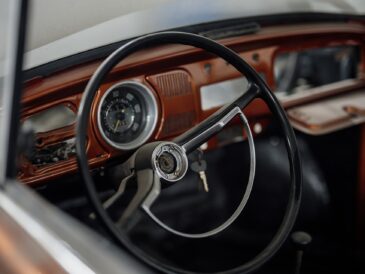
Inheriting a Porsche 911 from the 1970 era, a Ferrari Dino, or a Mercedes 300 SL butterfly-top car does not resemble any other heritage transmission. Beyond their market value—sometimes considerable—these classic cars carry an emotional charge, a family history, and an intimate connection with the owner who possessed them. Yet, when the time comes for succession, legal and tax questions arise with an urgency that the automotive passion cannot escape.
How to properly evaluate a collection vehicle in a succession? What rights will you have to exercise? Are there strategies to optimize the transmission of this unique asset? This comprehensive guide will accompany you through the intricacies of succession taxation applied to collection automobiles, from valuation rules to tax relief measures.
What is a collection vehicle in the tax sense?
Before addressing the successor mechanisms, it is necessary to clarify precisely what the term “collection vehicle” encompasses in the eyes of the tax administration. This qualification indeed determines the application of specific rules that can have a significant impact on the patrimonial treatment of the property.
The official qualification criteria
A vehicle is considered to be a classic when it meets three cumulative conditions: being more than 30 years old, having seen its production cease, and having been kept in its original condition without any substantial modification to the chassis, body, steering, braking, transmission, suspension, or engine systems. Repairs and restorations remain permitted, provided that the historical authenticity of the vehicle is preserved.
Vehicles that have participated in a major historical event or have a significant sporting record acquired during prestigious national or international competitions can also claim this qualification. A Porsche 917 that has competed in the 24 Le Mans 24 Hours or an Alpine A110 rally car therefore fall into this category, sometimes independently of their age.
Collection registration plate: useful but not essential
Obtaining a “collection vehicle” registration certificate is not necessary for the tax regime to apply. Once the three criteria are met, the qualification is imposed automatically. Acollectible registration plateIt certainly offers practical advantages—regular technical inspections every five years, the possibility of registering non-approved vehicles in France—but it does not determine the tax status of the property.
The succession rules applicable to classic cars
Contrary to a common misconception, luxury cars do not benefit from any special exemption regarding inheritance taxes. They are subject to the common law regime, just as other movable property comprising the deceased’s estate.
Integration into the succession assets
When settling a succession, the deceased’s vehicles must be included in the succession declaration established by the notary. Their value is added to the gross succession assets, from which the liabilities are then deducted to obtain the taxable net assets. This value will be distributed among the heirs according to the rules of legal or testamentary distribution.
Successoral indivision: a point of attention
In the absence of specific testamentary provisions, the vehicle is left in joint ownership among the heirs. Several scenarios then arise. If the surviving spouse or an heir wishes to retain the automobile, they must obtain the consent of the other heirs to proceed with the change of registration. The sale can take place without a prior change of registration, provided that it is completed within three months following the death, or that the vehicle has not been in use since then—which must be attested by a sworn declaration.
Note: The surviving spouse or PACS partner is completely exempt from inheritance taxes, regardless of the amount of the inheritance. This exemption applies entirely to the value of the vehicle, even if it is a high-value collectible automobile.
Vehicle evaluation: a crucial issue
The issue of valuation often serves as the focal point of auctions involving classic automobiles. Unlike common vehicles for which the Argus rating is referenced, classic cars adhere to more complex and sometimes subjective valuation mechanisms.
Recognized evaluation methods
The tax administration considers several methods for determining the value of a collectible vehicle. If the automobile was acquired during a auction sale, the auction price will be used, in accordance with article 764 I 1° of the General Tax Code. In other cases, the value declared in the current insurance contract at the time of death constitutes the minimum reference. This value may correspond to an approved value resulting from a prior appraisal.
For exceptional vehicles or disputed cases, the use of an accredited automotive expert is often necessary. This expert will provide an estimate taking into account the condition of preservation, authenticity, documented history, rarity of the model, and market trends.
The factors influencing valuation
The evaluation of a classic car relies on a multitude of criteria. The general condition of the vehicle—mechanical, bodywork, interior—plays a determining role, as does the authenticity of the parts and compliance with original specifications. A documented history, including maintenance records, repair invoices, and authenticity certificates, constitutes a significant factor in valuation.
Expert advice: Keep all invoices related to restoration work carefully. These documents will allow you to justify a higher acquisition price in case of resale, thereby minimizing the taxable capital gain.
The calculation of inheritance taxes
Once the value of the vehicle is established and incorporated into the estate assets, the calculation of inheritance rights follows common law rules. The amount of rights depends closely on the relationship of kinship between the deceased and each heir.
The deductions applicable in 2025
Each heir benefits from a personal deduction on their share of inheritance, the amount of which varies depending on the degree of kinship. For direct online transfers, the deduction is 100 000 euros per child or per parent. Grandchildren receive a deduction of 1 594 euros in succession. Brothers and sisters receive 15 932 euros, while nephews and nieces only receive 7 967 euros. People with disabilities who meet certain conditions may receive an additional deduction of 159 325 euros. If you are already an heir and are looking for the order of procedures,our guide to the heritage of a classic carrepeats each step.
The progressive rating system in direct online
After applying the exemptions, the taxable portion is subject to a progressive rate structure. For direct line heirs, the rates range from 5% for the tranche up to 8 072 euros, to 10% between 8 072 and 12 109 euros, then 15% between 12 109 and 15 932 euros, 20% between 15 932 and 552 324 euros, and up to 45% beyond 1 805 677 euros. For more distant heirs, the taxation is significantly increased: 35 to 45% between siblings, 55% for parents up to the fourth degree of kinship, and 60% beyond that.
Tax relief measures: donation to the State and payment in donation
If classic cars do not benefit from specific exemptions, two exceptional mechanisms allow to reduce the succession tax bill when the vehicle has a major patrimonial interest.
The donation to the state or a museum
Article 1131 of the General Tax Code allows the heirs of a collection car to donate it to the State. If the State approves the donation after an evaluation procedure, the heir is granted total exemption from inheritance taxes on the concerned property. This option is primarily intended for vehicles with exceptional historical or patrimonial value, which are likely to enrich public collections.
The payment date
Codified in article 1716 bis of the General Code of Taxes, the payment-in-kind option offers an interesting alternative. This scheme, conceived by André Malraux in 1968 and implemented in 1972, allows one to settle all or part of inheritance taxes by donating high-value artistic or historical collectible items to the State—including automobiles.
To be eligible, the donation offer must cover a minimum amount of 10 000 euros of rights. It is subject to the approval of the Minister responsible for the Budget, after the advice of an interministerial commission that evaluates the interest of the item for public collections. This mechanism has allowed exceptional pieces, including automobile prototypes, to enter national collections.
Anticipate transmission: optimization strategies
For collectors who are concerned about preserving their automotive heritage within their family while optimizing tax burden, several strategies are worth considering in person.
The donation with a reservation of usufruit
Instead of bequeathing the vehicle by succession, the owner can choose to give it outright in their lifetime as a transfer of ownership. This technique involves transferring the bare ownership of the vehicle to their children while retaining the usufruit—that is, the right to continue using it. Since the usufruit is not taxed, only the bare ownership is subject to donation rights, which range from 40 to 60% of the total value depending on the donor’s age. Upon death, the usufruit extinguishes, and the bare owner becomes the full owner without any additional rights.
Optimal use of abatments
The deduction of 100 000 euros per child and per parent is renewed every fifteen years. A parent can therefore donate a collectible vehicle with a value below this threshold without any obligation to pay a donation fee. If the vehicle’s value exceeds this amount, a multi-cycle planning over fifteen years can allow for the gradual transmission of the automotive heritage tax-free.
The mistakes to avoid during a car succession
Underestimate or forget to declare the vehicle
Failure to declare a vehicle in the succession or deliberately underestimating its value exposes heirs to tax adjustments accompanied by penalties. The administration has effective control measures, including the review of registration files and auction sales databases.
Drive the vehicle without changing the registration plate
Driving a vehicle whose registration plate is in the sole name of a deceased person constitutes a violation. If the heirs wish to retain the vehicle, they must absolutely proceed with the change of ownership. Sale without prior change is only permitted within three months of the death, or if the vehicle has not been in use.
The succession theft
Disguising the existence of a vehicle or appropriating it at the detriment of other heirs constitutes a succession fraud punishable by civil and criminal sanctions. The negligent heir may be forced to return the property and be deprived of his share on it.
To remember: the essential points
The transfer of a classic car by succession follows the common law tax rules, without any special exemption. The vehicle’s value must be declared and included in the succession assets. The valuation is based on the purchase price in a auction sale, unless otherwise stated in the value declared in the insurance contract.
The surviving spouse and the PACS partner are completely exempt from inheritance taxes. Two mechanisms allow for reducing the tax burden on major-interest vehicles: donation to the State (total exemption) and donation in payment. Anticipation remains the best strategy: donation with a reservation of usufruct, and the use of renewable deductions every fifteen years.
Frequently asked questions
Do we have to go through a notary to inherit a classic car?
For succession cases whose gross assets are less than 5 000 euros, the use of a notary is not mandatory: a certificate signed by the heirs or a certificate of inheritance may be sufficient. Beyond this threshold, it is the notary who draws up the notarization deed necessary for administrative procedures.
Can a collector’s car be exempt from inheritance taxes?
There is no automatic exemption for collector vehicles. However, two mechanisms allow you to waive all or part of the fees: donation to the State (if the State approves the vehicle for its public collections) and payment-in-kind donation (return of the vehicle in exchange for the fees, subject to approval).
How to prove the value of a classic car in a succession?
Several elements can justify the declared value: the insurance contract mentioning an agreed value, an expert report prepared by an accredited automotive expert, the auction price in case of acquisition at auction, or even references to comparable transactions on the specialized market.
conclusion
Transferring a classic car succession is not an easy matter. Between delicate valuation, complex tax implications, and family concerns, this operation requires meticulous preparation and, often, the support of professionals—a specialized notary, a car expert, or a estate management advisor.
For collectors, anticipation remains the best ally. Carefully documenting each vehicle, keeping insurance contracts updated with approved values, and considering transmission strategies from now on will help preserve this exceptional heritage while optimizing the tax burden. Because beyond their market value, these automobiles carry a share of history, passion, and family memory that would be a shame to see scattered if they hadn’t been able to anticipate their transmission.