In brief:The rarest cars in the world include the Mercedes-Benz 300 SLR Uhlenhaut Coupé, produced in just two examples, the Bugatti Type 57SC Atlantic, and the Ferrari 250 GTO. Ten models whose value is primarily determined by the number of survivors.
In the world of classic cars, rarity transcends the mere status of a mechanical object to become a work of art. Some cars exist in only a handful of examples worldwide, sometimes with only a single survivor. These mechanical jewels embody the pinnacle of design, engineering, and automotive history. Their value is measured not only in millions but also in cultural heritage and passion passed down through the decades.
From the vanished Bugatti Type 57SC Atlantic to the mysterious Phantom Corsair, these cars represent the height of exclusivity. Each has a unique story, often marked by tragedy, boldness, or the visionary genius of their creators. Discover these ten mechanical legends that define the very essence of automotive rarity.
1.Mercedes-Benz 300 SLR Uhlenhaut Coupé – The Queen of Auctions
Only two examples of this mechanical myth were built by Mercedes-Benz in 1955. One of them set a world record in 2022 by becoming the most expensive car ever sold.
Designed by engineer Rudolf Uhlenhaut, this marvel derived from the W196 Formula 1 racing car boasts astonishing performance for its time. According to RM Sotheby’s, the top speed approached 290 km/h. The eight-cylinder inline engine of 3 litres produces 302 horsepower, according to Les Voitures magazine.
Legend has it that Uhlenhaut used one of the two examples as his company car, regularly completing the Stuttgart-Munich journey in just under an hour. In May 2022, Mercedes-Benz sold one of the two coupés for the record sum of 135 million euros at a private sale organised by RM Sotheby’s at the Mercedes-Benz Museum in Stuttgart. This transaction shattered all previous records and definitively crowned the 300 SLR as the most valuable car in the world. These records are also reflected in euros:the ranking of the most expensive cars in the world.
The second example remains on display at the Mercedes-Benz Museum, a permanent testament to German technical excellence and an era when innovation took precedence over all else.
2.Bugatti Type 57SC Atlantic – The Enigma of the Black Car
Only four examples were produced between 1936 and 1938, according to Bugatti’s official website. Three survive today, but the fourth, nicknamed “The Black Car,” mysteriously disappeared in 1938 and remains one of the greatest mysteries in automotive history.
A masterpiece by Jean Bugatti, the Atlantic embodies French aesthetic perfection. Its riveted aluminium bodywork, inspired by the Aérolithe prototype, features the famous dorsal seam running the length of the car. The eight-cylinder inline engine of 3,3 litres develops approximately 200 horsepower thanks to a supercharger, allowing it to reach over 200 km/h.
The first example, chassis 57374, was delivered to British banker Victor Rothschild. The third, chassis 57473, belonged to Jacques Holzschuh before being destroyed in a level crossing accident, then fully restored decades later. The last produced example, chassis 57591, is now owned by fashion designer Ralph Lauren.
If Jean Bugatti’s “Black Car” were to reappear, it could fetch 100 million euros. This lost Atlantic alone embodies the mystery and fascination surrounding the rarest cars in the world.
3.Ferrari 250 GTO – The Italian Holy Grail
Produced in only 36 examples between 1962 and 1964, according to Ferrari.com, the 250 GTO represents the pinnacle of Italian automotive art. Triple world champion in GT from 1962 to 1964, it combines sporting performance with timeless elegance.
The name “GTO” stands for “Gran Turismo Omologata,” homologated for competition. Under the bonnet, a V12 Colombo engine of 3 litres develops around 300 horsepower. The top speed approaches 280 km/h. Designed by Sergio Scaglietti, the hand-shaped aluminium bodywork makes each example unique.
In 2018, an example of 1963 sold in a private auction for 70 million euros, setting a world record before being dethroned by the Mercedes 300 SLR. The 36 examples still exist, jealously preserved by their owners, including celebrities such as Nick Mason of Pink Floyd and Ralph Lauren.
Jeremy Clarkson once described it as the “Mona Lisa on wheels” – a metaphor that perfectly sums up this mechanical masterpiece, now the ultimate symbol of automotive passion.
4.Rolls-Royce 15 HP 1904 – The Very First Witness
Six examples were built in 1904. Only one has survived to this day, restored by its owner Bill Morton. This car represents one of the very first collaborations between Charles Rolls and Henry Royce.
The three-cylinder inline engine of 3089 cm³, water-cooled, developed about 15 horsepower according to Wikipedia. Capable of reaching a top speed of around 63 km/h, this model embodies the heroic beginnings of British luxury motoring.
Exhibited at the Paris Motor Show in December 1904, the 15 HP made an impression with its exemplary finish and quiet operation. The three cylinders represented an elegant technical solution at the time, offering less vibration than twin-cylinders while remaining simpler to manufacture than six-cylinder engines.
This unique survivor testifies to the first steps of a brand that would become synonymous with automotive excellence. Its existence reminds us that before becoming a legend, every great marque must cross the threshold of its first model.
5.Porsche 916 – The Forbidden Prototype
Eleven prototypes built in 1971 and 1972 constitute the entire production of this secret model. Porsche cancelled the project two weeks before its presentation at the Paris Motor Show 1971, fearing it would overshadow the 911.
The prototype named “Brutus,” driven by Ferdinand Piëch himself, was fitted with an experimental 2,9 litre engine developing over 300 horsepower. The other ten examples were equipped with the 911 S engine of 2,4 litres developing 190 horsepower or the 2,7 litre Carrera engine of 210 horsepower, according to Porsche of the Day.
Based on the 914/6, the 916 adopted a welded steel roof for greater rigidity, widened wheel arches, and an aerodynamic front bumper. According to StuttCars, the 0 to 100 km/h sprint was completed in less than 7 seconds, and the top speed reached 233 km/h. These performances made it the fastest road-going Porsche of its time.
Five examples remained in the Porsche and Piëch families. In 2019, “Brutus” sold at auction for 928 000 euros during the Artcurial Rétromobile sale. A price reflecting the absolute exclusivity of these prototypes never officially marketed.
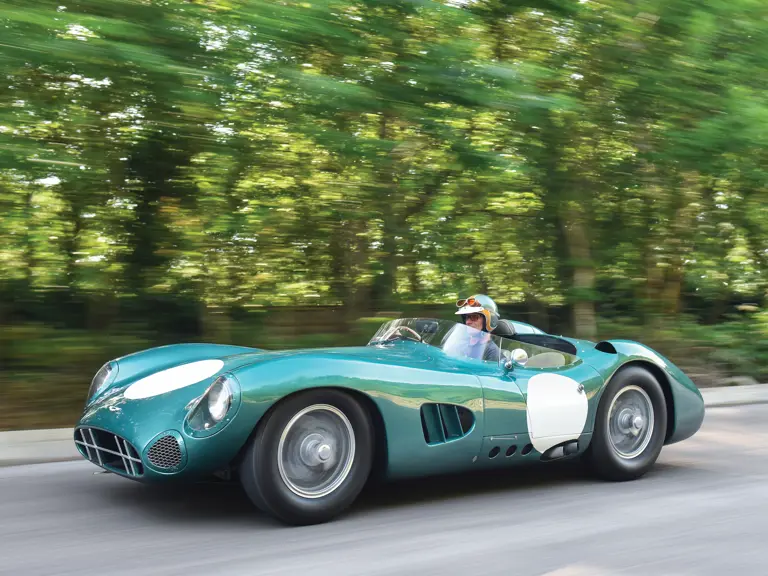
6.Aston Martin DBR1 – British Glory
Five examples produced between 1956 and 1959, according to AstonMartins.com. This racing car embodies the pinnacle of British engineering and remains Aston Martin’s only victory at the 24 Hours of Le Mans.
Designed by Ted Cutting, the DBR1 initially received a six-cylinder inline engine of 2,5 litres before adopting the 3 litre version developing around 250 horsepower at 6250 rpm. The dimensions impress: 4026 mm long by only 978 mm high, according to sources.
In 1959, the DBR1/2 driven by Carroll Shelby and Roy Salvadori won the 24 Hours of Le Mans, according to Wikipedia. That same year, another DBR1 won the 1000 km Nürburgring race, allowing Aston Martin to secure its only World Sports Car Championship title.
In August 2017, the DBR1/1 chassis sold for 22,55 million dollars according to Moniteur Automobile, setting the record for a British car. This DBR1 had been driven by legends such as Stirling Moss, Roy Salvadori, and Carroll Shelby. It represents the golden age of British motorsport, an era where boldness and talent prevailed over huge budgets. Other rarities, less publicised, are among the rarest collector cars ever produced.
7.Talbot-Lago T150-C SS Teardrop – Rolling Art Deco
Exact production numbers remain debated, but according to Wikipedia, around 25 examples were bodied by Figoni & Falaschi between 1937 and 1939, with several variants including only 11 in the “New York” style. Today, only a few survivors testify to this golden era of French automotive design.
Presented at the Paris Motor Show in 1937, the “Teardrop” broke aesthetic codes. Its aerodynamic bodywork designed by Giuseppe Figoni marries elegance and performance. The six-cylinder inline engine of 4 litres allowed speeds of 100 mph, approximately 160 km/h, according to SuperCars.net. One example finished third at the 24 Hours of Le Mans 1938.
In 2011, an example with full bodywork sold for 3,136 million euros at the RM Sotheby’s sale in Villa d’Este. Another reached 3,36 million euros in 2017 at the same event.
These Teardrops represent the pinnacle of Art Deco style applied to automobiles. Their fluid lines and sensual curves continue to inspire contemporary designers. Each example is a unique work of art, the result of collaboration between engineer Antonio Lago and visionary coachbuilder Figoni.
8.Bugatti Type 41 Royale – The Excessive Dream
Six examples produced between 1927 and 1933 (a seventh, the prototype, was rebuilt in 2017). Ettore Bugatti dreamed of producing twenty-five for monarchs worldwide, but the Great Depression of 1929 ruined his ambitions.
The dimensions impress: 6,4 metres long and weighing three tonnes. The eight-cylinder inline engine of 12,763 litres develops between 200 and 300 horsepower at 1700 rpm. The top speed reached 180 to 200 km/h, exceptional performance for the era. The roadster driven by Jean Bugatti was reportedly timed at around 205 km/h on the Montlhéry circuit.
Only three Royales were sold during Ettore Bugatti’s lifetime. The first customer, Armand Esders, received in 1932 a roadster designed by Jean Bugatti, without headlights as its owner only drove during the day. The “Napoleon Coupé,” Ettore’s personal car, is now exhibited at the Schlumpf Museum in Mulhouse.
In 1987, one example sold for 8,1 million dollars, setting a world record at the time. The unsold engines were eventually fitted to 88 Bugatti railcars between 1932 and 1939, achieving unexpected success in rail transport.
9.Phantom Corsair – The Unique Futuristic Vision
A single example built in 1938. This visionary creation by Rust Heinz, heir to the ketchup empire, represents the rarest car in the world by its absolute uniqueness.
Based on the chassis of a Cord 810, the Phantom Corsair was fitted with a V8 Lycoming engine producing 190 horsepower. Its aerodynamic bodywork, crafted by coachbuilders Bohman & Schwartz, could accommodate six passengers despite its coupé silhouette. Production cost 24 000 dollars, while Rust Heinz envisaged a selling price of 12 500 dollars.
Featured in the film “The Young in Heart” in 1938 under the name “Flying Wombat,” it was also exhibited at the New York World’s Fair in 1939. Unfortunately, Rust Heinz died in a car accident in July 1939 at the age of 25, ending all plans for series production.
After serving as a fairground attraction in the 1950s, the Phantom Corsair now rests at the National Automobile Museum in Reno, Nevada, a testament to a future that never came to be.
10.Rolls-Royce Phantom I Jonckheere – The Doors of Mystery
A unique example, according to SuperCars.net. This Art Deco automotive masterpiece was created in 1935 by Belgian coachbuilder Henri Jonckheere on a Rolls-Royce Phantom I chassis from 1925.
The perfectly round doors are the visual signature of this car nicknamed “Round Door Rolls.” The six-cylinder inline engine of 7,7 litres develops approximately 110 horsepower. Nearly six metres long, it is probably the largest two-door coupé ever built.
The history of this Rolls remains partly mysterious, as archives were destroyed during World War II. Some sources suggest it was commissioned by the Raja of Nanpara, others that it was intended for Prince Edward. In 1936, it won the Honour Prize at the Cannes Concours d’Élégance.
After being painted gold and exhibited at American travelling fairs, it was acquired in 1991 for 1,5 million dollars. Restored by the Petersen Automotive Museum, it won the Lucius Beebe Trophy at the Pebble Beach Concours 2005. This unique Rolls-Royce embodies the creative boldness of the coachbuilders of the 1930s, daring to reinterpret the aesthetic canons of the British marque.
Comparison Table
| Model | Year | Examples | Engine | Power | Record Price |
| Mercedes 300 SLR Uhlenhaut | 1955 | 2 | 8 cyl. 3,0L | 302 hp | 135 M€ (2022) |
| Bugatti Type 57SC Atlantic | 1936-1938 | 4 (3 survivors) | 8 cyl. 3,3L | 200 hp | ~100 M€ estimated |
| Ferrari 250 GTO | 1962-1964 | 36 | V12 3,0L | 300 hp | 70 M€ (2018) |
| Rolls-Royce 15 HP | 1904 | 6 (1 survivor) | 3 cyl. 3,1L | 15 hp | – |
| Porsche 916 | 1971-1972 | 11 prototypes | 6 cyl. 2,4-2,9L | 190-300+ hp | 928 k€ (2019) |
| Aston Martin DBR1 | 1956-1959 | 5 | 6 cyl. 3,0L | 250 hp | 22,55 M$ (2017) |
| Talbot-Lago T150-C SS | 1937-1939 | ~11-25 | 6 cyl. 4,0L | 140 hp | 3,36 M€ (2017) |
| Bugatti Type 41 Royale | 1927-1933 | 6 | 8 cyl. 12,8L | 200-300 hp | 8,1 M$ (1987) |
| Phantom Corsair | 1938 | 1 unique | V8 | 190 hp | 1,5 M$ (1991) |
| Rolls-Royce Phantom I Jonckheere | 1935 | 1 unique | 6 cyl. 7,7L | 110 hp | 1,5 M$ (1991) |
Conclusion
These ten mechanical legends embody the very essence of automotive exclusivity. Whether it is the two Mercedes 300 SLRs, the lost Bugatti Atlantic, or the unique Phantom Corsair, each tells a story blending genius, boldness, and sometimes tragedy. These cars are not simply rare by their numbers – they are rare by their ability to transcend their primary function to become works of art, historical testimonies, and symbols of an era when creators’ imagination knew no bounds.
Rarity is not decreed; it is built over decades, nourished by history, passion, and the inexorable passage of time separating survivors from the lost. These cars now belong to the history of humanity, far beyond the simple automotive world.
And you, which of these ten mechanical rarities would you dream of beholding one day?
Find our entire selection of exceptional vehicles on Plethore.fr, your reference for prestigious and collector automobiles.