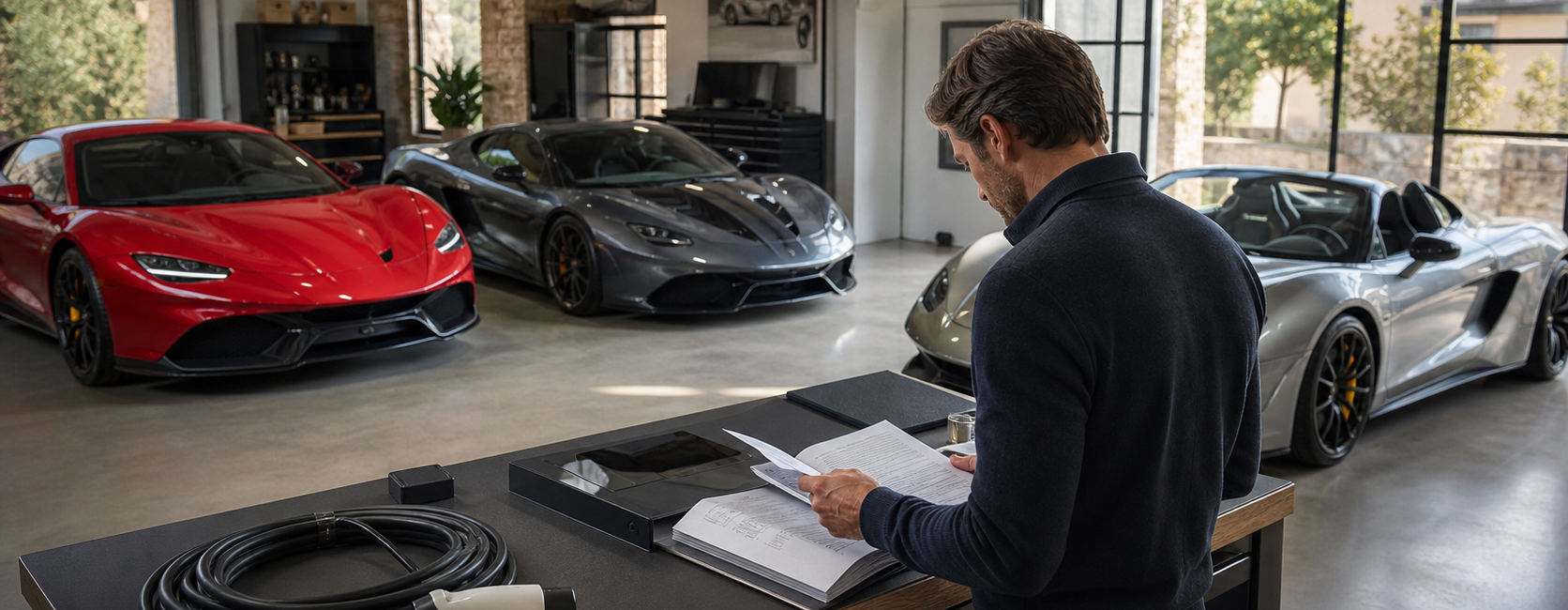
Hybrid supercars have become one of the most discussed topics in the premium market in 2026. On paper, they tick all the boxes: very high power, instant response, useful electric mode in the city, technological image and top-tier performance. In the reality of a second-hand purchase or a first allocation, the question is more nuanced: should you buy now, take advantage of the correction in some prices, or wait for the market to better understand these cars?
The Ferrari 296 GTB/GTS, Ferrari SF90 Stradale, McLaren Artura, Lamborghini Revuelto or future electrified sports cars: hybridisation is no longer a parenthesis. It is the new language of the modern supercar. But not all hybrids will automatically become collectors. For a buyer, the right approach is to separate performance, desirability, running costs and resale liquidity.
The short answer: yes, buy, but not just any configuration.
A hybrid supercar can be an excellent purchase in 2026 if it meets four criteria: a strong configuration, a clear history, a solid warranty or manufacturer support, and a price consistent with the real market depth. The drop in some values should not be read solely as a negative signal. It can also open a buying window for exceptional cars that were too expensive coming out of the automotive crisis.
Before deciding, compare the references already present on the premium market, notablythe Ferraris currently offered on PlethoreCars. Even though each example is unique, the listings help to understand the colours, options, mileages and price levels accepted by sellers.
Why hybrids worry some buyers
The first concern relates to complexity. A classic thermal supercar is already costly to maintain. A hybrid adds a high-voltage battery, electric motors, control units, additional cooling and more specific diagnostic procedures. This is not necessarily a problem, but it requires a more professional reading of the file.
The second concern relates to future value. Many buyers collect naturally aspirated engines, manual gearboxes, end-of-era V10 or V12 engines. Faced with this mechanical nostalgia, a hybrid supercar can be perceived as a transitional car. This is unfair to the best of them, but this perception really influences prices.
The third concern relates to obsolescence. Batteries, software and assistance systems evolve quickly. A first-generation hybrid supercar may seem technologically less pure than an iconic thermal car and less advanced than a future electrified generation. It is precisely this tension that creates opportunities, but also pitfalls.
Ferrari 296, SF90, Artura: three very different profiles
The Ferrari 296 is probably the easiest to defend in terms of driving pleasure. Its hybrid V6 develops very high power, but above all a response and agility that give the car a real personality. It is not just fast: it feels compact, expressive, more usable than a hypercar and modern enough to appeal to new Ferrari customers.
The SF90 Stradale plays in a different league. It is a technological showcase: spectacular total power, electrified all-wheel drive, historic status as the first Ferrari PHEV of series at this level. But its very high positioning, its production less confidential than a limited series and its high initial price make value analysis more sensitive. On an SF90, configuration and entry price matter enormously.
The McLaren Artura is the most interesting case for the rational buyer. It offers a carbon architecture, a truly lightweight approach and a second-hand price often more accessible than its Italian rivals. In return, the McLaren brand remains more volatile in residual value. For an enthusiast who wants to drive, it is a serious option. For a pure investor, caution remains necessary. You can monitorthe McLarens for saleto assess the real rarity of fine examples.
The real issue: liquidity, not just the price
Many buyers ask whether a hybrid supercar will rise or fall in value. The better question is often: will it be easy to resell at the right price? Liquidity depends on concrete factors: colour, options, mileage, history, warranty, number of owners, dealership maintenance and coherence of the asking price.
A very well-configured Ferrari 296, with low mileage and clear service history, can remain highly sought after even if the overall market softens. Conversely, a mundane SF90, overpriced, with too many miles or poorly optioned, can linger on the market for a long time. In the high-end segment, a price reduction alone does not always trigger a purchase: the example must tell a reassuring story.
To understand this logic, observe the transactions already completed. Liquid models rarely have just one selling point. They combine condition, desirability, provenance and price transparency.
Options that really make a difference
On a hybrid supercar, the buyer must look beyond power. Carbon-ceramic brakes, seats, carbon packs, wheels, historic colours, contrast stitching, customisation elements and the presence of a track-oriented pack can significantly affect desirability.
- Exterior colour: an iconic or understated shade often resells better than a configuration that is too personal.
- Interior: coherent, uncluttered and well-preserved interiors provide greater reassurance.
- Dynamic options: these matter if they correspond to the car’s actual use.
- Charging and usage history: useful for understanding the health of the hybrid system.
- Manufacturer warranty or extension: almost indispensable on a recent, high-value purchase.
For extreme models, the hypercar context remains useful: the world of hypercars and exceptional cars shows how rarity alone is not enough. The examples that endure are those whose configuration, story and maintenance remain impeccable.
Checklist before buying a hybrid supercar
- Request the complete maintenance history, invoices and manufacturer campaigns.
- Have the high-voltage system checked by a qualified workshop or official network.
- Compare at least three comparable listings in terms of year, mileage and options.
- Check the remaining warranty duration, possible extensions and exclusions.
- Check the wear on brakes, tyres, running gear and undercarriage.
- Avoid modified cars if your goal is to preserve value.
- Do not confuse a significant discount with a good deal: the price must be consistent with the configuration.
Should you favour a hybrid or a late-era petrol car?
It all depends on your objective. For regular driving, a Ferrari 296 or an Artura can offer exceptional modern enjoyment. For a very conservative collector’s approach, a Ferrari F8, a 458, a 812, a Lamborghini Huracán or an atmospheric Porsche GT might seem more straightforward. The market favours what it easily understands.
But it would be too simplistic to oppose hybrid and petrol. Some hybrids will be sought after because they represent a turning point. The LaFerrari, the Porsche 918 Spyder or the McLaren P1 have already demonstrated this. The question is therefore whether the car you are looking at is a mere technological evolution or a true milestone in its brand’s history.
To gain perspective on the value of iconic Ferraris, you can read our feature on the fastest Ferraris, which clearly illustrates the transition between legendary petrol engines and new electrified architectures.
Our PlethoreCars opinion
In 2026, hybrid supercars are neither to be avoided on principle nor to be bought blindly. They simply require more method. The buyer seeking a pleasure car can take advantage of a less euphoric market to target a fine example. The buyer thinking of collecting must be more selective: strong configuration, reasonable low mileage, documented maintenance, warranty, provenance and defensible price.
If you already own a hybrid supercar or a rare sports car and want to assess its real value, the healthiest approach is to compare the car to the market, not to memories of the new price. For this, you can entrust the sale of an exceptional car to benefit from clear positioning and an adapted marketing approach.
FAQ
Is a hybrid supercar a good investment?
It can be, but only if the example is rare in its configuration, well maintained, correctly priced and easy to explain to the future buyer. Technology alone does not guarantee value.
Should you be afraid of high-voltage batteries?
You should not be afraid, but they must be thoroughly checked. Ask for the history, available diagnostics, remaining warranties and conditions for replacement or coverage.
Ferrari 296 or McLaren Artura: which to choose?
The Ferrari 296 is more reassuring due to the strength of the brand and its desirability. The McLaren Artura can offer a very interesting price-to-pleasure ratio. The right choice depends on your priority: residual value, driving experience, budget or image.
Can an SF90 Stradale become a collector’s car?
Yes, because it marks an important step at Ferrari. But not all SF90s will be equal: configuration, mileage, condition, history and purchase price will make the difference.
PlethoreCars advice: this article provides a general framework. Before any purchase, check the documents, history, technical inspection, warranties, condition of the hybrid system and the prices actually paid at the time of the transaction.