Should you wait until 2027 to sell a car that will be 30 years old?Not necessarily. In France, the thirtieth anniversary does not automatically transform a car into a “collector vehicle”, nor does it mechanically affect its value. Waiting can be relevant if the example is sound, original, documented, and if its model is beginning to be sought after. Selling before the deadline can, on the contrary, avoid a large expense, take advantage of an already active demand, or secure a transaction while the car is still drivable and presentable.
The right decision is therefore not based solely on the year 1997. It depends on the exact date of the vehicle, its configuration, condition, history, and the cost required to keep it until the deadline. Here is a practical method to decide without confusing administrative age with market value.
At 30 years, a car does not automatically become “collector”
Service-Public recalls three criteria to request the “collector vehicle” status: the vehicle must be over 30 years old, its type must no longer be produced, and its essential technical characteristics must not have been modified. The change to a collector registration certificate remains optional and is not automatic.
For a 1997-year-old car, it is therefore necessary to check the date of first registration recorded in field B of the registration certificate and, when required, the manufacturing date. Not all cars of the same model reach the threshold on 1 January 2027. Our selection of 1997 models that will be 30 years old in 2027 details this distinction.
To remember: being 30 years old may open access to an administrative procedure. This does not constitute a full authenticity certification, nor a guarantee of price increase.
Waiting until 2027: in which cases can this make sense?
Waiting a few months can be rational when time plays in favour of the paperwork rather than against the car.
The example is close to original and well documented
A coherent configuration, a legible serial number, tracked invoices, manuals, keys, a service book and original parts kept facilitate the presentation. On a sports car or an uncommon model, traceability can weigh more than simply reaching 30 years. Taking advantage of the wait to organise documents and photograph useful markings can genuinely strengthen the file.
The cost of preservation remains controlled
A car stored in a dry place, insured, regularly brought to temperature and maintained without major imminent work can wait for its anniversary in good conditions. The equation changes if an additional twelve months involve tyres, timing belt, hydraulics, corrosion, air conditioning or restarting. A necessary safety expense is not automatically recovered in the sale price.
The market is already beginning to distinguish the version
Early series, desirable engines, manual gearboxes, period colours or limited editions can attract collectors even before the administrative threshold. However, it is necessary to compare truly similar cars: version, documented mileage, condition, country of delivery and recent work. A price displayed in an advertisement does not prove that a transaction was concluded at that level.

Selling before 30 years: when is it preferable?
A sale in 2026 or at the beginning of 2027 may be the best option if waiting risks degrading the car or the file.
- A major service is approaching: buyers often prefer a reasonable price and transparent diagnosis over a rushed refurbishment.
- Storage is unsuitable: humidity, inactivity and outdoor exposure can cost more than any potential gain linked to age.
- Demand already exists: enthusiasts often know a model before its official anniversary.
- The car is heavily modified: waiting 30 years does not automatically resolve non-compliance nor guarantee eligibility for the classic car status.
- You need a quick or simple transaction: the actual liquidity of the model matters more than its future status.
The key point is to avoid two misleading promises in the advertisement: “automatic classic registration in 2027” and “guaranteed rising value at 30 years”. Instead, present the date of first registration, current condition, available documents and eligibility criteria that remain to be verified.
The five-step method to decide
1. Precisely identify the vehicle
Note the VIN, date of first registration, type, version, engine, gearbox, colour and options. Verify the consistency between the vehicle and its documents. For an imported model, also document the country of origin and the stages of French registration.
2. Make an honest assessment
Distinguish routine maintenance, cosmetic defects, structural corrosion, breakdowns and modifications. List the work with estimates where relevant. An independent appraisal can be useful for a rare or valuable vehicle, but it does not replace transparency about known defects.
3. Estimate two scenarios, not a dream price
Compare the sale value today with the plausible value after preservation, maintenance and possible classic car procedures. Deduct actual costs: storage, insurance, servicing, MOT, tyres, transport and preparation. To obtain a suitable starting point for your example, you canrequest an appraisal of your car before choosing between immediate sale and waiting.
4. Measure actual demand
Look at several sources: comparable active listings, withdrawn vehicles, published auction results and offers received. An advert visible for six months at a high price indicates the seller’s ambition, not necessarily the market value. Conversely, a single auction is not enough to set an entire valuation.
5. Choose a date and a channel
Set a deadline. If the planned conditions are not met — service completed, file organised, safe storage location — reassess the decision. An independent owner can prepare their description andplace an advertisement. To delegate the presentation and follow-up of the sale, you can also entrust the sale by mandate. The choice depends on the available time, the value and the complexity of the vehicle.
Which documents should be prepared before the sale?
Whether the car is 29 or 30 years old, the transfer obligations remain essential. Service-Public notably indicates that the seller must be in possession of the registration certificate. For a private car over four years old sold to a private individual, the technical inspection must generally be less than six months old; a sale to a motor trade professional follows a different regime.
The seller must also provide a certificate of administrative status less than 15 days old. HistoVec allows the holder to share with the buyer the available administrative history: date of first registration, changes of ownership, certain controlled repair claims and administrative status. The transfer must then be declared within 15 days.
Prepare in parallel:
- the up-to-date registration certificate;
- the Cerfa transfer certificate No. 15776;
- the technical inspection applicable to the vehicle’s situation;
- the recent certificate of administrative status;
- invoices, manuals, duplicate keys and previous technical inspections;
- proof of restorations and replaced parts;
- a written list of known defects and work to be expected.
The rules of technical inspection for classic cars in 2027depend notably on the mention on the registration document and the date of first registration. Do not therefore deduce an exemption solely from the car’s age.
If you wait until 2027, what should you do during the year?
- Establish a maintenance scheduleto avoid prolonged immobilisation and to address safety components.
- Keep the removed partswhen a reversible improvement is made.
- Create a digital file with invoices, dated photos and identification numbers.
- Prepare clean sales photos, without hiding defects. Our guide explains how to photograph a classic car for sale.
- Recheck the regulations just before putting it on the market, as procedures and forms may change.
Verdict: should you wait for the 30 years?
Wait if the car is sound, original, properly stored, if the cost of upkeep is low and if a few months allow you to strengthen an already attractive file.Sell without delay if a major expense is looming, if storage threatens the condition, if demand is already present or if reaching 30 years does not affect the eligibility and desirability of your version.
The right moment is therefore not a magical date: it is when condition, documentation, the market and your plan are aligned.
Frequently asked questions
Does a 1997 year-old car automatically become a classic in 2027?
No. The classic status is optional and must be requested. The vehicle must notably be over 30 years old, no longer in production and must not have undergone significant modifications.
Does a classic registration certificate increase the value?
Not by itself. The value mainly depends on the model, version, condition, authenticity, history and demand. The administrative status may facilitate certain uses but does not guarantee the price.
Can I sell the car just before it reaches 30 years?
Yes, if the legal conditions for the sale are met. The advertisement must describe the current situation and not present future eligibility as guaranteed.
Should the car be registered as a classic before selling it?
This is not a general obligation. Compare the real benefit of the procedure, the timing, the vehicle’s authenticity and the buyer’s plan. A car can remain on a normal registration after 30 years.
Which document reassures a buyer the most?
There is no single document. A coherent set — registration certificate, HistoVec, technical inspection, invoices, ownership history and detailed photos — is more convincing than a simple “collection” mention.
Sources and credits
Information verified on 11 November 2026. Administrative rules must be rechecked at the time of sale.
- Service-Public — Obtaining a classic vehicle registration certificate : criteria, optional and non-automatic nature of the mention.
- Service-Public — Selling or giving away your vehicle : registration certificate, technical inspection, certificate of transfer and declaration.
- Service-Public — Certificate of administrative status : obligation and validity of less than 15 days.
- HistoVec — Vehicle history : report sharing by the owner.
- FFVE — Eligibility for classic vehicle registration certificate : heritage interest, age and compliance.
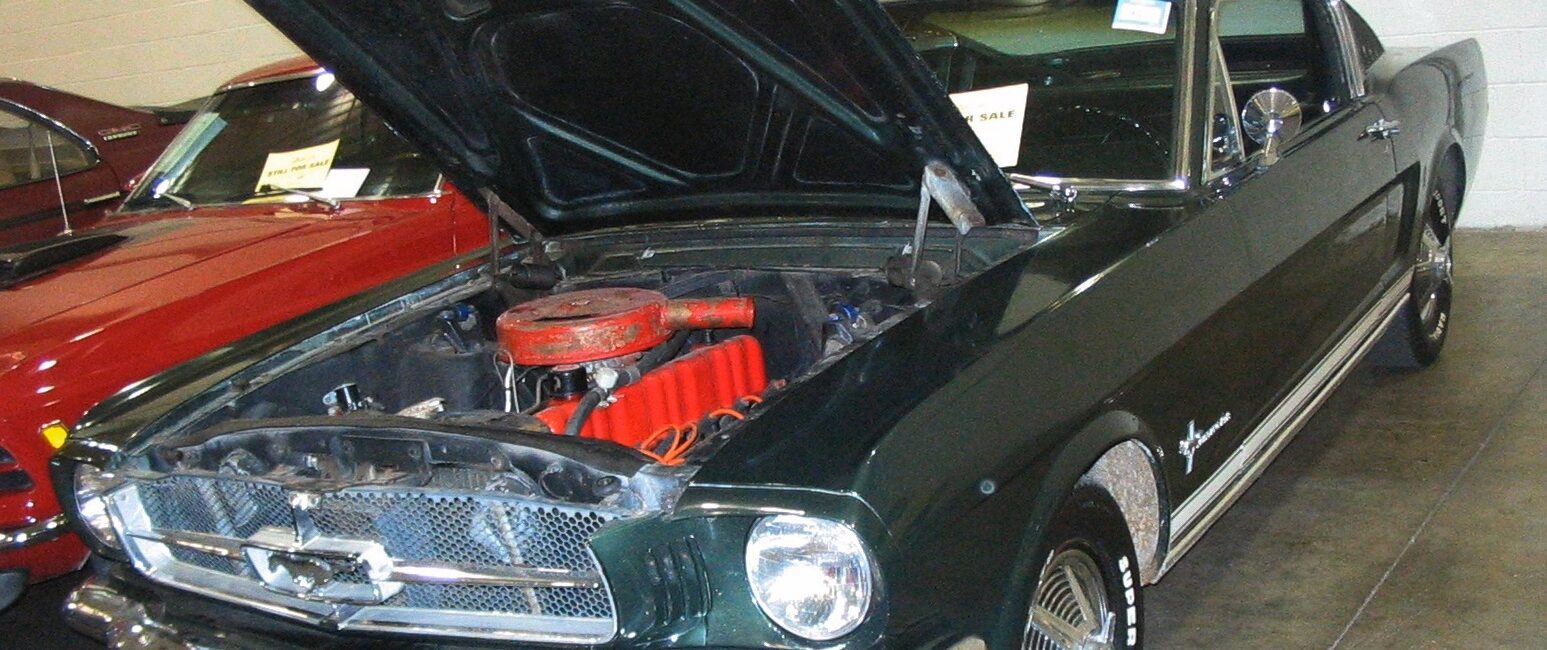
Credit for the featured image: Ford Mustang 1965 photographed during a classic car sale in Toronto, Bull-Doser, public domain, via Wikimedia Commons.